
Medical Marijuana Risks for Green Card Holders
Discover the federal immigration pitfalls of state-legal medical marijuana for lawful permanent residents seeking safety and stability.
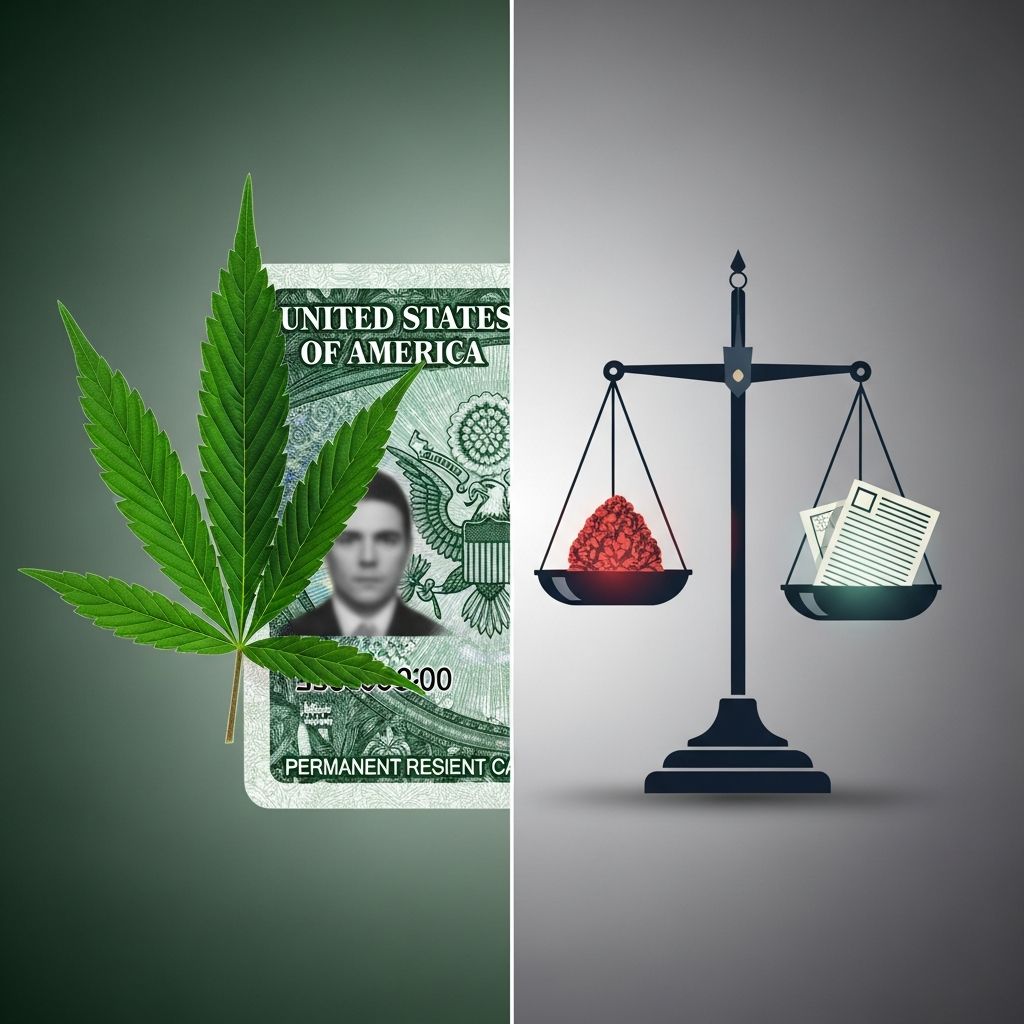
Lawful permanent residents, or green card holders, must navigate a complex legal landscape when considering medical marijuana in states where it is permitted. While over 38 states allow medical cannabis programs as of 2026, federal law classifies marijuana as a Schedule I controlled substance, creating direct conflicts for non-citizens.
The Clash Between State Permissions and Federal Authority
State laws enabling medical marijuana do not alter its illegal status under the federal Controlled Substances Act (21 U.S.C. § 802). This federal supremacy means green card holders engaging in any marijuana-related activity risk immigration penalties, regardless of state protections or physician recommendations.
Federal agencies like U.S. Citizenship and Immigration Services (USCIS), Customs and Border Protection (CBP), and Immigration and Customs Enforcement (ICE) enforce these rules strictly. Even a single instance of use can trigger scrutiny during status reviews or travel.
Direct Threats to Permanent Residency Status
Green card holders convicted under federal drug laws—excluding a single possession offense of 30 grams or less for personal use—become deportable. Admissions of use during interviews or on forms can equate to a violation, labeling one as a “drug abuser or addict,” another deportable ground.
- Deportation Proceedings: ICE may initiate removal if marijuana involvement surfaces, such as through state registry records or arrests.
- Moral Turpitude Concerns: While simple possession rarely qualifies as a crime involving moral turpitude (CIMT), cultivation or distribution—even medical—might, amplifying risks.
- Employment Ties: Working in cannabis dispensaries or grow operations violates federal law, potentially barring good moral character findings.
Obstacles to U.S. Citizenship Applications
Naturalization requires demonstrating good moral character (GMC) for at least five years (or three if married to a U.S. citizen). Any federal controlled substance violation, including medical marijuana use, undermines this requirement.
USCIS Form N-400 explicitly asks about drug use. An affirmative response or discovered evidence can lead to denial. Even past use admitted during the process may disqualify applicants, as federal law views marijuana without exception for medical contexts.
| Factor | Impact on Naturalization | Example Scenario |
|---|---|---|
| Admission of Use | Automatic GMC Bar | Checking “yes” on Form N-400 for marijuana. |
| State Card Possession | Evidence of Violation | Card found during background check. |
| Cannabis Employment | Aggravated Offense | Dispensary job history disclosed. |
| Minor Possession | Possible Waiver | Single 30g incident; rare approval. |
Border Reentry Challenges After International Travel
Green card holders traveling abroad face heightened risks upon return. CBP officers treat returning residents as “arriving aliens” subject to admissibility checks. Admitting past or current marijuana use—even state-legal—renders one inadmissible.
Carrying a medical card or residue can prompt secondary inspection. Officers may deny entry or parole you in pending removal proceedings. Waivers exist only for simple possession under 30 grams, but approval is discretionary and rare.
- Avoid travel if using medical marijuana to prevent CBP confrontations.
- Denials of entry can lead to prolonged separations from family and assets in the U.S.
Broader Implications for Non-Immigrant Visa Holders
Those on temporary visas (e.g., H-1B, F-1) face even steeper consequences. Visa revocations, adjustment of status denials, and consular refusals stem from any marijuana involvement. Future green card petitions may fail due to inadmissibility grounds.
Employers sponsoring visas must ensure no cannabis ties, as discoveries during USCIS reviews can terminate statuses abruptly.
Potential Defenses and Limited Waivers
Options are narrow but include:
- Simple Possession Waiver: For one offense under 30 grams, Form I-212 may allow reentry or status retention.
- Non-Disclosure Strategy: Avoiding admissions on forms or interviews, though risky if evidence exists.
- Legal Consultation: Immigration attorneys can assess case-specific waivers under INA § 212(h) for extreme hardship.
However, proactive abstinence remains the safest path, as federal enforcement priorities evolve unpredictably.
State Variations and Registration Hurdles
Medical programs vary: some require state ID, accessible to green card holders via driver’s licenses. Others demand proof of residency without citizenship barriers. Yet, registration itself flags users for federal databases potentially shared with USCIS.
As of 2026, 40+ states operate these systems, but none shield against federal immigration consequences.
Frequently Asked Questions
Can green card holders safely obtain a state medical marijuana card?
No, registration creates a record that federal agencies may access, risking status challenges.
Does one-time medical use lead to automatic deportation?
Not automatically, but it can initiate proceedings if discovered, especially during travel or naturalization.
Is working in a legal cannabis business okay for LPRs?
No, it constitutes a federal violation, harming GMC and admissibility.
What if marijuana use occurred before green card approval?
Past admissions can still bar naturalization or trigger inadmissibility upon reentry.
Are there safe states for medical marijuana as a non-citizen?
No state law overrides federal immigration rules; risks persist nationwide.
Strategic Advice for Lawful Permanent Residents
Prioritize immigration stability over state-legal remedies. Explore FDA-approved alternatives like CBD products (under 0.3% THC) or non-cannabis treatments. Disclose nothing during USCIS interactions unless advised by counsel.
Regular status maintenance—timely reentry permits, avoiding arrests—mitigates unrelated risks. Monitor policy shifts, as congressional rescheduling efforts continue, though immigration impacts lag.
In summary, while medical marijuana offers relief for many Americans, green card holders must weigh profound federal repercussions. Professional legal guidance is essential before any involvement.
References
- Are Green Card Holders Okay to Use Medical Marijuana? — Nolo. 2023. https://www.nolo.com/legal-encyclopedia/can-green-card-holders-use-medical-marijuana-states-where-its-legal.html
- Will Work in the Cannabis Industry Affect My Green Card Application? — Godoy Olivieri. 2024-05-15. https://godoyolivieri.com/blog/faqs-will-work-in-the-cannabis-industry-affect-my-green-card-application/
- Could Medical Marijuana Use Impact Your Immigration Status? — Unzueta Law. 2025-01-20. https://www.unzuetalaw.com/blog/could-medical-marijuana-use-impact-your-immigration-status
- Immigration and State Legalization of Marijuana — AZITA Law. 2024. https://azitalaw.com/immigration-and-state-legalization-of-marijuana/
- Cannabis and Immigration — Boundless Immigration. 2025-03-10. https://www.boundless.com/blog/cannabis-and-immigration
- Immigrants and Marijuana — Immigrant Legal Resource Center (ILRC). 2021-05-01. https://www.ilrc.org/sites/default/files/resources/immigrants_marijuana_may_2021_final.pdf
Similar Articles








Read full bio of Sneha Tete


