
The Mechanics and Security of Mail-In Voting
Understanding the safety, processes, and impact of voting by mail.
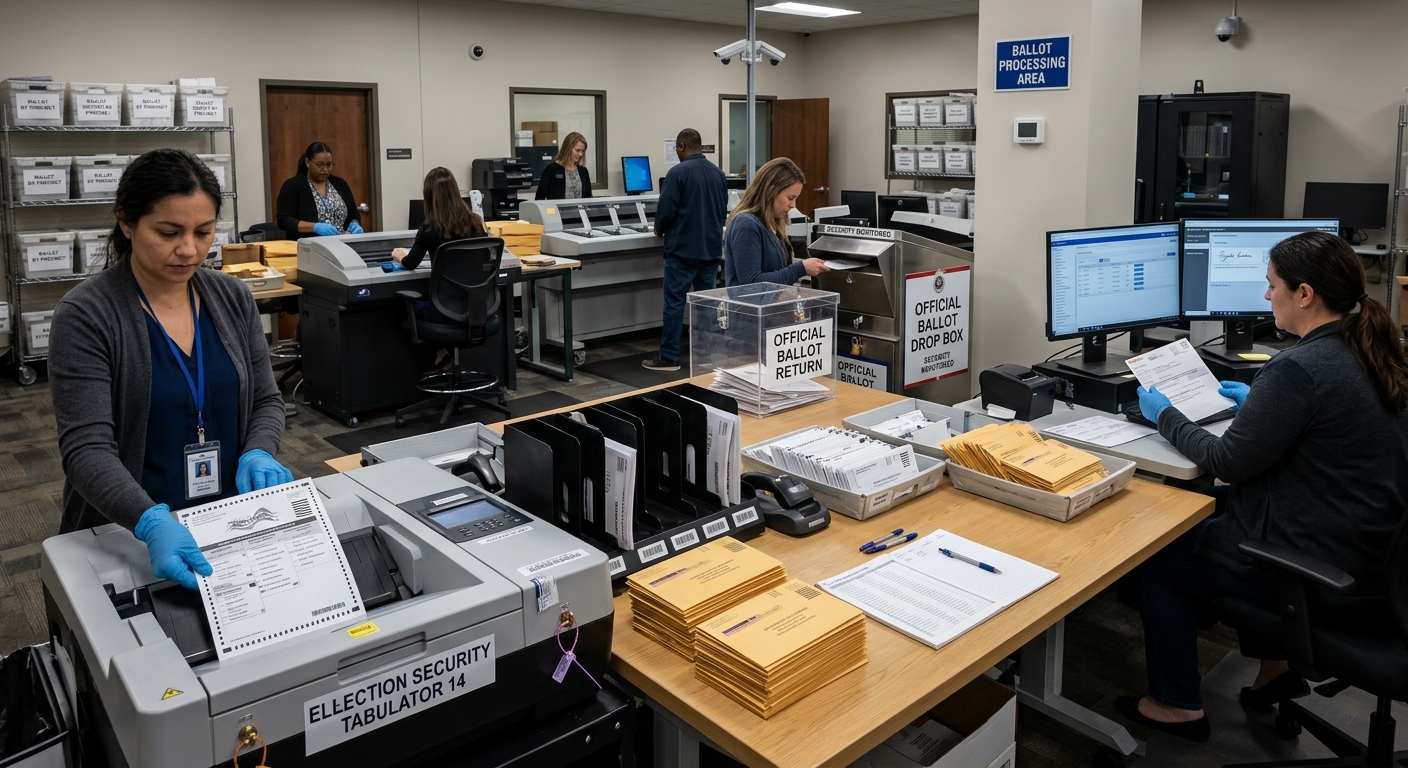
The Evolution of Remote Electoral Participation
Voting is widely recognized as the foundational mechanism through which citizens in a democratic society exercise their civic duty, hold their leaders accountable, and shape the future of their communities. Over the past few decades, the landscape of electoral participation in the United States has undergone a profound transformation. While the traditional image of democracy often involves standing in line at a local precinct on a crisp Tuesday morning in November, modern election administration has diversified heavily to accommodate the complex, fast-paced realities of contemporary life. Among the most significant advancements in this arena is the widespread adoption and normalization of remote balloting.
Voting by mail, which has been utilized in various forms for generations, provides eligible citizens with the unparalleled flexibility to carefully research candidates, thoroughly review complex ballot measures, and securely cast their votes from the privacy and comfort of their own homes. Despite periodic waves of intense public scrutiny and political discourse surrounding the practice, comprehensive empirical data and rigorous administrative audits continually affirm that remote balloting is heavily fortified by multi-layered security protocols that rival those of in-person voting. By exploring the historical progression, the intricate mechanical architecture, the robust verification systems, and the demographic impacts of mail-in voting, voters can gain a profound appreciation for the resilience, accessibility, and integrity of modern election infrastructure.
Historically, the concept of remote voting in the United States was born out of absolute necessity rather than mere convenience. The earliest large-scale implementation of absentee balloting occurred during the American Civil War, allowing deployed soldiers to participate in the democratic process from distant battlefields. This foundational precedent established the principle that a citizen’s geographic displacement in service to the nation should not result in disenfranchisement. Decades later, this principle was dramatically expanded at the federal level with the passage of the Uniformed and Overseas Citizens Absentee Voting Act (UOCAVA) of 1986 . UOCAVA explicitly guaranteed the voting rights of active-duty military personnel, their eligible dependents, and citizens residing abroad, mandating that states provide them with secure absentee options.
The operational success of the UOCAVA framework laid the technical groundwork for widespread civilian applications. Pioneering states such as Oregon, Washington, and Colorado eventually transitioned to universal vote-by-mail systems, automatically sending ballots to all active registered voters ahead of Election Day. For the rest of the nation, the transition occurred more gradually, shifting from stringent excuse-required absentee voting—where voters had to legally document an illness or unavoidable absence—to no-excuse systems. The global public health events of the early 2020s catalyzed an unprecedented acceleration of this trend, transforming vote-by-mail from a regional preference into a nationwide electoral staple supported by advanced logistical coordination.
Step-by-Step: The Architecture of Mail-In Balloting
Understanding the architecture of mail-in balloting requires looking at the comprehensive, highly structured journey of a ballot, from the initial request to the final tabulation. In jurisdictions without universal vote-by-mail policies, the process is initiated proactively by the voter through a formal application. This request phase often requires the citizen to provide specific identifying information, such as a state-issued driver’s license number, a social security fragment, or an exact signature match, serving as the first gatekeeper in the electoral security process. Once a voter’s eligibility is verified and their active registration status is confirmed, a customized ballot packet is dispatched from the county or municipal election office.
This ballot packet is meticulously designed to protect both the anonymity and the integrity of the vote. It typically contains three core components: the official ballot itself, a privacy sleeve or secrecy envelope, and a pre-addressed, barcoded return envelope. After reading the instructions and marking the ballot clearly with the required ink, the voter places it inside the secrecy envelope, which completely conceals their electoral choices from whoever opens the mail. This sealed secrecy envelope is then placed directly into the outer return envelope.
The outer envelope functions as the critical linchpin of the remote voting process. It features a standardized affidavit section where the voter must sign their name under penalty of perjury, legally attesting to their identity and their eligibility to cast the enclosed ballot. Returning the ballot offers multiple avenues designed to prioritize both accessibility and security. Voters can rely on the United States Postal Service, often utilizing prepaid postage provided by the local government, or they can bypass the postal system entirely by depositing their sealed envelope into an official, highly secure ballot drop box. Alternatively, many jurisdictions allow voters to hand-deliver their ballots directly to the local election administration office. Each of these return methods is closely monitored and governed by strict statutory deadlines, ensuring that every legally cast vote is systematically accounted for before the final certification of results.
Safeguarding the Vote: Multi-Layered Security Protocols
A pervasive misconception surrounding remote balloting is the assumption that it operates outside the rigorous oversight applied to traditional in-person voting. In reality, election administrators employ a sophisticated, multi-layered security apparatus designed to detect, deter, and reject unauthorized, duplicative, or fraudulent submissions. The cornerstone of this protective framework is the signature verification process. When a return envelope arrives at an election processing facility, it is not immediately opened. Instead, the signature on the exterior affidavit is carefully analyzed and compared against the official reference signature on file—typically captured from the voter’s original voter registration form or their Department of Motor Vehicles record.
This verification is conducted by specially trained election personnel or, in larger jurisdictions, through automated signature recognition software that flags discrepancies for human review. If a signature is missing or does not sufficiently match the historical record, the ballot is immediately segregated. In the interest of enfranchisement, the voter is generally contacted and given a statutory window to “cure” or correct the discrepancy by providing secondary photographic identification or a newly signed affidavit before the final tally is conducted.
Beyond identity verification, the physical handling of the ballots is governed by stringent chain-of-custody protocols. The Cybersecurity and Infrastructure Security Agency (CISA) provides federal guidance to state and local election officials, outlining comprehensive risk assessment frameworks to maintain an unbroken, fully documented chain of custody from the moment a ballot is printed to the moment it is optically scanned for tabulation . Official ballot drop boxes, for example, are frequently constructed from heavy-duty, tamper-evident steel, securely bolted to the ground, and placed under continuous 24-hour video surveillance. When ballots are retrieved from these boxes, the collection is executed by bipartisan teams of election workers who log the exact time, location, and volume of ballots collected in securely sealed transfer cases.
Furthermore, modern mail-in ballots are equipped with intelligent digital tracking technologies. Each return envelope features a unique, individualized barcode that connects the packet directly to the voter’s secure registration file. This ensures that a single voter can only successfully cast one ballot; if an individual attempts to vote in person after submitting a mail-in ballot, the electronic poll book at the precinct will instantly flag the duplication, preventing double voting. This barcode system also empowers voters to track their ballot’s progress online, offering peace of mind by confirming exactly when their envelope was mailed, received, and officially accepted for counting.
Analyzing Demographic Shifts and Voter Turnout
The expanded accessibility of remote voting has profoundly influenced national voter behavior, though its impact on partisan electoral outcomes is frequently misunderstood in the public discourse. For years, political strategists theorized that increasing the ease of voting through expanded mail-in options would inherently and systematically advantage one political ideology over another. However, rigorous empirical research has repeatedly debunked this assumption. A comprehensive study published by the Stanford Institute for Economic Policy Research analyzed localized electoral data across multiple election cycles and concluded that the introduction of no-excuse absentee voting has an observably neutral partisan effect . While it unequivocally increases overall voter convenience and marginally boosts total civic participation by retaining marginal voters who might otherwise stay home, it does not disproportionately inflate the turnout or electoral success of any single political party.
What has changed significantly, however, is the partisan preference for specific voting methods. During recent election cycles, a stark ideological divergence emerged in how different demographic cohorts chose to cast their ballots. According to comprehensive data compiled by the Pew Research Center analyzing the 2024 election, Democratic voters demonstrated a sustained, overwhelming preference for remote balloting, with 44% reporting that they voted by mail or absentee. In contrast, only 26% of Republican voters utilized mail-in options, showing a much stronger preference for casting their ballots in person on Election Day .
To illustrate these shifting behavioral preferences, consider the distribution of voting methods across major political affiliations during recent national elections:
| Voter Affiliation (2024) | Voted in Person (Election Day) | Voted Early (In Person) | Voted by Mail / Absentee |
| Democratic Voters | 28% | 28% | 44% |
| Republican Voters | 39% | 35% | 26% |
These statistics highlight a critical operational reality for modern election administrators: to adequately serve the voting public, local governments must maintain robust, fully funded infrastructure for both in-person and remote voting simultaneously. Ensuring all demographic preferences are securely accommodated without creating administrative bottlenecks is vital for a healthy, functioning democracy.
Confronting Misinformation: The Reality of Ballot Integrity
The most persistent and corrosive myth surrounding remote balloting is the allegation that it is inherently susceptible to widespread, systemic voter fraud. Extensive criminal investigations, independent audits, and academic analyses consistently demonstrate that voter fraud in the United States is exceedingly rare, and mail-in voting is no exception to this rule. A detailed analytical report cited by TIME, drawing on comprehensive election fraud data compiled by the Brookings Institution, calculated the historically documented rate of mail-in voting fraud to be a microscopic 0.000043% of all ballots cast . To contextualize this figure, it equates to roughly four instances of verified wrongdoing out of every ten million votes processed.
The logistical impossibility of orchestrating mass fraud via mail is deeply embedded in the highly decentralized nature of the American electoral system. Because elections are administered strictly at the county and municipal levels, each jurisdiction utilizes completely different ballot designs, varying envelope styles, distinct localized security barcodes, and unique paper weights. A bad actor attempting to alter the outcome of a state or national election would have to successfully forge tens of thousands of unique signatures, replicate hundreds of distinct proprietary ballot formats, and seamlessly intercept postal routes without alerting a single voter, postal inspector, or election official. Such an endeavor requires a massive, perfectly coordinated conspiracy that is virtually impossible to execute undetected.
Furthermore, the penalties for attempting voter fraud act as a severe, life-altering deterrent. In both federal and state jurisdictions, intentionally casting a fraudulent ballot, voting twice, or legally coercing another person’s vote is classified as a felony. Individuals convicted of these crimes face exorbitant financial fines, years of imprisonment, and the permanent loss of their own voting rights. The sophisticated tracking systems in place, combined with the sheer severity of the legal consequences, reduce the risk-to-reward ratio for election fraud to near zero, ensuring that legitimate election results remain entirely uncompromised.
Frequently Asked Questions (FAQs) About Mail-In Voting
Does voting by mail compromise the secrecy of my vote?
No. Election offices utilize a highly secure dual-envelope system. Your marked ballot is sealed inside a privacy sleeve or secrecy envelope, which bears absolutely no identifying marks linking it to you. This blank sleeve is then placed inside the outer return envelope, which you sign. When your signature is verified by election staff, the outer envelope is opened, and the still-sealed secrecy envelope is completely separated from your identity before the ballot is extracted and optically tabulated, ensuring complete anonymity.
What happens if I make a mistake while filling out my mail-in ballot?
If you make an error—such as marking the wrong candidate bubble or accidentally tearing the paper—you should not attempt to cross it out or use correction fluid, as this can confuse the optical scanning machines. Instead, you should contact your local county clerk or election office immediately. They will officially void your original ballot barcode and issue a replacement packet, ensuring your intended vote is accurately recorded.
Can I change my mind and vote in person after requesting a mail ballot?
In most states, yes. If you decide to vote in person on Election Day, you are typically required to bring your blank mail-in ballot to the polling place and surrender it to an election worker, who will securely void it. If you forget to bring the physical mail ballot, you may be required to cast a provisional ballot, which will only be counted once officials confirm during the canvass period that your mail-in ballot was never received or tabulated.
References
- CISA Insights: Chain of Custody and Critical Infrastructure Systems — Cybersecurity and Infrastructure Security Agency. 2024-01-01. https://www.cisa.gov/resources-tools/resources/cisa-insights-chain-custody-and-critical-infrastructure-systems
- Voters Broadly Positive About How Elections Were Conducted, in Sharp Contrast to 2020 — Pew Research Center. 2024-12-04. https://www.pewresearch.org/politics/2024/12/04/voters-broadly-positive-about-how-elections-were-conducted-in-sharp-contrast-to-2020/
- Vote-by-mail had surprisingly little effect on turnout in 2020, new study shows — Stanford Institute for Economic Policy Research (SIEPR). 2021-03-15. https://siepr.stanford.edu/news/vote-mail-had-surprisingly-little-effect-turnout-2020-new-study-shows
- The Facts About Mail-In Voting Fraud — TIME. 2026-03-21. https://time.com/6958863/mail-in-voting-fraud-facts-statistics/
- Military and Overseas Voters (UOCAVA) — U.S. Election Assistance Commission. 2026-01-08. https://www.eac.gov/voters/military-and-overseas-voters-uocava
Similar Articles








Read full bio of Sneha Tete


