
Maximizing Civic Impact Through Grassroots Action
Discover actionable strategies to amplify your voice and drive voter turnout.
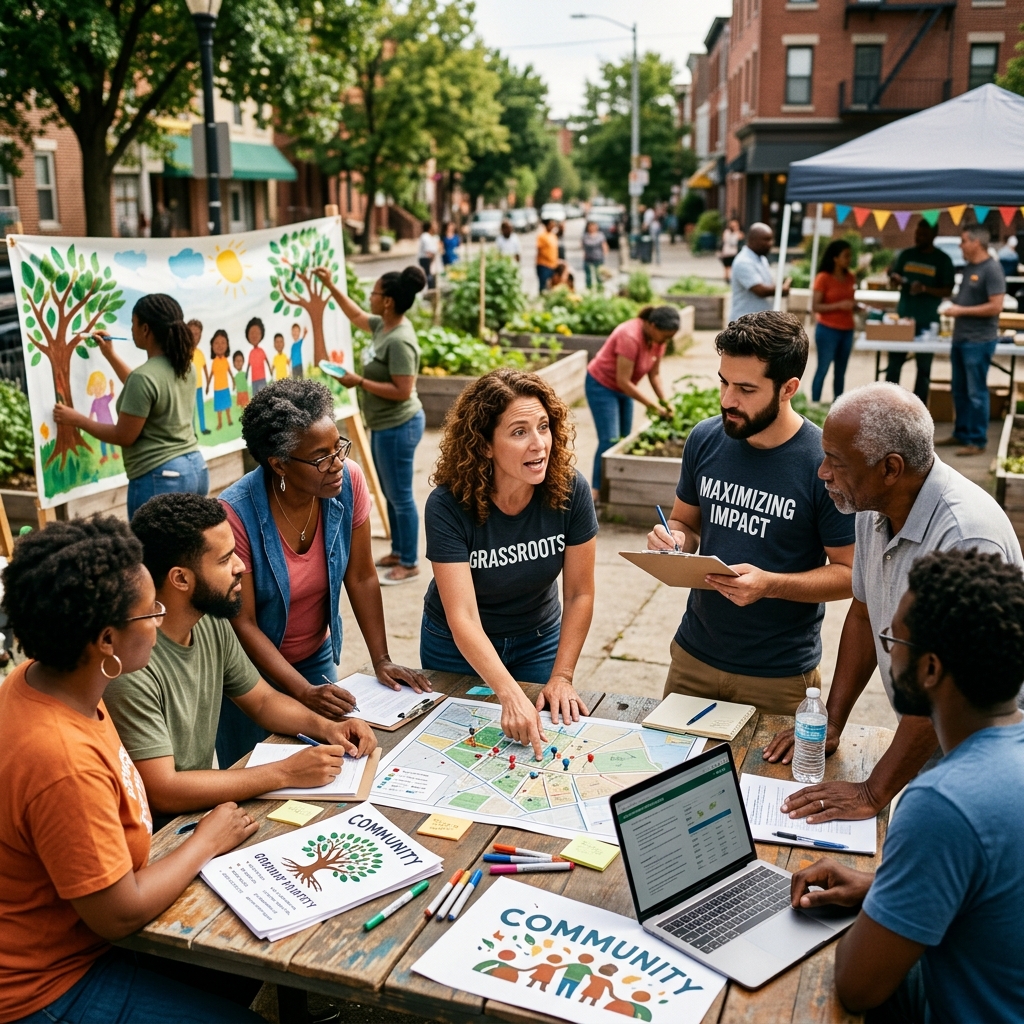
The foundation of a thriving representative democracy rests not merely on the passive right to vote, but on the active, continuous participation of its citizenry. Every election cycle, millions of Americans head to their local polling places to cast their ballots, fulfilling a fundamental and hard-won civic duty. However, for those individuals who are deeply invested in ensuring their values are accurately reflected in government policy, simply casting a single ballot is often just the beginning of their civic journey. The true engine of sustained democratic participation is powered by grassroots volunteers—everyday people who start with small, localized actions that collectively generate a massive, quantifiable impact on voter turnout and electoral outcomes.
In an era where political discourse can often feel overwhelmingly nationalized, deeply polarized, and sometimes inaccessible, many citizens experience a profound sense of powerlessness. They logically wonder how one person’s limited free time, resources, or social reach could possibly influence the trajectory of a nationwide or even statewide election. The reality is that major political shifts and legislative victories rarely happen in a vacuum; they are the direct result of countless incremental efforts made by dedicated volunteers organizing in their own neighborhoods. By transitioning from a passive observer of political news into an active facilitator of the democratic process, any citizen can exponentially multiply their civic impact.
The Current Landscape of American Voter Turnout
To truly understand the critical importance of grassroots civic engagement, it is necessary to first analyze the baseline of American voter participation. The 2024 general election provided a fascinating and highly instructive case study in modern voter dynamics and systemic engagement. According to the United States Census Bureau’s comprehensive voting and registration tables, which analyze demographic participation following national elections, approximately 73.6% of the voting-age population was successfully registered to vote, and 65.3% of the eligible population actually cast a ballot during the cycle.
While a 65.3% turnout rate reflects a highly engaged electorate by historical American standards—remaining near the modern high-water marks established in recent, highly contested cycles—it still leaves tens of millions of eligible voices entirely unheard. Data compiled by the University of Florida Election Lab corroborates these massive figures, estimating that over 158 million individual ballots were officially counted in the 2024 general election. Despite these record-breaking raw numbers, the percentage of non-voters remains a critical vulnerability in the democratic system.
This persistent gap between registered voters and actual voters represents the primary, most fertile battleground for grassroots organizations and independent volunteers. When roughly a third of the eligible electorate stays home on Election Day, the outcome of vital elections—from the presidency down to the local municipal school board—is decided by a disproportionate, and often non-representative, subset of the population. The underlying reasons for this participation gap are complex and multifaceted, ranging from institutional barriers and strict state-level registration deadlines to a generalized feeling of apathy, exhaustion, or disillusionment with the available candidate pool. Understanding these specific statistics highlights exactly where volunteers can step in to make a difference. By targeting the demographic of registered but unlikely voters, grassroots volunteers can effectively bridge the participation gap, turning potential voters into active participants in the democratic process.
The Science and Efficacy of Grassroots Mobilization
The assumption that multi-million dollar national advertising campaigns, endless television commercials, or massive fundraising advantages solely dictate election results is a persistent and highly funded myth. Empirical academic research consistently demonstrates that localized, interpersonal outreach is actually among the most effective, cost-efficient methods for increasing voter turnout across diverse demographics. A landmark political science study published by researchers at Stanford Law School analyzed the granular results of a neighbor-to-neighbor ‘get-out-the-vote’ (GOTV) drive. The study found that unpaid community volunteers who adhered to a hyper-local, conversational program design drove a statistically significant 2.3% baseline increase in voter turnout among their assigned contacts.
In the context of modern American elections, where outcomes in swing districts, highly contested states, and local mayoral races are frequently determined by margins of less than one percent, a 2.3% baseline increase in turnout is nothing short of monumental. The underlying psychology behind this impressive success rate is deeply rooted in the concepts of social proof and community trust. A slick television advertisement or an automated, pre-recorded robocall is easily ignored, muted, or dismissed by the recipient as partisan noise. Conversely, a genuine, unscripted conversation with a neighbor, a personalized text message from a local community member, or a handwritten letter carries a distinct weight of authenticity that mass media simply cannot replicate.
Grassroots volunteers leverage this localized, inherent trust to break through the apathy barrier that traditionally keeps low-propensity voters at home. When a volunteer takes the time to patiently explain the specific stakes of an upcoming election and provides concrete, logistical information about how, when, and where to vote, they significantly lower the cognitive and practical hurdles that often suppress marginalized, elderly, or first-time voters.
Actionable Steps: How Volunteers Drive Meaningful Change
For everyday citizens looking to maximize their civic footprint without entirely upending their daily lives, the sheer array of available volunteer options can initially seem daunting. However, impactful engagement does not require a full-time professional commitment; it merely requires strategic, targeted action that aligns with a volunteer’s specific skill set and availability. Here are several evidence-based, highly effective methods through which grassroots volunteers successfully influence election outcomes.
Strategic Phone Banking and Texting Campaigns
Modern political campaigns and non-partisan voting rights organizations rely heavily on structured phone banking and peer-to-peer texting networks, and these expansive efforts are almost entirely powered by unpaid volunteers. Contrary to popular belief, the primary goal of these calls is rarely to engage in hostile debates or change a staunch political opponent’s mind. Rather, the objective is to identify supportive or undecided voters and ensure they have a definitive, actionable plan to vote. These brief conversations allow volunteers to directly answer pressing logistical questions about absentee ballot request deadlines, early voting locations, and shifting voter ID requirements. A polite, informative conversation taking less than five minutes can easily transform a ‘maybe’ into a confirmed, counted vote.
Navigating the Mail-In Ballot Process
Voting by mail has become an indispensable, permanent staple of the American electoral process. The Massachusetts Institute of Technology (MIT) Election Lab’s Survey of the Performance of American Elections noted that while pandemic-era mail voting decreased slightly in recent cycles, it has remained well above historical, pre-2020 norms. Furthermore, the U.S. Election Assistance Commission (EAC) reported in their comprehensive data release that hundreds of thousands of mail ballots enter the ‘cure process’ during federal elections—a legal procedure where voters must urgently fix a technical error, such as a missing signature or incorrect date, for their ballot to be legally counted. Volunteers play a critical, time-sensitive role in ‘ballot curing’ campaigns. By proactively contacting voters whose ballots have been flagged by local election boards and walking them step-by-step through the administrative process, volunteers directly rescue legitimate votes that would otherwise be discarded.
Serving on the Front Lines as a Poll Worker
While voter outreach and education are undeniably vital, the actual physical infrastructure of American democracy relies entirely on citizens who are willing to staff physical polling locations. According to the EAC’s Election Administration and Voting Survey, over 70% of voters still prefer to cast their ballots in person, either during early voting periods or on Election Day itself. However, local municipal election commissions chronically struggle with severe poll worker shortages, often relying on an aging population of dedicated retirees. By volunteering to serve as a poll worker, individuals directly ensure that polling locations open on time, remain adequately staffed to prevent disenfranchising long lines, and operate in strict compliance with election laws, thereby guaranteeing that every voter in their community has a smooth, accessible, and dignified voting experience.
The Overlooked Power of Local Elections
While presidential and congressional races predictably consume the vast majority of media attention, cable news coverage, and campaign spending, local municipal elections actually represent the most significant opportunity for a single grassroots volunteer to make an outsized, undeniable impact on their community.
Extensive civic research, including data compiled by the Yankelovich Center for Social Science Research, highlights a persistent and concerning disparity in American voter participation: while presidential turnout frequently exceeds 60%, turnout for local mayoral, city council, or municipal judge elections often plummets drastically, sometimes hovering between a mere 15% and 30%. This widespread phenomenon, commonly known in political science as voter roll-off or ballot fatigue, means that the local policies which most directly impact daily life—including public school funding, residential zoning laws, local policing strategies, and municipal infrastructure maintenance—are decided by a tiny, highly motivated fraction of the community.
For a grassroots volunteer, this low-turnout environment is highly advantageous for driving change. In a municipal race decided by a margin of just a few hundred votes, a dedicated volunteer who organizes a weekend neighborhood canvassing event or sends out a few hundred personalized text messages can easily, single-handedly alter the final trajectory of the election. Engaging voters on hyper-local issues also serves as an excellent, non-intimidating entry point for broader civic education. When citizens realize exactly how local government administration directly impacts their daily lives and neighborhood quality, they are far more likely to develop a lasting civic habit and turn out for both municipal and national elections in the future.
Overcoming Common Barriers to Civic Engagement
Despite the clear, documented benefits of civic participation and grassroots action, many potential volunteers hesitate to get involved due to common psychological and structural barriers. The most prevalent and damaging of these is the pervasive myth that ‘one person cannot make a difference.’ This cynical sentiment is essentially a self-fulfilling prophecy; the democratic system remains unresponsive and exclusionary precisely when well-meaning citizens withdraw their participation and cede the floor to special interests.
Volunteers actively help dismantle this toxic mindset by modeling civic engagement and constantly reminding their communities that political power is aggregated drop by drop, voter by voter. When a prospective volunteer feels overwhelmed by the scale of national issues, the most effective strategy is to start incredibly small. Organizations across the entire political and civil rights spectrum offer ‘micro-volunteering’ opportunities that require minimal time commitments. Activities such as writing ten handwritten postcards to unregistered voters, dedicating just 30 minutes a week to a remote phone bank, or simply sharing verified, non-partisan voter registration links on social media can fit into the busiest of schedules.
Furthermore, finding a larger organization or community group that aligns perfectly with an individual’s specific ethical values is crucial for avoiding burnout and ensuring sustained, long-term engagement. Whether a volunteer’s primary focus is on environmental policy, reproductive rights, economic justice, or broad non-partisan democratic access, partnering with established groups provides volunteers with the necessary organizational infrastructure, legal training, and community support needed to make their efforts both highly efficient and personally fulfilling.
Conclusion
The fundamental health and longevity of a representative democracy are never permanently guaranteed by the static words written in a constitution; rather, they are continuously maintained and defended by the persistent, everyday actions of its people. Starting small—whether by patiently helping a single neighbor register to vote, sending a quick batch of informational text messages, or taking a day off work to serve as a local poll worker—creates an expanding ripple effect that strengthens the entire electoral system. By intentionally stepping out of the comfortable role of a passive observer and enthusiastically embracing grassroots volunteering, citizens can actively reclaim their political agency and ensure that the government truly reflects the will, diversity, and values of the people it was built to serve.
Frequently Asked Questions (FAQs)
- Does neighborhood canvassing actually increase voter turnout?
Yes. Extensive peer-reviewed research, such as studies conducted by Stanford Law School, clearly demonstrates that personalized, neighbor-to-neighbor canvassing can yield a statistically significant baseline increase in local voter turnout, often proving far more effective and cost-efficient than impersonal, mass-market campaign advertisements. - How much time do I realistically need to dedicate to make an impact?
You can make a measurable impact with as little as 30 minutes a week. Micro-volunteering activities, such as remote text banking, writing postcards to low-propensity voters, or verifying voter registration statuses online, are specifically designed to easily fit into busy schedules while still collectively reaching millions of potential voters. - What exactly is ‘ballot curing’, and how can volunteers assist with it?
Ballot curing is the official legal process of helping voters correct minor technical errors on their submitted mail-in ballots (such as a missing signature or an incomplete date). Trained volunteers quickly contact these flagged voters and safely guide them through their local county election office’s specific cure process to ensure their vote is officially counted before the deadline. - Why should I focus my volunteer efforts on local elections?
Local municipal elections suffer from significantly lower voter turnout than major national races, meaning your individual volunteer efforts have a proportionally larger, mathematically undeniable impact on the final result. Furthermore, local governments make crucial, everyday decisions that directly affect your immediate community’s public schools, infrastructure, and public safety.
References
- Voting and Registration in the Election of November 2024 (P20 Detailed Tables) — United States Census Bureau. 2025-04-30. https://www.census.gov
- 2024 General Election Turnout Statistics — University of Florida Election Lab. 2026-03-02. https://election.lab.ufl.edu/voter-turnout/
- The Effectiveness of a Neighbor-to-Neighbor Get-Out-the-Vote Program: Evidence from the 2017 Virginia State Elections — Stanford Law School. 2021-10-12. https://law.stanford.edu/publications/the-effectiveness-of-a-neighbor-to-neighbor-get-out-the-vote-program-evidence-from-the-2017-virginia-state-elections/ (Note: Older authoritative academic study utilized to demonstrate consistent baseline GOTV effectiveness).
- Election Administration and Voting Survey (EAVS) 2024 Comprehensive Report — U.S. Election Assistance Commission. 2025-06-30. https://www.eac.gov
- New Report: How We Voted in 2024 — MIT Election Lab. 2025-07-21. https://electionlab.mit.edu
- Big Cities – Tiny Votes? America’s Urban Voter Turnout — Yankelovich Center for Social Science Research, UC San Diego. 2024-12-01. https://yankelovichcenter.ucsd.edu
Similar Articles








Read full bio of Sneha Tete


