
Employee Disciplinary Notices: 7 Key Components For Managers
Comprehensive guide to creating effective disciplinary notices for better workplace accountability and legal protection.
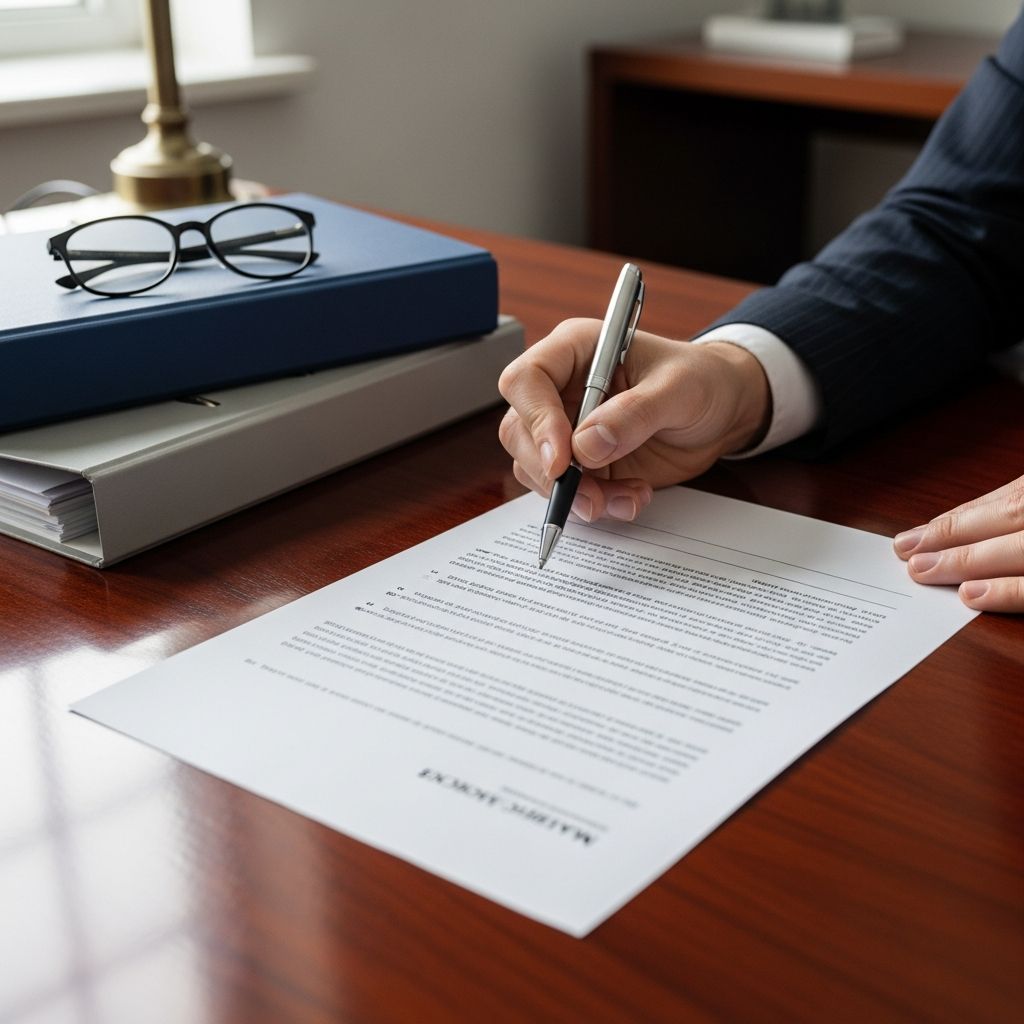
Employee disciplinary notices serve as critical tools in maintaining order and productivity in any organization. These formal records help managers address infractions promptly while providing employees with clear paths to improvement. By documenting issues objectively, businesses can protect themselves from potential disputes and promote a culture of accountability.
Why Disciplinary Notices Matter in Modern Workplaces
Disciplinary notices go beyond simple reprimands; they create a paper trail that supports progressive discipline strategies. This approach starts with verbal discussions and escalates to written documentation, suspensions, or termination if necessary. Such records prove that employers followed fair procedures, which is vital during unemployment claims or legal challenges.
In today’s litigious environment, thorough documentation demonstrates consistent application of policies across all staff levels. It also motivates employees to correct behaviors early, reducing recurring problems and boosting overall team morale. According to U.S. Department of Labor guidelines, maintaining detailed records aligns with federal requirements under the Fair Labor Standards Act for wage and hour disputes, though primarily for performance matters.
Common Triggers for Issuing Disciplinary Notices
Organizations issue these notices for a range of behaviors that disrupt operations or violate standards. Recognizing patterns early allows for timely intervention.
- Attendance Problems: Frequent lateness, unexcused absences, or no-call/no-show incidents undermine team reliability.
- Performance Shortfalls: Missing deadlines, producing substandard work, or failing to meet measurable goals.
- Conduct Violations: Insubordination, harassment, or disruptive actions that affect coworkers.
- Safety Breaches: Ignoring protocols, mishandling equipment, or endangering others.
- Policy Infractions: Unauthorized internet use, misuse of company resources, or substance-related issues on premises.
Addressing these promptly prevents escalation. For instance, repeated tardiness might signal deeper issues like transportation challenges, warranting supportive discussions alongside documentation.
Key Components of an Effective Disciplinary Notice
A well-crafted notice includes specific elements to ensure clarity and defensibility. Omit vague language; focus on facts.
| Section | Purpose | Example Content |
|---|---|---|
| Employee Details | Identifies the individual | Name: John Doe; Position: Sales Associate; ID: 12345 |
| Incident Date | Establishes timeline | Occurred on 2026-01-15 at 2:00 PM |
| Issue Description | Details the facts | Failed to submit weekly report by deadline, impacting team metrics |
| Policy Reference | Links to rules | Violates Section 4.2 of Employee Handbook |
| Improvement Plan | Sets expectations | Submit reports by EOD Fridays; attend training by 2026-02-01 |
| Consequences | Outlines next steps | Further incidents may lead to suspension |
| Signatures | Confirms receipt | Employee and Supervisor initials |
This structure ensures all parties understand the situation. Always allow space for the employee’s comments to promote fairness.
Step-by-Step Process for Managers
Issuing a notice requires preparation and follow-through. Here’s a streamlined workflow:
- Gather Evidence: Collect witness statements, emails, timesheets, or performance logs objectively.
- Review Policies: Consult HR to confirm alignment with company guidelines and legal standards.
- Schedule Meeting: Meet privately with the employee to discuss facts without accusations.
- Draft Document: Use templates but customize for the specific case.
- Review and Sign:
- Have HR verify, then obtain employee acknowledgment.
- Distribute Copies: Provide the employee a copy and file the original in their personnel record.
- Monitor Progress: Schedule check-ins to track improvements.
This methodical approach minimizes errors and supports positive outcomes.
Employee Perspectives: Responding Professionally
Receiving a disciplinary notice can feel daunting, but it’s often an opportunity for growth. Employees should:
- Read carefully and ask questions during the meeting.
- Sign to acknowledge receipt, not agreement—add a written response if needed.
- Develop an action plan, seeking support from supervisors or resources.
- Track improvements and request a review after the specified period.
Professional responses demonstrate maturity and commitment, potentially turning the situation around quickly. Refusing to sign doesn’t invalidate the notice but may escalate matters.
Legal Considerations and Best Practices
Compliance with laws like the Equal Employment Opportunity Commission’s anti-discrimination rules is essential. Notices must apply uniformly regardless of protected characteristics such as race, gender, or age. The Society for Human Resource Management emphasizes documenting behaviors, not traits, to avoid bias claims.
State laws vary; for example, some require final warnings before termination. Consult local regulations or legal counsel for multi-state operations. Digital tools for e-signatures enhance efficiency while maintaining audit trails.
Progressive Discipline: Building a Fair System
Most organizations use tiered discipline:
- Step 1: Verbal Warning – Informal discussion, noted in logs.
- Step 2: Written Notice – First formal document.
- Step 3: Performance Plan – Structured improvement with deadlines.
- Step 4: Suspension – Paid/unpaid time off to reflect.
- Step 5: Termination – Last resort after exhaustion of options.
This ladder encourages correction at each stage, with exceptions for gross misconduct like theft or violence, which may justify immediate action.
Customizing Notices for Different Scenarios
Tailor content based on issue type. For performance, include metrics (e.g., “Sales targets missed by 20% over three months”). For conduct, specify impacts (e.g., “Yelling disrupted meeting, delaying project”). Safety violations demand precise details on hazards created.
Remote work adds layers: document virtual meeting disruptions or data security lapses similarly.
Tools and Templates for Efficiency
HR software like BambooHR or ADP streamlines creation and storage. Free templates from reputable sources ensure compliance. Always brand with company letterhead for professionalism.
Frequently Asked Questions
How many disciplinary notices before termination?
Typically three, but depends on severity and policy. Progressive systems allow improvement chances.
Does signing mean I admit fault?
No, it confirms receipt. Add your comments to provide context.
Can I remove a notice from my file?
Rarely, but strong improvement might lead to notes of resolution. Union agreements may specify.
What if I disagree with the notice?
Discuss with your manager or HR; appeal processes exist in many policies.
Are digital signatures valid?
Yes, under the E-SIGN Act, they hold legal weight equivalent to handwritten ones.
Overcoming Common Challenges
Managers often hesitate due to confrontation fears. Training builds confidence. Employees may react defensively; stay factual and empathetic. Consistent enforcement across teams prevents favoritism perceptions.
For chronic issues, pair notices with coaching or EAP referrals. Metrics show disciplined teams often outperform others post-correction.
References
- Fair Labor Standards Act Advisor — U.S. Department of Labor. 2023-06-01. https://www.dol.gov/agencies/whd/flsa
- Employee Discipline and Termination Guidelines — Society for Human Resource Management (SHRM). 2025-01-15. https://www.shrm.org/topics-tools/tools/policies/employee-discipline-termination
- Progressive Discipline Policy — U.S. Equal Employment Opportunity Commission (EEOC). 2024-11-20. https://www.eeoc.gov/employers/small-business/discipline
- Best Practices for Documentation — Academy to Innovate HR (AIHR). 2025-03-10. https://www.aihr.com/blog/employee-write-up-form/
- Workplace Discipline Framework — Rippling HR Resources. 2025-07-22. https://www.rippling.com/blog/employee-write-up-form
Similar Articles








Read full bio of Sneha Tete




