
Massachusetts Car Crash Regulations: Essential Guide 2025
Essential guide to Massachusetts car crash rules, insurance mandates, fault rules, and steps for victims seeking justice and compensation.
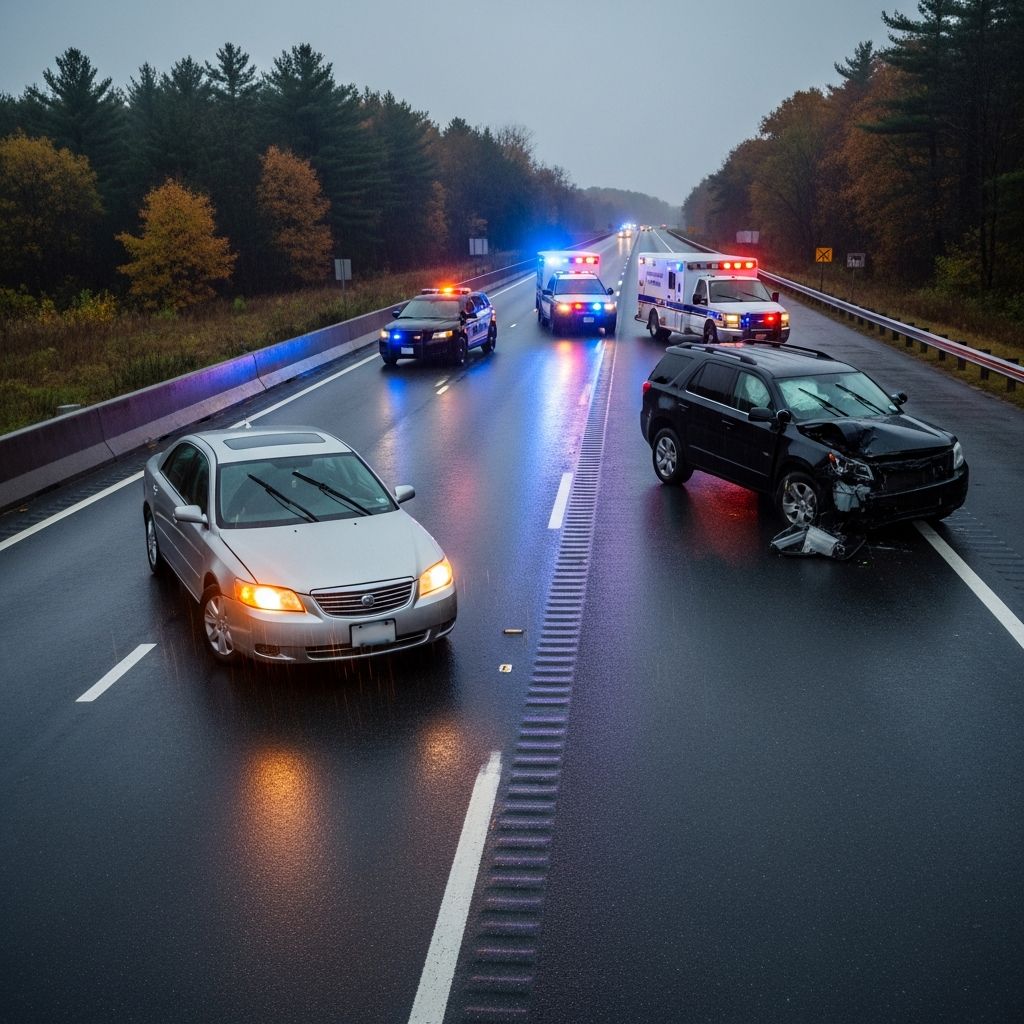
Massachusetts roadways see thousands of vehicle collisions yearly, leading to injuries, property loss, and legal complexities. Grasping state-specific rules is vital for drivers to handle incidents effectively, secure fair compensation, and avoid penalties. This handbook details key aspects including immediate response protocols, coverage obligations, responsibility allocation, timelines for claims, and potential recoveries.
Immediate Steps Following a Vehicle Collision
After any crash in Massachusetts, safety and legal compliance come first. Drivers must halt immediately, regardless of damage extent, to prevent hit-and-run accusations which carry criminal penalties. If safe, shift vehicles from traffic lanes; however, never relocate seriously hurt individuals, as this risks further harm.
Summon emergency services via 911 for injuries or major damage. Provide operator license, registration, and insurer details to involved parties. Document the scene with photos of vehicles, injuries, road conditions, and witness contacts. These records prove invaluable for insurance and court proceedings.
- Prioritize personal and others’ safety by checking for injuries.
- Avoid admitting fault verbally to safeguard claim viability.
- Gather evidence discreetly without obstructing responders.
Compulsory Vehicle Coverage in Massachusetts
The Commonwealth mandates specific auto insurance minimums to protect parties in collisions. Policies must include:
- Bodily Injury Liability: $20,000 per individual / $40,000 per incident.
- Property Damage Liability: $5,000 per event.
- Uninsured Motorist Bodily Injury: $20,000 per person / $40,000 per accident.
- Personal Injury Protection (PIP): $8,000 for medical bills and wage loss irrespective of fault.
PIP acts as no-fault coverage, reimbursing eligible expenses promptly without blame assignment. Optional additions like collision, comprehensive, or underinsured motorist enhance protection. Non-compliance invites fines, license suspension, and vehicle impoundment.
| Coverage Type | Minimum Limit | Purpose |
|---|---|---|
| Bodily Injury Liability | $20K/$40K | Covers injuries to others from your fault |
| Property Damage | $5,000 | Repairs to others’ property |
| Uninsured Motorist | $20K/$40K | Protection if hit by uninsured driver |
| PIP | $8,000 | No-fault medical and wage benefits |
Fault Determination Under Modified Comparative Negligence
Massachusetts employs a modified comparative negligence framework, enabling recovery if your fault is under 51%. Fault percentages reduce awards proportionally; exceeding 50% bars compensation entirely. Insurers apply standardized fault criteria per 211 CMR 74.00 to evaluate responsibility.
Negligence requires proving duty, breach, causation, and damages. Common breaches encompass speeding, distraction, signal disregard, yielding failures, impairment, and road rage. Multiple parties may share blame, with courts apportioning based on evidence like dashcams, witness accounts, and police reports.
Massachusetts operates as a no-fault state for minor claims via PIP, but severe injuries permit lawsuits against at-fault parties beyond policy thresholds. Surchargeable incidents, where fault exceeds 50%, hike premiums.
Official Reporting Obligations for Crashes
State law demands written reports to the Registrar of Motor Vehicles within five days for collisions involving death, injury, or over $1,000 property damage. Submit copies to local police. Immediate police notification is required for injuries or significant damage; omissions lead to fines and license issues.
Even in hit-and-runs, victims should file promptly. Accurate reporting aids investigations and claim processing. Police crash reports, available post-incident, detail facts crucial for liability disputes.
Timelines for Filing Claims and Lawsuits
Act swiftly on claims to preserve rights. PIP submissions must occur “as soon as practical,” capped at two years post-crash. Personal injury and property damage lawsuits face a three-year statute of limitations from the incident date.
Missing deadlines forfeits court access. Exceptions like discovery rules or minors may extend periods, but consult professionals promptly. Insurers often pressure quick settlements; delaying allows full injury assessment.
Potential Compensation Categories After a Crash
Victims pursue varied damages:
- Medical Costs: Bills, therapy, future care via PIP or liability.
- Lost Income: Wages forfeited during recovery.
- Pain & Suffering: Non-economic harm compensation.
- Property Losses: Vehicle fixes or totals.
- Wrongful Death: Family claims for support loss, burials.
Awards adjust per fault share. Uninsured hits trigger UM coverage. Legal aid maximizes recoveries against resistant insurers.
Special Circumstances: Uninsured Drivers and Hit-and-Runs
With mandated UM, victims of uninsured at-fault drivers claim from their policy up to liability limits. Hit-and-run pursuits involve police and potential crime victim funds. Proving fault without the other party heightens evidence importance.
Government vehicles or commercial fleets carry distinct rules, often higher limits. Drunk driving crashes enable punitive awards.
When to Engage Legal Counsel
Complex cases—disputed fault, severe trauma, insurer denials—warrant attorneys. Experts negotiate, litigate, and value claims accurately. Contingency fees align interests, with no upfront costs.
Post-crash, focus on healing while professionals handle bureaucracy. Free consultations assess case strength.
Frequently Asked Questions About Massachusetts Car Crashes
Can I recover if partially responsible?
Yes, if under 51% at fault; damages reduce by your percentage.
What if the other driver lacks insurance?
Your UM coverage applies, minimum $20K/$40K.
How soon must I report to police?
Immediately for injuries or $1,000+ damage.
Does PIP cover passengers?
Yes, medical and 75% wages up to $8,000.
How long for lawsuit filing?
Three years typically for injuries.
Preventive Measures for Safer Roads
Beyond laws, defensive habits cut risks: obey limits, shun distractions, buckle up, avoid impairment. Regular maintenance prevents mechanical failures. Awareness fosters responsibility.
In sum, informed drivers mitigate crash impacts through compliance and preparation. Knowledge empowers protection of rights and welfare.
References
- Guide to Massachusetts Car Accident Injury Laws — Enjuris. 2023. https://www.enjuris.com/massachusetts/accidents-crashes/
- Massachusetts Car Accident Laws: Essential Guide & Key Points — Swartz Law. 2023. https://swartzlaw.com/understanding-massachusetts-car-accident-laws-what-you-need-to-know/
- Surchargeable incidents — Mass.gov. 2025-01-17. https://www.mass.gov/info-details/surchargeable-incidents
- Massachusetts Car Accident Laws — The Bottaro Law Firm, LLC. 2023. https://bottarolaw.com/auto-accident-attorney/massachusetts-car-accident-laws/
- Who is Liable for a Vehicle Accident in Massachusetts? — Rob Levine Law. 2023. https://roblevine.com/faqs/who-is-liable-for-a-vehicle-accident-in-massachusetts/
- General Law – Part I, Title XIV, Chapter 90, Section 26 — Massachusetts Legislature. 2023. https://malegislature.gov/Laws/GeneralLaws/PartI/TitleXIV/Chapter90/Section26
Similar Articles








Read full bio of medha deb


