
Understanding Service Dogs and Support Animals in Maryland
Complete guide to Maryland's laws protecting service dogs and emotional support animals.
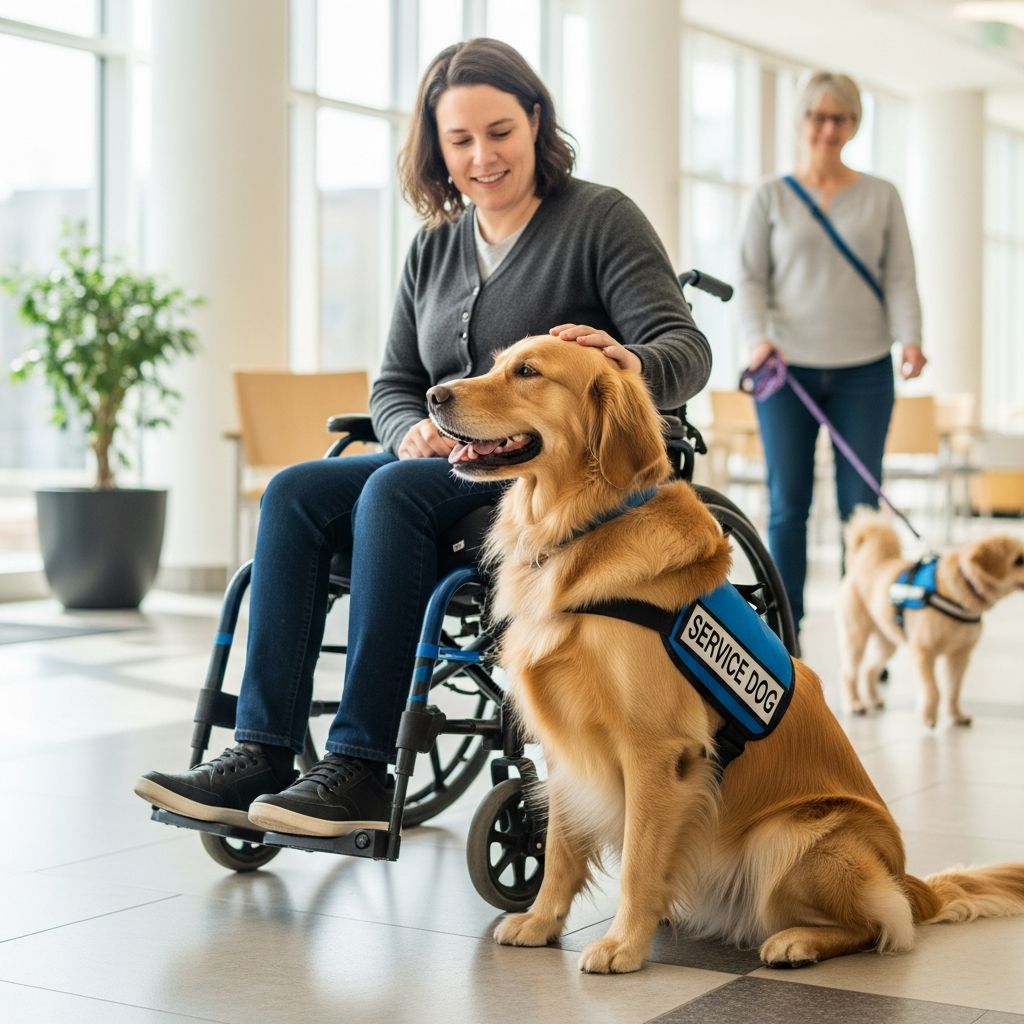
Maryland’s Framework for Assistance Animals: Rights and Regulations
Maryland residents with disabilities often rely on specially trained animals to perform critical tasks that enhance their independence and quality of life. Understanding the distinction between service animals and emotional support animals is essential for both handlers and the general public, as these categories carry different legal protections and obligations. The state of Maryland operates within the broader federal framework established by the Americans with Disabilities Act (ADA), while also implementing its own supplementary regulations and programs designed to support individuals with disabilities and their assistance animals.
Defining Service Animals Under Federal and Maryland Law
The ADA provides a clear and specific definition of service animals that forms the foundation for understanding Maryland’s approach to these working animals. A service animal is defined as a dog that has been individually trained to perform specific work or tasks directly related to a person’s disability. These disabilities may be physical, sensory, psychiatric, intellectual, or mental in nature. The critical element distinguishing service animals from other animals is that the tasks or work performed must have a direct connection to the individual’s disability and must be essential to the person’s functioning and independence.
With limited exceptions, only dogs qualify as service animals under the federal ADA. The one exception permits miniature horses in specific circumstances, though this is rarely seen in practice and comes with additional considerations regarding facility access. Unlike pets or emotional support animals, service dogs are not chosen arbitrarily but are carefully selected and trained based on an individual’s particular disability needs. The training process is rigorous and ongoing, ensuring that the animal can reliably perform its assigned tasks in various environments.
Distinguishing Service Animals from Emotional Support and Therapy Animals
One of the most misunderstood aspects of disability law involves the differences between service animals, emotional support animals, and therapy dogs. These categories are legally distinct, and conflating them can lead to misunderstandings about rights and privileges. Emotional support animals differ fundamentally from service animals in that they provide comfort through their presence but are not specifically trained to perform disability-related tasks. While emotional support animals may offer psychological benefits to their owners, this comfort alone does not qualify them as service animals under the ADA.
A doctor’s letter or prescription recommending an animal for emotional support does not automatically convert that animal into a service animal. The ADA does not recognize emotional support animals as having the same access rights as service animals in public spaces. Therapy dogs, similarly, are animals trained to provide comfort to multiple individuals in settings such as hospitals, nursing homes, or schools, but they do not perform personalized tasks for a specific individual with a disability. Understanding these distinctions is crucial for handlers seeking appropriate accommodations and for businesses seeking to comply with accessibility requirements.
Public Access Rights and Protections for Service Animal Handlers
One of the most significant protections afforded to service animal handlers is the right to public access. Under the ADA, individuals with disabilities who use service animals are generally permitted to bring their animals into public spaces where the general public is allowed, regardless of whether the facility has a “no pets” policy. This access extends to restaurants, retail establishments, hotels, transportation services, and other public accommodations. The rationale behind this protection is that service animals are not pets but rather working animals performing essential functions for their handlers.
Business owners and facility managers cannot refuse entry to a person with a service animal unless the animal poses a direct threat to health or safety or is behaving in a disruptive manner. Examples of unacceptable behavior include uncontrolled barking, jumping on other patrons, or running away from the handler. If a service animal is disrupting a business or posing a threat, the handler may be asked to remove the animal, but the individual with the disability retains the right to access the facility and services offered.
Importantly, businesses and public facilities cannot require documentation, certification, or proof that an animal is a service dog. They cannot ask for medical records, disability documentation, or training certificates. Only two specific questions may be asked if the service animal’s purpose is not immediately obvious: whether the animal is required because of a disability and what work or task the animal has been trained to perform. These limitations on questioning help protect the privacy and dignity of individuals with disabilities.
Maryland’s Specific Service Animal Programs
Beyond federal ADA protections, Maryland has established dedicated programs to support residents with disabilities through service animal assistance. The state operates the Maryland Children’s Service Animal Program and the Maryland Veterans Service Animal Program, which provide resources and support to eligible participants. These programs may have their own eligibility requirements, application processes, and oversight mechanisms designed to ensure that service animals meet specific standards and that handlers receive appropriate training and support.
Recent legislative developments in Maryland have focused on refining the management and oversight of these state programs. Proposed legislation has addressed participant disqualification standards, ensuring that nonprofit training entities can implement safeguards while protecting program integrity. These programs represent Maryland’s commitment to expanding access to service animals for populations with particularly acute needs, including children with disabilities and veterans managing service-related injuries or conditions.
Handler Responsibilities and Behavioral Standards
While the ADA provides significant rights to service animal handlers, it also establishes corresponding responsibilities. Handlers are required to maintain control of their service animals at all times using appropriate methods such as leashes, harnesses, or other tethers. In situations where a handler’s disability prevents the use of a tether or where using one would interfere with the animal’s ability to perform its tasks, control through voice commands or other reliable means is acceptable. The fundamental requirement is that the animal remains under the handler’s control in all public settings.
Service animals must be housebroken and generally well-behaved in public spaces. While the ADA does not require handlers to carry proof of vaccination or specific medical documentation, it is prudent and often legally required at the state or local level to maintain current vaccinations. Handlers are also responsible for cleaning up after their animals and managing any messes, as businesses and public facilities are not obligated to provide waste cleanup services.
The handler bears the primary responsibility for monitoring their service animal’s behavior and determining whether the animal is suitable for particular environments. If an animal demonstrates persistent misbehavior or aggression, the handler should seek additional training or assessment to ensure public safety and maintain positive relationships with businesses and public spaces.
Access and Denial Policies in Different Settings
Service animals are permitted in housing situations, including apartments and rental properties, even when the landlord has a no-pets policy. Housing providers cannot charge pet deposits or pet fees for service animals, nor can they impose restrictions on service animals based on breed or size. However, in housing contexts, landlords may request certain documentation to verify that an animal is a service animal and that the tenant has a disability requiring the animal’s assistance.
In employment settings, service animals generally are permitted in the workplace. Employers cannot exclude a handler and their service animal based on disability discrimination laws. However, if a service animal creates an undue hardship or poses a direct threat to workplace safety, employers may seek accommodations such as modified scheduling or alternative work arrangements. Service animals in training may also be permitted in the workplace as a reasonable accommodation, though only if they do not create disruptions or hardships.
Federal and Maryland law also recognize limited circumstances where service animals may be excluded. These circumstances are narrowly defined and include situations where the animal poses a direct threat to health or safety that cannot be mitigated, or where the animal’s behavior is severely disruptive. In such cases, the individual with the disability must be offered an alternative means of accessing the service or facility in question.
Penalties for Violating Service Animal Rights
Maryland and federal law provide enforcement mechanisms for service animal protections. Individuals or businesses that violate ADA provisions regarding service animals may face civil liability, including monetary damages. These penalties are designed to deter discrimination and ensure compliance with accessibility requirements. Violations might include refusing entry to a handler with a service animal, improperly questioning the handler, or interfering with the animal’s ability to perform its tasks.
Additionally, Maryland has statutory protections addressing the mistreatment or interference with service animals. While not all states have these “service animal interference” laws, Maryland’s commitment to protecting working animals is reflected in its legal framework and the regulations governing state-operated programs.
Recent Legislative Developments in Maryland
Maryland continues to refine its approach to service animal regulation through legislative action. Recent proposals have addressed the standards by which nonprofit training entities may disqualify program participants from state service animal programs. These proposals aim to establish clear criteria for disqualification while protecting both public safety and the rights of individuals with disabilities. Effective implementation of these standards ensures that service animal programs maintain high quality while remaining accessible to those who need them most.
Housing Protections for Service Animal Handlers
Maryland law and the federal Fair Housing Act (FHA) provide substantial protections for individuals with service animals in residential settings. Landlords and housing providers cannot impose restrictions on service animals or charge additional fees, even if they maintain a no-pets policy for other animals. Service animals are not considered pets for housing purposes and therefore are exempt from pet-related rules and charges.
Housing providers may ask for reasonable documentation verifying the tenant’s disability and the relationship between the disability and the animal’s necessity, but they cannot demand medical records, veterinary credentials, or proof of formal training. Reasonable documentation might include a statement from a healthcare provider confirming that the tenant has a disability and explaining how the animal assists with disability-related tasks.
Training and Certification Considerations
Despite the prevalence of online “service dog certification” websites and companies, the ADA does not require formal certification or licensing for service animals. Legitimate service animals may come from established training organizations or may be trained by individuals themselves. The actual training and the animal’s ability to perform necessary tasks matter far more than official paperwork or certificates. This approach protects the rights of individuals with disabilities who may train their own animals while also preventing fraudulent claims through fake certifications.
Frequently Asked Questions About Maryland Service Animals and Support Animals
Q: Can a business ask to see my service dog’s certification or identification papers?
A: No. The ADA does not permit businesses to require documentation, certification, identification cards, or medical records. They may only ask if the animal is required because of a disability and what work or task it performs, and only if the service animal’s purpose is not obvious.
Q: What should I do if a business refuses entry to my service animal?
A: Document the incident with details about the date, location, business, and what occurred. Contact the business management in writing to explain the ADA requirements. If the issue persists, you may file a complaint with the U.S. Department of Justice or seek legal counsel regarding potential discrimination claims.
Q: Are emotional support animals protected under Maryland and federal law?
A: Emotional support animals do not have the same public access rights as service animals. However, they may be protected in housing and employment situations under the FHA and other federal laws, depending on specific circumstances and the individual’s disability status.
Q: Can a landlord require me to remove my service animal from my apartment?
A: A landlord cannot require removal of a legitimate service animal based on a no-pets policy or breed restrictions. A service animal can only be excluded if it poses a direct threat to health or safety or has demonstrated severe behavioral issues despite your attempts to control it.
Q: Do service animals need to be vaccinated in Maryland?
A: While the ADA itself does not mandate vaccination, Maryland state and local laws may require service animals to be current on vaccinations. It is advisable to maintain vaccination records and consult local health regulations to ensure compliance.
Q: How can I report a business that violated my service animal rights?
A: You can file a complaint with the U.S. Department of Justice Civil Rights Division, which investigates ADA violations. Maryland’s Office of the Attorney General may also handle complaints regarding state-level violations or unfair practices.
References
- Americans with Disabilities Act Service Animal Requirements — U.S. Department of Justice. 2024. https://www.ada.gov/resources/service-animals-faq/
- Service Animals and Emotional Support Animals — National Disability Rights Network (ADATA). 2025. https://adata.org/guide/service-animals-and-emotional-support-animals
- Maryland Service Animal Programs – Participant Disqualification – Revisions (SB0037) — Maryland General Assembly. 2026. https://mgaleg.maryland.gov/mgawebsite/Legislation/Details/sb0037
- Service Animals — UMBC’s Office of Equity and Civil Rights. 2025. https://ecr.umbc.edu/service-animals/
- Fair Housing Act and Service Animals — U.S. Department of Housing and Urban Development. 2024. https://www.hud.gov/program_offices/fair_housing_equal_opp/assistance_animals
- ADA Service Dog Laws 2026: Rules, Access & Proof — Pettable. 2026. https://pettable.com/blog/ada-service-animal
Similar Articles








Read full bio of medha deb


