
Maryland Car Accident Laws 2026: What Drivers Need To Know
Essential guide to Maryland's car accident laws, insurance rules, fault determination, and steps after a crash for drivers in 2026.
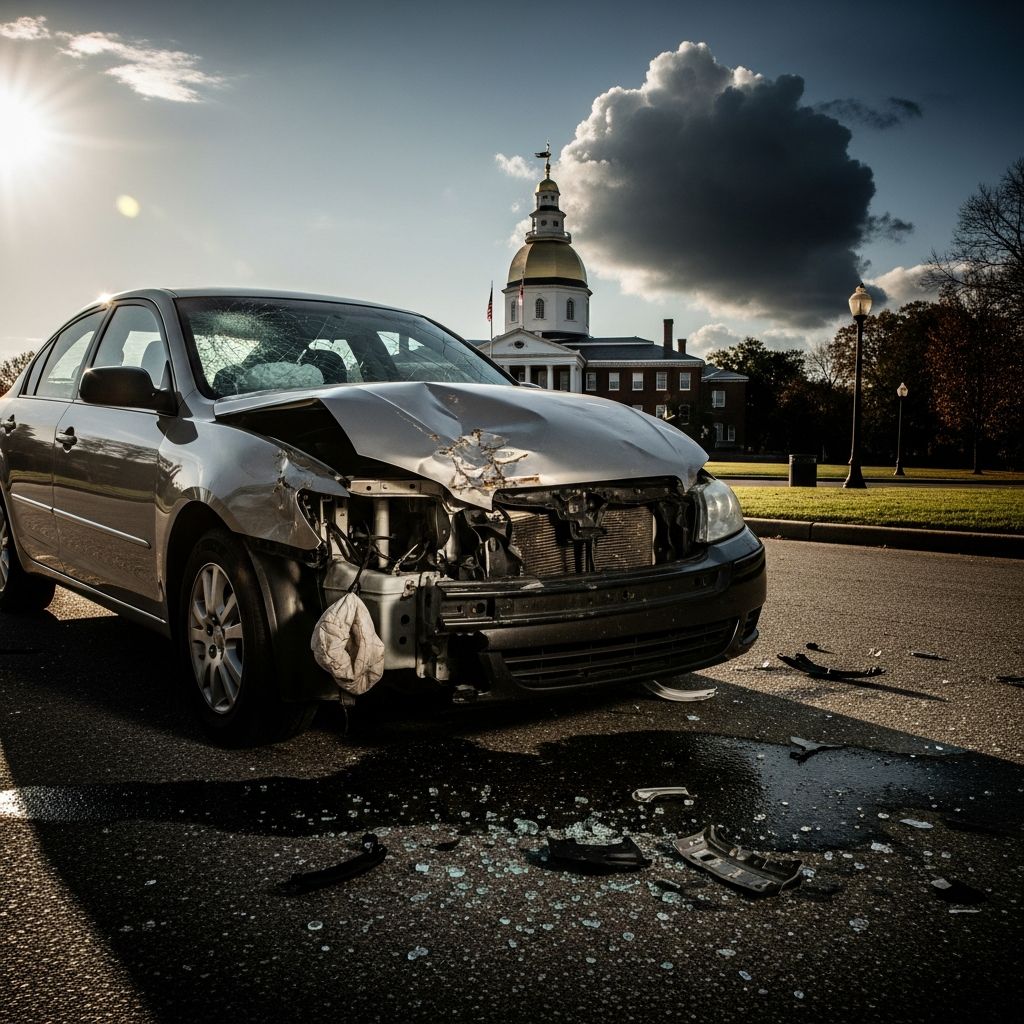
Maryland’s roadways see thousands of collisions annually, making it crucial for drivers, passengers, and pedestrians to understand state-specific rules governing these incidents. This guide explores key legal frameworks, from immediate post-crash actions to long-term claim processes, incorporating recent 2025-2026 legislative updates that influence fault assignment and victim rights.
Immediate Actions Following a Collision
Right after a crash, Maryland drivers must prioritize safety and compliance to avoid penalties. First, ensure all parties are safe and call emergency services if injuries are apparent or vehicles block traffic. State law demands stopping at the scene, exchanging details like names, addresses, driver’s license numbers, vehicle registration, and insurance information with others involved.
If the incident causes injury, death, property damage exceeding $1,000, or involves a potentially impaired driver, report it immediately to law enforcement. A police report becomes vital evidence for insurance claims and liability disputes, detailing scene conditions, witness statements, and initial fault assessments.
- Check for injuries and provide aid without admitting fault.
- Move vehicles if safe and not blocking emergency access.
- Document the scene with photos of damage, positions, and road conditions.
- Avoid discussing fault with insurers until consulting an attorney.
Failure to comply, such as fleeing the scene, constitutes a hit-and-run, punishable by fines up to $5,000, license suspension, or jail time, escalating if injuries or fatalities occur.
Mandatory Insurance Coverage Requirements
All Maryland motorists must maintain minimum liability insurance to protect against damages they cause. These limits, unchanged in core structure but under scrutiny amid 2026 reforms, are:
| Coverage Type | Minimum Limit |
|---|---|
| Bodily Injury (per person) | $30,000 |
| Bodily Injury (per accident, multiple persons) | $60,000 |
| Property Damage | $15,000 |
These thresholds cover medical bills, lost wages, and repairs for others but often fall short for serious crashes, prompting many to purchase higher limits or additional policies like uninsured motorist coverage. Driving without proof of insurance risks fines from $1,000 to $3,000, vehicle towing, and license points.
In 2026, ongoing debates may lead to adjustments, but current mandates remain firm. Victims without adequate coverage from at-fault parties can pursue personal assets or underinsured motorist claims if they carry such protection.
Determining Fault: The Contributory Negligence Doctrine
Maryland adheres to pure contributory negligence, a strict rule barring recovery if the injured party shares any fault, even 1%. This positions the state among a minority—only four others follow suit—making claims high-stakes.
Proving the other driver’s sole negligence is essential. Courts examine evidence like traffic camera footage, witness accounts, and expert reconstructions. The 2013 Coleman v. Soccer Association of Columbia decision by Maryland’s highest court upheld this doctrine, rejecting shifts to comparative fault where damages reduce proportionally to blame.
This rule profoundly impacts urban areas like Baltimore, where multi-vehicle pileups or ambiguous signals often assign partial fault. Victims must demonstrate:
- The defendant owed a duty of care (e.g., obeying speed limits).
- Breach of that duty occurred.
- The breach directly caused the injuries.
- Quantifiable damages exist (medical costs, pain, lost income).
Negligence per se applies when violations of Maryland’s Transportation Article Title 21 (rules of the road) prove automatic liability, streamlining cases.
Time Limits for Filing Claims
The statute of limitations sets a three-year window from the accident date to file personal injury lawsuits, per Md. Courts and Judicial Proceedings § 5-101. Missing this deadline results in automatic dismissal, regardless of case strength.
For property damage, the limit is also three years, but wrongful death claims allow two years from death. Discovery rules may extend timelines if injuries manifest later, but prompt action is advised to preserve evidence like vehicle black boxes.
Recent Legislative Changes Impacting Road Safety
Maryland enacted significant updates in 2025, effective into 2026, targeting reckless behaviors and accident response. Key reforms include:
- Expanded reckless driving definitions: Speeds 30+ mph over limits, street racing, or aggressive maneuvers like lane splitting by non-motorcycles now carry harsher penalties, including license revocation and fines up to $1,000.
- Mandatory testing for impaired driving in fatal or life-threatening crashes: SB0110 requires breath/blood tests for involved parties.
- Towing notifications: Operators must alert the state when impounding vehicles post-crash, aiding owners in recovery.
These aim to reduce collisions—Maryland reported over 100,000 annually—and clarify liability in claims. Violations now bolster negligence arguments under contributory rules.
Compensation Available to Victims
Successful claimants recover economic damages (bills, repairs, wages) and non-economic (pain, emotional distress). No caps apply in standard cases, but contributory negligence blocks all if fault is shared.
Wrongful death suits, under Md. Courts and Judicial Proceedings § 3-904, let eligible survivors (spouse, children, parents) seek losses like funeral costs and support. Pedestrians and cyclists benefit from heightened driver duties.
Insurance negotiations often precede suits; adjusters scrutinize for contributory fault. Legal representation maximizes settlements, especially against insurers minimizing payouts.
Special Considerations for Vulnerable Road Users
Pedestrians, bicyclists, and motorcyclists face elevated risks. Drivers must yield to crosswalks and maintain safe distances. 2026 laws strengthen protections via stricter helmet/speed enforcement, aiding fault proofs.
In multi-party crashes, joint liability applies if multiple parties negligently contribute, though victims still need zero personal fault.
Frequently Asked Questions
What should I do immediately after a Maryland car accident?
Stop, check for injuries, exchange info, call police if needed, and document everything without admitting fault.
Does Maryland use comparative or contributory negligence?
Contributory: Any victim fault bars recovery.
What are Maryland’s minimum auto insurance limits?
$30k/$60k bodily injury, $15k property damage.
How long do I have to sue after a crash?
Three years for personal injury.
Have 2026 laws changed car accident rules?
Yes, expanded reckless driving penalties and testing requirements enhance safety and liability clarity.
Navigating Claims with Professional Help
Given complexities like contributory negligence and evolving laws, consulting attorneys experienced in Maryland torts is wise. They handle evidence collection, insurer dealings, and litigation to secure fair outcomes.
This 2026 guide equips you with foundational knowledge, but laws evolve—verify with official sources or counsel for case-specific advice.
References
- Maryland Car Accident Laws — Serafini Law. 2025. https://www.lawserafini.com/car-accidents/maryland-car-accident-laws
- Maryland Car Accident Laws — Gilman & Bedigian. 2025. https://www.gilmanbedigian.com/maryland-car-accident-laws/
- Maryland Car Accident Laws 2025: How New Rules Impact Baltimore Drivers — SG Legal Group. 2025. https://www.sglegalgroup.com/blog/maryland-car-accident-laws-2025-how-new-rules-impact-baltimore-drivers
- Legislation – SB0110 — Maryland General Assembly. 2026-01-14. https://mgaleg.maryland.gov/mgawebsite/Legislation/Details/sb0110?ys=2026RS
- New laws in Maryland on October 1st — WYPR. 2025-09-30. https://www.wypr.org/wypr-news/2025-09-30/new-laws-in-maryland-on-october-1st
Similar Articles








Read full bio of Sneha Tete


