
Maryland Burial and Cremation Regulations
Comprehensive guide to Maryland's rules on burial, cremation, permits, and disposition of remains for families navigating end-of-life arrangements.
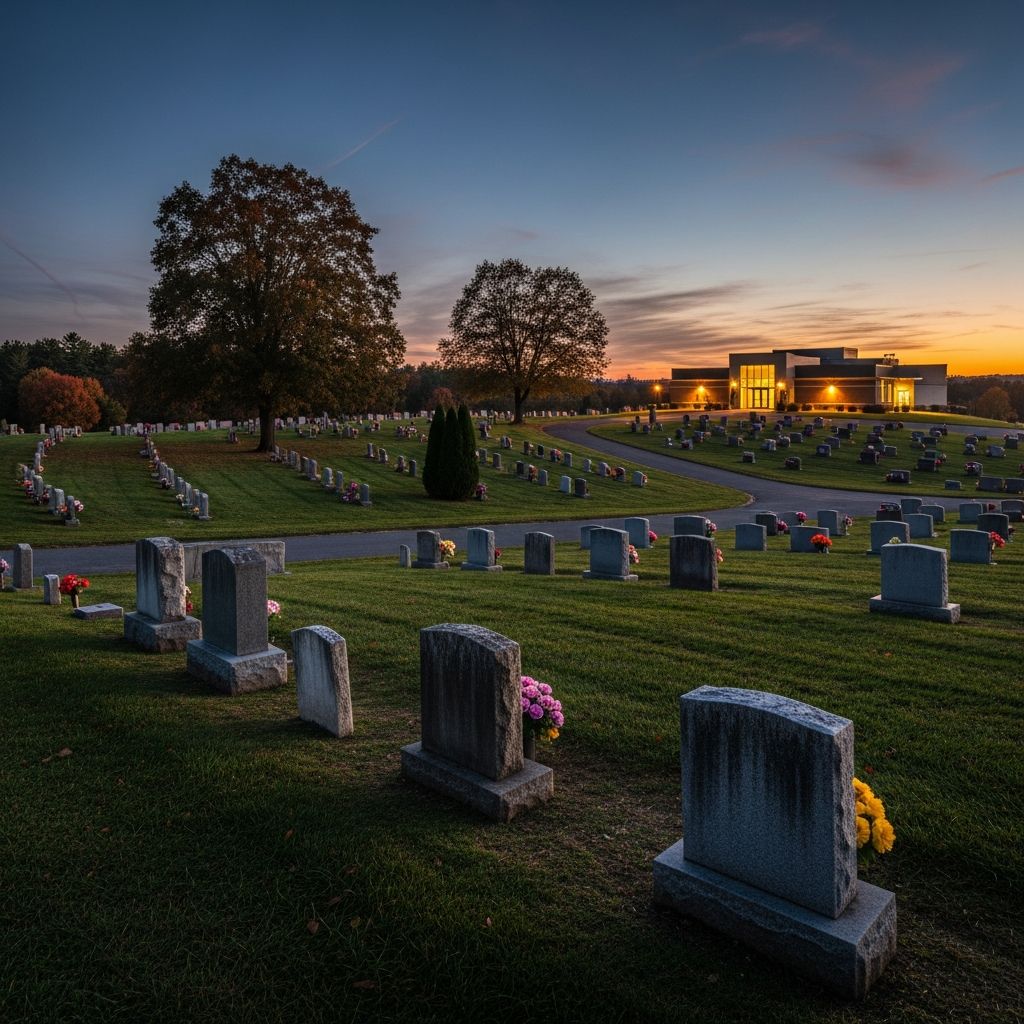
Maryland maintains specific legal frameworks governing the handling, burial, and cremation of human remains to ensure public health, respect for the deceased, and orderly disposition processes. These regulations balance family choices with safety standards, drawing from state health codes and federal protections.
Understanding Legal Authority for Disposition
The right to decide on final arrangements falls to designated individuals under Maryland law. Typically, the surviving spouse holds primary authority, followed by adult children, parents, or siblings in a defined order of priority. If no next of kin is available, a public administrator or court may intervene. This hierarchy prevents disputes and ensures prompt handling.
Authorizing agents must provide written consent using approved forms that detail the deceased’s identity, death date, agent relationship, and explicit permission for cremation or burial. Forms also require affirmations that no pacemakers, defibrillators, or recent radiological implants are present, as these pose risks during processing.
Key Requirements for Cremation Procedures
Cremation in Maryland demands strict adherence to timelines and documentation. Facilities cannot proceed without body identification by next of kin, an agent, or medical examiner. A minimum 12-hour waiting period from the time of death must be documented before cremation begins, promoting verification and cooling.
- Identification confirmation via visual or documentary means.
- Approved cremation authorization form signed by the agent.
- Burial transit permit and death certificate.
- Verification of removed medical devices to avoid explosions or damage.
Crematories must maintain records including receipts, cremation logs, and return certificates for cremated remains. Human remains cannot be held for unpaid fees, ensuring ethical practices.
Cremation Containers and Facility Standards
State law mandates rigid, combustible, stackable, and leak-proof containers for cremation, but does not require caskets. Crematories may enforce their own container policies, yet federal rules prohibit mandating purchases from them—families can supply alternatives like cardboard or fiberboard.
| Container Type | Legal Requirement | Notes |
|---|---|---|
| Casket | Not required | Cemeteries or crematories may specify; alternatives accepted. |
| Alternative Container | Allowed (wood, fiberboard) | Must be combustible and rigid per Md. Code Health-Gen. § 5-505. |
| Rigid Combustible | Required | No leakage; stackable for storage. |
Facilities require sinks with hot/cold water, floor cleaning equipment, and safety retrofits on cremators. No portable fans near equipment, and stacks must clear roofs by 6 inches for ventilation.
Burial Options and Cemetery Rules
Burial can occur in cemeteries or private property without a state-mandated casket, though cemeteries often impose container rules for ground stability. Embalming is optional unless delays exceed a few days or transportation crosses state lines.
Private land burials need local zoning approval and health department oversight to avoid groundwater contamination. Cemeteries must accept family-provided caskets and disclose policies upfront.
Transportation and Permit Essentials
Moving remains requires a burial transit permit, obtainable from local registrars after death certification. This ensures chain-of-custody and prevents unauthorized transport.
- Original permit accompanies the body.
- Leak-proof containers mandatory.
- Documentation for cross-state movement includes additional federal forms.
Funeral homes or crematories handle most logistics, but individuals must comply with these for home funerals.
Handling Cremated Remains (Cremains)
Post-cremation, remains must be processed into uniform particles and returned promptly in urns or containers selected by the agent. Scattering is permitted on private property with owner consent, or at sea beyond three miles from shore. Public lands generally prohibit scattering without permits.
Unclaimed cremains held over 90 days trigger notifications to veterans’ organizations. If identified as veterans or dependents, they qualify for state cemetery plots or Department of Veterans Affairs disposition.
Embalming, Autopsies, and Health Considerations
Embalming is not legally required for immediate services but recommended for viewings or delays. Autopsies, ordered by medical examiners in suspicious deaths, delay cremation until released.
Crematories verify no recent radiation therapy (within 5 days) to mitigate hazards.
Costs, Consumer Rights, and Planning Ahead
Families shop providers, as no casket sales mandates exist. Pre-planning via trusts or directives specifies wishes, easing burdens. Maryland’s Funeral Directors Association offers resources for compliant arrangements.
| Service | Typical Legal Notes |
|---|---|
| Direct Cremation | No viewing; simplest, lowest cost option. |
| Full Service Burial | Optional embalming; cemetery rules apply. |
| Cremation with Memorial | Requires authorization; ashes disposition flexible. |
Frequently Asked Questions (FAQs)
Who can authorize cremation in Maryland?
The next of kin or designated agent, using an approved form confirming identity and no objections.
Is there a waiting period before cremation?
Yes, at least 12 hours post-death, documented by the crematory.
Can I scatter ashes anywhere?
On private land with permission or at sea 3+ miles offshore; check local rules for public areas.
Does Maryland require caskets for burial?
No state requirement, but cemeteries may; alternatives accepted.
What happens to unclaimed cremains?
After 90 days, offered to veterans’ groups; then to VA if applicable.
Can crematories charge to hold remains?
No, cannot hold for unpaid fees.
Recent Updates and Compliance Tips
As of 2024-2026, regulations emphasize safety devices and veteran protocols. Consult the Maryland Department of Health for latest forms. Families should document wishes in advance directives to align with hierarchy rules.
Violations risk fines or license revocation, underscoring professional oversight.
References
- Arranging a Funeral or Cremation Service in Maryland — US Funerals. 2024. https://www.us-funerals.com/funeral-guide/funeral-plan-maryland/
- Md. Code Regs. 09.34.08.07 – Cremation Authorization — Cornell Law School (Maryland Regulations). 2024. https://www.law.cornell.edu/regulations/maryland/COMAR-09-34-08-07
- Crematory Regulations — Maryland Department of Health. 2024. https://health.maryland.gov/bom/documents/crematoryregs.pdf
- Maryland Laws About Cremation And Burial — Tobin O’Connor. 2024. https://www.tobinoconnor.com/maryland-laws-about-cremation-and-burial/
- Burial and Cremation Laws in Maryland — Nolo. 2024. https://www.nolo.com/legal-encyclopedia/burial-cremation-laws-maryland.html
- Maryland Health Occupations Code Section 7-406 — Justia (Maryland Statutes). 2024. https://law.justia.com/codes/maryland/health-occupations/title-7/subtitle-4/section-7-406/
- Cremation Laws in Maryland (2026) — Funeral.com. 2026. https://funeral.com/blogs/the-journal/cremation-laws-in-maryland-2026-waiting-periods-permits-cremation-authorization-next-of-kin-order
Similar Articles








Read full bio of medha deb


