
MLK’s Enduring Fight for Workers’ Rights
Discover how Dr. Martin Luther King Jr. championed labor unions, fair wages, and economic justice alongside civil rights for all workers.
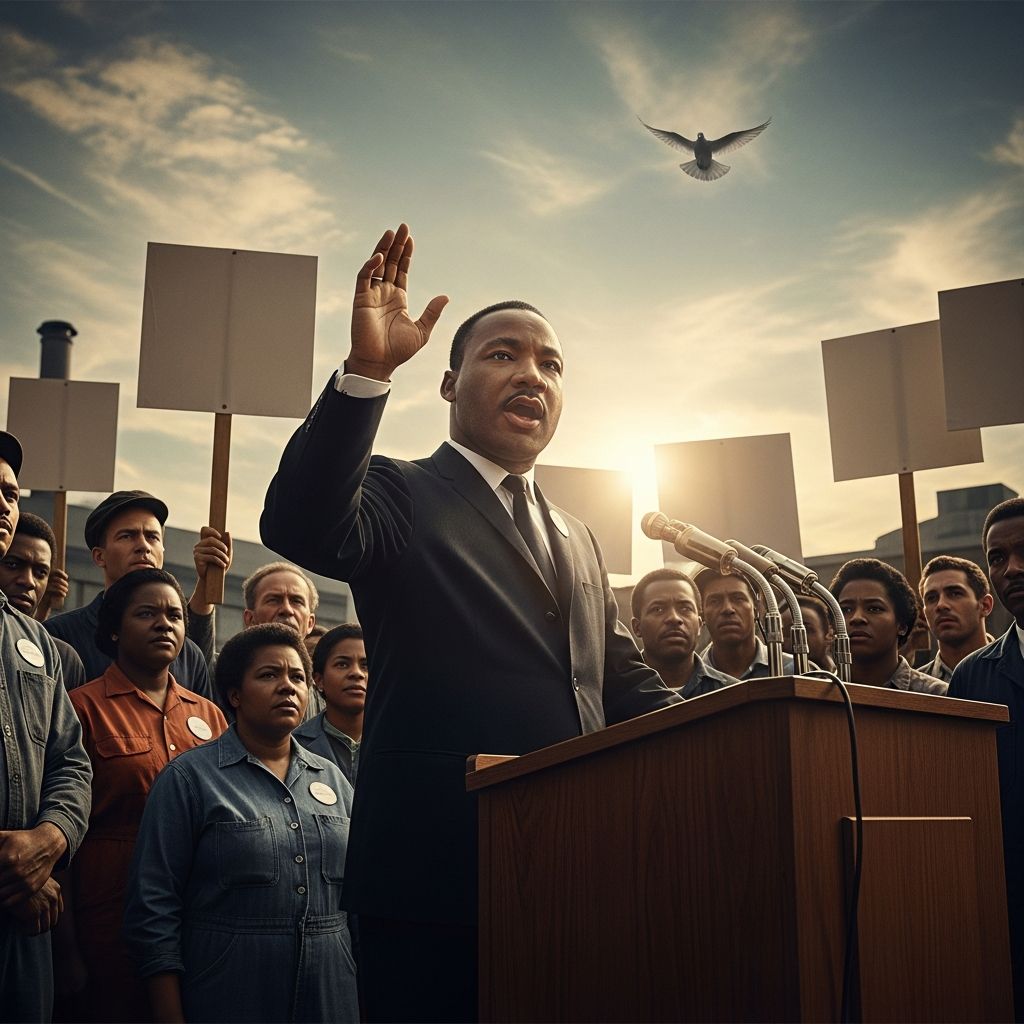
Dr. Martin Luther King Jr. is widely celebrated for his leadership in the civil rights movement, but his commitment to workers’ rights was equally profound. He viewed economic justice as inseparable from racial equality, arguing that true freedom required fair wages, safe conditions, and the power of collective bargaining. King’s advocacy bridged these struggles, empowering generations of laborers.
The Intersection of Civil Rights and Labor Power
King firmly believed that the battles for civil rights and labor rights were intertwined. He often highlighted how opponents of racial justice frequently opposed unions as well, creating a united front against progress. In speeches, he described labor-haters as dual threats, spewing anti-Negro rhetoric from one side and anti-labor propaganda from the other. This perspective stemmed from his observation that economic empowerment was essential for marginalized communities to achieve full equality.
During the 1963 March on Washington for Jobs and Freedom, King’s iconic “I Have a Dream” speech underscored demands for a universal minimum wage of $2, alongside ending discrimination. This event, organized with significant union involvement, demonstrated his vision of holistic justice. Unions reciprocated by funding civil rights initiatives, supporting sit-ins, and aiding the march, forging a powerful alliance.
King’s Critique of Anti-Union Measures
King was a vocal opponent of so-called “right to work” laws, labeling them deceptive tools designed to undermine collective bargaining. He warned that these laws lowered wages, reduced job opportunities, and eroded civil rights protections wherever implemented. Instead of fostering freedom, they robbed workers of the ability to negotiate better conditions collectively.
His stance drew from historical lessons of the 1930s, when the labor movement pulled the nation from economic despair. Unions drove reforms like unemployment insurance, old-age pensions, and livable wages, overcoming resistance from industry leaders. King credited this era’s union wave with securing not just labor gains but societal progress, transforming survival into tolerable living standards.
Memphis Sanitation Strike: A Defining Moment
In early 1968, King’s final campaign centered on the Memphis sanitation workers’ strike, involving 1,300 mostly Black workers protesting low pay, unsafe conditions, and abusive supervision. Many worked 60-hour weeks yet relied on welfare, highlighting profound poverty amid employment.
King arrived in Memphis to rally support, addressing over 10,000 people on March 18. He proclaimed, “All labor has dignity,” emphasizing that the fight extended beyond wages to recognition of union rights and dues collection. He urged unity, stating, “We can get more organized together than we can apart,” drawing on examples like the United Auto Workers compelling General Motors to concede.
The strikers sought collective bargaining rights, invoking constitutional protections under the Thirteenth and First Amendments against indentured servitude-like conditions. King’s involvement escalated when he called for a general strike if demands were unmet, reinforcing his belief that power yields only to persistent struggle. Tragically, he was assassinated on April 4, 1968, while supporting the cause, but the strike succeeded shortly after, securing union recognition.
Early Influences and Union Solidarity
King’s labor advocacy began early, influenced by events like the Scripto Strikes, where Black women protesters highlighted the need to merge racial and economic fights. He urged unions to combat internal discrimination, arguing it weakened their collective strength and hindered broader justice goals. In a 1961 AFL-CIO address, he reinforced natural alliances between Black workers and labor, as unions pioneered anti-poverty efforts.
- Key Union Supports: Financial donations to civil rights groups.
- Assistance in sit-ins and freedom rides.
- Organizational help for the 1963 March on Washington.
King praised organized labor as a potent force against segregation and discrimination, capable of uniting with people of goodwill for human dignity.
Broader Vision for Economic Justice
Beyond specific strikes, King critiqued corporate greed and exploitation, linking them to inequality and diminished worker dignity. He advocated for fair wages, just conditions, and respect for all labor forms, seeing these as foundational to an equitable society. In Memphis, he noted that most poor Americans worked daily yet earned too little for economic participation.
His Poor People’s Campaign aimed to address poverty through demands for minimum wage hikes, unemployment insurance, and more jobs, viewing these as extensions of civil rights. King organized strikes and boycotts against discriminatory employers denying fair pay or hires to African Americans.
| Era | Key Labor Reform | King’s Role/Impact |
|---|---|---|
| 1930s | Unemployment insurance, pensions | Cited as union-driven progress against industry resistance |
| 1961 | AFL-CIO support | Advocated anti-discrimination in unions |
| 1963 | March on Washington | Pushed $2 minimum wage demand |
| 1968 | Memphis Strike | Led rallies for union recognition |
Legacy in Today’s Labor Landscape
King’s principles remain vital amid ongoing debates over wages, union busting, and worker protections. His call for solidarity echoes in modern fights against low-pay jobs and unsafe workplaces. By framing all labor as dignified, he inspired movements recognizing workers’ autonomy and empowerment.
Today, as income inequality persists, King’s warnings about intertwined injustices resonate. His support for collective action challenges efforts to dismantle bargaining rights, much like in Memphis or against “right to work” laws. Unions continue drawing from his playbook, uniting diverse workers for shared gains.
King’s economic focus extended his civil rights work, proving that justice requires addressing poverty’s roots. His final words in Memphis urged escalation for victory, a timeless lesson in persistence.
Frequently Asked Questions
Why did Martin Luther King Jr. support labor unions?
King saw unions as essential for economic justice, improving wages and conditions while combating discrimination. He believed they transformed despair into progress, especially for marginalized workers.
What was the Memphis sanitation strike about?
Workers protested low wages, unsafe conditions, and lack of union recognition. King supported their right to collective bargaining, declaring all labor has dignity.
How did King view “right to work” laws?
He called them fraudulent, aimed at destroying unions and reducing wages, job opportunities, and civil rights.
Did King link civil rights to economic issues?
Yes, he argued racial equality required economic empowerment, with fights for both inseparable.
What is King’s most famous labor-related quote?
“All labor has dignity,” said during the Memphis strike, emphasizing respect for every worker’s contribution.
Conclusion: Honoring King’s Dual Legacy
Dr. King’s work reminds us that civil rights without labor rights leaves injustices intact. Workers today owe much of their protections to his vision of united struggle. By championing unions and dignity, he built a foundation for ongoing progress.
References
- Martin Luther King Jr. Championed Civil Rights and Unions — AFL-CIO. 2018-04-02. https://aflcio.org/2018/4/2/martin-luther-king-jr-championed-civil-rights-and-unions
- Remembering Martin Luther King, Jr. as a Labor Leader — CLASP. N/A. https://www.clasp.org/blog/remembering-martin-luther-king-jr-as-a-labor-leader-and-champion-of-working-people-in-the-civil-rights-movement/
- Honoring Martin Luther King Jr. and the Labor Movement — RALIANCE. N/A. https://www.raliance.org/honoring-martin-luther-king-jr-and-the-labor-movement/
- Martin Luther King and Union Rights — PSC CUNY. 2011-04. https://psc-cuny.org/clarion/2011/april/martin-luther-king-and-union-rights/
- Dr. Martin Luther King, Jr. on Labor — AFSCME. N/A. https://www.afscme.org/about/history/mlk/dr-martin-luther-king-jr-on-labor
- Honoring the Legacy of Dr. Martin Luther King Jr. — U.S. Department of Labor OFCCP. N/A. https://content.govdelivery.com/accounts/USDOLOFCCP/bulletins/3831e9a
Similar Articles








Read full bio of Sneha Tete


