
Marijuana Possession Laws Across U.S. States
A comprehensive look at how marijuana possession is treated in each U.S. state and territory.
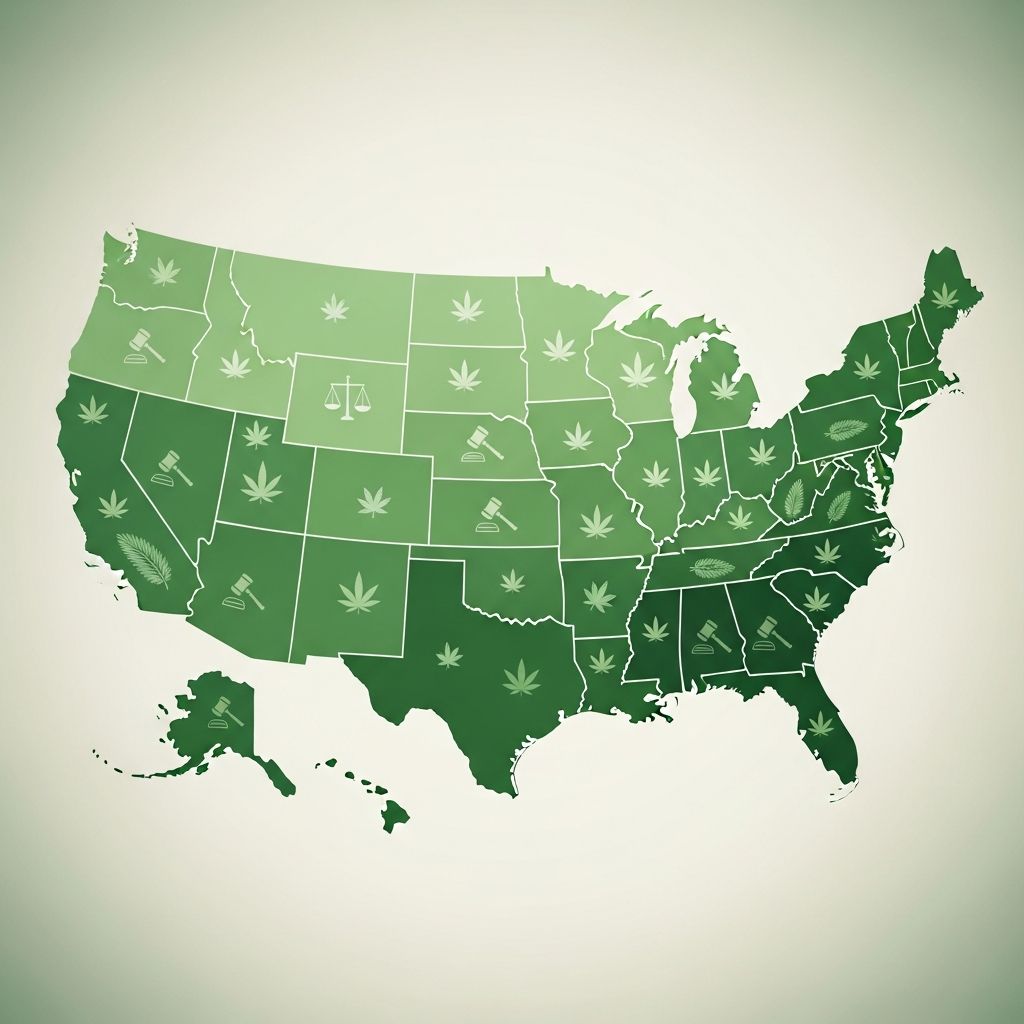
Understanding the Patchwork of Marijuana Possession Rules in the U.S.
The legal status of marijuana possession in the United States is a complex and constantly shifting landscape. While federal law still classifies cannabis as a Schedule I controlled substance, individual states have taken dramatically different approaches, ranging from full legalization to strict criminal penalties. For residents, travelers, and employers, understanding these differences is essential to avoid legal trouble and make informed decisions.
How Federal and State Laws Interact
Under the Controlled Substances Act, marijuana remains illegal at the federal level, regardless of state policy. This creates a legal gray area: someone can be fully compliant with state law while still technically violating federal law. In practice, federal enforcement has largely focused on large-scale trafficking and interstate distribution, not personal possession in states where it is legal. However, this does not eliminate all risk, especially on federal property, in federal workplaces, or when crossing state lines.
Categories of State Marijuana Policies
States generally fall into one of several broad categories when it comes to marijuana possession:
- Recreational (Adult-Use) Legal: Adults 21 and older may possess limited amounts of cannabis for non-medical use.
- Medical-Only Legal: Only patients with qualifying conditions may legally possess cannabis, usually through a regulated program.
- Decriminalized: Possession of small amounts is treated as a civil or minor offense, not a serious crime, but not fully legal.
- Illegal: Possession remains a criminal offense, often a misdemeanor or felony depending on amount and circumstances.
States Where Recreational Marijuana Is Legal
As of mid-2025, a growing number of states allow adults 21 and older to possess and use marijuana for recreational purposes. These states typically set specific possession limits and allow regulated sales through licensed dispensaries.
Typical Recreational Possession Limits
In most recreational states, adults may legally possess:
- Up to 1 ounce (28 grams) of dried flower in public.
- Higher amounts at home (often 2–3 ounces).
- Small amounts of concentrates (usually 5–15 grams).
- Home cultivation of a limited number of plants (often 3–6 mature plants per adult, with household caps).
Examples of Recreational States
States like California, Colorado, Oregon, Washington, Illinois, Michigan, and New Jersey have fully legalized recreational marijuana. In these jurisdictions:
- Adults can buy cannabis from licensed retailers.
- Personal possession within state limits is not a crime.
- Employers and landlords may still impose their own rules.
- Driving under the influence of marijuana remains illegal.
States With Medical Marijuana Only
Many states permit marijuana possession only for patients enrolled in a medical cannabis program. These programs require a qualifying condition and often a doctor’s recommendation or state-issued card.
Common Medical Possession Rules
In medical-only states, possession is typically limited to:
- A defined “30-day supply” as determined by a physician.
- Specific forms such as flower, edibles, oils, tinctures, or vaporizable products.
- Strict THC content limits in some cases (e.g., low-THC or CBD-dominant products).
- No home cultivation, or cultivation only under tightly regulated conditions.
States That Allow Medical but Not Recreational Use
Examples include Florida, Pennsylvania, New York, Ohio, and Arizona. In these states:
- Patients with qualifying conditions can legally possess and use cannabis.
- Recreational possession remains illegal and can result in criminal charges.
- Dispensaries are limited to serving registered patients.
- Out-of-state medical cards are generally not honored.
States That Have Decriminalized Marijuana
Decriminalization means that possession of small amounts is no longer a criminal offense, but it is not fully legal. Instead, it is treated as a civil infraction or minor violation, similar to a traffic ticket.
What Decriminalization Typically Means
In decriminalized states:
- Possession of small amounts (often under 1 ounce) results in a fine, not jail time.
- No criminal record for first-time or low-level possession.
- Higher amounts or repeat offenses may still be criminal.
- Public consumption may still be prohibited or penalized.
Examples of Decriminalized Jurisdictions
States like Virginia, Louisiana, and New Hampshire have decriminalized small amounts of marijuana. In these places:
- First-time possession of under a certain weight (e.g., 1 ounce) is a civil offense.
- Fines are usually modest (often under $250).
- Some states allow expungement of past low-level marijuana convictions.
- Home cultivation and sales remain illegal.
States Where Marijuana Possession Is Still Illegal
A number of states continue to treat marijuana possession as a criminal offense, even for small amounts. Penalties vary widely based on amount, prior record, and location.
Typical Penalties in Prohibition States
In states where marijuana remains illegal:
- Possession of small amounts is usually a misdemeanor.
- Possible penalties include fines, probation, community service, or short jail sentences.
- Larger amounts can trigger felony charges with more severe consequences.
- Some states have “zero tolerance” policies, especially for minors.
Examples of Strictly Prohibited States
States like Idaho, Kansas, and South Dakota maintain some of the strictest marijuana laws. In these jurisdictions:
- Any possession of marijuana is a crime, regardless of amount.
- Even trace amounts or paraphernalia can lead to charges.
- Medical marijuana programs are either very limited or nonexistent.
- Law enforcement may prioritize marijuana arrests more heavily than in other states.
Key Factors That Affect Possession Laws
Several factors influence how marijuana possession is treated in each state:
Amount in Possession
The quantity of cannabis is often the most important factor. States typically define different penalties based on weight:
- Very small amounts (e.g., under 10 grams): often decriminalized or treated as a minor offense.
- Small amounts (e.g., 1 ounce or less): legal in recreational states, misdemeanor in others.
- Larger amounts (e.g., multiple ounces or pounds): treated as evidence of intent to distribute, leading to felony charges.
Age and Prior Record
Age and criminal history significantly impact outcomes:
- Minors caught with marijuana may face juvenile court, mandatory education, or drug testing.
- First-time offenders often receive lighter penalties than repeat offenders.
- Some states offer diversion programs or expungement for eligible cases.
Location and Context
Where and how marijuana is possessed also matters:
- Possession on school grounds, in federal buildings, or near children often carries enhanced penalties.
- Public consumption is usually prohibited, even in recreational states.
- Driving with marijuana in the vehicle or under the influence is a serious offense.
Home Cultivation Rules by State
Whether you can grow marijuana at home depends entirely on state law:
States That Allow Home Cultivation
In many recreational and some medical states, adults may grow a limited number of plants:
- Typical limits: 3–6 mature plants per adult, with a household cap (e.g., 12 plants).
- Plants must usually be kept in a secure, locked area not visible to the public.
- Local jurisdictions (cities, counties) may impose additional restrictions or bans.
States That Prohibit Home Cultivation
Some states that allow medical or recreational marijuana still ban home growing:
- Patients must obtain cannabis only from licensed dispensaries.
- Any cultivation, even for personal use, can result in criminal charges.
- These rules are often justified by concerns about diversion, safety, or regulation.
Traveling With Marijuana: What You Need to Know
Even if marijuana is legal in your home state, traveling with it can be risky:
Interstate Travel
- Moving marijuana across state lines is a federal crime, even between two legal states.
- Transporting cannabis into a state where it is illegal can result in serious charges.
- Law enforcement at borders, airports, and rest stops may still search and seize marijuana.
Domestic Air Travel
- The TSA does not actively search for marijuana, but if found, it must be reported to law enforcement.
- Passengers should assume that any marijuana in checked or carry-on bags is at risk.
- Travelers should research the laws of both departure and destination states carefully.
International Travel
- Bringing marijuana into or out of the U.S. is strictly prohibited and can lead to severe penalties.
- Many countries treat marijuana possession as a serious crime, including long prison sentences.
- Travelers should never assume that U.S. state laws apply abroad.
Employment and Housing Considerations
Legal possession under state law does not guarantee protection in all areas of life:
Employment Policies
- Employers can still require drug testing and may fire employees for marijuana use, even in legal states.
- Some states have limited protections for off-duty, legal use, but these vary widely.
- Safety-sensitive jobs (e.g., transportation, healthcare) often have stricter rules.
Housing and Landlords
- Private landlords can prohibit marijuana use and possession on their property.
- Public housing is federally funded and generally prohibits marijuana, even in legal states.
- Tenants should review lease agreements and local rules before using cannabis at home.
Frequently Asked Questions
Can I be arrested for marijuana possession in a legal state?
Yes, if you exceed possession limits, are under 21, are in a prohibited location (like a school), or are driving under the influence. Legalization does not mean unlimited or unrestricted use.
What happens if I’m caught with marijuana in a state where it’s illegal?
Possession of small amounts is usually a misdemeanor with possible fines, probation, or short jail time. Larger amounts can lead to felony charges. Penalties depend on the specific state and circumstances.
Do medical marijuana patients have more protection than recreational users?
In medical-only states, yes—only registered patients can legally possess cannabis. In recreational states, both medical and recreational users are protected within possession limits, but medical patients may have higher limits or additional rights.
Can I use marijuana on federal land in a legal state?
No. Federal land (national parks, forests, military bases, federal buildings) follows federal law, where marijuana remains illegal. Possession or use on federal property can result in federal charges.
Are there efforts to change federal marijuana laws?
Yes. There is ongoing debate in Congress about rescheduling or descheduling marijuana, legalizing it federally, and addressing banking, taxation, and criminal justice issues. However, as of now, federal law has not changed significantly.
Staying Informed and Compliant
Marijuana laws continue to evolve rapidly. To stay compliant:
- Check your state’s official health or public safety website for the most current possession limits and rules.
- Be aware of local ordinances, which can be stricter than state law.
- When traveling, research the laws of your destination and any states you will pass through.
- Consult a qualified attorney if you face charges or have complex legal questions about marijuana use.
References
- Legality of cannabis by U.S. jurisdiction — Wikipedia. Accessed 2025. https://en.wikipedia.org/wiki/Legality_of_cannabis_by_U.S._jurisdiction
- State Medical Cannabis Laws — National Conference of State Legislatures (NCSL). June 26, 2025. https://www.ncsl.org/health/state-medical-cannabis-laws
- Marijuana Legalization by State 2025 — Recovered.org. June 26, 2025. https://recovered.org/marijuana/marijuana-legalization-by-state
- Marijuana Laws by State for 2025 — CoverCannabis.com. 2025. https://covercannabis.com/blog/where-is-marijuana-legal/
- Map of State Marijuana Laws — Marijuana Policy Project (MPP). 2025. https://www.mpp.org/issues/legalization/map-of-state-marijuana-laws/
Similar Articles








Read full bio of Sneha Tete


