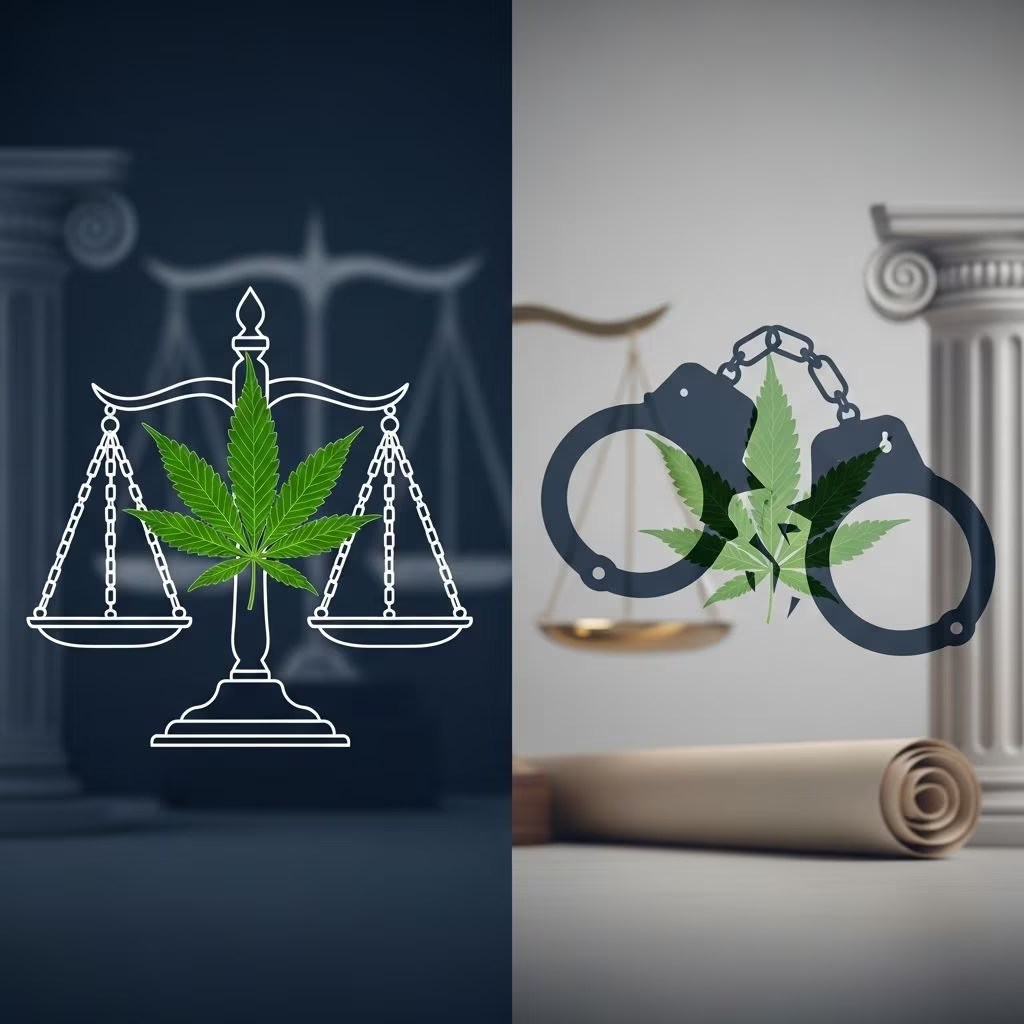
Marijuana policy in the United States has shifted dramatically over the last few decades. Many states have eased penalties or fully legalized cannabis, while federal law still treats it as a controlled substance. To understand your rights and potential criminal exposure, it is critical to distinguish between legalization and decriminalization, and to see how these concepts interact with federal and state law.
1. Key Concepts: Legalization, Decriminalization, and Prohibition
Although often used interchangeably, legalization, decriminalization, and prohibition describe very different legal regimes.
1.1 What Is Marijuana Legalization?
Legalization generally means that adults may possess and use marijuana under state law, subject to certain limits and regulations.
In most states that have legalized recreational cannabis:
- Adults over a specified age (commonly 21) may possess limited amounts for personal use.
- Licensed businesses may cultivate, process, and sell marijuana products under strict regulatory oversight.
- The state imposes taxes on marijuana sales and sets rules for packaging, labeling, advertising, and product testing.
However, legalization is not a free-for-all. Activities such as selling without a license, furnishing marijuana to minors, or driving under the influence remain criminal offenses.
1.2 What Is Marijuana Decriminalization?
Decriminalization typically means that the state reduces or removes criminal penalties for possessing small amounts of marijuana for personal use, often replacing them with civil fines.
Common features of decriminalization laws include:
- Possession under a certain threshold is treated as a civil infraction or low-level violation, not a criminal misdemeanor.
- Offenders may face a fine, mandatory education, or community service instead of jail time.
- Criminal penalties may still apply for larger quantities, distribution, or repeat offenses.
Importantly, decriminalization does not create a legal market for marijuana sales. Buying and selling cannabis usually remain criminal offenses.
1.3 What Does Prohibition Mean Today?
In states that maintain prohibition of marijuana, possession, distribution, and cultivation remain criminal acts under state law, although penalties have generally softened over time compared with earlier decades.
Even in prohibition states, some reforms—such as limited medical programs or reduced penalties—may coexist with otherwise strict laws.
2. Federal vs. State Law: How They Clash
Despite sweeping state-level changes, marijuana remains regulated under the federal Controlled Substances Act (CSA). Understanding the tension between federal and state law is essential.
2.1 Federal Classification of Marijuana
Under the CSA, marijuana has long been classified as a Schedule I substance—defined as having a high potential for abuse and no currently accepted medical use, with severe restrictions on research and medical access.
Following a request from the President in 2022, the U.S. Department of Health and Human Services recommended moving marijuana from Schedule I to Schedule III, concluding that it does have a currently accepted medical use. The Drug Enforcement Administration (DEA) proposed a rule in 2024 to reschedule marijuana, and as of early 2025, that process remains in progress.
2.2 Why State Legalization Does Not Equal Federal Legalization
When a state legalizes or decriminalizes marijuana, it changes how that state enforces its own criminal laws. It does not change federal law.
Key implications include:
- Federal authorities retain the power to enforce federal marijuana statutes, especially in cases involving large-scale trafficking or activity on federal land.
- Businesses that comply with state marijuana laws may still face federal restrictions on banking, taxation, and interstate commerce, although rescheduling could ease some of these burdens.
- Individuals working in or around marijuana businesses may experience collateral consequences under federal law, such as firearm or immigration restrictions.
3. How States Differ: Legal, Medical, and Decriminalized Models
Across the United States, no two states regulate marijuana in exactly the same way. The resulting patchwork can significantly affect potential criminal liability.
3.1 Recreational Legalization
Many states now allow adults to purchase and possess marijuana for non-medical use. According to data compiled in mid-2025, dozens of states permit recreational cannabis, generally with age restrictions, possession limits, and licensing systems for producers and retailers.
Within these states, common limits include:
- Maximum ounces of usable cannabis that an adult may possess in public.
- Caps on the number of plants an individual may cultivate at home.
- Separate categories and rules for concentrates, edibles, and infused products.
3.2 Medical Marijuana Only
Other states recognize marijuana solely for medical purposes. These laws typically:
- Require a qualifying medical condition and physician authorization.
- Limit products or THC content, and control access through patient registries and licensed dispensaries.
- Provide limited or no legal protection for recreational possession or use.
Some states have gradually expanded from low-THC or CBD-only programs to broader medical cannabis regimes, increasing patient access and permissible products over time.
3.3 Decriminalization Without Legal Sales
Several states that have not created legal retail markets have still decriminalized possession of small amounts of marijuana. In these jurisdictions:
- Minor possession may result in a citation or fine rather than arrest.
- Criminal charges may still be possible for repeat offenses or amounts above the decriminalized threshold.
- Commercial distribution and large-scale cultivation remain criminal acts.
3.4 Comparative Overview
| Policy Type | Personal Possession | Retail Sales | Typical Penalty for Small Amounts |
|---|---|---|---|
| Recreational Legalization | Allowed within limits for adults | Allowed through licensed businesses | No penalty if within legal limits |
| Medical-Only Legalization | Legal for registered patients | Restricted to medical dispensaries | Non-patients may face criminal charges |
| Decriminalization | Technically illegal but treated as civil infraction | Not legal; commercial activity remains criminal | Fines or non-criminal sanctions |
| Full Prohibition | Criminal offense | Criminal offense | Misdemeanor or felony, depending on quantity and conduct |
4. Criminal Consequences and Record Relief
Changes in marijuana law affect not only future conduct but also past convictions. Many reform efforts aim to reduce criminal penalties and provide a path to clear or seal criminal records for low-level marijuana offenses.
4.1 Reducing or Eliminating Criminal Penalties
Legalization and decriminalization primarily reshape the criminal justice response to marijuana. Some typical shifts include:
- Eliminating jail time for low-level possession.
- Converting some possession offenses from misdemeanors to civil infractions.
- Reclassifying or downgrading certain distribution and cultivation offenses.
4.2 Expungement and Record Sealing
Because marijuana enforcement historically fell disproportionately on low-income and minority communities, some laws now include mechanisms to expunge or seal prior convictions for eligible cannabis offenses.
Examples of record-relief provisions include:
- Automatic expungement of specified low-level marijuana offenses.
- Petition-based processes allowing individuals to request that courts clear or reclassify past convictions.
- Priority review for individuals whose offenses would not be crimes under current law.
At the federal level, proposed legislation such as the Marijuana Opportunity Reinvestment and Expungement (MORE) Act has emphasized expungement and social equity as core components of broader reform, although it has not yet been enacted into law.
5. Public Health, Safety, and Regulation
Legalization debates extend beyond criminal law. Policymakers must address public health, youth access, and impaired driving while designing marijuana regulations.
5.1 Potential Benefits of Legalization
Public health and policy researchers have identified several potential benefits associated with regulated cannabis markets:
- Shifting sales from illegal markets to regulated, taxed systems where product quality can be monitored.
- Reducing the number of people entering the criminal justice system for low-level possession.
- Generating state revenue that can be reinvested in health programs, education, and substance-use treatment.
5.2 Risks and Ongoing Concerns
At the same time, legalization raises important public health questions:
- Increased access may contribute to higher rates of cannabis use, including heavy or problematic use in some populations.
- Edibles and high-potency products may carry elevated risks of accidental ingestion and acute intoxication.
- Law enforcement and public health agencies must address driving under the influence of cannabis, for which measuring impairment is more complex than for alcohol.
Because scientific research has been constrained by federal scheduling, experts emphasize that evidence on long-term health impacts, especially among youth, continues to evolve.
6. Practical Implications: What These Laws Mean for You
Whether you face potential charges or simply want to understand your rights, it is important to consider how marijuana policies apply in everyday situations.
6.1 Everyday Scenarios
- Personal possession: In a legalized state, possession within the legal limit may be lawful under state law, while exceeding the limit or possessing on federal land could still lead to serious consequences.
- Traveling between states: Carrying marijuana across state lines can implicate federal law. Even if both states permit cannabis, interstate transport remains illegal under the CSA.
- Housing and employment: Landlords and employers may maintain policies restricting marijuana use, especially where federal funding or safety-sensitive positions are involved.
6.2 Why Local Legal Advice Matters
Because marijuana rules vary substantially by jurisdiction and often change, generic information cannot replace tailored legal counsel. Penalties, record-relief options, and procedural requirements differ widely from state to state, and even from county to county. If you are under investigation, charged with a crime, or considering entering the cannabis industry, speaking with a qualified attorney in your state is essential.
7. Frequently Asked Questions (FAQs)
Q1: If my state legalized marijuana, can I still be arrested?
Yes. Legalization usually comes with strict limits. You can still be arrested for possessing more than the legal amount, selling without a license, providing marijuana to minors, driving under the influence, or possessing cannabis on federal property. Federal law also continues to prohibit marijuana, regardless of state reforms.
Q2: Is decriminalization the same as legalization?
No. Decriminalization reduces or removes criminal penalties—often replacing them with civil fines—for small-scale possession, but it does not authorize legal sales or broader commercial activity. Legalization, in contrast, usually creates a regulated market for production and retail sales.
Q3: Can past marijuana convictions be cleared from my record?
In many states, yes, but the process varies. Some states provide automatic expungement of certain marijuana offenses, while others require individuals to petition the court. Eligibility often depends on the nature of the offense and whether it would still be illegal under current law.
Q4: How does federal rescheduling affect state marijuana laws?
If marijuana is moved from Schedule I to Schedule III, it will remain a controlled substance under federal law but subject to different regulatory and tax rules. State legalization frameworks would still control conduct under state law, but rescheduling may alter how federal agencies treat medical use, research, and state-compliant businesses.
Q5: Is marijuana safer now that it is legal in many places?
Legalization allows states to regulate product quality and access, which can reduce certain risks, such as contamination from unregulated markets. However, public health experts caution that legalization does not eliminate potential harms related to heavy use, youth exposure, or impaired driving, and ongoing research continues to clarify these risks.
References
- Cannabis Overview — National Conference of State Legislatures (NCSL). 2024-11-12. https://www.ncsl.org/civil-and-criminal-justice/cannabis-overview
- Federal Marijuana Rescheduling: Process and Impact — Drug Enforcement and Policy Center, Ohio State University Moritz College of Law. 2025-03-01. https://moritzlaw.osu.edu/faculty-and-research/drug-enforcement-and-policy-center/research-and-grants/policy-and-data-analyses/federal-marijuana-rescheduling
- The Evolution of Marijuana as a Controlled Substance and the Federal–State Policy Gap — Congressional Research Service. 2017-03-09. https://www.congress.gov/crs-product/R44782
- Legality of Cannabis by U.S. Jurisdiction — Compiled legal status summary (accessed 2025-06-21). https://en.wikipedia.org/wiki/Legality_of_cannabis_by_U.S._jurisdiction
- Risks and Benefits of Legalized Cannabis — Johns Hopkins Bloomberg School of Public Health. 2023-04-20. https://publichealth.jhu.edu/2023/risks-and-benefits-of-legalized-cannabis
- Recreational Cannabis Legalization: Potential Implications for Health Care Providers — Cleveland Clinic Journal of Medicine. 2025-07-01. https://www.ccjm.org/content/92/7/407