
Managing Profanity In Legal Proceedings: Expert Strategies
Essential strategies for attorneys facing profanity in courtrooms, ensuring professionalism amid challenging language.
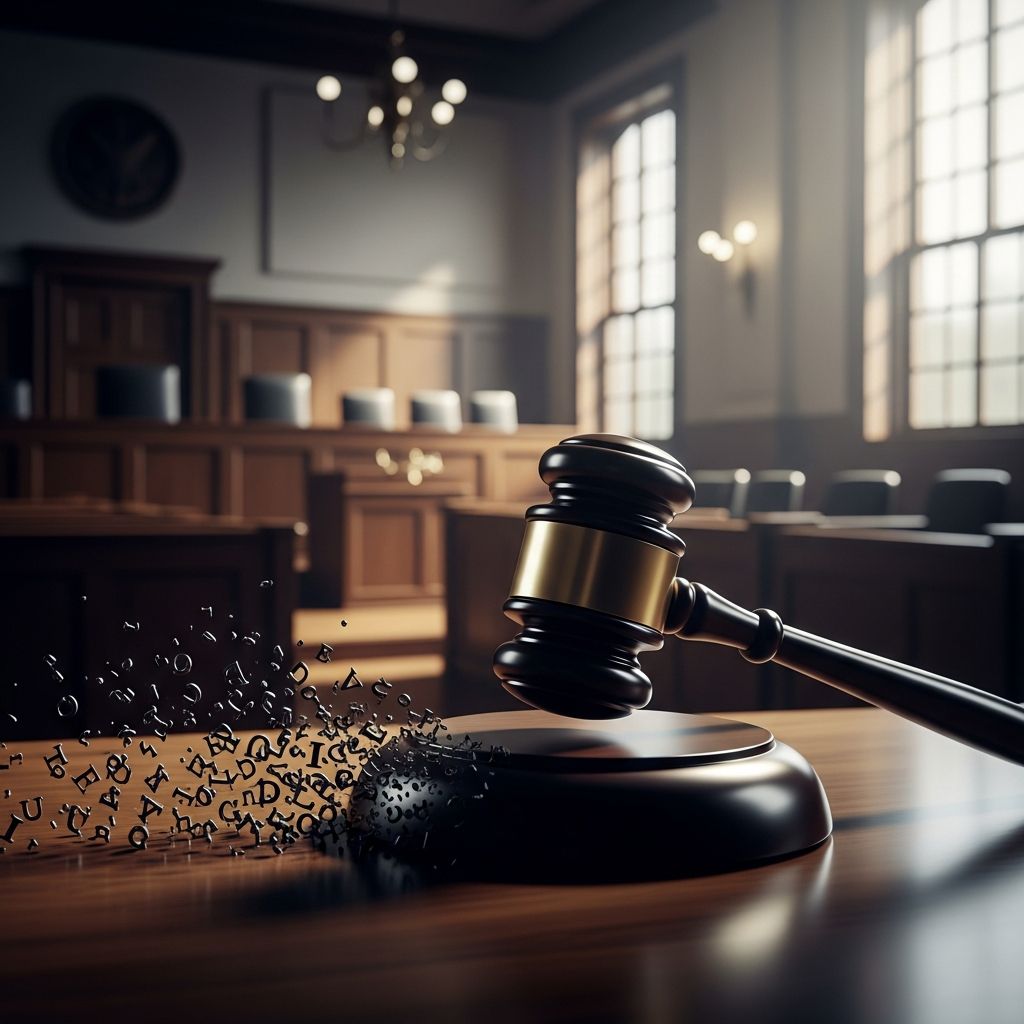
Profanity in courtrooms presents unique challenges for attorneys, judges, and litigants alike. While legal battles can evoke strong emotions, maintaining decorum is crucial for fair proceedings. This article provides actionable insights into recognizing, addressing, and strategically responding to offensive language during trials, hearings, and depositions.
Understanding the Role of Language in Court
Language shapes the atmosphere of any legal setting. Courts demand respect for the process, and deviations like cursing can disrupt proceedings or influence perceptions. Federal Rule of Evidence 403 allows judges to exclude evidence if its probative value is substantially outweighed by risks of prejudice, confusion, or undue delay, which can extend to inflammatory speech. State courts often mirror this with similar evidentiary standards.
Historically, U.S. courts have grappled with free speech limits inside the courthouse. The Supreme Court in Bridges v. California (1941) emphasized that courtroom speech must balance First Amendment rights with the need for orderly justice. Modern cases reinforce that while witnesses may testify candidly, gratuitous profanity risks contempt charges.
Common Scenarios Involving Offensive Speech
Profanity arises in various contexts, each requiring tailored responses:
- Witness Testimony: A witness recounting events might use strong language to convey authenticity, such as quoting a heated argument.
- Party Outbursts: Frustrated litigants, especially self-represented ones, may curse under stress.
- Attorney Statements: Rare but serious, lawyers slipping into vulgarity during arguments can damage credibility.
- Depositions: Less formal settings often see more relaxed language, but records preserve everything.
In criminal trials, defendants invoking the Fifth Amendment might still face profanity from victims or family. Civil cases, like personal injury disputes, frequently involve emotional testimony quoting profane exchanges.
Strategic Responses for Defense Counsel
Defense attorneys must protect client interests without escalating tensions. Key tactics include:
- Preemptive jury instructions: Request the court remind jurors that quoted language reflects events, not courtroom norms.
- Motion in limine: File beforehand to limit unnecessary profanity in evidence.
- Redirect examination: Gently rephrase witness statements to sanitize delivery without altering substance.
For instance, if a witness says, “He told me to f*** off,” counsel might ask, “What exact words did the individual use?” to place it on record clinically. This preserves testimony while minimizing repetition.
Prosecution Perspectives on Verbal Challenges
Prosecutors encounter profanity from defendants aiming to provoke mistrials. In high-profile cases, like those involving gang-related testimony, witnesses may use street vernacular. Strategies include:
- Seeking protective orders for vulnerable witnesses.
- Using leading questions to control narrative flow.
- Objecting to defense counsel’s inflammatory hypotheticals laced with profanity.
Maintaining composure signals authority to the jury, turning potential disruptions into opportunities to highlight opposing counsel’s tactics.
Judicial Authority Over Courtroom Language
Judges wield broad discretion under inherent powers and rules like Federal Rule of Criminal Procedure 42 for contempt. They can:
| Action | Purpose | Example |
|---|---|---|
| Verbal Admonition | Warn without halting proceedings | “Counsel, refrain from such language immediately.” |
| Sanctions | Penalize repeat offenders | Fines up to $1,000 or brief incarceration |
| Mistrial Declaration | Extreme remedy for incurable prejudice | Rare, post-United States v. Grinnell Bros. |
| Record Sealing | Protect sensitive testimony | Closed sessions for minors |
Appellate courts defer to trial judges on these matters, as seen in Illinois v. Allen (1970), upholding removal of disruptive defendants.
Impact on Jury Perception and Verdicts
Jurors exposed to profanity may view cases through emotional lenses. Studies from the American Psychological Association indicate that vulgar language heightens arousal, potentially biasing toward sympathy for the profane speaker if portrayed as authentic. Conversely, it can alienate if perceived as disrespectful.
Attorneys should gauge jury composition—urban panels may tolerate more than rural ones—and prepare voir dire questions like, “How do you react to strong language in testimony?”
Best Practices for Preventing Escalations
- Preparation: Coach witnesses on phrasing without coaching content.
- Objections: Use precise grounds: “Objection, Your Honor—irrelevant and prejudicial under Rule 403.”
- Sidebar Conferences: Request private discussions to strategize handling.
- Post-Incident Motions: Move for curative instructions immediately.
- Documentation: Ensure transcript captures context for appeals.
Proactive chambers conferences before trial can set ground rules, fostering mutual respect among counsel.
Ethical Considerations for Attorneys
ABA Model Rule 3.4(d) prohibits lawyers from intentionally disrupting evidence or witness examination. Using profanity to bait opponents violates this. Rule 3.5 demands respect for tribunal and opposing parties. Violations invite bar complaints, as in disciplinary cases where counsel’s cursing led to suspensions.
Self-represented litigants receive leeway but not immunity; judges often appoint standby counsel in complex cases to mitigate issues.
Case Studies: Lessons from Notable Trials
In the 2023 trial of a high-profile celebrity, a witness’s repeated expletives prompted a defense motion for mistrial, denied after judicial admonition. The jury acquitted, suggesting the language humanized the witness.
Contrastingly, a 2021 federal fraud case saw prosecution sanctions against a defendant for courtroom outbursts, bolstering the government’s orderly image.
These examples underscore timing and context’s role—profanity early risks tainting the pool; later, it may normalize.
Depositions and Alternative Dispute Settings
Outside trials, depositions allow more leeway under Federal Rule of Civil Procedure 30. However, videos amplify impact. Strategies include stipulations limiting profanity or using written questions. Arbitration and mediation demand even stricter self-control, as panels value civility.
Training and Professional Development
Law schools and bar associations offer trial advocacy programs simulating profanity scenarios. NITA workshops emphasize de-escalation techniques, drawing from psychology to reframe hostile language neutrally.
Frequently Asked Questions (FAQs)
What should I do if a witness curses repeatedly?
Object succinctly, request a break for coaching, or move to strike prejudicial portions. Avoid drawing attention unless necessary.
Can profanity lead to a contempt finding?
Yes, under Rule 42, if willful and disruptive. Judges assess intent and impact.
How does profanity affect appeals?
Rarely reversible unless it denies fair trial; transcripts are key.
Is profanity ever protected speech in court?
Limited by Cohen v. California (1971), but time/place/manner restrictions apply stringently indoors.
Should I warn clients about language use?
Absolutely—review decorum expectations pre-trial.
Future Trends in Courtroom Communication
Virtual hearings post-pandemic introduce new dynamics: muted mics prevent outbursts, but chat logs capture text profanity. AI transcription tools flag offensive language, aiding judges. As diversity grows, courts adapt to multicultural expressions of frustration.
Ultimately, mastering profanity management elevates advocacy, turning potential pitfalls into persuasive strengths. Attorneys who navigate these waters professionally enhance client outcomes and uphold justice’s integrity.
References
- Federal Rules of Evidence — United States Courts. 2023-12-01. https://www.uscourts.gov/rules-policies/current-rules-practice-procedure/federal-rules-evidence
- Illinois v. Allen, 397 U.S. 337 — Supreme Court of the United States. 1970-03-02. https://supreme.justia.com/cases/federal/us/397/337/
- Guidelines for Substantive Law Articles — Colorado Bar Association. 2022-01-15. https://www.cobar.org/Portals/COBAR/Repository/TCL/CL%20Guidelines%20for%20Substantive%20Law%20(Feature)%20Articles.pdf
- Writing An Article – Law Review Orientation — Northern Kentucky University Chase Law Library. 2024-05-10. https://chaselaw-nku.libguides.com/c.php?g=762235&p=5465494
- Federal Rules of Criminal Procedure — United States Courts. 2023-12-01. https://www.uscourts.gov/rules-policies/current-rules-practice-procedure/federal-rules-criminal-procedure
Similar Articles








Read full bio of Sneha Tete


