
Managing Neighbor Conflicts: Practical Pathways to Resolution
Navigate neighbor disputes with confidence using proven communication and mediation techniques.
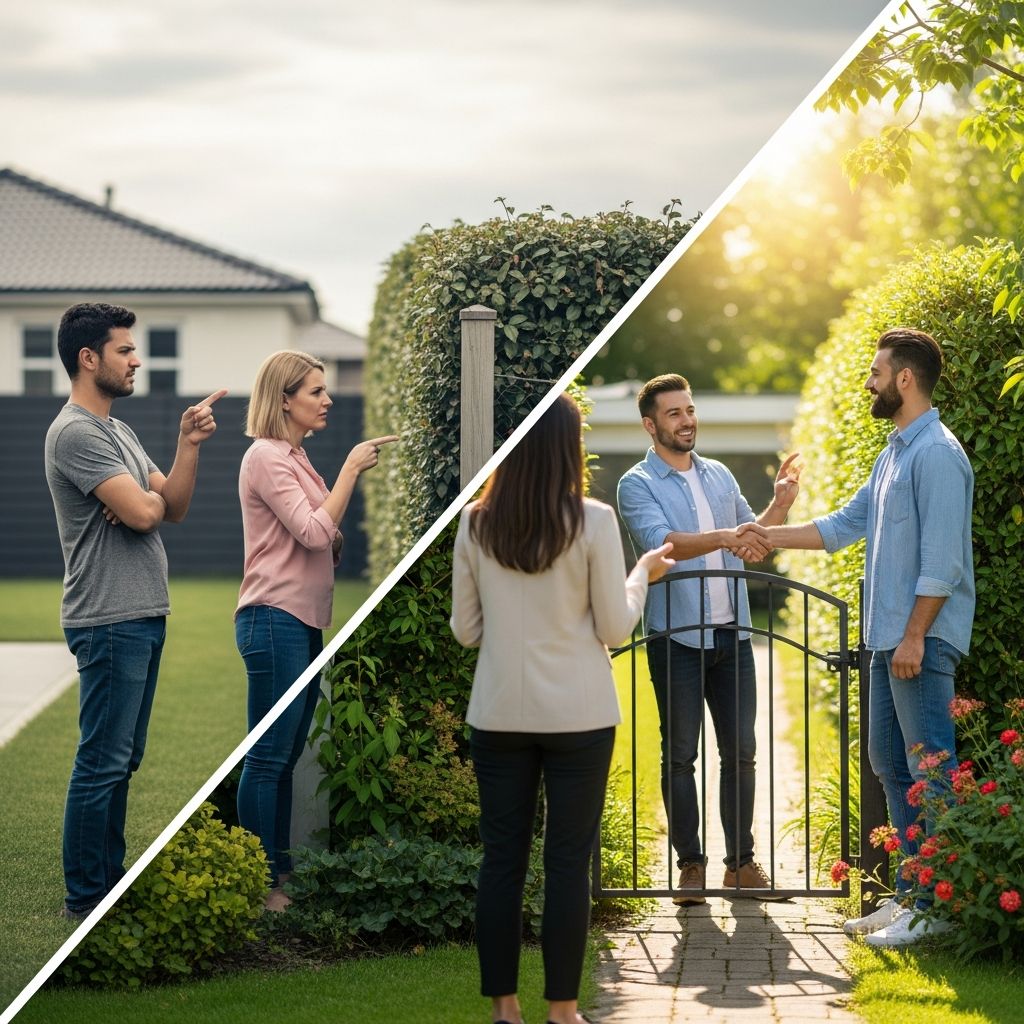
Living in close proximity to others inevitably creates opportunities for misunderstandings and disagreements. Whether the issue involves noise levels, property maintenance, shared resources, or boundary concerns, neighbor disputes can significantly impact quality of life and community cohesion. The good news is that most conflicts can be resolved effectively when approached with the right mindset and tools. Rather than allowing tensions to escalate into legal battles, proactive communication and structured resolution methods can transform potentially divisive situations into opportunities for understanding.
Understanding the True Cost of Unresolved Conflict
When neighbor disputes remain unaddressed, the consequences extend far beyond the immediate relationship between the two parties involved. Small irritations—such as occasional noise or unclear expectations about shared spaces—can grow into significant resentments that poison the entire neighborhood atmosphere. Research on community dynamics shows that unresolved conflicts erode trust among residents, reduce overall engagement in community activities, and can even negatively impact property values in residential areas.
Beyond these tangible effects, prolonged disputes take an emotional toll. Residents experiencing ongoing conflict often report increased stress, anxiety, and a sense of powerlessness. When disagreements escalate to formal complaints or legal action, the financial and time costs multiply considerably. Early intervention—preferably before disputes become entrenched—remains the most cost-effective and emotionally sustainable approach to conflict management.
The Foundation: Preparing for Constructive Dialogue
Before approaching a neighbor about a concern, thoughtful preparation significantly increases the likelihood of a productive conversation. This preparation phase involves honest self-reflection about the situation from multiple angles.
Clarify Your Perspective and Assumptions
Begin by examining whether your neighbor is actually aware their behavior is causing a problem. Often, what seems like intentional disruption is simply a difference in expectations or lifestyle habits. A neighbor’s music that you consider loud during evening hours might be their normal background level during waking hours. Taking time to reflect on whether the issue stems from genuine negligence or simply different norms reduces the likelihood of accusatory framing.
Additionally, consider what underlying concerns amplify the significance of the immediate problem. Are you stressed about work? Dealing with health issues? Sometimes our sensitivity to neighbor behavior fluctuates based on our own circumstances. Understanding this context helps you approach the conversation with greater compassion and reduces defensiveness.
Gather Objective Evidence
If your dispute involves measurable issues—such as noise, property damage, or visible maintenance concerns—collecting factual documentation proves invaluable. Noise logs that record specific times and durations, photographs showing property damage or maintenance issues, or written records of incidents create an objective basis for discussion rather than relying on subjective impressions.
This evidence becomes particularly important if the dispute eventually requires mediation or involves a homeowners association. Objective facts move the conversation away from “he said, she said” territory and toward tangible, addressable problems.
Opening the Dialogue: Timing and Environment Matter
The mechanics of how you initiate conversation significantly influence the outcome. Several factors determine whether your neighbor will be receptive or defensive.
Choose the Optimal Time and Setting
Timing dramatically affects how your message will be received. Approaching someone in the heat of the moment—when the problem is actively occurring—almost guarantees a defensive response. Similarly, catching a neighbor when they’re rushed, stressed, or occupied with their own concerns creates a poor foundation for dialogue.
Instead, select a time when both parties can focus on the conversation without external pressures. Late afternoon or evening often works better than early morning. A calm Saturday might be preferable to a weekday morning. More importantly, avoid discussing issues in public or in front of others, as this can amplify embarrassment and defensiveness.
The physical location also matters. While face-to-face conversations are ideal because they allow tone of voice and body language to convey sincerity, a neutral location works better than someone’s private space. A brief chat at the front door or arranging to meet at a community common area removes the vulnerability some people feel when inviting someone into their home during a conflict.
Articulate Your Concerns Clearly
Plan what you want to say in advance, being specific about the problem and how it affects you. Vague complaints (“You’re always making noise”) are less effective than specific observations (“I’ve noticed loud music after 10 PM on weeknights, which makes it difficult for me to sleep”). This specificity demonstrates that you’ve given the matter genuine thought rather than acting on momentary frustration.
Equally important is using “I” language rather than accusatory “you” statements. Saying “I have trouble sleeping due to late-night music” differs fundamentally from “You’re always making noise and being inconsiderate.” The first invites problem-solving; the second triggers defensiveness. This linguistic shift transforms the conversation from blame-focused to impact-focused.
The Art of Listening: The Often-Overlooked Resolution Tool
While preparing to communicate your perspective is important, the ability to genuinely listen may be even more critical to resolution. Active listening—truly hearing and understanding another person’s viewpoint without immediately formulating a rebuttal—demonstrates respect and a willingness to collaborate despite disagreement.
What Active Listening Requires
Active listening involves more than hearing words. It requires maintaining open body language, making appropriate eye contact, and paraphrasing what you’ve heard to confirm understanding. When someone feels genuinely heard and understood, they become significantly more willing to consider alternative perspectives and collaborate on solutions.
This practice is particularly valuable because it often uncovers information that reframes the entire conflict. Your neighbor might explain that their late-night noise stems from shift work, health conditions that disrupt sleep, or caring for young children. These contextual factors don’t necessarily excuse the disturbance, but they transform the dynamic from “they’re being inconsiderate” to “we both have legitimate needs that require creative accommodation.”
As you listen, ask clarifying questions to explore the issue fully rather than making assumptions about motivations or circumstances. This approach converts what might feel like an interrogation into genuine dialogue.
Bridge the Gap: Empathy and Compromise
Moving from conflict to resolution requires shifting from a competitive mindset (“winning” the dispute) to a collaborative one (finding solutions both parties can accept).
Develop Genuine Empathy
Empathy means attempting to understand how the situation appears and feels from your neighbor’s perspective, even if you don’t fully agree with their viewpoint. When people feel their concerns are validated rather than dismissed, they become far more amenable to considering solutions. This doesn’t mean accepting unfair treatment; rather, it means acknowledging their experience as real and legitimate from their vantage point.
Identify and Articulate Common Ground
Most neighbor disputes, when examined carefully, reveal shared interests and values. Both neighbors likely want to maintain a peaceful living environment. Both probably value the neighborhood’s quality and their property values. Both may share concerns about community safety or maintenance standards. Starting from these areas of agreement—rather than focusing exclusively on disagreement—creates momentum toward resolution.
Brainstorming solutions together, rather than one party imposing solutions on the other, dramatically increases the likelihood that agreements will be honored. A neighbor concerned about visitor parking availability, for instance, might work with the resident who frequently hosts guests to develop a system of advance notice that addresses both parties’ needs.
Navigate the Compromise Process Realistically
Compromise doesn’t mean both parties give up everything important. Rather, it involves flexible thinking about how core needs can be met. Someone concerned about noise might compromise by accepting reasonable noise at certain hours while establishing quiet hours for others. A neighbor troubled by a property’s appearance might work with the owner on a realistic maintenance timeline that doesn’t require instant perfection.
Viable compromises share several characteristics: they’re realistic for both parties to implement, they address core concerns rather than surface complaints, and they acknowledge that no solution will feel perfect to everyone involved.
Escalating Appropriately: When to Involve Third Parties
Not all disputes resolve through direct conversation. When direct communication fails, tensions remain high, or the situation involves complex legal questions, involving neutral third parties becomes appropriate.
Structured Mediation Services
Formal mediation involves a trained neutral party who guides both neighbors through a structured process. The mediator doesn’t impose solutions but rather helps each party understand the other’s perspective and facilitates discussion about potential resolutions. Many communities offer free or low-cost mediation services through local community centers, churches, or neighborhood associations.
The mediation process typically includes an opening statement from each party, separate caucuses where the mediator meets privately with each side, and joint sessions where possible resolutions are discussed. This structure prevents unproductive arguing and keeps focus on interests rather than positions.
Homeowners Association or Property Management Involvement
In managed communities, homeowners associations and property management companies often provide structured conflict resolution support. These organizations have access to community governing documents, policies, and precedent that inform fair resolution. They can also enforce agreed-upon solutions if one party fails to comply, which strengthens the credibility of any agreement.
Before escalating to formal association involvement, however, consider whether direct communication or informal mediation might resolve the issue. Association involvement sometimes creates an adversarial dynamic that complicates future relationship repair.
Legal and Regulatory Resources
When disputes involve potential legal violations—such as ongoing nuisance conditions, code violations, or discrimination—consultation with local authorities or legal counsel may become necessary. Most jurisdictions have nuisance ordinances, noise regulations, and building codes that provide legal recourse for certain types of neighbor disputes.
Communication Techniques That Enhance Resolution
Beyond the structural elements of conflict resolution, specific communication approaches consistently improve outcomes across all dispute types.
Embrace Respectful and Neutral Language
The words chosen during conflict discussions influence emotional temperature and receptiveness. Neutral, respectful language that avoids blame, sarcasm, or contempt creates space for genuine dialogue. This means avoiding absolute language (“You always…,” “You never…”) in favor of specific, observable descriptions.
Recognize and Respect Diversity
Neighbor disputes often involve people from different cultural backgrounds, age groups, life stages, and linguistic contexts. What constitutes “reasonable” noise levels, appropriate outdoor entertaining, or proper property maintenance varies significantly across cultures and generations. Approaching conflicts with genuine curiosity about different perspectives—rather than assuming your standards are universal—opens pathways to understanding and creative solutions.
In diverse communities, misunderstandings sometimes stem from different communication styles, cultural norms about personal space, or varied expectations about community norms. Acknowledging these differences explicitly can transform potential sources of friction into bridges for understanding.
Implementing and Maintaining Agreements
Once a resolution is reached, documenting the agreement and establishing accountability mechanisms increases the likelihood that both parties will honor commitments.
Written agreements need not be formal legal documents. A simple email summarizing the agreed-upon solution, specific actions each party will take, and any timelines or conditions helps prevent future misunderstandings about what was actually decided. This documentation also provides valuable reference material if issues resurface.
Regular check-ins—perhaps a brief conversation a month after agreement, then quarterly—allow both parties to assess whether the solution is working and make adjustments if unexpected complications arise. This ongoing communication also signals genuine commitment to maintaining the resolution rather than simply declaring victory and moving on.
Frequently Asked Questions
Q: What should I do if my neighbor refuses to discuss the issue?
A: If direct communication fails, document the problem objectively, involve your homeowners association or property management if applicable, and consider formal mediation services in your community. If the issue involves code violations or legal nuisances, contact local authorities or consult an attorney about your options.
Q: Can I involve the police in a neighbor dispute?
A: Police typically become involved only when disputes involve illegal activity, threats, trespassing, or other criminal conduct. For noise complaints, they may respond if local ordinances are being violated. For civil disputes, they generally refer parties to mediation or small claims court.
Q: How long should I try to resolve a dispute before involving a mediator?
A: If a direct conversation goes poorly or remains unresolved after a single attempt, mediation typically becomes more effective than continued direct attempts. Some people benefit from a second conversation after thinking about the first discussion, but extended conflict without progress suggests third-party involvement will be more productive.
Q: What if we reach an agreement but my neighbor stops following it?
A: Document the violation clearly. Contact your neighbor calmly to discuss whether circumstances have changed. If the problem persists, involve property management, the homeowners association, or consider small claims court. For ongoing violations, you may need to escalate through appropriate legal channels.
Q: Should I involve lawyers from the beginning of a dispute?
A: Typically, no. Legal involvement often escalates costs and transforms the dispute into an adversarial contest rather than a problem-solving exercise. Consider legal counsel only after direct communication and mediation have failed, or when disputes involve potential criminal conduct or significant property damage.
References
- Resolving Neighbor Disputes: A Practical Approach — First Community Management. 2024. https://condomanagement.com/resolving-neighbor-disputes-a-practical-approach/
- Neighbor Conflict Resolution — City of Arvada, Colorado. 2024. https://www.arvadaco.gov/1003/Neighbor-Conflict-Resolution
- Conflict Resolution With Your Neighbor: What to Do — Ag Workers. April 2024. https://agworkers.com/2024/04/19/conflict-resolution-with-your-neighbor-what-to-do/
- How to Resolve Conflict Within A Neighborhood Association — JXN Neighborhoods. 2024. https://www.jxnneighborhoods.com/news/how-to-resolve-conflict-within-a-neighborhood-association
- Methods for Resolving Conflicts and Disputes — Oklahoma Bar Association. 2024. https://www.okbar.org/freelegalinfo/disputes/
Similar Articles








Read full bio of Sneha Tete


