
Maine Car Crash Laws: Complete Driver’s Guide
Essential guide to Maine's vehicle collision rules, insurance mandates, fault rules, and steps after a crash for drivers and victims.
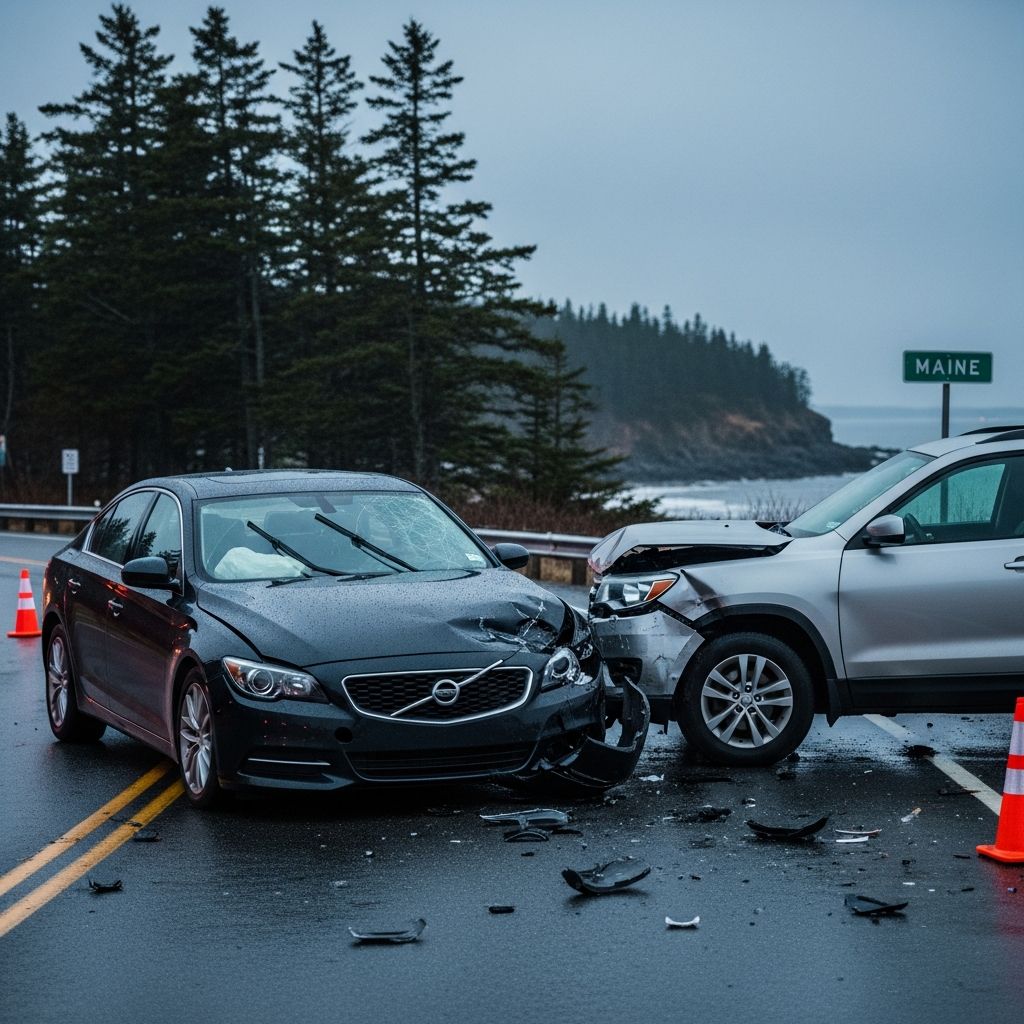
Maine’s legal framework for vehicle collisions prioritizes safety, accountability, and fair compensation. Drivers must understand insurance obligations, immediate post-crash actions, fault allocation, and claim deadlines to handle incidents effectively.
Core Principles of Liability in Maine Vehicle Collisions
Maine employs a traditional tort-based system where the at-fault party bears responsibility for damages. This requires proving negligence through four elements: the duty to drive safely, breach of that duty, direct causation of harm, and resulting losses like medical costs or vehicle repairs.
In practice, this means victims pursue compensation from the responsible driver’s insurer, covering bodily injury, property damage, and related expenses. Unlike no-fault states, Maine allows direct claims against the negligent party, promoting accountability but necessitating strong evidence such as police reports and witness accounts.
Mandatory Insurance Coverage for Maine Drivers
All Maine motorists must maintain specific liability insurance to operate legally. The minimum requirements, effective in 2026, include:
- $50,000 bodily injury per person
- $100,000 bodily injury per accident
- $25,000 property damage per accident
Additionally, policies must provide $2,000 in medical payments coverage and matching uninsured/underinsured motorist limits of $50,000/$100,000. These ensure protection against financially irresponsible drivers. While minimums suffice legally, experts recommend higher limits or full coverage—averaging $1,722 annually versus $530 for basics—to safeguard against severe incidents.
| Coverage Type | Minimum Limit | Purpose |
|---|---|---|
| Bodily Injury (per person) | $50,000 | Covers injuries to others |
| Bodily Injury (per accident) | $100,000 | Total for multi-person crashes |
| Property Damage | $25,000 | Vehicle and property repairs |
| Uninsured Motorist | $50K/$100K | Protection from uninsured drivers |
Failure to comply risks fines, license suspension, and personal liability for excess damages.
Post-Collision Reporting Obligations
Immediate actions following a crash are critical. Operators must stop at the scene, especially if damage occurs to attended vehicles, providing name, address, license, registration, and insurance proof to involved parties.
Report to police any collision causing injury, death, or over $1,000 in property damage. The official report captures essentials like location, conditions, participant details, witness statements, violations, and diagrams—vital for insurance and legal claims. For minor hits-and-runs or unattended property, specific statutes mandate notification. Non-compliance constitutes a Class E crime or traffic infraction.
Fault Determination Under Comparative Negligence
Maine adopts modified comparative negligence, allowing recovery if you’re less than 51% at fault. Compensation reduces proportionally to your fault percentage. For instance, in a $20,000 damage claim where you’re 20% responsible, you’d receive $16,000.
This equitable approach encourages careful driving while not barring partially blameless victims. Courts assess fault via evidence like skid marks, dashcam footage, and expert testimony.
Deadlines for Filing Claims and Lawsuits
The statute of limitations provides six years from the crash date to sue for personal injury or property damage. Missing this forfeits court access, though insurance claims may have shorter insurer deadlines.
Prompt filing preserves evidence and witness memories. Consult attorneys early to navigate nuances, such as tolling for minors or incapacity.
Consequences of Common Traffic Infractions
Maine enforces strict penalties to deter unsafe behavior contributing to crashes:
- Speeding: Starts at $50 fine, escalates with excess speed, adds license points.
- Red Light/Stop Sign Violations: Fines, points, heightened crash liability.
- Distracted Driving (e.g., Texting): Fines and points under hands-free laws.
- DUI: Fines, suspension, education, potential jail; major fatality contributor.
These violations often prove negligence, impacting fault and compensation.
Navigating Insurance Claims After a Crash
Post-report, notify your insurer promptly, providing the police report and documentation. Expect adjusters to investigate; disputes may require independent appraisals or legal aid.
Maine’s at-fault system demands proving the other driver’s negligence. Common compensable damages include medical bills, lost income, pain, and vehicle totals. Uninsured motorist coverage activates if the at-fault party lacks sufficient insurance.
Special Scenarios: Hit-and-Runs and Unattended Vehicles
For hit-and-runs involving attended vehicles, stop, exchange info, and report immediately. Damage to unattended property requires locating the owner or leaving a note with contact/insurance details.
Recent legislative efforts, like LD 1401, aim to adjust towing/storage coverage in policies, reflecting evolving insurance debates.
Protecting Your Rights: When to Seek Legal Help
Complex cases—disputed fault, severe injuries, insurance denials—warrant professional representation. Attorneys aid evidence gathering, negotiation, and litigation within deadlines.
Maine’s rules emphasize documentation: photos, medical records, and journals strengthen claims.
Frequently Asked Questions About Maine Car Crash Laws
What if I’m partially at fault in a Maine crash?
You can recover damages reduced by your fault percentage, provided it’s under 51%.
Do I need to call police after every crash?
Yes, for injuries, deaths, or $1,000+ property damage.
How much insurance is legally required in Maine?
$50K/$100K bodily injury, $25K property damage, plus med pay and UM.
What’s the time limit to sue after a Maine crash?
Six years for injury/property claims.
Can I drive without insurance in Maine?
No—penalties include fines and suspension.
Staying Safe on Maine Roads
Adhering to these laws minimizes risks. Defensive driving, regular vehicle checks, and adequate insurance foster safer highways. Awareness of Maine’s framework empowers drivers to respond confidently.
References
- What You Need to Know About Maine’s Car Accident Laws — Romanow Law Group. 2026. https://www.romanowlawgroup.com/articles/need-to-know-maines-car-accident-laws/
- Car Insurance Requirements in Maine (2026) — Insurify. 2026. https://insurify.com/car-insurance/maine/minimum-requirements/
- Car Insurance In Maine 2026: Laws, Costs, Requirements & Companies — Insuranceopedia. 2026. https://www.insuranceopedia.com/auto-insurance/guide-to-car-insurance-maine
- The Difference Between a Crash and an Accident in Maine — Mann Law LLC. 2026. https://www.mannlawllc.com/what-is-the-difference-in-meaning-between-a-crash-and-an-accident/
- Title 29-A, §2253: Accidents involving vehicle damage — Maine Legislature. 2026. https://legislature.maine.gov/statutes/29-a/title29-Asec2253.html
Similar Articles








Read full bio of Sneha Tete


