
National Security and the Denial of Justice: The Maher Arar Case
How the invocation of national security and state secrets denied an extraordinary rendition victim his day in court.
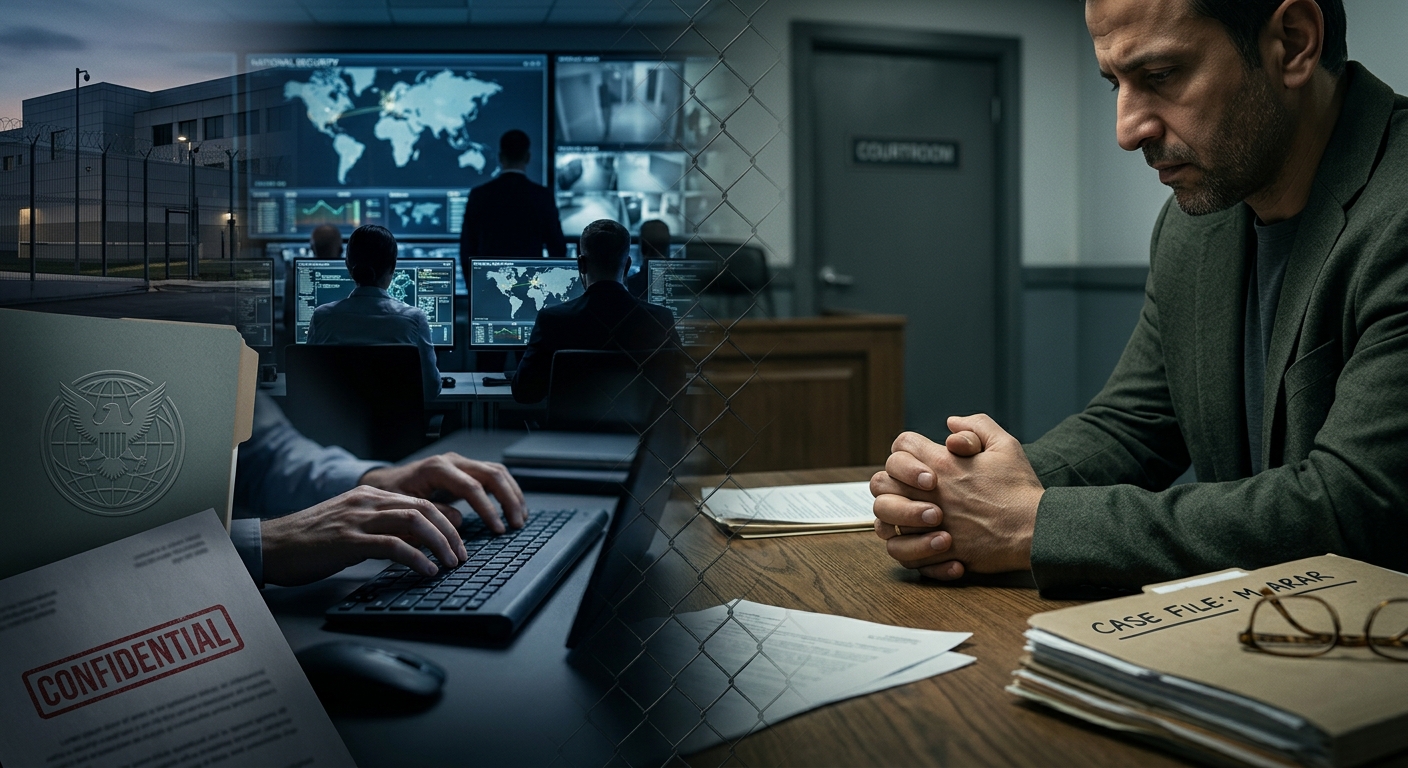
The delicate balance between robust national security measures and the preservation of fundamental human rights has been one of the most fiercely debated legal issues of the twenty-first century. Following the catastrophic events of September 11, 2001, the United States government implemented a series of sweeping counterterrorism protocols designed to dismantle global terrorist networks. Among the most controversial of these covert initiatives was the Central Intelligence Agency’s “extraordinary rendition” program. This practice involved the extrajudicial transfer of foreign nationals suspected of terrorism to third-party countries—nations often possessing dismal human rights records and known for utilizing torture during interrogations. While proponents argued these measures were vital for extracting actionable intelligence to prevent future attacks, human rights advocates condemned the program as a gross violation of domestic and international law.
At the center of this legal and moral maelstrom is the story of Maher Arar, a Syrian-born Canadian citizen who became the most high-profile victim of this shadowy policy. Arar’s subsequent quest for accountability in the American judicial system brought crucial questions to the forefront of constitutional law: When the executive branch commits egregious human rights abuses under the banner of national security, what recourse do the victims have? The ultimate refusal of the United States Supreme Court to review Arar’s civil lawsuit against high-ranking government officials illuminated a profound void in judicial oversight. By allowing lower court dismissals to stand, the judiciary effectively granted the executive branch an unprecedented shield against liability, leaving victims of state-sponsored abuse without a legal remedy.
The Anatomy of an Extraordinary Rendition
To understand the gravity of the Supreme Court’s inaction, one must examine the harrowing mechanics of Maher Arar’s rendition . In September 2002, Arar, a telecommunications software engineer, was returning home to Canada from a family vacation in Tunisia. During a routine stopover at John F. Kennedy International Airport in New York, American authorities detained him. Acting on flawed intelligence provided by the Royal Canadian Mounted Police (RCMP), U.S. officials suspected Arar of maintaining ties to the al-Qaeda terrorist network. Instead of extraditing him to Canada, where he was a citizen, or formally charging him with a crime in the United States, authorities held Arar essentially incommunicado for nearly two weeks in a Brooklyn detention center. He was denied access to legal counsel and meaningful consular assistance.
Despite his desperate pleas to be returned to his home in Canada, U.S. officials authorized his extraordinary rendition. Arar was covertly flown on a private jet to Jordan, where he was subsequently driven across the border into Syria. For the next ten months, Arar languished in a squalid, grave-like cell in a Syrian military intelligence prison. During this agonizing period, he was subjected to relentless physical and psychological torture, including beatings with heavy electrical cables, in an attempt to coerce a false confession regarding his alleged terrorist affiliations. Ultimately, Syrian officials concluded that Arar had no connections to terrorism whatsoever. He was released in October 2003 and returned to his family in Canada, his physical health compromised and his life forever shattered by a bureaucratic error compounded by a ruthless counterterrorism apparatus.
A Tale of Two Nations: Accountability Versus Immunity
The divergent responses of the Canadian and American governments to the Maher Arar tragedy present a stark study in democratic accountability. Upon Arar’s return to Canada, public outrage prompted the federal government to establish the Commission of Inquiry into the Actions of Canadian Officials in Relation to Maher Arar, commonly known as the Arar Commission . After an exhaustive, multi-year public inquiry, the Commission released a comprehensive report detailing the Royal Canadian Mounted Police’s culpability in supplying inaccurate and highly prejudicial information to American intelligence agencies. In a rare display of state accountability, the Canadian government formally cleared Arar’s name. Prime Minister Stephen Harper issued a public apology on behalf of the nation, and the government awarded Arar a $10.5 million CAD settlement for its role in his horrific ordeal .
Conversely, the response from the United States government was characterized by aggressive defensiveness and a staunch refusal to admit wrongdoing . Neither the Bush administration, under whose authority the rendition occurred, nor the subsequent Obama administration offered an apology to Arar . When Arar sought redress by filing a civil lawsuit in U.S. federal court against former Attorney General John Ashcroft and other senior officials, the Department of Justice mounted a vigorous defense designed not to debate the merits of Arar’s claims, but to ensure the courthouse doors remained firmly shut. The juxtaposition between Canada’s transparency and the United States’ insistence on immunity highlighted a critical divergence in how allied democracies approach the collateral damage of the War on Terror.
The Legal Struggle: Testing the Bivens Doctrine
Arar’s legal strategy hinged on a landmark precedent in American constitutional law: the *Bivens* doctrine. Established by the Supreme Court in the 1971 case *Bivens v. Six Unknown Named Agents*, this legal principle allows individuals to sue federal government officials for damages when their constitutional rights have been violated, even in the absence of a specific federal statute authorizing such a lawsuit. Arar’s legal team argued that his arbitrary detention and subsequent deportation to a country known to practice torture constituted a flagrant violation of his Fifth Amendment right to substantive due process.
However, over the decades, the Supreme Court has grown increasingly hostile to expanding *Bivens* remedies, consistently ruling that such lawsuits should not proceed if there are “special factors counseling hesitation.” In Arar’s case, the U.S. Court of Appeals for the Second Circuit seized upon this limitation. The appellate court ruled that allowing a foreign national to sue top U.S. officials over a rendition policy would inappropriately entangle the judiciary in the executive branch’s constitutional purview over national security, foreign policy, and wartime diplomacy. The court reasoned that Congress, not the judiciary, was the appropriate body to create a remedy for victims of rendition. By declining to extend *Bivens* to the realm of national security, the court effectively declared that even if government officials violate the Constitution in the most abhorrent manner imaginable, they cannot be held civilly liable by the victims of their actions.
The Expanding Shield of the State Secrets Privilege
Compounding the judiciary’s reluctance to extend a *Bivens* remedy was the government’s aggressive invocation of the “state secrets privilege.” Originating in the 1953 Supreme Court case *United States v. Reynolds*, the privilege was initially conceived as a narrow evidentiary rule. In *Reynolds*, which involved a lawsuit over a fatal military plane crash, the government successfully argued that it could withhold specific accident reports from civil discovery because their disclosure would expose secret military technology. Over the past several decades, however, executive branch lawyers have fundamentally weaponized the state secrets privilege, transforming it from a scalpel used to redact sensitive documents into a sledgehammer used to dismiss entire lawsuits at the pleading stage .
In the Arar litigation, the government argued that litigating the case would inevitably force the disclosure of highly classified intelligence-gathering methods, jeopardize clandestine relationships with foreign intelligence agencies, and compromise ongoing counterterrorism operations . The government maintained that the very subject matter of extraordinary rendition was a state secret. By accepting this premise, the courts permitted the government to dismiss the case before Arar could present evidence of his torture or demand discovery. Legal scholars have widely criticized this expansive application of the privilege, noting that it creates an unreviewable executive veto over litigation. When the government is permitted to invoke state secrets to cover up illegal activities or gross negligence, the fundamental democratic principle of checks and balances is severely undermined.
The Supreme Court’s Refusal and Its Ramifications
The culmination of Maher Arar’s agonizing legal journey arrived in June 2010, when the United States Supreme Court denied his petition for a writ of certiorari . By refusing to hear the case, the Supreme Court allowed the Second Circuit’s dismissal to stand as the final word. The Court provided no written explanation for its denial, a standard practice but one that stung deeply in a case of such immense constitutional magnitude. The refusal to intervene sent a chilling, unambiguous message: the highest court in the land would not scrutinize the executive branch’s extraordinary rendition program, nor would it offer a legal remedy to its innocent victims .
This decision effectively solidified a zone of absolute immunity for intelligence and law enforcement officials operating under the guise of national security. It signaled to future administrations that they could authorize the kidnapping and torture of foreign nationals without fear of civil liability in American courts. For human rights advocates, the Supreme Court’s abdication of its judicial review function represented a tragic failure to uphold the rule of law. It demonstrated that in the clash between individual liberty and executive claims of national security, the judiciary was willing to defer completely to the latter, regardless of the severity of the human rights abuses alleged.
Broader Implications for Global Human Rights
The legal vacuum cemented by the Arar case has had profound implications for global human rights and the pursuit of international justice. Arar’s story is not an isolated incident. Other victims of the CIA’s rendition program, such as Khaled El-Masri—a German citizen who was mistakenly abducted, rendered to a secret CIA “black site” in Afghanistan, and tortured—faced identical roadblocks in U.S. courts. Like Arar, El-Masri’s lawsuit was summarily dismissed following the government’s invocation of the state secrets privilege.
The refusal of the United States to hold its officials accountable stands in stark contrast to developments in other international jurisdictions. El-Masri, for instance, eventually took his case to the European Court of Human Rights, which issued a historic ruling condemning his treatment and ordering the government of Macedonia to pay compensation for its role in facilitating the CIA’s operation . The fact that victims of American counterterrorism policies must look to foreign tribunals for a measure of justice severely damages the United States’ credibility as a global champion of human rights. It undermines international treaties to which the U.S. is a signatory, most notably the United Nations Convention Against Torture, which requires nations to provide redress for victims of torture.
Ultimately, the Maher Arar case serves as a somber cautionary tale about the fragility of civil liberties in times of perceived existential threat. It illustrates how easily legal safeguards can be dismantled when national security concerns are allowed to override fundamental constitutional principles. Until Congress passes legislation explicitly providing a cause of action for victims of state-sponsored torture, or the Supreme Court reevaluates its deferential stance toward executive power, the courthouse doors will remain locked to those who have suffered the most grievous abuses in the shadowy margins of the War on Terror.
Frequently Asked Questions (FAQs)
What is extraordinary rendition?
Extraordinary rendition is an extrajudicial practice where a government abducts and transfers a person suspected of terrorism to a foreign country for detention and interrogation. This practice intentionally circumvents the legal protections of extradition and often results in the suspect being handed over to nations known to use torture as a method of interrogation .
Who is Maher Arar?
Maher Arar is a Syrian-born Canadian citizen who was detained by U.S. officials at JFK Airport in 2002 while returning home from a vacation. Based on faulty intelligence, he was secretly rendered to Syria, where he was tortured and held in degrading conditions for nearly a year before being cleared of all terrorism allegations and returned to Canada .
What is the State Secrets Privilege?
The state secrets privilege is a common law evidentiary rule that allows the U.S. government to withhold information from discovery in civil litigation if the disclosure of that information would harm national security. In recent decades, the government has used it broadly to dismiss entire lawsuits, such as those challenging extraordinary rendition, by arguing that the very subject matter of the case is a classified secret .
Why did the U.S. courts refuse to hear Maher Arar’s lawsuit?
U.S. lower courts ruled that extending civil rights remedies (under the *Bivens* doctrine) to a case involving foreign policy and national security would be inappropriate judicial interference. Furthermore, the government invoked the state secrets privilege, claiming the trial would reveal classified intelligence. The U.S. Supreme Court declined to review the lower courts’ dismissal, leaving Arar without a legal remedy in the United States .
How did Canada respond to the Maher Arar case compared to the United States?
Canada held a multi-year public inquiry, officially cleared Arar’s name, issued a formal apology from the Prime Minister, and awarded him $10.5 million for the intelligence errors that led to his rendition . In contrast, the United States government neither apologized nor admitted fault, and successfully fought in court to have his civil rights lawsuit dismissed .
References
- Maher Arar Case — The Canadian Encyclopedia. 2016-12-16. https://www.thecanadianencyclopedia.ca/en/article/maher-arar
- Supreme Court: No Day in Court for Canadian Rendition Victim Maher Arar — Center for Constitutional Rights. 2010-06-14. https://ccrjustice.org/home/press-center/press-releases/supreme-court-no-day-court-canadian-rendition-victim-maher-arar
- 20 Extraordinary Facts about CIA Extraordinary Rendition and Secret Detention — Open Society Justice Initiative. 2013-02-05. https://www.justiceinitiative.org/publications/globalizing-torture-cia-secret-detention-and-extraordinary-rendition
- Extraordinary Rendition and the State Secrets Doctrine Under the Reynolds Framework — University of Cincinnati College of Law Scholarship and Publications. 2012-05-06. https://scholarship.law.uc.edu/uclr/vol80/iss2/5/
Similar Articles








Read full bio of medha deb


