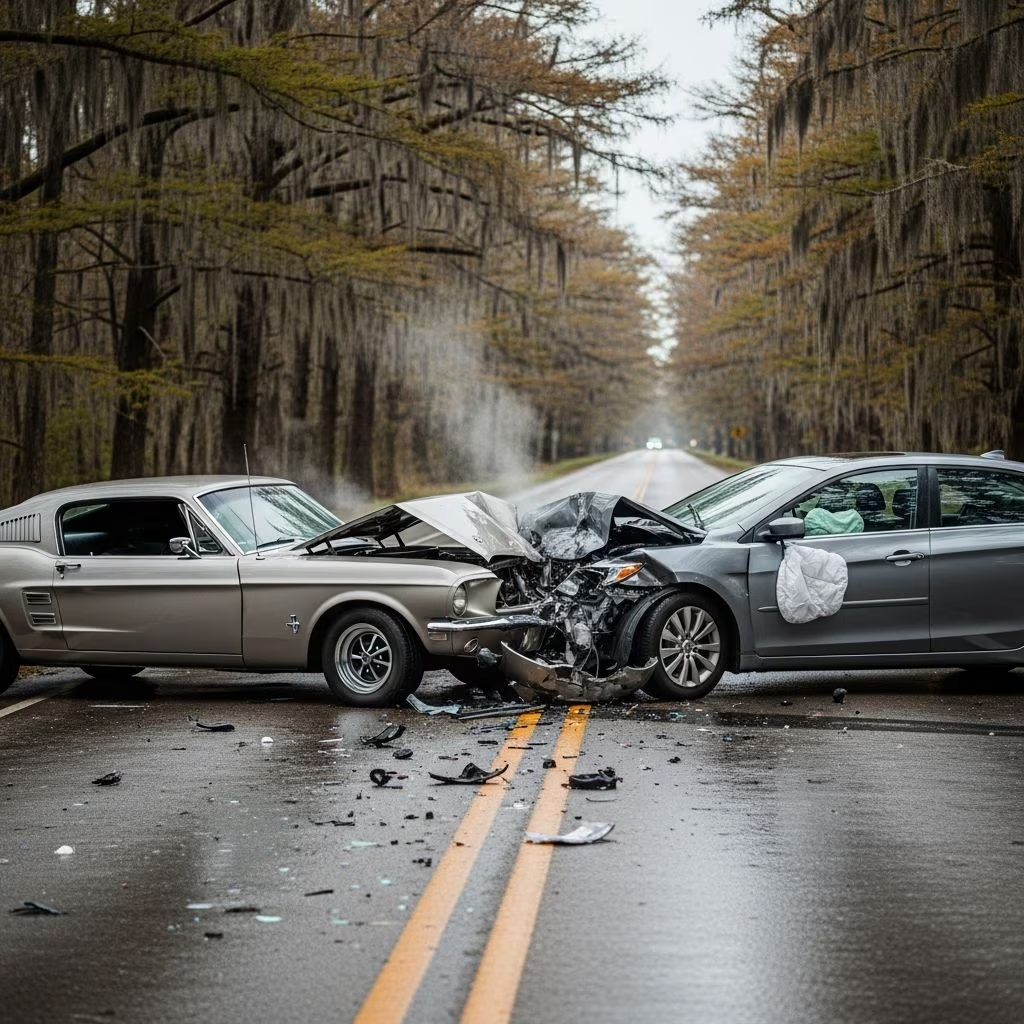
Louisiana drivers face unique legal frameworks governing car accidents, particularly with major reforms effective January 1, 2026. These changes shift how fault is assessed and compensation awarded, impacting injury claims significantly. Understanding these rules helps protect your rights post-crash.
Overview of Louisiana’s Auto Collision Legal Framework
Car accidents in Louisiana fall under personal injury law, where victims seek compensation for damages like medical costs, lost income, and pain. The state mandates minimum liability insurance: $15,000 per person/$30,000 per accident for bodily injury and $25,000 for property damage. Drivers must carry proof of insurance, facing fines or license suspension otherwise.
Key principles include negligence—proving the at-fault driver’s breach of duty caused the crash—and comparative fault, determining shared responsibility percentages. Recent tort reforms address high insurance rates by tightening recovery rules.
Major Shift: From Pure to Modified Comparative Fault
Until December 31, 2025, Louisiana used pure comparative fault, allowing recovery regardless of fault percentage, reduced proportionally. For example, 80% fault meant 20% damages recoverable.
House Bill 431, signed May 2025 by Governor Jeff Landry, introduces modified comparative fault effective January 1, 2026. Victims 51% or more at fault recover nothing, even with severe injuries. Those 50% or less recover damages minus their fault share.
| Scenario | Pre-2026 (Pure) | 2026+ (Modified 51%) |
|---|---|---|
| Plaintiff 40% at fault, $100k damages | $60k recovery | $60k recovery |
| Plaintiff 55% at fault, $100k damages | $45k recovery | $0 recovery |
| Plaintiff 50% at fault, $100k damages | $50k recovery | $50k recovery |
This table illustrates the stark difference: a single percentage point can eliminate compensation. The law applies to accidents on or after January 1, 2026; prior crashes use old rules, even if litigated later.
Reasons Behind the 2026 Tort Reforms
Louisiana’s auto insurance averages $3,400 annually, among the nation’s highest. Lawmakers blame generous fault rules enabling partial recoveries from largely at-fault drivers. Proponents argue the 51% bar deters frivolous suits and rewards responsibility.
Business groups and insurers pushed reforms to cut claim costs, potentially lowering premiums. Critics highlight inequities: a minimally faulty but severely injured victim loses all aid, while less-injured defendants pay shares.
Impacts on Injury Claims and Legal Strategies
The new threshold elevates fault disputes. Clear-liability cases proceed similarly, but shared-fault incidents risk denial if plaintiff exceeds 50%. Lawyers may decline borderline cases, prioritizing strong evidence of defendant majority fault.
- Investigation Focus: Early evidence collection (dashcams, witnesses, police reports) proves low plaintiff fault.
- Negotiation Shifts: Insurers push higher plaintiff percentages to hit 51%, prolonging settlements.
- Court Battles: Juries assign precise percentages; minor errors prove costly.
Vulnerable groups—rear-end victims often partially blamed for inattention—face heightened risks. Thorough documentation remains crucial.
New Rules for Medical Expense Compensation
Senate Bill 231, also effective January 1, 2026, reforms medical billing in claims. Courts now use insurance-paid amounts, not initial provider bills, for damage calculations. This caps recoveries, as negotiated insurer rates are lower.
Exceptions: Pre-2026 filings, medical malpractice, and med-pay policies unaffected. Victims lose leverage from inflated bills, reducing totals significantly.
Statutes of Limitations and Filing Deadlines
General rule: Two years from accident for personal injury suits (Louisiana Civil Code Art. 3492). Property damage: Same timeframe. Exceptions include minors (until age 19) or incapacity.
Claims against government entities shorten to one year. Federal claims (e.g., against USPS) follow one-year limits. Missing deadlines bars recovery permanently.
Insurance Requirements and Uninsured Motorist Coverage
Louisiana is a fault state: At-fault driver’s insurance pays. Minimums apply, but UM/UIM coverage rejects require waivers. No-fault absent; victims bill at-fault carriers directly.
Post-2026, UM claims unchanged but fault threshold applies. Higher voluntary limits recommended amid rising costs.
Steps to Take Immediately After a Crash
- Ensure Safety: Move vehicles, activate hazards, check injuries.
- Call Authorities: Police reports aid fault proof, especially contested cases.
- Exchange Info: Names, contacts, insurance, licenses; photograph scene/vehicles.
- Seek Medical Care: Document injuries promptly; delays weaken claims.
- Avoid Admissions: No fault apologies; insurers exploit statements.
- Contact Lawyer: Early consultation navigates reforms.
Types of Damages Recoverable in Louisiana
Compensatory damages split economic/non-economic:
- Economic: Bills (now insurer-paid), wages, repairs.
- Non-Economic: Pain, suffering, emotional distress—no caps generally.
Punitive rare, only egregious conduct. Post-2026, total reduced by plaintiff fault if under 51%.
How No-Fault Myths Affect Louisiana Drivers
Unlike 12 no-fault states, Louisiana requires fault proof for benefits. Personal Injury Protection (PIP) optional; victims rely on tort system. This incentivizes strong liability evidence under new rules.
Role of Evidence in Proving Fault
Police reports, eyewitnesses, traffic cams, expert reconstructions pivotal. Black boxes reveal speeds/braking. Post-2026, contesting minor plaintiff faults (e.g., failure to signal) intensifies.
Frequently Asked Questions About Louisiana Car Accident Laws
Does the 51% rule apply to 2025 accidents?
No, pre-January 1, 2026 crashes follow pure comparative fault, allowing any-percentage recovery reduced proportionally.
What if fault is exactly 50% after 2026?
Recovery allowed, reduced by 50%. Only 51%+ bars all compensation.
Can I reject uninsured motorist coverage?
Yes, via signed waiver, but recommended given uninsured drivers prevalence.
How long to file after a car accident?
Typically two years for injuries/property; one year for government suits.
Does the new medical rule affect all bills?
No, only amounts insurers actually pay, excluding med-pay or pre-2026 cases.
Protecting Your Rights in a Changing Legal Landscape
With 2026 reforms, proactive steps define outcomes. Secure comprehensive insurance, drive defensively, document meticulously. Experienced attorneys adapt strategies to prove minimal fault, maximizing recoveries under tighter rules. Stay updated, as courts interpret nuances.
References
- New Comparative Fault Rule Will Bar Some Injury Claims Starting in 2026 — Lawyer Don. 2025-05. https://www.lawyerdon.com/blog/new-comparative-fault-rule-will-bar-some-injury-claims-starting-in-2026
- Louisiana’s New Comparative Fault Law: What It Means for Auto Accident Victims in 2026 — Magness Law. 2025. https://www.magnesslaw.com/louisiana-new-comparative-fault-law-2026/
- HB 431: A Major Change to Civil Liability in Louisiana — MBLB. 2025-05-28. https://mblb.com/insurance-defense/hb-431-a-major-change-to-civil-liability/
- New Louisiana Car Accident Law Limits Recovery in 2026 — Chris Corzo Injury Attorneys. 2025. https://www.callcorzo.com/new-louisiana-car-accident-law-limits-recovery-in-2026/
- Louisiana Comparative Fault Law 2026 | Tort Reform — Saunders Chabert. 2025. https://saunderschabert.com/blog/louisiana-comparative-fault-law-2026/