
Local Policing and Immigration Sweeps: Constitutional Rights
How local police immigration sweeps impact constitutional rights.
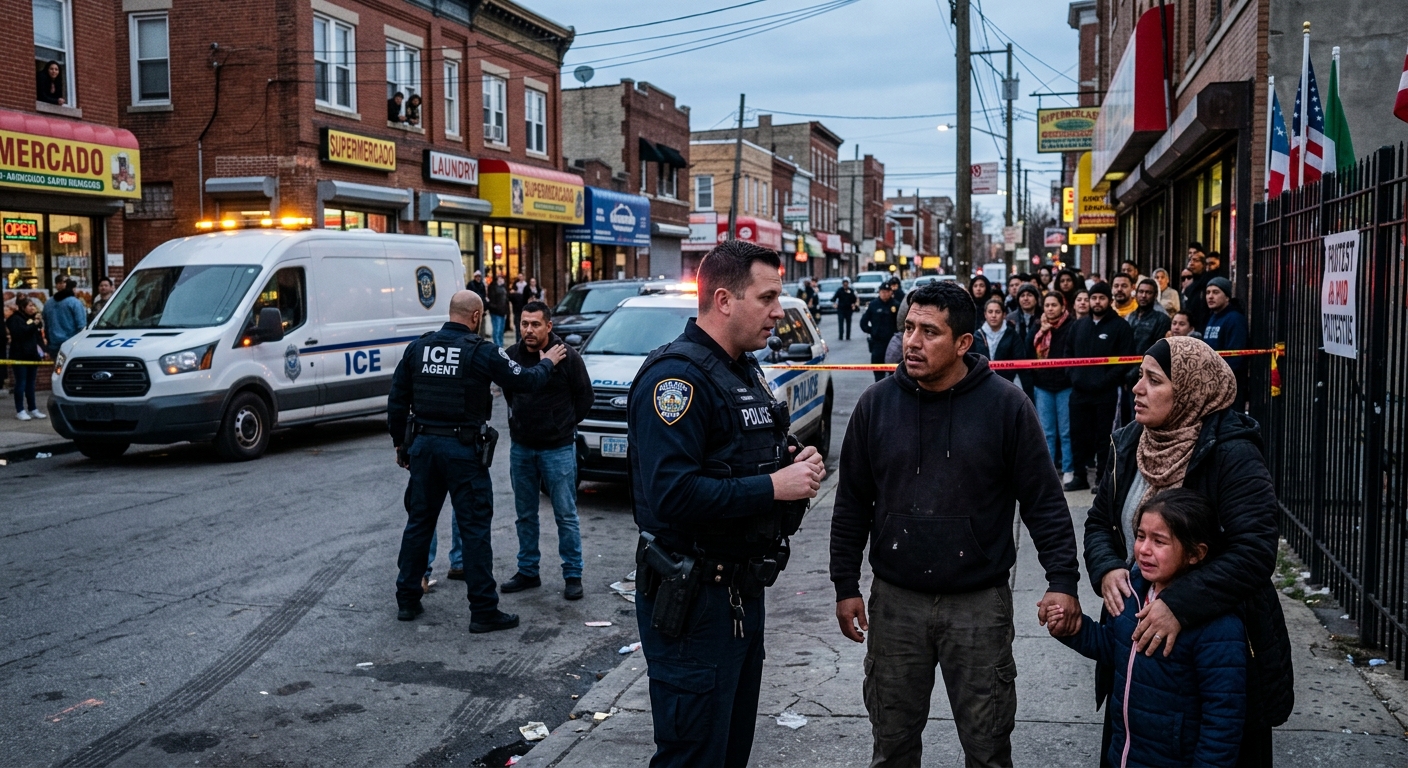
The role of local law enforcement in the United States has historically centered on maintaining public safety, responding to emergencies, and enforcing municipal and state criminal laws. For decades, there has been a clear demarcation of duties regarding jurisdiction: enforcing federal immigration statutes is fundamentally the purview of the federal government. However, a highly contentious paradigm shift occurs when local police departments are enlisted—or voluntarily take on the responsibility—to enforce federal immigration laws. This crossover frequently manifests in the form of localized “sweeps” or targeted neighborhood operations designed to identify and detain undocumented individuals living within a community.
While proponents argue that such cooperation is necessary for comprehensive national security and border control, civil rights advocates highlight a deeply troubling reality: these operations frequently cross the line into unconstitutional territory. The delegation of federal immigration authority to local police inherently complicates the traditional policing model. When patrol officers are tasked with assessing the immigration status of individuals during routine traffic stops or neighborhood patrols, the risk of subjective, racially biased policing increases exponentially. This dynamic not only strains the relationship between law enforcement and minority communities but also raises profound questions about the constitutional limits of police power. Understanding the gravity of these operations requires a rigorous examination of the legal guardrails established by the United States Constitution, specifically the protections against unreasonable searches and seizures and the guarantee of equal protection under the law.
Understanding the Constitutional Boundaries
The United States Constitution serves as the ultimate safeguard against government overreach, dictating the operational limits of law enforcement agencies at every level. When evaluating the legality of immigration sweeps conducted by local police, two specific amendments take center stage: the Fourth Amendment and the Fourteenth Amendment. Together, these constitutional pillars form a defensive perimeter around the rights of individuals, establishing rigorous standards for what law enforcement can and cannot do during a localized sweep operation.
The Fourth Amendment and Unreasonable Seizures
The Fourth Amendment to the U.S. Constitution unequivocally protects individuals from “unreasonable searches and seizures” by the government. According to guidance maintained by the United States Courts, a seizure occurs when a law enforcement officer, by means of physical force or a show of authority, restrains the liberty of a citizen or resident. In the context of immigration sweeps, this amendment is frequently tested and sometimes overtly violated. For a police officer to legally stop and detain an individual—a practice often referred to as a Terry stop, derived from the landmark Supreme Court case Terry v. Ohio—the officer must possess “reasonable suspicion” based on specific and articulable facts that the person is involved in criminal activity.
The critical legal friction arises because unlawful presence in the United States is, in many specific contexts, a civil regulatory violation rather than a criminal offense. Therefore, local police officers conducting routine patrols cannot legally detain an individual solely on the suspicion of a civil immigration violation unless they are operating under a specific, federally sanctioned agreement. When neighborhood sweeps result in the mass detention of individuals based on vague suspicions or generic ethnic descriptions, they severely undermine Fourth Amendment protections. The foundational presumption of innocence is bypassed, and individuals are subjected to arbitrary, prolonged detentions that the framers of the Constitution explicitly sought to prevent.
The Fourteenth Amendment and Equal Protection
Equally crucial to this legal discourse is the Fourteenth Amendment, which contains the Equal Protection Clause. This clause mandates that no state shall deny to any person within its jurisdiction the equal protection of the laws. In practical policing terms, this means that law enforcement operations cannot target individuals based on their race, ethnicity, or national origin. The courts have routinely held that racial profiling is fundamentally incompatible with the principles of equal protection and is subject to “strict scrutiny” in the judicial system.
During aggressive neighborhood immigration sweeps, there is a documented tendency for officers to rely on phenotypic traits—such as skin color, the language spoken, or perceived cultural background—as proxies for determining legal status. The U.S. Department of Justice (DOJ) has issued stringent policy guidance explicitly banning racial profiling in federal law enforcement, noting that biased practices “are unfair, promote mistrust of law enforcement, and perpetuate negative and harmful stereotypes.” When local police act as de facto immigration enforcement agents without strict oversight and training, the line between legitimate police work and unconstitutional racial profiling becomes perilously blurred, disproportionately ensnaring Hispanic and Latino Americans who are legally present in the country.
The Mechanics and Legal Reality of Community Sweeps
To fully grasp the implications of these sweeps, one must understand how they operate practically and legally on the ground. Historically, mechanisms like the 287(g) program have allowed the federal government, via U.S. Immigration and Customs Enforcement (ICE), to delegate specific immigration enforcement powers to state and local officers. According to reports by the Congressional Research Service, the 287(g) agreements generally follow two different models: the “jail enforcement model,” where designated officers process criminal aliens within detention facilities, and the “task force model,” where officers identify and arrest removable individuals during regular operations in the community.
While this program requires formalized federal training and signed Memorandums of Agreement, many localized sweeps occur outside the bounds of these highly structured federal partnerships. Instead, they rely on broad local mandates or aggressive traffic enforcement initiatives that stretch the boundaries of municipal authority. These operations often masquerade as “crime suppression” or “traffic safety” campaigns. Police units might establish checkpoints or saturate a specific neighborhood—typically one with a high concentration of minority residents—and aggressively enforce minor infractions such as broken taillights, jaywalking, or failure to signal. Once an individual is stopped, the interaction quickly pivots from a minor traffic inquiry to a prolonged interrogation regarding the individual’s citizenship status.
The federal government retains preemptive authority over the regulation and enforcement of immigration. When local jurisdictions unilaterally execute sweeps targeting undocumented immigrants outside of official federal frameworks, they not only risk overstepping their jurisdictional bounds under the Tenth Amendment but also expose themselves to severe legal liabilities. Municipalities that encourage or turn a blind eye to these tactics frequently face costly civil rights lawsuits initiated by affected citizens, advocacy groups, and the Department of Justice.
Societal and Economic Repercussions on Targeted Communities
The consequences of utilizing local police for federal immigration enforcement extend far beyond the courtroom; they permeate the very fabric of the affected communities. The societal and economic toll on targeted neighborhoods is profound, leading to an immediate breakdown in public safety, community cohesion, and economic stability.
Erosion of Public Trust in Law Enforcement
The most immediate and devastating impact of immigration sweeps is the complete erosion of trust between minority communities and local police departments. When residents view the police not as protectors, but as potential deportation agents, public safety is inherently compromised. A dangerous chilling effect takes hold: victims of crimes, witnesses to violent acts, and individuals needing emergency assistance become paralyzed by the fear that calling 911 will result in the deportation of themselves or their family members. This silence allows real criminal enterprises to flourish in vulnerable neighborhoods.
Statistical data strongly correlates aggressive immigration enforcement with diminished trust in local authorities. According to comprehensive research conducted by the Pew Research Center, confidence in local police among Hispanic communities is notably lower than among white communities. A late 2025 demographic survey by Pew noted that approximately half of U.S. Latinos worry they or someone close to them might be deported, and a significant percentage actively alter their daily routines out of fear of encountering law enforcement. When a large segment of the population is forced to live in the shadows, unable to report crimes or cooperate with active criminal investigations, predators are emboldened, and the entire municipality becomes markedly less safe for everyone.
Economic and Social Disruption
Beyond the primary concern of public safety, unconstitutional immigration sweeps inflict severe economic and social disruption on the community level. The structural impacts on neighborhoods targeted by aggressive policing are vast and multifaceted:
- Disruption of Local Economies: The pervasive fear of arbitrary stops and checkpoints prevents individuals from participating normally in the local economy. People are less likely to shop at local businesses, dine at neighborhood restaurants, or commute freely to work, leading to a notable decline in local commerce and municipal tax revenue.
- Family Separation and Welfare Strain: Sweeps often result in the sudden detention of primary breadwinners or caregivers. This leaves children—many of whom are native-born U.S. citizens—without adequate supervision or financial support, placing an immense, unexpected burden on local social services and child welfare agencies.
- Educational Deterioration: The psychological trauma of living in a heavily policed, sweep-prone area severely affects children’s mental health and academic performance. Absenteeism spikes as parents keep children home from school to avoid potential checkpoints on their morning commute.
- Healthcare Avoidance: Individuals routinely avoid seeking necessary medical care, including emergency services, vaccinations, and preventative treatments, out of fear that hospitals and local health clinics might share their personal information with law enforcement agencies.
Moving Toward Constitutional Policing
Rectifying the damage caused by unconstitutional sweeps requires a fundamental recommitment to the core principles of constitutional policing. Law enforcement agencies must prioritize their primary mandate: serving and protecting the local community impartially. This transition begins with the implementation of strict, transparent internal policies that decouple routine local policing from federal immigration enforcement. By focusing resources on violent crime rather than civil immigration infractions, police can begin to rebuild the fractured trust that is essential for effective community policing.
Many progressive jurisdictions have adopted ordinances that strictly limit the circumstances under which local municipal resources can be used to assist federal immigration agents. These policies are not designed to harbor dangerous criminals, but rather to ensure that local police can focus their limited budgets and manpower on solving actual crimes. Furthermore, comprehensive, bias-free policing training must be mandatory, ensuring that every patrol officer understands the constitutional prohibitions against using race, language, or ethnicity as a basis for legal suspicion.
Accountability mechanisms are equally essential to this reform process. Independent civilian oversight boards, the mandatory utilization of body-worn cameras, and rigorous data collection regarding the demographics of traffic stops can help identify and eliminate patterns of discriminatory policing. Only through absolute transparency, stringent accountability, and a staunch adherence to the United States Constitution can law enforcement agencies protect civil rights while effectively maintaining public safety.
Frequently Asked Questions (FAQs)
What exactly is a local immigration sweep?
An immigration sweep is a targeted law enforcement operation, often involving saturation patrols or vehicle checkpoints in specific neighborhoods, aimed at identifying, detaining, and eventually deporting undocumented immigrants. When conducted by local police without specific federal authorization or probable cause of a crime, these sweeps raise significant Fourth and Fourteenth Amendment concerns.
How does the Fourth Amendment apply to routine traffic stops?
The Fourth Amendment protects individuals from unreasonable searches and seizures. In the context of a traffic stop, an officer must have “reasonable suspicion” of a traffic violation or criminal activity to initiate the stop. Prolonging a traffic stop beyond its original purpose simply to investigate an individual’s immigration status, without additional reasonable suspicion, violates Fourth Amendment protections.
Are local police required by law to enforce federal immigration laws?
No. According to the Tenth Amendment’s anti-commandeering doctrine, the federal government cannot compel state or local authorities to allocate their own resources to enforce federal regulatory programs, including civil immigration laws. State and local agencies may choose to cooperate through specific programs, but they are not federally mandated to act as immigration agents.
What is the 287(g) program?
The 287(g) program is a specific provision of the Immigration and Nationality Act that allows the Department of Homeland Security to enter into formal agreements with state and local law enforcement agencies. These agreements delegate specific, limited immigration enforcement authorities to designated local officers, provided they undergo rigorous federal training and operate under direct federal supervision.
Why do civil rights advocates oppose local police acting as immigration enforcers?
Advocates argue that mixing local policing with federal immigration enforcement inevitably leads to racial profiling, violates equal protection clauses, and destroys community trust. When residents fear that interacting with the police could lead to their deportation, they are far less likely to report crimes, act as witnesses, or seek help during emergencies, ultimately making the entire community less safe for everyone.
References
- What Does the Fourth Amendment Mean? — United States Courts. N.D. https://www.uscourts.gov/about-federal-courts/educational-resources/about-educational-outreach/activity-resources/what-does-0
- Latinos’ experiences with immigration enforcement in the second Trump administration — Pew Research Center. 2025-11-24. https://www.pewresearch.org/hispanic/2025/11/24/latinos-experiences-with-immigration-enforcement-in-the-second-trump-administration/
- Guidance for Federal Law Enforcement Agencies Regarding the Use of Race, Ethnicity, Gender, National Origin, Religion, Sexual Orientation, or Gender Identity — U.S. Department of Justice. 2014-12. https://www.justice.gov/sites/default/files/ag/pages/attachments/2014/12/08/use-of-race-policy.pdf
- Authority of State and Local Police to Enforce Federal Immigration Law — Congressional Research Service. 2013-02-26. https://crsreports.congress.gov/product/pdf/R/R41423/8
Similar Articles








Read full bio of medha deb




