
Local Police and Federal Immigration Law: A Systemic Crisis
Exploring gaps in training when local police enforce federal immigration laws.
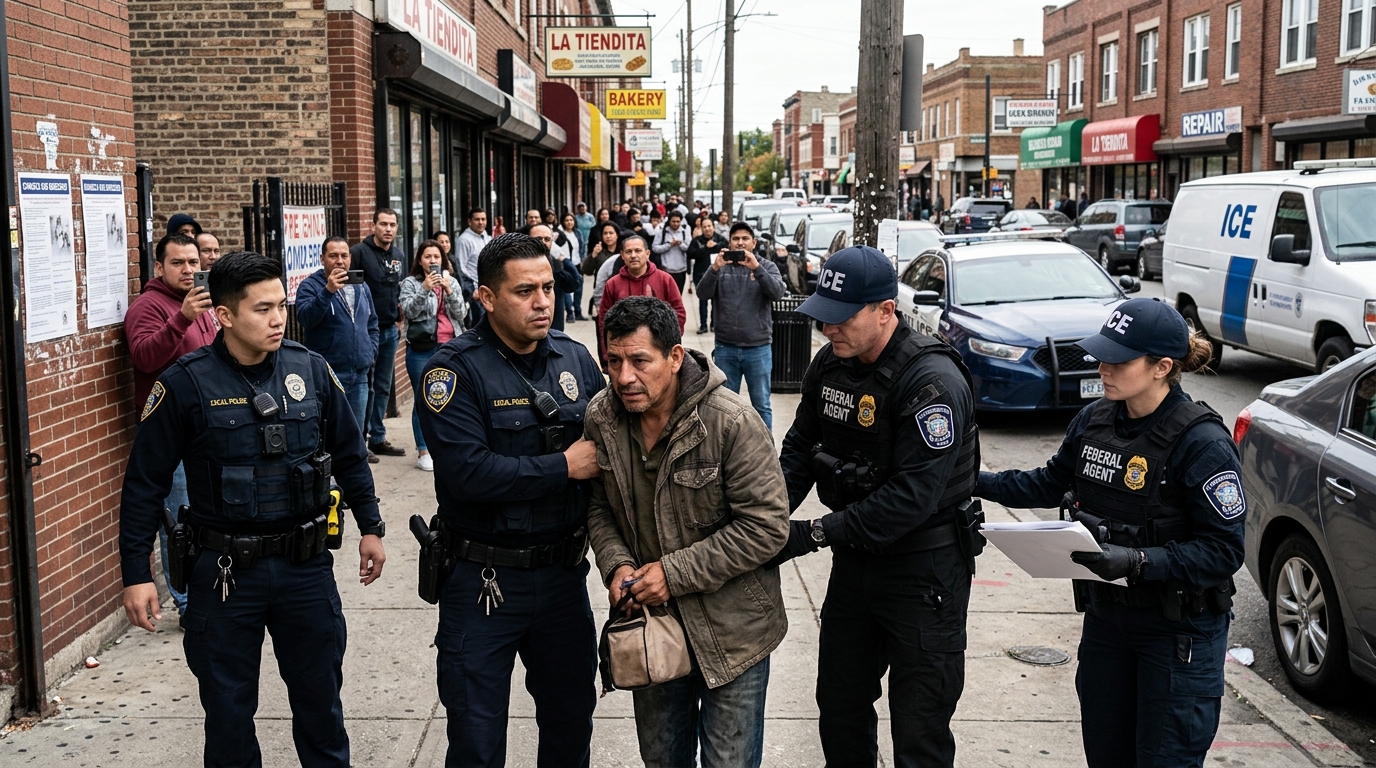
Overstepping Boundaries: When Local Police Enforce Federal Mandates
The United States legal system is built upon a delicate balance of federalism, where specific responsibilities are delegated to the national government while others remain strictly under the purview of state and local jurisdictions. Traditionally, local law enforcement agencies are tasked with maintaining public order, responding to emergencies, and enforcing state criminal codes and municipal ordinances. Conversely, the enforcement of immigration law has historically been the exclusive domain of the federal government, managed by specialized agencies with extensive, dedicated training.
However, over the past two decades, various municipalities and local jurisdictions have attempted to blur these jurisdictional lines. Driven by localized political movements, some city councils and county boards have passed local ordinances mandating that their municipal police departments take an active role in verifying the immigration status of residents. These directives often require patrol officers to inquire about citizenship during routine traffic stops or when processing individuals for minor infractions. While these ordinances are frequently championed as measures to enhance public safety, they consistently collide with harsh operational realities on the ground.
When police chiefs and law enforcement leaders are forced to implement these local immigration mandates, they frequently encounter profound systemic barriers. Foremost among these are a critical lack of specialized training for rank-and-file officers and a glaring absence of empirical, statistical data to justify the necessity of the ordinances. By forcing local police to act as de facto federal immigration agents, municipalities risk violating constitutional rights, shattering community trust, and exposing taxpayers to massive financial liabilities.
The Critical Gap: Severe Deficits in Specialized Training
To understand why local police are ill-equipped to enforce federal immigration law, one must first recognize the sheer complexity of the U.S. immigration system. Immigration law is governed by Title 8 of the United States Code, a labyrinthine set of statutes that is frequently compared to the federal tax code in its density and complexity. It involves intricate distinctions between civil infractions and criminal violations, differing classifications of visas, temporary protected statuses, asylum claims, and deportation deferments.
Standard police academy training across the United States simply does not cover these federal administrative complexities. A typical municipal police recruit spends hundreds of hours learning about state penal codes, constitutional law, emergency driving, firearms proficiency, and de-escalation tactics. They are trained to identify probable cause for state crimes, such as theft, assault, or driving under the influence. They receive absolutely zero foundational training in adjudicating federal immigration statuses.
The gap in education becomes a severe liability when untrained officers are forced into the field to enforce local immigration ordinances. Under the U.S. Constitution, specifically the Fourth Amendment, police officers cannot legally detain an individual without reasonable suspicion or probable cause that a crime has been committed. Crucially, mere “unlawful presence” in the United States is generally a civil violation, not a criminal offense. If an inadequately trained local police officer extends a routine traffic stop to investigate a civil immigration violation, they may be committing an unconstitutional seizure.
Law enforcement executives frequently acknowledge this severe training deficit. When pressed in public forums or legal proceedings, police chiefs have admitted that their personnel do not possess the requisite knowledge to accurately determine a person’s immigration status. An officer cannot simply look at a foreign-issued driver’s license or evaluate a person’s English proficiency and accurately deduce whether that individual has a pending asylum application, a valid work authorization, or legal permanent residency. This lack of specialized education dramatically increases the likelihood of wrongful detentions, false arrests, and the violation of civil liberties.
Data Disconnect: The Absence of Statistical Justification
The primary rationale historically provided by local politicians for enacting aggressive local immigration ordinances is the assertion that undocumented immigrants are a driving force behind local crime rates. This narrative relies on the assumption that deputizing local police to remove undocumented individuals will lead to a direct, measurable decrease in property and violent crimes. However, a deep dive into law enforcement data reveals a stark disconnect between this political rhetoric and empirical reality.
When civil rights organizations and legal advocates challenge these local ordinances, they frequently request the statistical data that municipal leaders used to justify the new laws. In many high-profile cases, police chiefs and municipal administrators have been forced to admit under oath that no such statistics exist. There is often no localized, empirical data demonstrating that undocumented immigrants are committing crimes at higher rates than native-born citizens in their jurisdictions.
In fact, extensive academic research and national data analyses directly contradict the narrative that undocumented immigration drives crime. Peer-reviewed studies spanning decades consistently show that immigrant populations, regardless of their legal status, are associated with lower crime rates than native-born populations. A landmark 2020 study published in the Proceedings of the National Academy of Sciences (PNAS), which analyzed comprehensive data from the Texas Department of Public Safety, found that undocumented immigrants had substantially lower felony arrest rates than native-born U.S. citizens.
When local law enforcement is directed to prioritize immigration enforcement without statistical evidence of a localized problem, it diverts scarce policing resources away from actual criminal threats. Police departments operate on finite budgets. Every hour an officer spends investigating a complex civil immigration matter is an hour not spent solving burglaries, preventing violent crime, or engaging in proactive community policing. The absence of data-driven justification renders these local ordinances not only legally suspect but operationally inefficient.
The Chilling Effect: Community Trust and Public Safety
Perhaps the most devastating consequence of forcing local police to enforce federal immigration law is the rapid erosion of community trust. Modern law enforcement relies heavily on the philosophy of community policing, which postulates that police departments can only effectively maintain public safety if they have the active cooperation and trust of the communities they serve. Officers rely on community members to report crimes, step forward as witnesses, and provide tips that help solve ongoing investigations.
When a local police department is mandated to act as an arm of federal immigration enforcement, a severe “chilling effect” takes hold within immigrant communities. If individuals believe that interacting with the local police could lead to their deportation—or the deportation of their family members—they will simply stop calling 911. This fear applies not only to undocumented immigrants but also to legal permanent residents and naturalized citizens who live in mixed-status households.
The implications for public safety are profound. Victims of domestic violence, human trafficking, and workplace exploitation become virtually invisible to law enforcement because the fear of deportation overrides the desire for justice. Criminals quickly realize that they can prey upon immigrant communities with total impunity, knowing that their victims will never report the crimes to the authorities. Consequently, by attempting to “crack down” on immigration, local jurisdictions inadvertently create safe havens for violent criminals and predators, making the entire municipality fundamentally less safe.
This dynamic is exactly why many of the nation’s most prominent law enforcement organizations, including the Major Cities Chiefs Association (MCCA), have historically opposed mandates that require local police to enforce federal immigration laws. These seasoned law enforcement executives understand that maintaining a strict firewall between local criminal investigations and federal immigration enforcement is essential for preserving the community trust required to solve real crimes.
Civil Rights Implications and the Threat of Racial Profiling
Beyond the logistical and public safety concerns, local immigration ordinances frequently invite severe civil rights violations. When local police are ordered to investigate immigration status but lack the training to do so legally and accurately, they inevitably fall back on arbitrary, subjective criteria. This creates a fertile breeding ground for racial profiling.
Because there is no definitive “look” to an undocumented immigrant, untrained officers may rely on ethnic appearance, skin color, language proficiency, or a foreign accent as proxies for reasonable suspicion. Such practices are explicit violations of the Equal Protection Clause of the Fourteenth Amendment. When enforcement is concentrated almost exclusively on Hispanic or Latino communities, it sends a clear message of systemic discrimination, fracturing the social fabric of the municipality.
The financial ramifications of these civil rights violations can be ruinous for local governments. Civil rights organizations frequently sue municipalities that enact unconstitutional immigration ordinances, citing violations of the Fourth and Fourteenth Amendments. The resulting legal battles often drag on for years, costing taxpayers millions of dollars in legal fees, settlements, and court-mandated federal oversight. Municipal insurance premiums can skyrocket, and the reputational damage to the city can deter business investment and stunt local economic growth.
Comparing Jurisdictions: Local Policing vs. Federal Immigration
To fully grasp why local implementation of federal mandates fails, it is helpful to look at the structural differences between local policing and federal immigration enforcement.
| Feature | Local Police Departments | Federal Immigration Enforcement (ICE/CBP) |
|---|---|---|
| Primary Jurisdiction | Municipal and state boundaries. | National borders and the entire U.S. interior. |
| Governing Law | State penal codes and local ordinances. | Title 8 of the United States Code (Federal Law). |
| Nature of Offenses | Criminal offenses (misdemeanors and felonies). | Primarily civil/administrative violations (with some criminal exceptions). |
| Training Focus | State law, emergency response, traffic control, criminal investigation. | Federal immigration law, deportation procedures, cross-border smuggling. |
| Detainer Authority | Requires probable cause of a crime (Fourth Amendment). | Authorized to hold individuals on civil administrative warrants. |
Conclusion
The push to mandate local police involvement in federal immigration enforcement is a policy deeply flawed in its execution and fundamentally damaging in its results. When local politicians enact ordinances demanding that their police departments investigate immigration status, they are asking officers to perform complex federal duties without the necessary specialized training. They justify these mandates with narratives of crime reduction, despite a stark lack of statistical evidence and despite clear data showing immigrants commit crimes at lower rates than native-born populations.
The resulting consequences are dire: community trust is destroyed, victims of violent crimes are pushed into the shadows, constitutional rights are violated through wrongful detentions and racial profiling, and municipalities are drained of financial resources through protracted civil rights litigation. True public safety is achieved through community cooperation and adequately trained officers focusing on local criminal codes, not through the untrained, data-deficient enforcement of federal administrative laws.
Frequently Asked Questions (FAQs)
- Can local police legally enforce federal immigration law?
Generally, local police do not have the inherent authority to enforce federal civil immigration laws. However, under specific federal programs like Section 287(g) of the Immigration and Nationality Act, state and local officers can be officially deputized and receive specialized federal training to perform certain immigration duties under strict federal supervision. Local ordinances passed outside of these specific federal agreements often run afoul of the law. - Why do many police chiefs oppose local immigration ordinances?
Law enforcement executives typically oppose these ordinances because they destroy community trust. If immigrant communities fear the police, they will not report crimes or cooperate with investigations, making the entire city less safe. Furthermore, chiefs recognize their officers lack the specialized training required to navigate complex federal immigration laws without violating civil rights. - What is the difference between unlawful presence and illegal entry?
“Illegal entry” (crossing the border outside of an official port of entry) is a federal misdemeanor. However, “unlawful presence” (such as overstaying a legally obtained visa) is a civil administrative violation, not a crime. Local police generally only have the authority to detain individuals for suspected crimes, making the detention of someone solely for a civil immigration violation unconstitutional. - Does undocumented immigration increase local crime rates?
No. Extensive empirical research and statistical analyses, including comprehensive studies on arrest data in states with large immigrant populations, consistently demonstrate that undocumented immigrants are arrested for violent and property crimes at significantly lower rates than native-born U.S. citizens.
References
- Comparing crime rates between undocumented immigrants, legal immigrants, and native-born US citizens in Texas — Proceedings of the National Academy of Sciences (PNAS). 2020-12-07. https://www.pnas.org/doi/10.1073/pnas.2014704117
- Delegation of Immigration Authority Section 287(g) Immigration and Nationality Act — U.S. Immigration and Customs Enforcement. 2023-08-10. https://www.ice.gov/identify-and-arrest/287g
- Community Policing — U.S. Department of Justice, COPS Office. 2023-01-15. https://cops.usdoj.gov/
- Does Undocumented Immigration Increase Violent Crime? — Criminology (Journal). 2018-03-01. https://onlinelibrary.wiley.com/doi/abs/10.1111/1745-9125.12175
Similar Articles








Read full bio of medha deb




