
Local Immigration Laws: Legal Clashes & Community Impact
Exploring the legal and social fallout of local immigration laws.
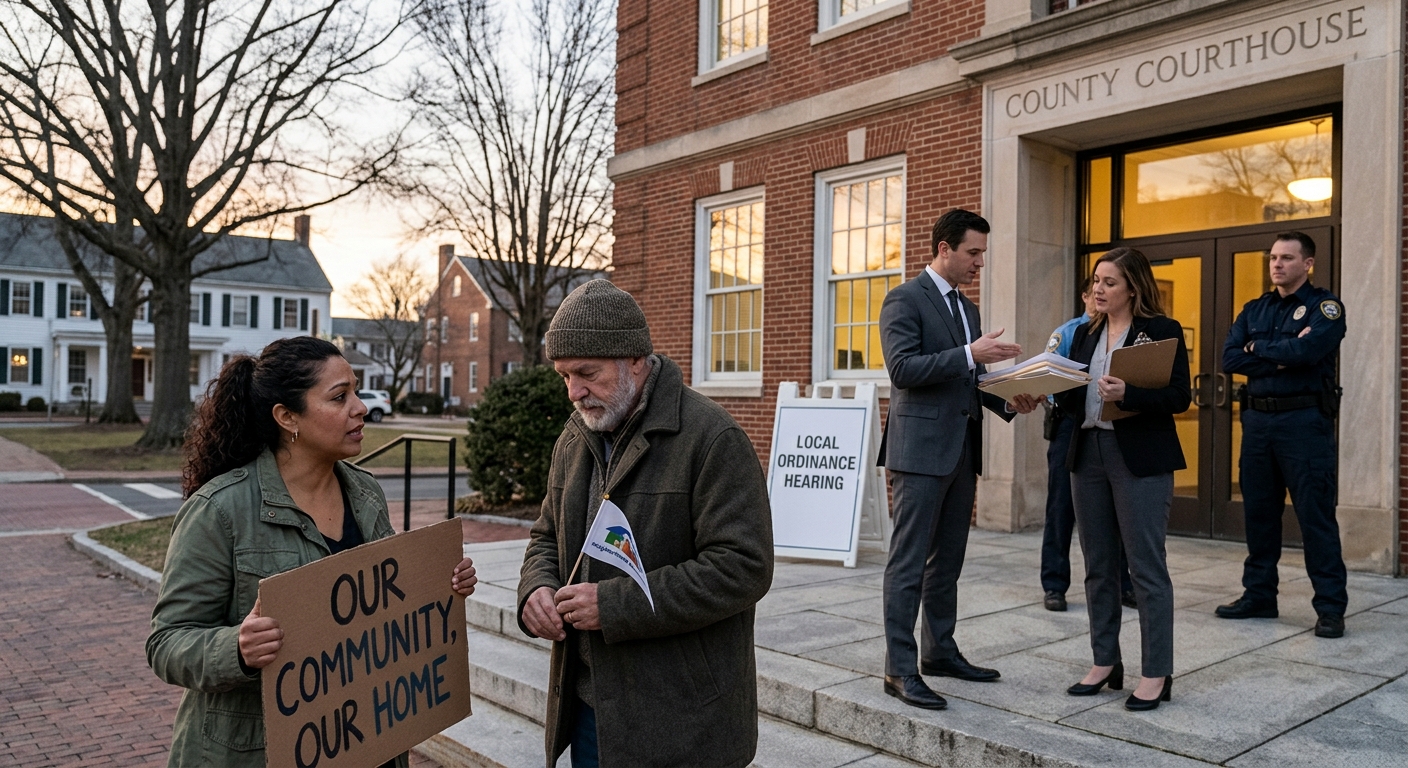
The Complex Landscape of Municipal Immigration Policies
For decades, the United States has navigated a highly intricate and often politically charged debate regarding immigration reform. In the absence of comprehensive and updated federal legislation, various states, counties, and local municipalities have historically attempted to take matters into their own hands. By enacting localized ordinances designed to regulate the presence and employment of undocumented immigrants, municipal governments have sparked profound legal, social, and economic controversies.
These restrictive local laws typically aim to penalize the foundational elements of daily survival for undocumented individuals: access to housing and employment. By targeting landlords who rent to undocumented immigrants and business owners who hire them, local governments seek to make their towns inhospitable, operating under the theory of “attrition through enforcement.” However, these municipal actions routinely collide with constitutional boundaries, civil rights protections, and the practical realities of community economics.
The Constitutional Tug-of-War: The Doctrine of Federal Preemption
At the heart of the debate over local immigration ordinances lies the Supremacy Clause of the United States Constitution (Article VI, Clause 2). This clause establishes that federal law and the Constitution take precedence over state and local laws. Because the federal government holds the exclusive, sovereign authority to regulate immigration, manage the nation’s borders, and dictate the terms of non-citizen residency, localized attempts to create a patchwork of immigration regulations are generally deemed unconstitutional.
Courts analyze these local laws through the lens of two primary types of preemption:
- Field Preemption: This occurs when the federal government has created a regulatory framework so pervasive and comprehensive that it occupies the entire “field” of that particular subject. The Immigration and Nationality Act (INA) is widely recognized by the judiciary as a comprehensive system that leaves no room for supplementary local laws.
- Conflict Preemption: This happens when it is impossible to comply with both local and federal law, or when a local law stands as an obstacle to the accomplishment of the full purposes and objectives of Congress. When a local ordinance imposes harsher penalties or different standards for immigrant residency than federal law, it inherently creates an unconstitutional conflict.
Because the federal framework is carefully balanced to weigh national security, foreign relations, and humanitarian concerns, local ordinances that blindly penalize undocumented presence disrupt this delicate equilibrium. Municipalities cannot act as independent nations establishing their own foreign policy or immigration enforcement priorities.
The Mechanics of Restrictive Local Ordinances
When municipalities draft these restrictive laws, they rarely target the immigrants directly, recognizing they lack the authority to deport. Instead, they target the local residents—landlords and employers—who facilitate the immigrants’ integration into the community.
Targeting the Housing Sector
Housing ordinances typically mandate that landlords verify the citizenship or immigration status of all prospective tenants. If a landlord is found to be harboring an undocumented immigrant, they face severe consequences. These penalties often include exorbitant daily fines for the duration of the unauthorized tenancy, the revocation of rental licenses, or even criminal misdemeanor charges. The underlying goal is to make it impossible for undocumented individuals to secure shelter, thereby forcing them to leave the municipality.
Targeting Local Employers
Similarly, employment-focused provisions require local businesses to utilize federal databases, such as E-Verify, beyond what federal law strictly mandates. Businesses discovered employing undocumented workers face the suspension or permanent revocation of their business licenses—the corporate equivalent of the death penalty. These harsh sanctions terrify business owners and completely restructure the local labor market, often with unintended and disastrous consequences for the local economy.
Administrative Nightmares: The Unworkability of Local Enforcement
One of the most glaring flaws in municipal immigration laws is their inherent unworkability. Immigration law is notoriously complex, often compared to the U.S. tax code in its density and administrative nuance. An individual’s immigration status is rarely a binary designation of “legal” or “illegal.”
There are countless nuanced categories of lawful presence that local officials are unequipped to interpret. Individuals may be present in the United States holding Temporary Protected Status (TPS), awaiting the adjudication of an asylum claim, participating in the Deferred Action for Childhood Arrivals (DACA) program, or holding specific visas for victims of crime (U-visas) or human trafficking (T-visas).
Local town clerks, municipal code enforcement officers, and local police departments lack the specialized training, jurisdiction, and access to secure federal databases required to accurately determine a person’s immigration status. Consequently, local laws force municipal workers and private citizens (like landlords) into the role of untrained federal immigration agents, leading to inevitable errors, wrongful evictions, and severe violations of due process rights.
Discriminatory Ripple Effects and Racial Profiling
Beyond the legal and administrative hurdles, restrictive local immigration ordinances unleash severe social consequences, most notably a drastic increase in racial profiling and housing discrimination.
When landlords are threatened with heavy financial penalties or the loss of their livelihoods for renting to undocumented immigrants, they often adopt overly cautious, risk-averse behaviors. Rather than navigating the complexities of immigration documents, many landlords simply choose to reject any applicant who “appears” foreign. This discriminatory dragnet ensnares legal permanent residents, temporary visa holders, and even U.S.-born citizens of specific ethnic and racial backgrounds.
A landlord might deny housing to someone based on their accent, the spelling of their surname, or their physical appearance, operating out of fear of municipal fines. This directly violates the Fair Housing Act and state civil rights laws, fracturing community cohesion and creating an environment of fear, suspicion, and hostility. Similarly, employers may refuse to hire qualified minorities out of a generalized fear of municipal audits, exacerbating systemic employment discrimination.
The Economic Fallout on Local Communities
While proponents of restrictive municipal ordinances often argue they will save taxpayer money by reducing the burden on public services, the economic reality is typically the exact opposite. Municipalities that pass these laws frequently suffer severe and immediate economic devastation.
The announcement of such ordinances often triggers a mass exodus of the immigrant population. Because immigrants are deeply woven into the local economic fabric—both as a vital labor force and as consumers—their sudden departure leaves a vacuum.
- Housing Market Collapse: The flight of immigrant families leads to a spike in vacant rental properties. Landlords lose significant rental income, and property values often plummet as a result of the sudden housing surplus.
- Labor Shortages: Essential local industries that rely heavily on immigrant labor, such as agriculture, construction, hospitality, and manufacturing, face immediate workforce shortages. Businesses may be forced to scale back operations, relocate to neighboring towns, or close down entirely.
- Decreased Consumer Spending: Immigrants purchase groceries, clothing, vehicles, and services within the community. Their departure results in a sharp decline in local consumer spending, heavily impacting small businesses and reducing local sales tax revenues.
Furthermore, municipalities that attempt to enforce these unconstitutional laws inevitably face immediate legal challenges from civil rights organizations. Defending these ordinances in federal court can take years and cost local taxpayers millions of dollars in legal fees and settlements, financially crippling small municipal budgets.
Comparing Policy Outcomes
| Policy Approach | Primary Mechanism | Legal Viability | Economic Impact |
|---|---|---|---|
| Restrictive Local Ordinances | Penalizing landlords and employers; revoking business licenses. | Consistently struck down by federal courts due to Constitutional preemption. | High legal defense costs, housing vacancies, and acute labor shortages. |
| Comprehensive Federal Enforcement | Enforcement via ICE, USCIS, and federal immigration courts. | Constitutionally sound; backed by the Supremacy Clause. | Standardized economic impacts managed at a macroeconomic level. |
| Inclusive Municipal Policies | Limiting local police cooperation with federal civil immigration enforcement. | Generally upheld under the Tenth Amendment (anti-commandeering doctrine). | Encourages immigrant integration, tax compliance, and consumer spending. |
The Legal Consensus: Courts Reject Local Interference
Over the past two decades, federal appellate courts and the United States Supreme Court have consistently invalidated municipal and state attempts to criminalize everyday interactions with undocumented immigrants. The prevailing legal consensus is that while localities may feel frustrated by the pace of federal immigration reform, they cannot usurp Congressional authority.
Courts have emphasized that allowing thousands of individual municipalities to dictate their own immigration policies would lead to regulatory chaos. It would subject individuals to wildly differing standards of law simply by crossing a county line, undermining the concept of a unified national immigration system. Consequently, the judiciary remains a steadfast barrier against localized attempts to rewrite immigration law, reinforcing that such powers are uniquely and exclusively federal.
Frequently Asked Questions (FAQs)
Why do local governments attempt to pass their own immigration laws?
Local municipalities often attempt to pass restrictive immigration laws out of frustration with perceived inaction at the federal level. Local lawmakers may believe that a growing undocumented population strains local resources, schools, and infrastructure, prompting them to take legislative action despite constitutional limitations.
What does “federal preemption” mean regarding immigration?
Federal preemption is a constitutional doctrine based on the Supremacy Clause. It establishes that federal law overrides state and local laws. Because the U.S. Constitution grants the federal government exclusive authority over immigration and foreign policy, local laws that attempt to regulate immigration are “preempted” and therefore unconstitutional.
How do these local laws lead to housing discrimination?
When landlords are threatened with massive fines or the loss of their rental licenses for housing undocumented immigrants, they often react by discriminating against anyone who seems “foreign.” This fear-driven profiling leads to housing denials based on race, ethnicity, or accent, negatively impacting legal residents and U.S. citizens.
Do municipalities face financial risks for passing these ordinances?
Yes. Passing unconstitutional immigration ordinances frequently leads to immediate civil rights lawsuits. Defending these laws in federal court can cost municipalities millions of dollars in legal fees. Additionally, the resulting loss of immigrant labor and consumer spending can severely depress the local economy.
Conclusion
The attempt by local municipalities to regulate immigration through harsh ordinances targeting landlords and employers has proven to be a legally flawed and economically destructive strategy. These laws violate the fundamental constitutional principle of federal preemption and force untrained local residents to act as immigration enforcement agents. The resulting fallout—ranging from rampant housing discrimination and racial profiling to sudden labor shortages and millions in legal fees—demonstrates why immigration policy must remain under unified federal jurisdiction. Navigating the future of immigration requires comprehensive national reform, rather than a fragmented, chaotic patchwork of punitive municipal laws.
References
- Arizona v. United States, 567 U.S. 387 — Supreme Court of the United States. 2012-06-25. https://www.supremecourt.gov/opinions/11pdf/11-182b5e1.pdf
- Lozano v. City of Hazleton, 724 F.3d 297 — United States Court of Appeals for the Third Circuit. 2013-07-26. https://www2.ca3.uscourts.gov/opinarch/073531p1.pdf
- State Laws Related to Immigration and Immigrants — National Conference of State Legislatures (NCSL). 2023-01-10. https://www.ncsl.org/immigration/state-laws-related-to-immigration-and-immigrants
- Delegation and Divergence: A Study of 287(g) State and Local Immigration Enforcement — Migration Policy Institute. 2011-01-01. https://www.migrationpolicy.org/research/delegation-and-divergence-study-287g-state-and-local-immigration-enforcement
Similar Articles








Read full bio of Sneha Tete


