
How Local Elections Shape Your Civil Rights
Discover why down-ballot races are crucial for protecting your daily rights.
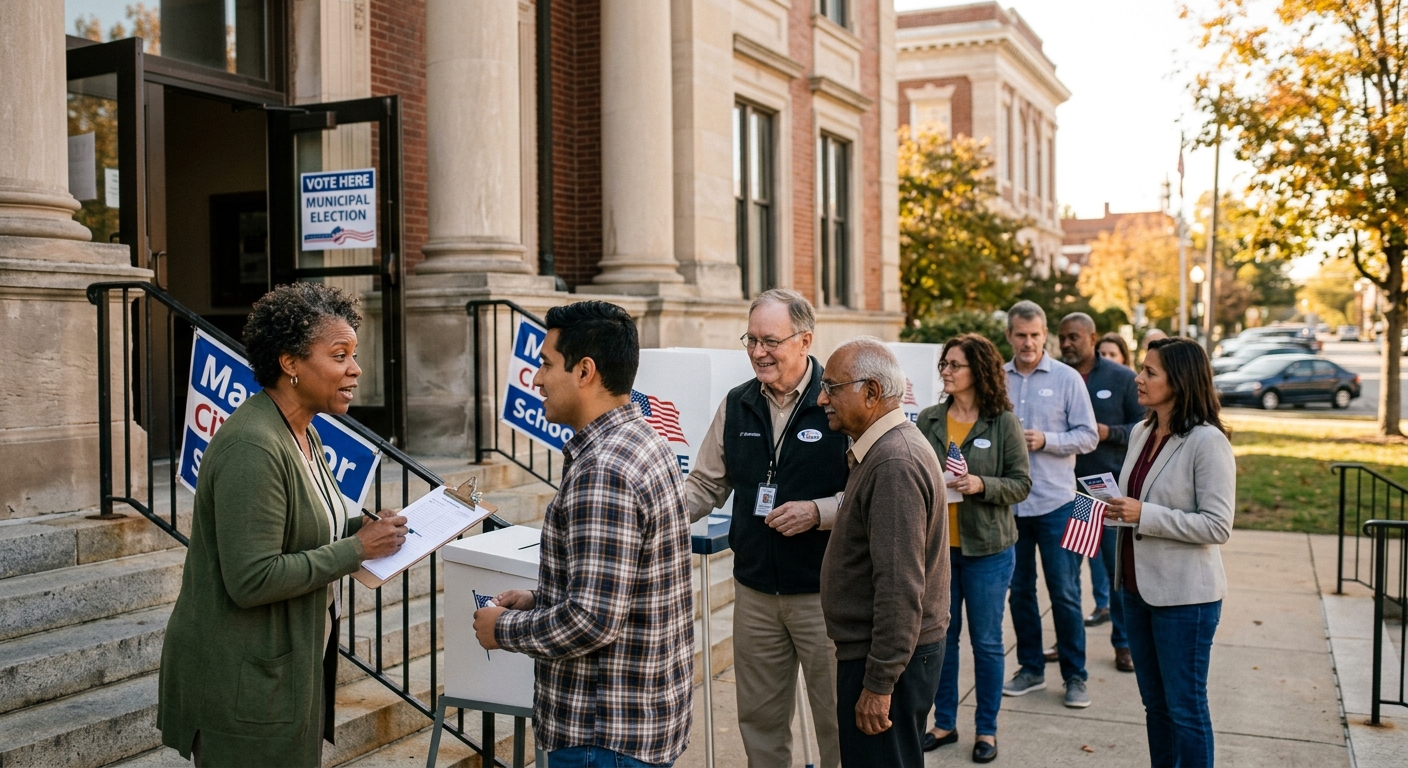
The Hidden Power of State and Local Elections
Every four years, the race for the presidency captures the nation’s attention, dominating headlines, television broadcasts, and social media feeds. This immense focus on federal power often creates a significant blind spot for the electorate: the critical importance of state and local elections. While national policies set broad frameworks, the daily realities of governance, civil liberties, and criminal justice are largely dictated by officials whose names appear much further down the ballot. Understanding the profound impact of these down-ballot races is the first step toward comprehensive civic engagement and protecting essential rights within your community.
Under the United States system of federalism, the Tenth Amendment reserves substantial powers to state and local governments. These entities manage public health, education, election administration, law enforcement, and commerce within their borders. Consequently, the individuals occupying state executive mansions, local courthouses, and county sheriff’s offices wield tremendous influence over how laws are interpreted, enforced, and experienced by everyday citizens. When voters skip the bottom of the ticket, they inadvertently surrender their voice on the most immediate and localized issues affecting their lives, from the condition of neighborhood roads to the fairness of the local criminal justice system.
Executive Authority: The Far-Reaching Role of Governors
Governors function as the chief executive officers of their respective states, wielding authority that parallels, and in some localized aspects exceeds, that of the presidency. Their most visible power is the legislative veto. A governor can block legislation passed by the state assembly, preventing it from becoming law unless overridden by a supermajority. In many states, governors also possess a line-item veto, allowing them to strike specific financial allocations from budget bills without rejecting the entire package. This enables them to single-handedly shape state spending on public services, healthcare, and infrastructure.
Beyond legislative involvement, governors possess significant unilateral authority through executive orders. These directives can declare states of emergency, deploy the National Guard, and manage public health crises. During natural disasters or civic unrest, the governor’s response dictates the speed and nature of state intervention. Furthermore, governors act as the chief administrative officers, appointing the heads of crucial state agencies such as departments of education, environmental protection, and public health.
Perhaps their most profound impact on individual lives lies in their power of clemency. Governors typically have the authority to grant pardons, commute sentences, or offer reprieves to individuals convicted of state crimes. In an era of evolving perspectives on criminal justice, a governor’s willingness to exercise this power can literally mean the difference between life and death for those on death row, or offer a second chance to those serving harsh sentences under outdated statutes.
The State Judiciary: Unsung Arbiters of Civil Liberties
While the United States Supreme Court occupies the spotlight in judicial news, state courts handle over 90 percent of all litigation in the country. At the apex of these systems sit State Supreme Courts, acting as the final word on the interpretation of state laws and state constitutions. Their rulings resonate deeply through everyday life, affecting everything from property disputes and corporate regulations to fundamental civil rights.
A crucial legal doctrine known as “independent state grounds” or “new judicial federalism” highlights the immense power of state supreme courts. State constitutions can, and often do, provide broader protections for civil liberties than the federal Constitution. For instance, many state constitutions contain explicit guarantees regarding the right to privacy, the right to a free public education, and specific protections for environmental conservation. State supreme court justices interpret these unique provisions, making them the ultimate defenders of rights that may not even exist at the federal level.
The methods by which these powerful judges ascend to the bench vary wildly across the nation. Some states utilize partisan or non-partisan elections, directly involving voters in the selection process. Other states rely on gubernatorial appointments, legislative selections, or merit-based retention elections. In jurisdictions where voters elect their judges, informed participation is vital, as these jurists will establish legal precedents that govern the state for generations.
Defending the State: The Attorney General
The Attorney General (AG) serves as a state’s chief legal officer and top law enforcement official. Operating at the intersection of law and politics, the AG’s office wields broad discretionary power that significantly impacts both corporate behavior and individual rights. One of their primary duties is defending the state when its laws or agencies are sued. If a state legislature passes a controversial statute regarding election access or environmental regulations, the AG decides how vigorously to defend that law in court.
Conversely, Attorneys General also play a proactive role by initiating lawsuits on behalf of the state’s citizens. They frequently lead consumer protection initiatives, suing corporations for deceptive business practices, antitrust violations, or environmental pollution. In recent years, multi-state litigation led by coalitions of AGs has resulted in massive settlements against pharmaceutical companies regarding the opioid crisis and against major financial institutions for predatory lending.
Furthermore, AGs issue formal legal opinions that guide the actions of state agencies and local governments. While not technically binding law, these opinions carry significant weight and often dictate how a state will interpret new legislation or comply with federal mandates. Because in 43 states the Attorney General is directly elected by the public, voters have a direct say in determining the legal priorities and protective focus of their state government.
Guardians of the Ballot: Secretaries of State
The office of the Secretary of State has emerged from administrative obscurity to become a focal point of modern civic engagement. In the vast majority of states, the Secretary of State serves as the chief election official. They do not merely count votes; they establish the logistical framework that determines how easily a citizen can cast their ballot.
Secretaries of State are responsible for maintaining accurate voter registration databases. They must balance the necessity of keeping the rolls up-to-date with the risk of improperly purging eligible voters. Their administrative decisions cover critical logistical details, including the certification of voting machines, the design of ballots, and the allocation of polling resources. If a Secretary of State fails to distribute adequate voting equipment to populous counties, the result can be hours-long lines that effectively disenfranchise working citizens.
Moreover, these officials often draft the training manuals for local poll workers and interpret complex election statutes regarding absentee voting, signature matching, and early voting periods. During closely contested elections, their role in certifying the final results makes them the ultimate stewards of democratic integrity within their borders. Choosing a competent, fair-minded Secretary of State is fundamental to ensuring that every other election is conducted equitably.
The Front Lines of Justice: District Attorneys and Sheriffs
At the county and municipal levels, the criminal justice system is heavily directed by two elected positions: District Attorneys (DAs) and Sheriffs. Their daily decisions impact the safety, liberty, and financial stability of community members more directly than almost any federal policy.
District Attorneys possess immense prosecutorial discretion. When an individual is arrested, it is the DA’s office, not the police, that decides whether to press charges, what specific crimes to charge, and what bail amounts to recommend. A DA can choose to pursue maximum mandatory minimum sentences or, conversely, route non-violent offenders toward diversion programs, mental health courts, or drug rehabilitation. They also determine whether to prosecute low-level offenses, profoundly shaping the reality of mass incarceration within their jurisdiction.
Sheriffs, functioning as the highest law enforcement officers in a county, typically manage the county jail system. They dictate the living conditions for inmates—most of whom have not been convicted of a crime and are merely awaiting trial because they cannot afford bail. Sheriffs establish policies regarding inmate access to healthcare, rehabilitation programs, and communication with families. Additionally, sheriff’s deputies are responsible for executing evictions, serving warrants, and enforcing civil court orders. Because they are directly accountable to the voters, community standards and expectations can strongly influence a sheriff’s approach to local policing.
Summary of Key Down-Ballot Offices
To better understand the distinct roles of these officials, review the following breakdown of their primary responsibilities and localized impact:
| Office | Jurisdiction | Primary Responsibilities and Civic Impact |
|---|---|---|
| Governor | Statewide | Signs or vetoes state laws, directs state agencies, manages state emergencies, and issues pardons or clemency. |
| State Supreme Court | Statewide | Interprets the state constitution, issues final rulings on state laws, and sets legal precedents for civil liberties. |
| Attorney General | Statewide | Defends state laws in court, initiates consumer protection lawsuits, and enforces state civil rights protections. |
| Secretary of State | Statewide | Administers elections, maintains voter rolls, certifies voting machines, and oversees corporate registrations. |
| District Attorney | County / District | Determines criminal charges, recommends bail amounts, and negotiates plea deals for state-level offenses. |
| Sheriff | County | Manages county jails, oversees local law enforcement outside city limits, and executes civil court orders (e.g., evictions). |
Frequently Asked Questions (FAQs)
What does “down-ballot” mean?
The term “down-ballot” refers to the offices and initiatives listed below the most prominent races (like the President or Governor) on a voting ballot. These include state legislators, judges, mayors, district attorneys, and local referendums. Because voters often experience “ballot fatigue,” they sometimes leave these sections blank, missing out on crucial local decisions.
Can state laws override federal laws?
Under the Supremacy Clause of the U.S. Constitution, federal law generally supersedes conflicting state law. However, states have the authority to create laws in areas where the federal government has not explicitly claimed jurisdiction. Furthermore, state constitutions can provide greater rights and protections to their citizens than the federal Constitution, though they cannot provide fewer.
Why do sheriffs and district attorneys matter if the legislature makes the laws?
While legislatures draft and pass laws, DAs and Sheriffs have significant discretion in how those laws are enforced. A DA can choose not to prosecute certain low-level offenses or prioritize diversion programs over prison time. Sheriffs dictate the deployment of law enforcement resources and the daily conditions of county jails, directly impacting community safety and human rights.
Conclusion: Maximizing Your Civic Voice
A functioning democracy requires active, informed participation at all levels of government. While national figures dictate the overarching narrative of the country, state and local officials are the architects of your daily reality. From the quality of the air you breathe to the fairness of your local courthouse and the accessibility of your polling location, down-ballot elected officials wield profound authority over your community. By researching local candidates and voting down the entire ballot, you ensure that your voice is heard not just in the halls of Washington D.C., but in the very streets where you live and work. True civic empowerment begins at the local level.
References
- What is an Attorney General? — National Association of Attorneys General. 2024. https://www.naag.org/attorneys-general/what-is-an-attorney-general/
- State and Local Government — The White House. 2024. https://www.whitehouse.gov/about-the-white-house/our-government/state-local-government/
- Secretaries of State: What They Do and Why They Matter — Brennan Center for Justice. 2022-07-28. https://www.brennancenter.org/our-work/research-reports/secretaries-state-what-they-do-and-why-they-matter
- Methods of Judicial Selection — National Center for State Courts. 2024. https://www.ncsc.org/information-and-resources/improving-the-courts/judicial-selection
Similar Articles








Read full bio of medha deb


