
Local Elections: The Ultimate Shield for Immigrant Rights
Discover how city councils and sheriffs hold the keys to defending communities.
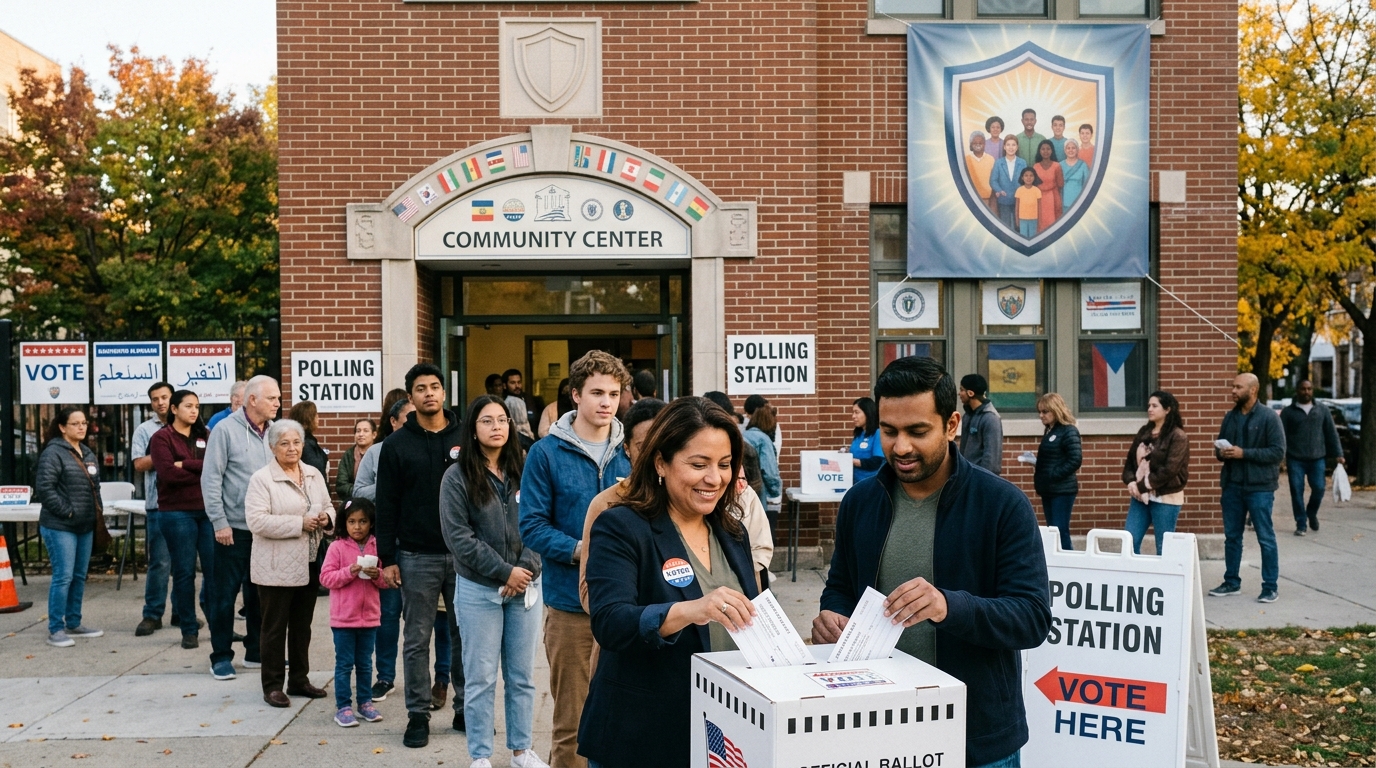
The Omitted Reality of Down-Ballot Voting
When citizens head to the voting booths, the glaring spotlight of the media and public discourse is almost exclusively fixed on federal elections. Presidential candidates and congressional hopefuls dominate the airwaves, debating sweeping national reforms, border policies, and comprehensive immigration legislation. However, this national fixation often obscures a critical reality: the day-to-day enforcement of immigration law, and the immediate protection of civil liberties for immigrant communities, is largely dictated by local, down-ballot races. Local elected officials—from county sheriffs to city council members and county commissioners—wield an astonishing amount of unheralded power over how federal directives are interpreted, facilitated, or restricted within municipal borders.
The structural mechanics of the United States legal system dictate that federal authorities like Immigration and Customs Enforcement (ICE) rely heavily on the logistical support, intelligence sharing, and infrastructure of local law enforcement and municipal governments. Without local cooperation, federal agencies face significant operational bottlenecks. Consequently, a voter’s choice for a local sheriff or a city council representative can be the deciding factor in whether a community becomes a sanctuary of civil rights or an active participant in federal deportation pipelines. In states like Colorado, the ongoing tension between state-level protections and local enforcement mechanisms perfectly illustrates why off-year and local elections are the definitive battleground for immigrant rights.
The Outsized Power of the County Sheriff
In the architecture of local government, perhaps no single figure holds more unilateral sway over the fate of immigrant residents than the county sheriff. Unlike appointed police chiefs who report to a mayor or a city manager, sheriffs are directly elected by the public. They operate with a broad mandate and significant autonomy, primarily overseeing the administration of county jails, courthouses, and law enforcement in unincorporated areas. This jurisdictional authority places them at the exact intersection where local policing meets federal immigration enforcement.
The Mechanics of Information Sharing and Detainers
The collaboration between a sheriff’s department and federal immigration authorities typically manifests behind the closed doors of the county jail. When an individual is arrested for any infraction—ranging from a minor traffic violation to a more serious offense—their fingerprints are routinely run through federal databases. If ICE suspects the individual may be undocumented or subject to deportation, they issue what is known as a “civil detainer” or an ICE hold.
An ICE detainer is essentially an administrative request, not a warrant signed by a judge. It asks the local sheriff to hold the individual in the county jail for an additional 48 hours beyond the time they would otherwise be legally released (such as after posting bail or having charges dropped). This extra time allows federal agents to arrive and take the individual into federal custody. The decision to honor or reject these warrantless requests rests entirely on the policies instituted by the elected sheriff. Sheriffs who prioritize immigrant rights often refuse to honor these administrative holds, arguing that holding a person without a judicial warrant violates Fourth Amendment protections against unreasonable search and seizure. Conversely, sheriffs who platform on hardline immigration stances actively utilize county resources to facilitate these federal transfers.
The 287(g) Program and Deputized Locals
Beyond honoring detainers, some sheriffs take federal cooperation a step further by entering into 287(g) agreements with the Department of Homeland Security . Named after the corresponding section of the Immigration and Nationality Act, these formal memorandums of agreement effectively deputize local law enforcement officers to perform the functions of federal immigration agents. Under a 287(g) program, county deputies can interrogate individuals about their immigration status, serve warrants, and initiate deportation proceedings directly from the local jail.
The implementation of a 287(g) program fundamentally alters the dynamic between local police and the community. It blurs the lines between local criminal justice and federal civil immigration enforcement, transforming local deputies into an extension of ICE. Because the sheriff has the unilateral authority to sign or terminate these agreements, electing a sheriff who opposes the deputization of local officers is one of the most direct ways a community can protect its immigrant population.
Municipal Governance: City Councils and Private Detention
While sheriffs control the jails, city councils and mayoral offices manage the geographic and operational landscape of the municipality itself. The influence of city council members on immigrant rights might seem abstract compared to law enforcement, but their power over zoning laws, public health regulations, and municipal budgeting makes them critical gatekeepers, especially concerning the operation of private immigration detention centers.
Zoning, Permitting, and Public Health Oversight
Federal immigration authorities frequently rely on private, for-profit prison corporations to house detained immigrants. These sprawling facilities do not materialize in a vacuum; they must be constructed and operated within the boundaries of a local municipality. City councils possess the authority to approve or deny zoning permits, building expansions, and utility access for these privately run detention centers.
Furthermore, city councils can implement robust public health and safety ordinances that subject these secretive facilities to local oversight. By passing ordinances that require regular health inspections, mandate transparent reporting of disease outbreaks, and establish community oversight boards, city councils can pierce the veil of secrecy that often surrounds private detention centers. If a facility fails to meet local health codes or safety standards, municipal leaders have the leverage to impose fines, restrict operations, or deny future expansion permits. Therefore, electing city council members who are willing to hold for-profit detention operators accountable is a vital mechanism for ensuring humane conditions for detained immigrants.
County Commissioners: The Power of the Public Purse
County commissioners, often the unsung administrators of regional governance, wield the ultimate tool of policy enforcement: the public purse. The board of county commissioners is responsible for approving the budgets for almost all county departments, including the sheriff’s office. This financial leverage provides commissioners with the ability to financially incentivize or restrict a sheriff’s cooperation with federal immigration authorities.
Beyond restricting funds for immigration enforcement, forward-thinking county commissioners can allocate public money toward initiatives that actively defend immigrant rights. One of the most impactful allocations is the funding of universal representation programs or legal defense funds. In the immigration court system, individuals facing deportation are not legally entitled to a government-appointed public defender. This leaves thousands of immigrants, including asylum seekers and long-term residents, to navigate the complex labyrinth of federal immigration law alone. By directing municipal or county funds to legal aid organizations, county commissioners can ensure that vulnerable community members have access to qualified legal counsel, dramatically increasing their chances of a fair hearing and remaining with their families.
The Collision of State Law and Local Enforcement
The battle over immigrant rights is often characterized by a profound friction between progressive state legislation and resistant local enforcement. Colorado serves as a prime example of this legal and political tug-of-war. In 2019, the Colorado General Assembly enacted House Bill 19-1124, a landmark piece of legislation designed to protect state residents from federal government overreach . The law explicitly prohibited local law enforcement officers from arresting or detaining individuals solely on the basis of a civil immigration detainer without a warrant signed by a judge.
Despite this clear legislative mandate, state laws are only as effective as the local officials willing to enforce them. The decentralization of local government means that rogue deputies or ideologically opposed sheriffs can and do attempt to circumvent state protections. The consequences of such subversion are legally severe but politically complex.
Recent Legal Battles and Accountability
The tension between state mandates and local defiance regularly spills into the courtroom. For instance, in July 2025, the state of Colorado, led by Attorney General Phil Weiser, took the unprecedented step of suing a local sheriff’s deputy . The deputy was accused of violating the state statutes established by HB19-1124 by actively sharing identifying information and aiding federal immigration agents in the arrest of a local college student. This legal action highlighted the persistent reality that local law enforcement personnel sometimes prioritize federal ICE cooperation over adherence to their own state laws .
This ongoing conflict underscores a crucial democratic principle: passing state-level sanctuary policies is insufficient if the local officials tasked with executing those policies are fundamentally opposed to them. Voters must ensure that the sheriffs, police chiefs, and local prosecutors they elect are committed to upholding state laws that protect civil liberties, rather than colluding with federal agencies in defiance of those protections.
Community Safety and the Trust Deficit
The consequences of local government entanglement with federal immigration enforcement extend far beyond the individuals facing deportation; they compromise the safety and well-being of the entire community. When local law enforcement agencies act as a proxy for ICE, a profound trust deficit is generated within immigrant neighborhoods. If victims of domestic violence, witnesses to violent crimes, or individuals experiencing a public health crisis believe that interacting with local police will result in their deportation or the deportation of a family member, they will inevitably retreat into the shadows.
This chilling effect creates a dangerous asymmetry of information, paralyzing the justice system and allowing predatory criminal behavior to go unchecked. Numerous sociological studies and public safety analyses have demonstrated that jurisdictions that disentangle local policing from federal immigration enforcement experience higher rates of crime reporting and improved public safety metrics. Trust is the foundational currency of effective community policing, and local elections determine whether that currency is cultivated or destroyed.
Jurisdictional Power Dynamics
To fully understand the leverage points within local elections, it is helpful to visualize the distinct roles and authorities of various local offices regarding immigration policy.
| Local Office | Primary Jurisdiction | Impact on Immigrant Rights |
|---|---|---|
| County Sheriff | Jails, unincorporated law enforcement | Decides on honoring ICE detainers; signs or terminates 287(g) agreements. |
| City Council | Municipal ordinances, zoning, public health | Approves/denies zoning for private detention centers; creates civilian oversight boards. |
| County Commissioners | County budget allocation, social services | Funds legal defense initiatives; restricts county resources used for federal enforcement. |
| District Attorney | Criminal prosecution | Determines charging metrics; can consider immigration consequences during plea deals. |
Frequently Asked Questions (FAQs)
- What is the difference between a judicial warrant and an ICE civil detainer?
A judicial warrant is signed by a judge after reviewing evidence that establishes probable cause of a crime, strictly adhering to constitutional protections. An ICE civil detainer is merely an administrative request generated by a federal agency asking a local jail to hold a person based on a suspected civil immigration violation, lacking independent judicial oversight. - Can a local city council shut down an existing federal immigration detention center?
While a city council generally cannot directly “shut down” a federal facility, they can enforce stringent local zoning, public health, and building codes. If a privately operated facility repeatedly violates these local ordinances, the council can revoke operating permits or impose heavy fines, severely limiting or halting the facility’s operations. - How does local ICE cooperation affect public safety?
When local police cooperate with ICE, it often severely damages community trust. Immigrant residents—regardless of their legal status—become fearful of reporting crimes, acting as witnesses, or seeking emergency services, which ultimately makes the entire community less safe by allowing criminals to exploit vulnerable populations. - Why do state laws protecting immigrants sometimes fail at the local level?
State laws rely on local authorities (like sheriffs and deputies) for implementation. If local officials are ideologically opposed to the state law, they may look for loopholes, quietly share information with federal agents, or wait to be sued by the state attorney general before changing their internal practices.
Conclusion
The defense of civil liberties and immigrant rights cannot rely solely on the outcomes of presidential elections or the shifting tides of federal congressional majorities. The most immediate, tangible impacts on the lives of immigrant families are determined at the municipal and county levels. The power to reject warrantless detainers, the authority to regulate for-profit detention centers, and the ability to fund legal defense networks all rest in the hands of local officials. By recognizing the omitted reality of down-ballot voting and engaging fiercely in local elections, communities possess the definitive power to build localized sanctuaries of justice, ensuring that the rights and dignity of all residents are rigorously protected from federal overreach.
References
- HB19-1124: Protect Colorado Residents From Federal Government Overreach — Colorado General Assembly. 2019-05-28. https://leg.colorado.gov/bills/hb19-1124
- Colorado AG explains why the state is suing a deputy who aided ICE — PBS News. 2025-07-30. https://www.pbs.org/newshour/show/colorado-ag-explains-why-the-state-is-suing-a-deputy-who-aided-ice
- Colorado deputies disciplined for helping federal immigration agents — Associated Press (AP News). 2025-07-31. https://apnews.com/article/colorado-deputies-disciplined-immigration-cooperation
- 287(g) Memorandum of Agreement — U.S. Immigration and Customs Enforcement. https://www.ice.gov/doclib/287gMOA/elpasocountyco.pdf
Similar Articles








Read full bio of Sneha Tete


