
Inside LMFAO’s Name: Trademarks, Censorship, and Branding
How a party-rock duo turned an internet acronym into a legally protected, family-friendly music brand.
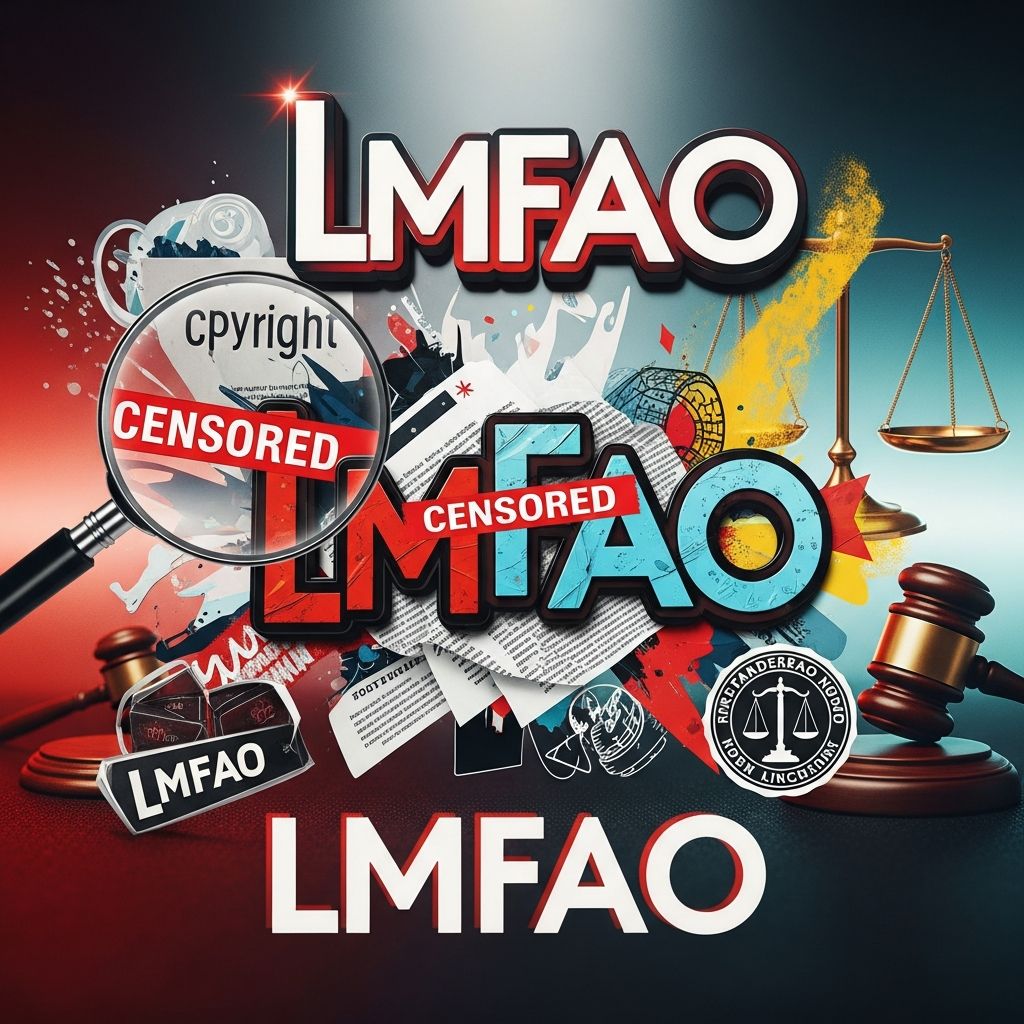
When Internet Slang Meets the Law: The LMFAO Name Story
The dance-pop duo LMFAO, famous for hits like “Party Rock Anthem” and “Sexy and I Know It,” did more than reshape club music—they tested how far U.S. trademark law will bend for a name rooted in online slang. Their dispute with the U.S. Patent and Trademark Office (USPTO) over what LMFAO “really” stands for offers a revealing look at morality rules, branding, and the collision between internet culture and formal legal systems.
What began as a casual acronym meaning “laughing my freaking ass off” in official filings became a case study in how to turn a potentially offensive phrase into a marketable and legally protectable brand.
From Family Chat to Global Brand
Before LMFAO became a global act, they were a local Los Angeles duo formed in 2006 by Redfoo (Stefan Gordy) and Sky Blu (Skyler Gordy), relatives of Motown founder Berry Gordy. They emerged from the city’s electro-house scene and quickly developed a reputation for high-energy “party rock” performances that blurred the line between comedy and club culture.
The Origin of the Acronym
Like many modern band names, LMFAO’s started as a joke in an online chat. According to interviews, a working name of “Sexy Dudes” drew laughter from a family member, who responded with the internet slang acronym “LMFAO.” The four letters stuck, capturing the duo’s irreverent persona and internet-savvy image.
Outside the law, LMFAO is widely known to mean “laughing my f—ing ass off,” but the group professionally advanced a softer version—“laughing my freaking ass off”—when dealing with formal institutions.
Why the Meaning Suddenly Mattered
In normal conversation, few people ask an artist to spell out their acronym. But the moment a name is submitted for federal trademark protection, the USPTO may scrutinize:
- Whether the mark is descriptive or distinctive
- Whether it is confusingly similar to existing marks
- Whether it includes immoral or scandalous matter under Section 2(a) of the Lanham Act (in force at the time LMFAO filed)
That third element is where LMFAO’s name ran into trouble.
Trademark Law and “Immoral or Scandalous” Marks
Historically, the Lanham Act allowed the USPTO to deny registration to trademarks it considered offensive, including those containing explicit profanity or vulgar terms. In practice, this meant that applicants often had to either:
- Convince the Office that the words were not actually profane in context
- Recast the meaning in a more neutral or family-friendly way
LMFAO’s First Attempt: A Profanity Problem
When LMFAO first sought to register their name around 2008, USPTO examiners refused the application, citing the mark as containing “immoral, deceptive, or scandalous” material tied to the profane reading of the acronym. The underlying concern was the assumption that the “F” stood for the explicit four-letter word, not the sanitized “freaking.”
Because formal registration brings significant commercial benefits—nationwide priority, potential statutory damages in infringement cases, and stronger licensing rights—the refusal was more than symbolic. For a touring and recording act, the name is a central business asset.
Reframing the Acronym for the Record
In later filings, LMFAO responded by explicitly stating in the Miscellaneous Statement section of their trademark applications that the name stands for “laughing my freaking ass off.” This move served two purposes:
- It provided an official, non-profane definition for examiners to rely on.
- It allowed the band to maintain their recognizable acronym while presenting a cleaned-up version in legal and commercial contexts.
This is a familiar compromise in branding: preserve the edgy surface, but supply a legally palatable backstory when necessary.
Branding vs. Censorship: A Delicate Balance
LMFAO’s case highlights the tension between authentic image and regulatory constraints. For a band built on outrageous party themes, the original, profane reading of LMFAO matched fan expectations and internet culture. Yet the machinery of trademark law pushed them toward a more neutral, family-compatible explanation.
| Aspect | Uncensored Interpretation | Trademark-Friendly Version |
|---|---|---|
| Spoken meaning among fans | Laughing my f***ing ass off | Laughing my freaking ass off |
| Perceived tone | Explicit, adult humor | Playful, PG-13 humor |
| Regulatory risk (pre-2019) | High – likely refusal | Lower – easier to register |
| Market access | Possible issues with broadcasters and advertisers | Broader mainstream appeal |
Why Registration Matters for Artists
For a globally recognized duo like LMFAO, the name is a multi-million-dollar asset. A registered trademark helps:
- Prevent confusion by blocking others from using similar marks in music, live shows, or merchandise.
- Streamline licensing for endorsements, brand collaborations, and sync deals.
- Strengthen enforcement in both court actions and online takedown processes.
When LMFAO later challenged usage of their name in unrelated commercial products—such as disputes over beer branding—registered rights provided leverage in negotiations and settlement discussions.
LMFAO in the Marketplace: A Name that Sells
LMFAO’s brand power extended far beyond the acronym. Their 2011 single “Party Rock Anthem” became a worldwide hit, topping charts in the U.S., Canada, Australia, and multiple European markets, and ranking among the best-selling digital singles of that year. Follow-up releases like “Sexy and I Know It” entrenched the duo as mainstream entertainment, not just a niche internet act.
How the Name Reinforced the Image
The group’s name functioned as an instant signal of their identity:
- Humor-driven: The acronym is rooted in online laughing slang, aligning with comedic lyrics and exaggerated visuals.
- Party-centric: Their self-described “party rock” style is embedded directly in song titles and performance personas.
- Internet-native: Using a chat-room acronym created a natural bridge to social media, memes, and viral culture.
By softening the “official” meaning to “freaking,” LMFAO preserved the playful, rule-breaking mood while remaining acceptable to broadcast partners, advertisers, and regulators.
What Changed in the Law After LMFAO’s Case
At the time LMFAO first tried to register their mark, the USPTO routinely refused marks considered “immoral or scandalous.” However, U.S. Supreme Court decisions in the following decade significantly altered that landscape.
- In 2017, Matal v. Tam held that the prohibition on “disparaging” marks violated the First Amendment.
- In 2019, Iancu v. Brunetti struck down the ban on “immoral or scandalous” marks, opening the door for registration of terms that had long been deemed vulgar.
If LMFAO had applied after these rulings, the USPTO’s ability to deny registration based purely on alleged profanity would have been far more limited. In that sense, their experience reflects an earlier era of trademark practice—one in which artists often had to edit themselves on paper, even if their audiences knew the uncensored reality.
Lessons for Artists and Brands Choosing Edgy Names
LMFAO’s trademark journey offers practical insights for anyone building a brand around slang, innuendo, or shock value.
Key Takeaways
- Expect scrutiny of acronyms. If your mark is made of initials, be prepared to explain what they stand for in official documents.
- Craft a defensible “clean” meaning. Like LMFAO’s “laughing my freaking ass off,” a plausible, non-profane expansion can reduce regulatory friction—especially in jurisdictions that still maintain morality standards.
- Separate fan lore from legal record. It is possible for the “real” story of a name to circulate informally while a more formal version appears in filings, press kits, and contracts.
- Consider long-term merchandising. Names that are too explicit can limit partnerships with retailers, sponsors, and broadcasters, even if the law technically allows registration.
- Monitor foreign rules. Even as U.S. restrictions have eased, other countries may still refuse vulgar or offensive marks under national trademark laws.
Frequently Asked Questions (FAQs)
Q: What does LMFAO officially stand for in legal documents?
In trademark filings, LMFAO is stated to mean “laughing my freaking ass off”, a toned-down version of the phrase widely used in online slang.
Q: Why did the USPTO initially refuse to register the LMFAO name?
The Office treated the acronym as containing immoral or scandalous matter under pre-2019 rules, essentially assuming a profane expansion of the “F” and thus refusing registration on morality grounds.
Q: Could a name like LMFAO be registered more easily today?
Yes. After the U.S. Supreme Court’s decision in Iancu v. Brunetti, the USPTO can no longer deny registration simply because a mark is considered vulgar or scandalous, so acronyms with profane meanings face fewer legal barriers.
Q: Did LMFAO’s name cause problems only with the government, or also in business?
Beyond government review, an edgy name can complicate relationships with broadcasters, advertisers, and family-focused retailers. Although LMFAO achieved mainstream success, their official softening of the acronym helped make the brand more acceptable to wider commercial partners.
Q: Why bother obtaining a trademark if fans already know the band?
A registered trademark strengthens legal rights, deters copycats, simplifies licensing and merchandising, and provides clearer remedies if others exploit the name on products like clothing, beverages, or digital content.
References
- Meaning Behind the Party-Rocking Band Name: LMFAO — American Songwriter. 2023-08-09. https://americansongwriter.com/meaning-behind-the-party-rocking-band-name-lmfao/
- LMFAO – Biography — IMDb. 2024-01-01 (last updated, approximate). https://www.imdb.com/name/nm3395864/bio/
- LMFAO — Wikipedia. 2024-06-01 (last updated, approximate). https://en.wikipedia.org/wiki/LMFAO
- Los Angeles Based LMFAO Reveals Meaning of Name in Trademark Application — Mandour & Associates, APC. 2011-09-21. https://www.mandourlaw.com/los-angeles-based-lmfao-reveals-meaning-of-name-in-trademark-application/
- Lanham Act, 15 U.S.C. § 1052 — U.S. Government Publishing Office. 2023-01-01. https://uscode.house.gov/view.xhtml?req=granuleid:USC-prelim-title15-section1052
- Matal v. Tam, 582 U.S. 218 — Supreme Court of the United States. 2017-06-19. https://www.supremecourt.gov/opinions/16pdf/15-1293_1o13.pdf
- Iancu v. Brunetti, 588 U.S. 388 — Supreme Court of the United States. 2019-06-24. https://www.supremecourt.gov/opinions/18pdf/18-302_c07d.pdf
Similar Articles








Read full bio of medha deb


