
Beyond LLC Shields: When Courts Pierce the Veil
Discover how courts can strip away LLC protections, exposing owners to personal liability through veil piercing doctrines and real-world examples.
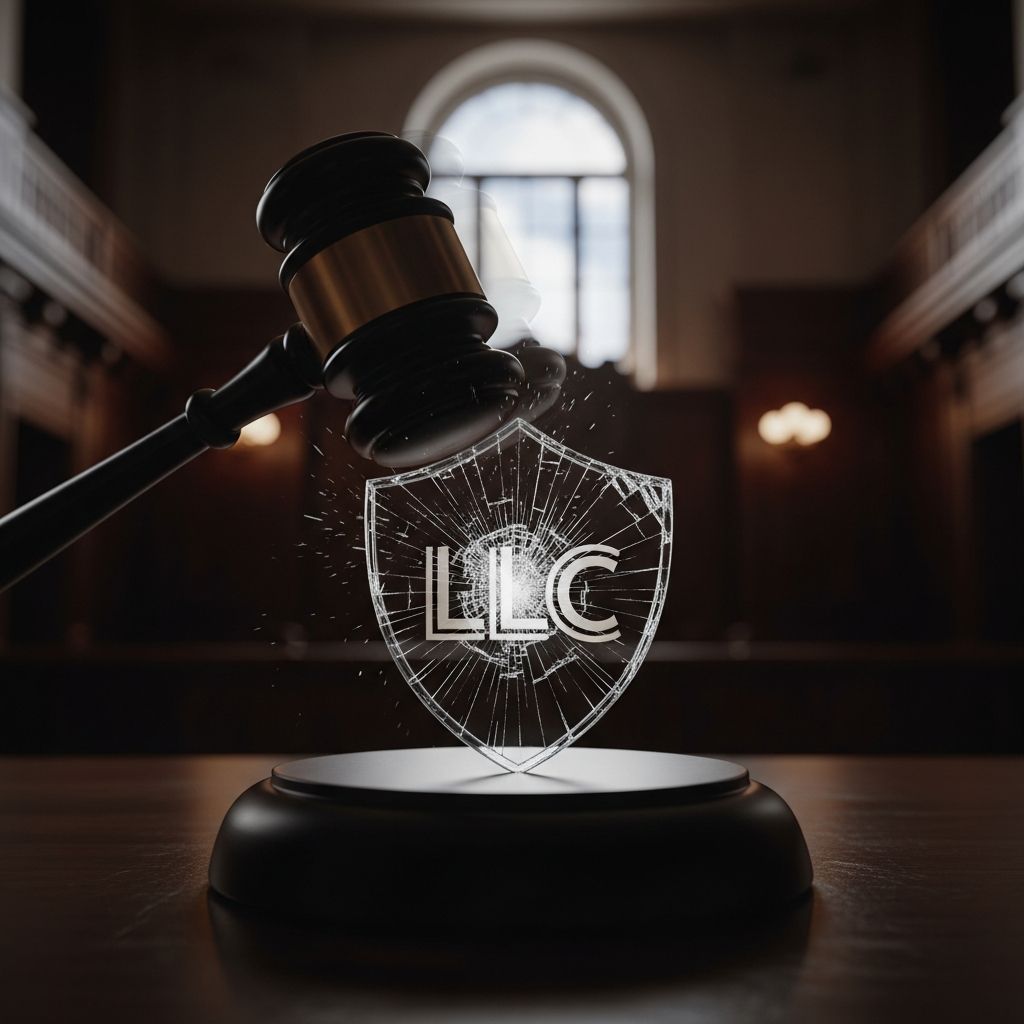
Limited liability companies (LLCs) offer robust protection by separating personal assets from business debts and lawsuits. However, this shield isn’t impenetrable. Courts can “pierce the corporate veil,” holding owners personally liable when the business form is abused. This doctrine balances encouraging entrepreneurship with preventing fraud.
The Core Concept of Veil Piercing
Piercing the corporate veil disregards the legal separation between a company and its owners, allowing creditors or plaintiffs to pursue personal assets. It applies to corporations and LLCs alike, rooted in equity to remedy injustice from misusing the corporate form. Courts invoke it rarely, requiring proof of egregious misconduct like fraud or treating the entity as a mere extension of the owner (alter ego).
Historically, this principle emerged to counter abuse of limited liability, first clarified in cases emphasizing corporate separateness unless formalities are blatantly ignored. For LLCs, the stakes are high: owners risk homes, savings, and investments if protections fail.
Primary Triggers for Court Intervention
Courts examine multiple factors before piercing. No single element suffices; a pattern of abuse must emerge. Key triggers include:
- Fraudulent Use: Using the LLC to perpetrate actual fraud, such as misrepresenting finances to deceive creditors.
- Alter Ego Treatment: Commingling personal and business funds, ignoring formalities like separate bank accounts.
- Undercapitalization: Starting with insufficient funds to cover foreseeable risks, signaling the entity was a sham.
- Failure to Observe Formalities: Skipping meetings, records, or treating the LLC as a personal piggy bank.
In personal injury or contract disputes, these issues amplify when the LLC lacks assets to pay judgments, pushing plaintiffs to target owners.
State-Specific Variations in Application
| State | Key Requirements | Notable Factors | Example Cases |
|---|---|---|---|
| Texas | Actual fraud required; alter ego plus injustice. | Strict under Texas BOC §21.223; poor management alone insufficient. | SSP Partners v. Gladstrong Invs. |
| Colorado | Clear evidence of unity of interest and wrongful purpose. | 8 factors: commingling, thin capitalization, shell usage. | In re Phillips (2006). |
| General U.S. | Egregious abuse; fraud or public policy violation. | Undercapitalization, asset stripping. | Adams v Cape Industries (UK influence). |
Texas demands proof of actual fraud for contractual claims, a high bar protecting owners but limiting plaintiff success. Colorado lists eight factors, from record-keeping to fund diversion, requiring extraordinary evidence. Federally, precedents stress rarity, only for clear evasion of obligations.
Real-World Scenarios and Case Studies
Consider a small LLC where the owner uses company credit cards for family vacations, fails to file annual reports, and drains accounts before a lawsuit. Courts pierced in similar setups, like Colorado’s Phillips case, where commingling and underfunding justified personal liability.
In personal injury, if an underfunded LLC causes harm via negligent operations, owners face exposure if formalities were ignored. Fraud cases, such as misusing the entity to hide assets from creditors, routinely trigger piercing. Internationally, UK cases like Vedanta Resources show parent-subsidiary veils lifted for tortious interference.
Another example: Single-member LLCs treated as personal fiefdoms, with no meetings or records, often fail separateness tests. These illustrate courts’ reluctance but readiness when abuse is blatant.
Strategies to Safeguard Your LLC’s Protections
Business owners can minimize risks through diligent practices:
- Maintain separate finances: Dedicated business accounts, no personal use.
- Observe formalities: Hold meetings, keep minutes, file required documents.
- Adequate capitalization: Fund sufficiently for operations and risks.
- Clear records: Track all transactions, contracts, and decisions separately.
- Avoid guarantees: Limit personal guarantees to essentials.
- Get insurance: D&O and general liability to cover gaps.
Regular compliance audits and legal counsel help. In high-risk industries like construction, extra layers like trusts protect assets.
Consequences of Successful Veil Piercing
If pierced, owners lose limited liability, facing wage garnishment, liens, and asset seizures. Businesses may dissolve if deemed shams. Negotiation leverage shifts: Threats of piercing spur settlements to avoid personal exposure. Long-term, damaged reputations hinder future ventures.
Tax implications arise too, as personal liability can trigger audits. Prevention far outweighs cure.
Frequently Asked Questions
What exactly triggers piercing the corporate veil in an LLC?
Courts look for fraud, alter ego (no separateness), undercapitalization, and ignored formalities. Proof must show these caused harm.
Does piercing apply only to multi-member LLCs?
No, single-member LLCs face equal scrutiny, especially if treated indistinguishably from the owner.
How can I tell if my LLC is at risk?
Self-assess: Separate accounts? Proper records? Adequate funding? Consult an attorney for review.
Is veil piercing common?
Rare; courts protect limited liability to foster business. Requires strong evidence of abuse.
What role does insurance play?
It covers claims without needing piercing, but doesn’t prevent it if formalities fail.
Navigating Veil Piercing in Modern Business
As LLCs proliferate, awareness of veil risks is vital. Evolving case law, like environmental torts piercing parent veils, signals broader application. Owners must prioritize compliance amid growth pressures. By understanding triggers and defenses, entrepreneurs sustain protections while innovating.
For complex setups, multi-entity structures or holding companies add layers, but demand rigorous separation. Ultimately, treating the LLC as truly independent ensures enduring safeguards.
References
- Piercing the Corporate Veil in Texas: What It Means and How It Affects Personal Injury Claims — Ryan Orsatti Law. 2023. https://ryanorsattilaw.com/piercing-the-corporate-veil-in-texas-what-it-means-and-how-it-affects-personal-injury-claims/
- Piercing the Veil — Legal Information Institute, Cornell Law School. Accessed 2026. https://www.law.cornell.edu/wex/piercing_the_veil
- What Does “Piercing the Corporate Veil” Mean? — Underhill Law. 2023. https://underhilllaw.com/business-law/what-does-piercing-the-corporate-veil-mean/
- Piercing the Corporate Veil — Wikipedia (citing primary cases). Accessed 2026. https://en.wikipedia.org/wiki/Piercing_the_corporate_veil
- Piercing the Corporate Veil: A Legal Mechanism for Accountability — VLAA. 2024. https://vlaa.org/piercing-the-corporate-veil-a-legal-mechanism-for-accountability/
- Piercing the Corporate Veil | How to Avoid Personal Liability — JAHLaw. 2023. https://www.jahlaw.com/piercing-the-corporate-veil-how-to-avoid-personal-liability-news-and-events/
Similar Articles








Read full bio of Sneha Tete


