
LLC Formation: State Requirements and Multi-State Considerations
Understanding where and how to establish your LLC for maximum legal protection and tax efficiency.
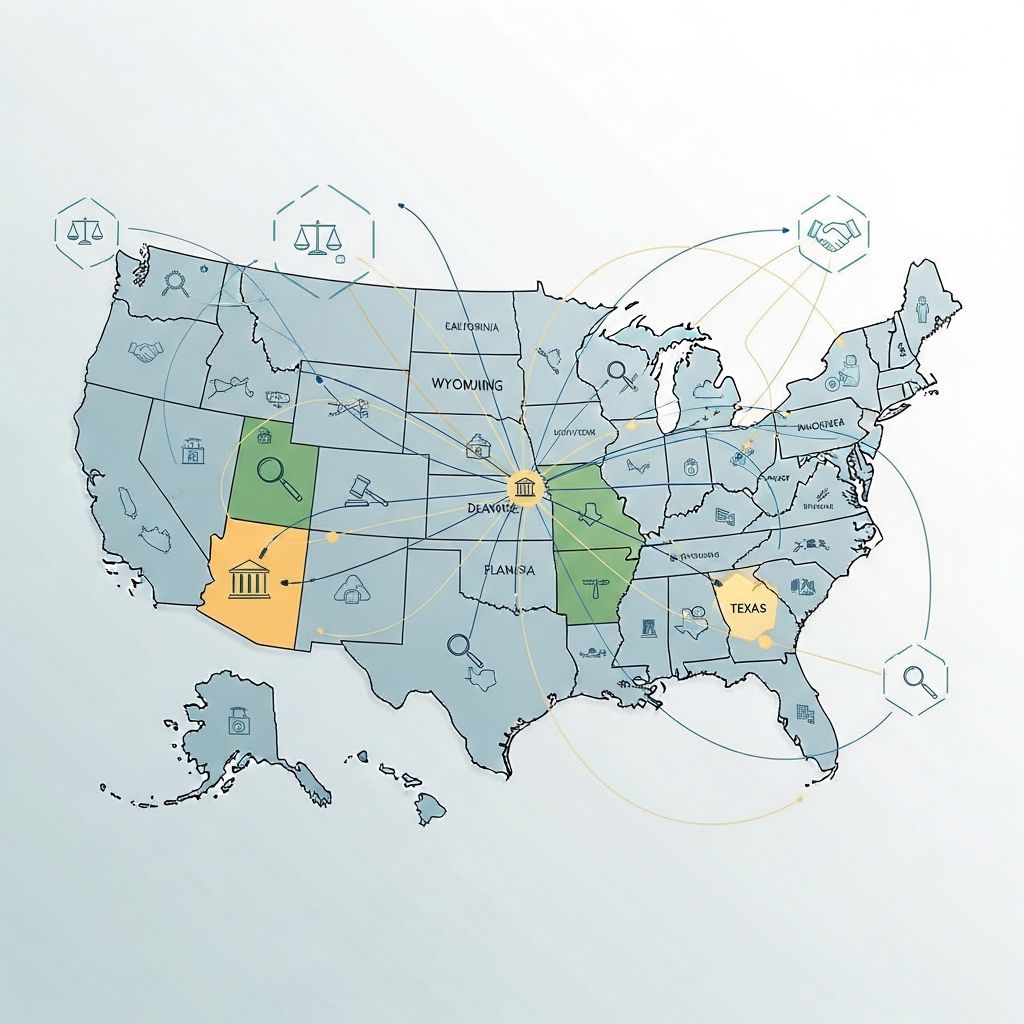
Establishing Your LLC: Navigating State-Specific Formation Requirements
When entrepreneurs decide to establish a limited liability company, one of the most fundamental decisions involves selecting the appropriate jurisdiction for formation. The location where you file your LLC’s Articles of Organization carries significant implications for your business structure, tax obligations, and legal protections. Unlike sole proprietorships or general partnerships, an LLC is a formal business entity that must be created at the state level through a deliberate filing process. Understanding the requirements and options available across different states is essential for making an informed decision that aligns with your business goals and operational realities.
Understanding State-Level LLC Creation
Each state in the United States maintains its own laws governing limited liability company formation. This means that the specific steps, fees, documentation requirements, and regulatory framework differ from one state to another. Generally, the process begins with selecting the state where you will file your formation documents, typically called Articles of Organization, though some states may use alternative terminology such as Certificate of Formation or Certificate of Organization. The state agency responsible for processing these filings is usually the Secretary of State’s office, which serves as the central repository for business entity information.
The filing fee represents one of the most variable costs associated with LLC formation. States charge dramatically different amounts, with some states assessing fees as low as $50, while others may charge $500 or more. This variation in costs has led to the phenomenon of businesses strategically selecting states like Delaware and Wyoming, which are renowned for their favorable legal climates and lower formation costs. However, choosing a formation state based solely on cost savings may not be the optimal approach for all businesses, particularly those with significant in-state operations or specialized regulatory requirements.
Core Documentation and Filing Requirements
The foundation of any LLC formation process rests on completing and submitting the appropriate state-specific documentation. The primary document across virtually all states is the Articles of Organization, which establishes the basic framework of your business entity. At minimum, these filing documents must include your company’s chosen name, the registered agent information, and an authorized signature. The registered agent requirement deserves particular attention, as every LLC must designate an individual or business entity with a physical address in the state where the LLC is registered to receive legal and official notices on the business’s behalf.
Beyond the Articles of Organization, many business formation professionals recommend developing an Operating Agreement, even in states where it is not legally mandated. This internal governance document outlines how the LLC will function operationally, including provisions for member roles and responsibilities, voting rights, profit and loss distribution mechanisms, and procedures for addressing membership changes or disputes. While most states do not require an Operating Agreement as a condition of formation, having one becomes critically important if you anticipate bringing on investors or if disagreements arise between members. Courts often examine the existence and terms of an Operating Agreement when determining liability in disputes, making it a valuable protective document regardless of legal requirements.
Deciding Between Single-State and Multi-State Formation
A question frequently asked by business owners involves whether an LLC formed in one state must also be formally registered in other states where it conducts business. The answer depends on several factors related to the nature and extent of business operations. An LLC that has been properly formed in one state and is conducting business solely within that state generally does not need to establish separate LLCs in other jurisdictions. The LLC’s legal existence and protections extend nationally once it is created through state filing.
However, situations arise where multi-state registration becomes necessary or advisable. If an LLC operates a physical office, maintains inventory, employs staff, or otherwise has a substantial presence in another state, that second state may require the LLC to register as a foreign LLC. This registration process, distinct from forming a new LLC, involves filing documentation with the second state’s Secretary of State office and obtaining authorization to conduct business in that jurisdiction. Foreign LLC registration does not create a separate legal entity but rather authorizes the existing LLC to operate under that state’s jurisdiction.
The distinction between forming an LLC in multiple states versus registering a single LLC as a foreign entity in other states carries important practical implications. Registering as a foreign LLC typically involves lower costs and less administrative complexity than forming multiple separate LLCs. However, each state where you register may impose its own tax obligations, annual renewal requirements, and compliance demands. Business owners must evaluate these ongoing obligations against the potential benefits of maintaining a unified LLC structure across state lines.
Tax Identification and Federal Compliance
Once you have selected your formation state and filed the Articles of Organization, the next critical step involves obtaining a federal Employer Identification Number (EIN) from the Internal Revenue Service. The EIN functions as a tax identification number for your LLC, similar to a Social Security number for individuals. Even if your LLC will not immediately hire employees, obtaining an EIN is often necessary for opening a business bank account, applying for licenses, or establishing business credit.
The application for an EIN can be completed online through the IRS website by submitting Form SS-4, a process that typically requires only a few minutes to complete. This federal identification number becomes the primary identifier the IRS uses to track your LLC’s tax obligations and financial activity. The presence of an EIN also serves an important legal function by helping courts determine whether your LLC maintains a distinct identity separate from your personal finances, which is fundamental to preserving the liability protection that LLC formation provides.
Ongoing State Compliance and Annual Obligations
LLC formation does not represent a one-time event but rather the beginning of ongoing compliance obligations. Each state requires LLCs to maintain their status through periodic filings and fee payments. Most states mandate annual or biennial reporting requirements, sometimes called Annual Reports, Business Renewal Reports, or by other state-specific terminology. These reports serve to confirm that your company information remains current and that your LLC continues to meet its obligations within the state.
Annual compliance fees vary significantly by state, ranging from $50 in some states to $500 or more in others. Some states combine annual reporting requirements with other obligations, such as franchise tax payments or corporate responsibility payments. Failing to file required annual reports can result in serious consequences, including late fees, penalties, and in extreme cases, involuntary dissolution of your LLC by the state. These risks underscore the importance of establishing a reliable system for tracking and meeting all state-specific deadlines and requirements.
Comparative Overview of Formation Approaches
| Formation Scenario | Primary Advantage | Primary Consideration | Best For |
|---|---|---|---|
| Single-State Formation | Simplified compliance and lower costs | Limited to operations within one state | Local businesses with no multi-state operations |
| Home State Formation | Proximity to state resources and compliance offices | May have higher fees than alternative states | Businesses with primary operations in their home state |
| Delaware or Wyoming Formation | Lower formation costs and favorable business laws | Requires foreign LLC registration in operating states | Online businesses or those seeking liability protection |
| Foreign LLC Registration | Maintains single LLC structure across multiple states | Additional state filing and compliance obligations | Expanding businesses entering new states |
Selecting the Optimal Formation State for Your Circumstances
The decision regarding where to form an LLC should reflect your specific business circumstances rather than following a one-size-fits-all template. A business operating exclusively within a single state and serving a local customer base typically benefits most from forming an LLC in that home state. The convenience of proximity to state offices, familiarity with local regulations, and avoidance of multi-state complexity often outweigh any cost savings from forming elsewhere.
Conversely, businesses with a national or online presence that do not maintain physical offices in multiple states may find strategic advantages in forming in states known for favorable business environments. Delaware has long been recognized for its sophisticated corporate law traditions and business-friendly courts, while Wyoming has gained prominence in recent years for its low formation costs and privacy protections. If you choose to form in such a state while conducting significant business elsewhere, you will need to register as a foreign LLC in your primary operating states, accepting the additional compliance responsibilities that come with multi-state registration.
Special Circumstances and Non-Citizen Formation
An important clarification for international entrepreneurs involves the eligibility requirements for LLC formation. Non-U.S. citizens and non-resident aliens are fully permitted to form and own LLCs within the United States. There is no citizenship or residency requirement imposed by either state law or federal regulations. This accessibility makes LLC formation an attractive option for foreign entrepreneurs seeking to establish business operations within the United States while maintaining the liability protection and operational flexibility that the LLC structure provides.
Frequently Asked Questions About LLC Formation
Q: Must an LLC be formed in the same state where it conducts business?
A: No, an LLC does not need to be formed in the state where it operates. You can form an LLC in any state you choose and then register as a foreign LLC in other states where you conduct business. However, registering as a foreign LLC in operating states typically becomes necessary if you maintain a physical presence, hire employees, or have substantial business activities in those states.
Q: What are the minimum steps required to form any LLC?
A: The minimum steps include: selecting your LLC name, choosing a registered agent with an address in your formation state, filing the Articles of Organization with the Secretary of State, obtaining an EIN from the IRS, and opening a business bank account. Most states also require initial tax registration depending on your business type.
Q: Can I form an LLC in a low-cost state and operate only in my home state?
A: Yes, you can form an LLC in any state regardless of where you operate. However, if you maintain a substantial presence in your home state, you will likely need to register as a foreign LLC there and pay additional compliance fees, which may offset the initial savings from choosing a low-cost formation state.
Q: Are operating agreements mandatory for LLC formation?
A: Operating agreements are not legally required in most states for LLC formation, but they are highly recommended. An operating agreement documents how your LLC will be managed, defines member rights and responsibilities, and provides crucial documentation if disputes arise or you seek outside investment.
Q: What happens if I fail to maintain compliance with annual reporting requirements?
A: Failing to file required annual reports can result in late fees, penalties, accumulated taxes, and potentially involuntary dissolution of your LLC by the state. It is essential to track all state-specific deadlines and maintain ongoing compliance to preserve your business’s legal status.
Strategic Recommendations for New LLC Owners
Successful LLC formation requires balancing several competing considerations. While formation costs matter, they should not be the sole determining factor. Consider the location of your actual business operations, the complexity of managing multi-state compliance, and your long-term growth plans. If you operate primarily in one state, forming there typically offers the most straightforward path to maintaining compliance while preserving the protections your LLC structure provides.
Regardless of where you form, establish a reliable system for tracking compliance deadlines, maintaining current registered agent information, and meeting annual reporting and tax filing obligations. The small cost of annual maintenance pales in comparison to the risk of involuntary dissolution and the loss of liability protection. Consider consulting with a business attorney or accountant familiar with your state’s specific requirements to ensure your LLC formation and ongoing compliance strategy aligns with your business objectives and legal obligations.
References
- LLC Formation in the USA: Benefits, Challenges, and Step-by-Step Guide — Clevver. 2025. https://www.clevver.io/llc-formation-in-the-usa-benefits-challenges-and-step-by-step-guide/
- Complete LLC Formation Guide: State, Federal, and Local Processes — Northwest Registered Agent. 2025. https://www.northwestregisteredagent.com/llc
- What Are the Legal Requirements for Forming a Limited Liability Company (LLC) — Tony Smith Law. 2025. https://www.tonysmithlaw.com/blog/what-are-the-legal-requirements-for-forming-a-limited-liability-company-llc/
- Start an LLC Online: Complete 2026 LLC Formation Guide — Tailor Brands. 2026. https://www.tailorbrands.com/llc-formation
- Limited Liability Company (LLC) — Internal Revenue Service. 2025. https://www.irs.gov/businesses/small-businesses-self-employed/limited-liability-company-llc
- Register Your Business — U.S. Small Business Administration. 2025. https://www.sba.gov/business-guide/launch-your-business/register-your-business
Similar Articles








Read full bio of Sneha Tete


