
Creating and Maintaining Living Trusts: A Complete Guide
Master the essentials of establishing, funding, and managing living trusts for your estate.
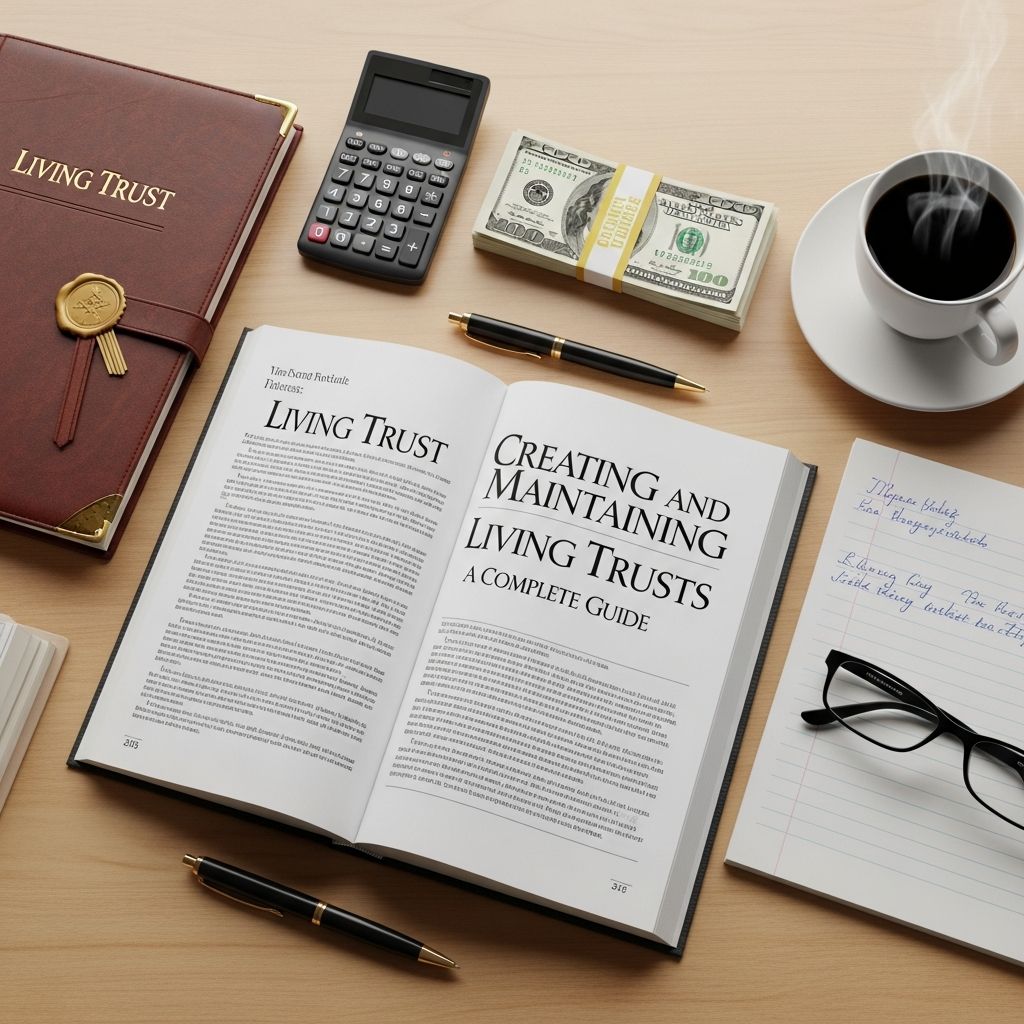
Understanding the Fundamentals of Living Trusts
A living trust represents one of the most effective tools available for comprehensive estate planning and asset management. Unlike a traditional will that only takes effect after you pass away, a living trust becomes active immediately upon creation and remains under your control throughout your lifetime. This legal arrangement allows you to designate how your assets will be managed during your lifetime and distributed after your death, all while maintaining privacy and avoiding costly court processes.
The structure of a living trust involves three primary roles: the grantor (the person who creates the trust and transfers assets into it), the trustee (who manages the trust assets), and the beneficiaries (those who receive the benefits of the trust). In most cases, individuals serve as their own trustee during their lifetime, retaining complete control over their assets. You can also designate a successor trustee who will step in to manage the trust if you become unable to do so or after your death.
The Mechanics of Funding Your Living Trust
Funding a living trust is the critical process of transferring your assets into the trust’s ownership. This step distinguishes a merely created trust from a functioning one. Without properly funding your trust, assets may not receive the legal protections or distribution benefits the trust was designed to provide.
The funding process involves a series of deliberate steps to retitle your assets in the name of the trust. For real property, this typically means recording a new deed with your county recorder’s office, replacing your individual name with the trust’s name as the owner. For financial accounts such as bank accounts, investment portfolios, and brokerage accounts, you will need to contact each institution and request to change the account registration to reflect trust ownership.
Personal property—including vehicles, artwork, jewelry, and household furnishings—can be transferred to the trust through various methods depending on the asset type. Vehicles typically require updated titles through your state’s Department of Motor Vehicles. Stocks and bonds may be transferred through your brokerage firm. Life insurance policies can be transferred to the trust through your insurance provider, often a strategy used to reduce estate tax liability.
Key Assets to Transfer Into Your Trust
- Real estate properties, including your primary residence and investment properties
- Bank accounts and savings vehicles
- Investment accounts and brokerage holdings
- Retirement accounts (with careful consideration of tax implications)
- Life insurance policies
- Vehicles and valuable personal property
- Business interests or partnerships
- Intellectual property and royalties
Avoiding Common Mistakes in Asset Transfer
Many individuals encounter problems with their trusts because they fail to complete the funding process comprehensively. Assets that remain in your individual name at the time of your death will not pass through your trust and may require probate proceedings, defeating one of the primary purposes of establishing the trust in the first place.
A frequent oversight involves acquiring new assets after the trust is created without transferring them into the trust. As your life circumstances change and you make new investments or purchases, you must remember to retitle these assets in the trust’s name. This ongoing responsibility requires diligent record-keeping and attention to detail.
Another critical consideration involves retirement accounts, which carry special tax implications. While some retirement accounts can be transferred to a trust, doing so may trigger unintended tax consequences. Consulting with a tax professional before transferring IRAs, 401(k)s, or similar accounts ensures you understand the implications and can structure the transfer appropriately.
Maintaining Your Trust Over Time
Creating a living trust represents the beginning of an ongoing relationship with that legal document, not the end. Regular maintenance and updates ensure your trust continues to reflect your wishes and adapts to changing circumstances throughout your life.
The dynamic nature of life—including marriage, divorce, the birth of children or grandchildren, significant changes in your financial situation, and shifting priorities—may require modifications to your trust. A revocable living trust offers the flexibility to make these changes during your lifetime without the formalities required to amend a will. You can add or remove beneficiaries, change the distribution amounts, modify the conditions under which assets are distributed, or even dissolve the trust entirely if circumstances warrant.
Annual Review and Updates
Experts recommend conducting a thorough review of your living trust at least every three to five years, or whenever significant life events occur. This review process involves examining whether your trust document still aligns with your current goals, verifying that all major assets are properly funded into the trust, and ensuring your designated trustee and beneficiaries remain appropriate choices.
During these reviews, you should verify that recent property acquisitions have been retitled in the trust’s name and that any changes to existing assets reflect your current wishes. If you’ve moved to a different state, your trust document may need updating to comply with that state’s laws, or you may need to re-record property deeds in the new state.
Managing Trust Assets During Your Lifetime
One significant advantage of a revocable living trust is that it allows you to continue managing and using your assets freely. You retain complete access to your bank accounts, can sell or refinance real estate, make investment decisions, and generally operate your finances as you did before establishing the trust.
However, this freedom comes with recordkeeping responsibility. You should maintain clear documentation of all transactions involving trust assets, including deposits, withdrawals, sales, and purchases. This documentation proves invaluable if questions arise later regarding the trust’s administration or if the trust must be used to address your incapacity.
Preparing for Incapacity
Living trusts serve a vital function that extends beyond planning for death: they provide a mechanism for managing your affairs if you become temporarily or permanently incapacitated. Unlike a will, which has no effect during your lifetime, a trust with a named successor trustee allows for seamless management of your financial affairs if illness, injury, or cognitive decline prevents you from handling these responsibilities yourself.
By designating a successor trustee in your trust document, you avoid the need for expensive and time-consuming court proceedings to establish a guardianship or conservatorship. Your successor trustee can access trust assets, pay your bills, manage investments, and make other financial decisions according to the instructions in your trust document. This continuity of management protects your financial interests and reduces stress on your family during a difficult time.
Clear instructions within your trust document regarding your preferences for care and the use of trust funds for your medical or living expenses ensure your successor trustee understands your wishes. This clarity helps prevent disputes among family members about how your care should be managed.
Estate Tax Considerations
A properly structured living trust can help minimize or eliminate estate taxes, potentially saving your heirs hundreds of thousands of dollars. The specific tax benefits depend on your total estate value, the state where you reside, and your family situation.
Irrevocable living trusts, which cannot be modified or dissolved after creation, receive special treatment under estate tax law. Assets transferred to an irrevocable trust are typically removed from your taxable estate, reducing estate tax liability. However, this strategy involves permanently relinquishing control over those assets, making it inappropriate for everyone.
Working with an estate planning attorney and tax professional helps you understand the tax implications of your specific trust structure and identify strategies appropriate for your situation.
Privacy and Probate Avoidance Benefits
Living trusts allow you to maintain complete privacy regarding your estate’s contents. Unlike a will, which becomes a public document available for anyone to review after it enters probate, the terms of your living trust remain confidential. Only those you choose to inform need know the details of how your assets will be distributed.
Additionally, assets held in your living trust bypass the probate process entirely. Probate proceedings can consume six months to two years or longer, depending on your state and the complexity of your estate. During this time, your beneficiaries cannot access inherited assets, and significant legal fees may be incurred. By holding assets in a living trust, your designated trustee can distribute them according to your wishes without court involvement, often within weeks of your death.
Special Situations and Modifications
Living trusts prove particularly valuable in several specialized situations. Parents with minor children can use trusts to specify how inherited assets should be used—designating funds for education, housing, or medical care—rather than distributing a lump sum when the child reaches adulthood. This approach prevents young beneficiaries from irresponsibly spending their inheritance all at once.
Similarly, if you have family members with special needs, a trust can provide for their care while preserving their eligibility for government benefits such as Medicaid or Supplemental Security Income. This requires specific language and structure within your trust document to avoid disqualifying the beneficiary from essential support programs.
Individuals who own property in multiple states benefit significantly from living trusts, as trusts eliminate the need for separate probate proceedings in each state. Without a trust, your estate may need to go through probate in your home state and again in any other state where you own real property.
Working with Professionals
While simple living trusts can be created through online services or templates, your personal circumstances may benefit from professional guidance. An estate planning attorney can ensure your trust document addresses your specific situation, anticipates potential problems, and complies with your state’s laws. A tax professional can advise on tax implications and strategies for minimizing your heirs’ tax burden.
These professionals work together to create a comprehensive estate plan that may include your living trust along with other documents such as a pour-over will, healthcare proxy, power of attorney, and advance healthcare directives.
Frequently Asked Questions
Q: Does a living trust replace my will?
A: Not necessarily. While a living trust handles most of your major assets, a pour-over will catches any assets you failed to transfer into the trust. The will provides instructions for your minor children’s guardianship and other matters the trust cannot address.
Q: Can I change my living trust after it’s created?
A: Yes. A revocable living trust can be modified, amended, or completely revoked at any time during your lifetime. You maintain full control over the document and can make changes whenever your circumstances or wishes change.
Q: What happens to my trust if I become incapacitated?
A: Your successor trustee, named in the trust document, automatically steps in to manage the trust and your affairs. This avoids the need for court-supervised guardianship or conservatorship proceedings.
Q: Do all of my assets need to be in the trust?
A: Ideally, yes. However, some assets like retirement accounts may have tax disadvantages if transferred. A pour-over will addresses any assets remaining in your individual name at death.
Q: Does a living trust save on estate taxes?
A: A revocable living trust does not directly reduce estate taxes, but an irrevocable living trust can remove assets from your taxable estate. Consult a tax professional about strategies appropriate for your situation.
Q: How often should I review my living trust?
A: Review your trust every three to five years or whenever significant life events occur, such as marriage, divorce, or major changes in your financial situation.
References
- 4 Benefits of a Living Trust — FreeWill. Accessed 2026. https://www.freewill.com/learn/benefits-of-a-living-trust
- Understanding the Benefits of Creating a Living Trust — Rubin Oruman. Accessed 2026. https://www.rubinoruman.com/blog/understanding-the-benefits-of-creating-a-living-trust/
- What is a Living Trust and Its Types? — Protective Life. Accessed 2026. https://www.protective.com/learn/living-trust-defined
- Understanding Living Trusts — Estate Planning. Accessed 2026. https://www.estateplanning.com/understanding-living-trusts
- 7 Things You Should Know About Living Trusts — Drexel University Giving. November 2020. https://giving.drexel.edu/ways-to-give/gift-planning-blog/2020/november/what-to-know-living-trusts
- What is a Revocable Living Trust? — Consumer Financial Protection Bureau. Accessed 2026. https://www.consumerfinance.gov/ask-cfpb/what-is-a-revocable-living-trust-en-1775/
- Living Trusts — Superior Court of California, County of Santa Clara. Accessed 2026. https://santaclara.courts.ca.gov/self-help/self-help-topics/self-help-probate/probate-medicalfinancialend-life-issues/living-trusts
Similar Articles








Read full bio of Sneha Tete


