
License Plate Light Laws: Tickets, Safety, and Your Rights
Understand why license plate lights matter, how laws work, and what to do if you receive a warning or citation.
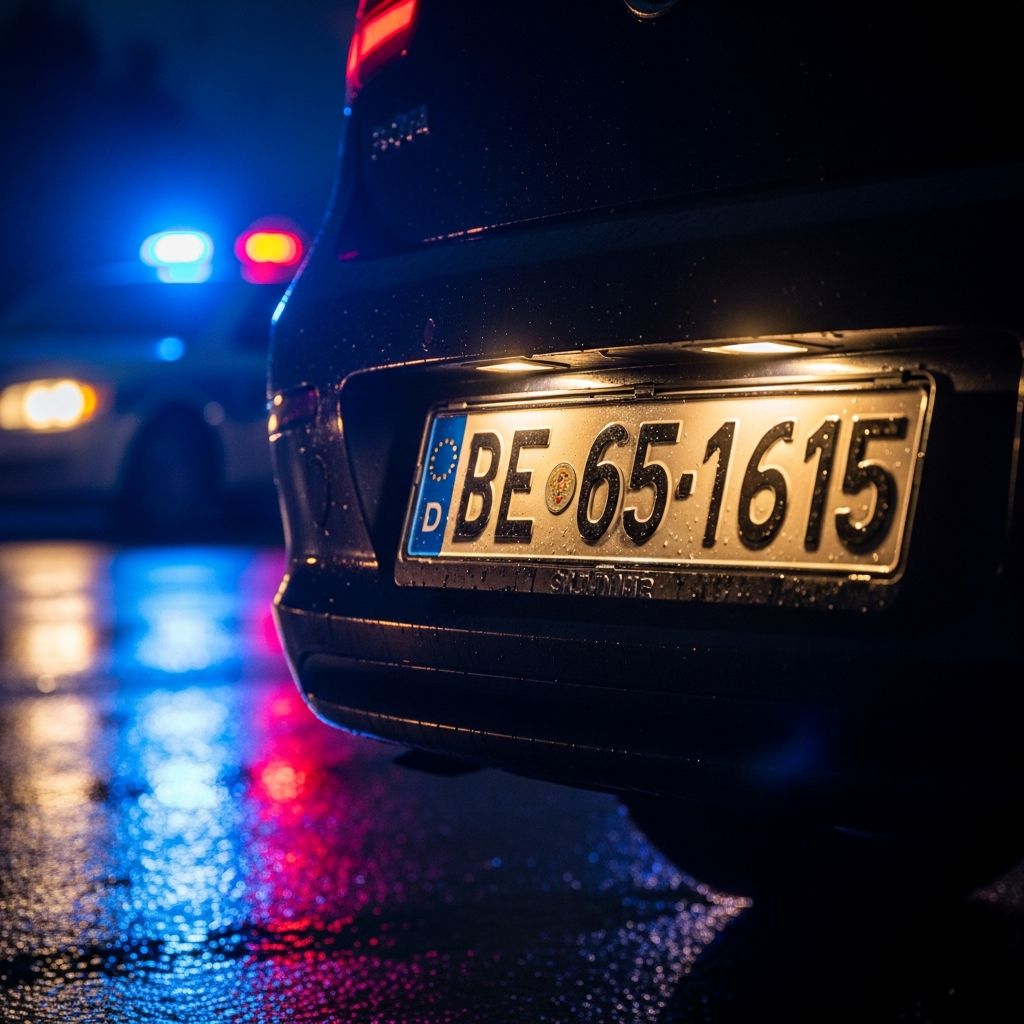
Most drivers focus on headlights, brake lights, and turn signals, but the small light over your rear license plate can also determine whether you get pulled over. Across the United States, traffic codes require that your rear license plate be clearly illuminated and legible at night or whenever lights are required. A burned-out or missing plate light may look minor, yet it can still justify a traffic stop and, in some cases, a ticket.
This guide explains how license plate light rules generally work, why they matter for safety and enforcement, and what practical steps you can take to avoid citations or use a stop based on a plate light as an opportunity to protect your rights.
Why License Plate Lights Matter to the Law
Every state sets its own vehicle lighting requirements, but there is a common theme: your car must be visible and identifiable to other road users and to law enforcement after dark or in low visibility conditions. The rear plate light is part of that system.
- Identification: A lighted plate allows police, other drivers, and automated systems to read your registration number at night.
- Compliance check: Officers use plate numbers to verify registration, insurance status, and warrants, which is a core part of routine traffic enforcement.
- Uniform equipment rules: Laws require certain minimum lighting equipment so that every vehicle on public roads meets basic visibility standards.
Because the license plate number connects a vehicle to its legal owner, lawmakers treat the plate and its illumination as essential, not optional. Even when the rest of your lights work, a dark plate can be enough to justify a stop in many jurisdictions.
Typical Legal Requirements for Plate Illumination
Statutes differ by state, but many follow a similar structure. Here are common elements you will see in vehicle codes:
1. White Light Directed at the Rear Plate
States often require that the rear registration plate be lit by a white light so that it can be read from a specific distance. Some laws allow the plate to be lit by the tail lamp itself; others explicitly mention a separate lamp for the plate.
- The plate must be illuminated with a light that is white rather than red, amber, or blue.
- The source can be a dedicated license plate lamp or part of the tail lamp assembly, depending on how the vehicle was built.
2. Minimum Visibility Distance
Vehicle codes commonly specify that the plate must be readable from at least 50 feet to the rear under normal conditions at night. While the exact distance can vary, the idea is that an approaching driver or officer should be able to clearly see and read the plate.
| Requirement Type | Typical Standard | Purpose |
|---|---|---|
| Light color | White light on rear plate | Ensures contrast and readability of numbers/letters |
| Visibility distance | Legible from about 50 feet at night | Allows officers and drivers to read the plate safely |
| When lights must be on | Between sunset and sunrise or in low visibility | Matches general headlamp and tail lamp requirements |
3. Lights Turn On with Headlamps
Many statutes require that the plate light be wired so that it is on whenever your headlamps or primary driving lights are on. That means you cannot legally drive at night with headlights on but your plate light turned off separately.
- Rear plate illumination is treated as part of the rear lighting system of the vehicle.
- If your vehicle uses automatic lighting, the plate lamp will normally follow the same on/off cycle as your tail lights.
Do All License Plate Lights Need to Work?
Modern vehicles often come with two small bulbs (one on each side) over the plate or a multi-LED assembly. A common question is whether every individual bulb must work, or whether it is enough if the plate is still readable with one bulb lit.
The answer usually turns on two ideas:
- Original equipment: Many states require that all lighting equipment originally installed by the manufacturer be kept in good working order. If two plate lights were installed, officers and courts may view one burned-out bulb as a defect.
- Actual visibility: Some enforcement focuses on whether the plate is in fact clearly legible from the required distance. If partial lighting still makes the plate readable, a judge could potentially view the violation as minor or dismissible, depending on the wording of the statute and local case law.
In practice, officers in many jurisdictions do use a single burned-out plate bulb as a lawful basis for a traffic stop, even if another bulb is working, just as they would for a single failed brake light.
When Your Plate Light Can Trigger a Traffic Stop
Courts generally treat a malfunctioning plate light as a legitimate reason for police to pull a vehicle over, as long as the officer reasonably believes the law is being violated.
Key points about stops based on plate illumination:
- Reasonable suspicion or probable cause: A visibly dark plate area at night can provide enough grounds for a brief stop to investigate a potential equipment violation.
- Pretextual stops: Even if officers are interested in other issues (such as impaired driving), they may lawfully use a minor equipment issue, like a plate light defect, as the objective basis for a stop, so long as the observed condition violates the traffic code.
- Scope of the stop: Once stopped, an officer may check your license, registration, and proof of insurance and may expand the stop if new facts create additional suspicion.
In some states, appellate decisions have specifically upheld traffic stops that began with a license plate illumination defect, confirming that the plate light is treated like any other necessary lamp on the vehicle.
Common Penalties and Consequences
Penalties for driving without a working license plate light vary, but the consequences are usually less severe than for speeding or reckless driving. Still, they can create inconvenience and cost.
Typical Outcomes Include:
- Fix-it warning: An officer may issue a verbal or written warning, giving you time to repair the light.
- Correctable ticket: Some jurisdictions issue a citation that can be dismissed if you show proof of repair within a set period.
- Fine-only infraction: In many states, driving with defective lighting equipment is a non-criminal infraction that carries a modest fine and no jail exposure.
- Possible court appearance: If you ignore the ticket or have multiple equipment violations, you may be required to appear in court or face additional penalties.
Many states do not assess driver’s license points or insurance surcharges for basic equipment violations alone, but that is not universal. Always check local rules or consult a traffic attorney if you are unsure.
Safety and Design Standards Behind Plate Lights
Beyond state statutes, vehicle lighting is influenced by federal safety standards and engineering practices. In the United States, the National Highway Traffic Safety Administration (NHTSA) sets performance rules for lamps and associated equipment on new vehicles.
- Minimum illumination levels: Federal standards specify how brightly a plate illumination device must light a target area to ensure visibility in testing conditions.
- Durability and placement: Manufacturers design plate lights to withstand weather, vibration, and car washes, and to aim light where it will most effectively illuminate the plate.
- Color and glare limits: Standards and state codes generally require white light on the rear plate to avoid confusion with brake or turn signals and to reduce glare for following drivers.
Although federal regulations apply mainly to vehicle manufacturers rather than directly to individual drivers, state lawmakers often mirror these technical expectations in their own visibility and color requirements.
How to Avoid License Plate Light Problems
Preventing plate light violations is straightforward if you add a quick inspection to your routine car checks.
Simple Preventive Steps
- Walk-around inspection: At night, turn on your lights and walk around the vehicle. Confirm that your rear plate is evenly lit and easy to read from several car lengths away.
- Clean the lens and plate: Dirt, road salt, or cloudy plastic can dim the light even when the bulb works. Wiping the lens and plate takes only a few seconds.
- Replace bulbs promptly: If you notice a dim or flickering lamp, replace it as soon as possible. Many plate bulbs are inexpensive and can be changed with basic tools.
- Use compatible parts: If you upgrade to LEDs, choose bulbs designed for your vehicle and ensure they meet brightness and color expectations in your jurisdiction.
- Check after body work: Plate lights can be disconnected during collision repairs or bumper replacements. Verify they work when you pick up the car.
Responding to a Plate Light Ticket
If you receive a ticket or warning for a license plate light issue, you have several possible responses. The best approach depends on the type of citation and your local procedures.
Steps to Take After a Citation
- Repair the problem immediately: Replace the bulb, fix the wiring, or address any damage so that the plate is clearly lit again.
- Document the repair: Take a dated photo of the illuminated plate and keep receipts for parts or labor.
- Read the ticket carefully: Some forms clearly mark the violation as “correctable” or “fix-it,” with instructions on how to show proof of repair.
- Consider contesting: If you believe the plate was adequately lit or the ticket misapplies the law, you may be able to contest it in traffic court. Bringing photos or repair documentation can help demonstrate your good-faith compliance.
- Ask about dismissal or reduction: In some courts, judges may dismiss or reduce fines for low-level equipment violations if the defect is quickly repaired.
For commercial drivers or anyone who relies on a clean driving record, speaking with a local traffic attorney can be valuable, especially if the ticket could interact with other infractions on your record.
Key Differences Among States
While the general principle—an illuminated, legible rear plate—is widely shared, each state writes its own rules and penalties. Here are examples of how state codes approach rear lighting and plate illumination:
- North Carolina: Law requires that a rear lamp or separate lamp illuminate the number plate with a white light so the plate can be read from a distance of 50 feet at night.
- Washington State: The statute similarly mandates a tail lamp or separate lamp that lights the rear registration plate with white light and renders it clearly legible from 50 feet, wired so it is on whenever the headlamps are on.
- Pennsylvania: General lighting rules require a rear lighting system, including a license plate light, in conformity with departmental regulations, treating the plate lamp as part of the mandatory rear lighting equipment.
Because of these differences, you should always check the specific wording of your state’s vehicle code or consult an attorney licensed in your state for tailored advice.
Frequently Asked Questions (FAQs)
Q: Is it illegal to drive with no license plate light if streetlights make my plate visible?
A: In most states, the law looks at whether your plate is illuminated by an installed lamp and legible from a specified distance at night, not whether ambient lighting happens to help. If your required plate lamp is missing or not working, you may still be in violation even on well-lit streets.
Q: Can the police stop me just for a burned-out license plate bulb?
A: Yes, in many jurisdictions a defective license plate light is treated like any other equipment violation and can provide a lawful basis for a traffic stop, as long as the officer reasonably believes the lighting does not meet legal standards.
Q: Do all the factory-installed license plate lights have to work?
A: Often, yes. Many laws require that all originally equipped rear lamps be in good working order. If the vehicle came with two plate bulbs and one is out, an officer may view that as a violation, especially if the plate is not fully illuminated.
Q: Will a plate light ticket affect my insurance or driving record?
A: Some states treat basic lighting violations as low-level infractions that do not carry points or insurance surcharges, while others may. You should check your state’s rules or ask a local attorney or insurer. Promptly fixing the issue can sometimes help minimize any impact.
Q: How often should I check my license plate light?
A: Including the plate light in a quick monthly walk-around inspection is usually enough for most drivers. If you drive extensively at night or in harsh conditions, more frequent checks are wise.
References
- GS 20-129: Required lighting equipment of vehicles — North Carolina General Assembly. 2023-01-01. https://www.ncleg.gov/EnactedLegislation/Statutes/PDF/BySection/Chapter_20/GS_20-129.pdf
- RCW 46.37.050: Tail lamps — Washington State Legislature. 2022-01-01. https://app.leg.wa.gov/rcw/default.aspx?cite=46.37.050
- § 74.05 Tail light; illumination of rear license plate — Washington Court House, Ohio, Code of Ordinances. 2021-01-01. https://codelibrary.amlegal.com/codes/washingtonch/latest/washingtonCH_oh/0-0-0-4148
- Title 75 § 4303: General lighting requirements — Pennsylvania General Assembly. 2020-01-01. https://www.legis.state.pa.us/WU01/LI/LI/CT/HTM/75/00.043.003.000..HTM
- Federal Motor Vehicle Safety Standard No. 108: Lamps, reflective devices, and associated equipment — National Highway Traffic Safety Administration, Federal Register. 2015-12-17. https://www.federalregister.gov/documents/2015/12/17/2015-31353/federal-motor-vehicle-safety-standard-lamps-reflective-devices-and-associated-equipment
- Failure to Drive with License Plate Light as Grounds for Traffic Stops in Arizona — Novak Law Offices. 2017-06-01. https://blog.novakazlaw.com/failure-to-drive-with-license-plate-light-as-grounds-for-traffic-stops-in-arizona/
Similar Articles








Read full bio of Sneha Tete


