
Liability for Injuries on Private Beaches
Understanding who bears responsibility when accidents happen on private beaches and how to protect your rights after an injury.
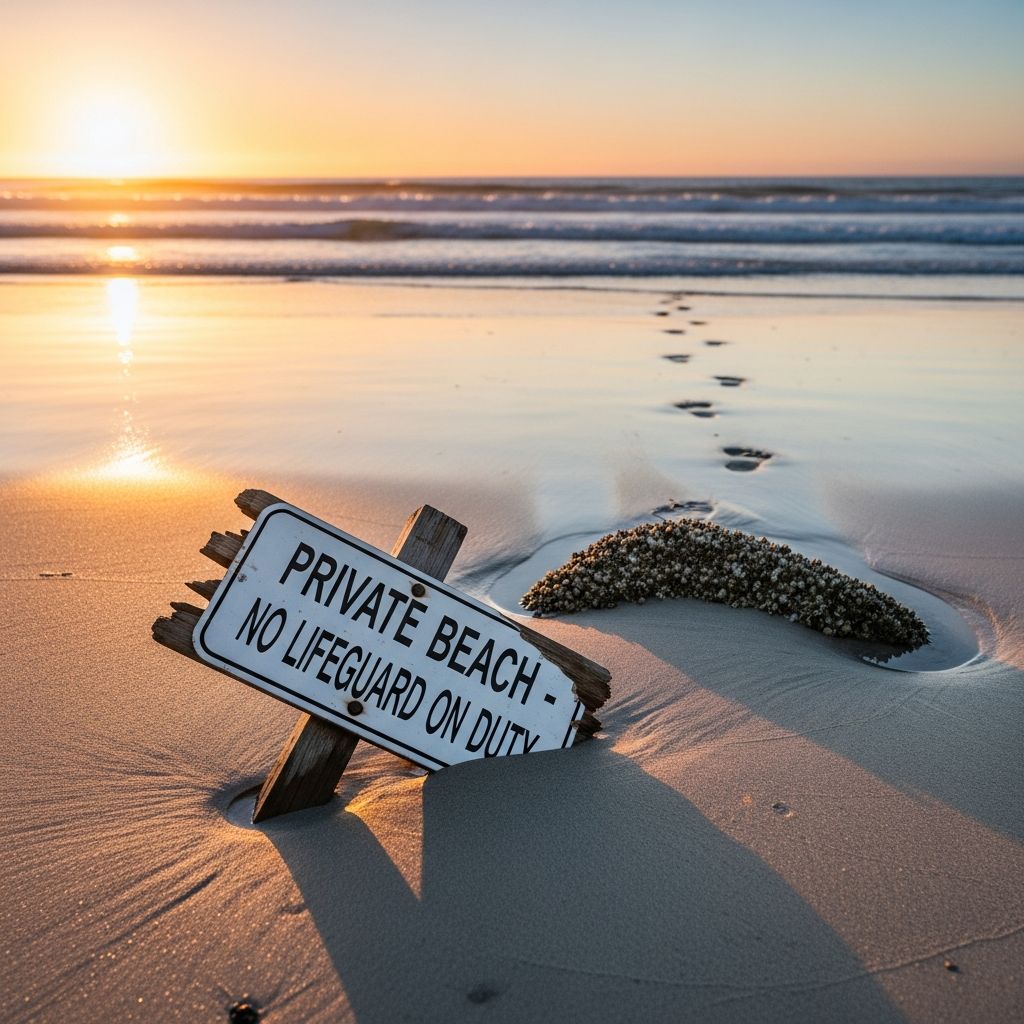
Private beaches offer serene escapes but carry unique legal responsibilities for property owners when visitors get hurt. Owners must balance providing access with maintaining safety to avoid premises liability claims.
Common Hazards on Private Beaches
Private beaches, while exclusive, expose visitors to specific risks that can lead to serious injuries. Understanding these dangers helps in assessing potential liability.
- Sharp Debris and Cuts: Shell fragments, broken glass, or discarded litter can cause deep lacerations, especially when walking barefoot.
- Slippery Surfaces: Wet sand, algae-covered rocks, or uneven terrain often result in slips and falls, leading to sprains, fractures, or head trauma.
- Water-Related Risks: Strong currents, sudden drop-offs, or undertows in adjacent waters pose drowning threats without proper warnings or supervision.
- Structural Issues: Faulty walkways, unstable boardwalks, or poorly secured beach equipment like umbrellas can collapse or tip over.
- Security Incidents: Overzealous private security may use excessive force, causing bruises, broken bones, or more severe harm during altercations.
These hazards underscore the need for diligent property maintenance to prevent avoidable accidents.
Legal Duties of Private Beach Owners
Under premises liability principles, private beach owners owe a duty of care to invitees, licensees, and trespassers, varying by visitor status. Invitees, such as paying guests or those with implied permission, receive the highest protection, requiring owners to inspect and remedy dangers regularly.
Owners must post clear warnings for natural risks like tides and ensure artificial hazards, such as litter or broken structures, are addressed promptly. Failure to do so can establish negligence, opening the door to lawsuits for medical bills, lost income, and pain compensation.
| Visitor Type | Duty Owed by Owner | Examples |
|---|---|---|
| Invitee | Reasonable inspection and repair | Hotel guests, ticketed event attendees |
| Licensee | Warning of known dangers | Friends of owner, public allowed free access |
| Trespasser | Minimal; avoid willful harm | Uninvited intruders |
This table illustrates how duties scale with permission levels, influencing liability outcomes.
State Variations in Private Beach Liability
Laws differ significantly by state, particularly regarding recreational use statutes that shield owners who open private land to the public without charge. For instance, in coastal states like Florida, owners granting free beach access enjoy limited liability for injuries, provided they did not willfully create hazards.
These statutes encourage public recreation by reducing lawsuit fears, but protections vanish if fees are charged or gross negligence occurs. In contrast, states without such laws hold owners to standard premises liability, demanding proactive safety measures.
- Florida’s Recreational Use Statute limits claims for free public access.
- Massachusetts applies tort claims acts for public beaches but scrutinizes private ones under common law.
Always check local regulations, as they dictate viable claims.
When Security or Staff Contribute to Injuries
Private beaches often employ security or staff, who can become liable if their actions cause harm. Negligent supervision, excessive force, or failure to intervene in fights may result in direct claims against individuals or vicarious liability against the owner.
For example, if security tackles a visitor unnecessarily, causing spinal injuries, both the guard and employer could face suits. Courts examine training records and incident reports to apportion fault.
Product Defects and Third-Party Liability
Injuries from rented gear like jet skis, chairs, or umbrellas shift blame to manufacturers or rental companies under product liability laws. Defective designs or inadequate warnings make these parties accountable, independent of beach owner duties.
Beachgoer assaults introduce negligence claims against attackers, with owners liable only if they failed to provide adequate security despite known risks.
Navigating Claims on Public vs. Private Beaches
Public beaches involve government entities bound by tort claims acts, requiring notice filings and proving waiver of sovereign immunity. Private beaches streamline claims against identifiable owners but hinge on proving notice of hazards.
Key evidence includes photos, witness statements, medical records, and maintenance logs demonstrating owner knowledge or constructive notice.
Steps to Take Immediately After a Beach Injury
Swift action preserves your case. Seek medical attention first, even for minor wounds, to document injuries. Report the incident to owners or staff, obtaining written acknowledgments.
- Photograph the scene, hazards, and injuries.
- Gather witness contacts.
- Avoid signing statements without legal review.
- Contact a personal injury attorney promptly to evaluate claims.
These steps maximize compensation potential for economic and non-economic damages.
Compensation Available in Beach Injury Cases
Successful claims recover varied damages:
- Economic: Hospital bills, rehab, lost wages, future care.
- Non-Economic: Pain, suffering, emotional distress, reduced life enjoyment.
- Punitive: Rare, for egregious conduct.
Average settlements vary, but severe cases like spinal injuries can exceed six figures, factoring in jurisdiction and liability clarity.
Frequently Asked Questions
Can I sue a private beach owner if I slip on wet sand?
Yes, if the owner failed to warn of known slippery areas or neglected maintenance, establishing negligence under premises liability.
Do ‘no trespassing’ signs protect owners from all lawsuits?
No, implied licenses or recreational statutes may still impose duties; willful injuries remain actionable.
What if a lifeguard ignores my distress on a private beach?
The owner or contractor hiring the lifeguard could be liable for negligent hiring or supervision.
Are children held to the same standard as adults in beach injury claims?
No, attractive nuisance doctrines may heighten owner duties toward minors on private property.
How long do I have to file a beach injury lawsuit?
Statutes of limitations vary (1-3 years typically); consult local laws immediately.
Why Consult a Personal Injury Attorney
Beach injury cases involve complex proofs, defenses like assumption of risk, and negotiations with insured parties. Experienced attorneys build strong cases, negotiate settlements, or litigate for maximum recovery, allowing focus on healing.
Free consultations assess viability without upfront costs via contingency fees.
References
- Beach Injuries: Who Can Be Held Liable? — Steinberg Law. 2023. https://www.brettsteinberglaw.com/beach-injuries-who-can-be-held-liable/
- Who Is Liable If I Get Injured at a Beach in Massachusetts? — Stone Injury Lawyers. 2024. https://www.stoneinjurylawyers.com/faqs/who-is-liable-injured-at-beach-massachusetts/
- Beach and Lake Accidents: What to Do if You’re Injured on Vacation — Brandon J. Broderick. 2025. https://www.brandonjbroderick.com/beach-and-lake-accidents-what-do-if-youre-injured-vacation
- SLIP AND FALLS ON BEACH WALKWAYS: WHO IS LIABLE FOR YOUR INJURIES? — Maus Law Firm. 2024. https://mauslawfirm.com/slip-and-falls-on-beach-walkways-who-is-liable-for-your-injuries/
- Beach Injury and Liability — D’Agostino & Associates. 2023. https://daglawteam.com/beach-injury-and-liability/
Similar Articles








Read full bio of Sneha Tete




