The Illusion of Total Victory in Civil Rights
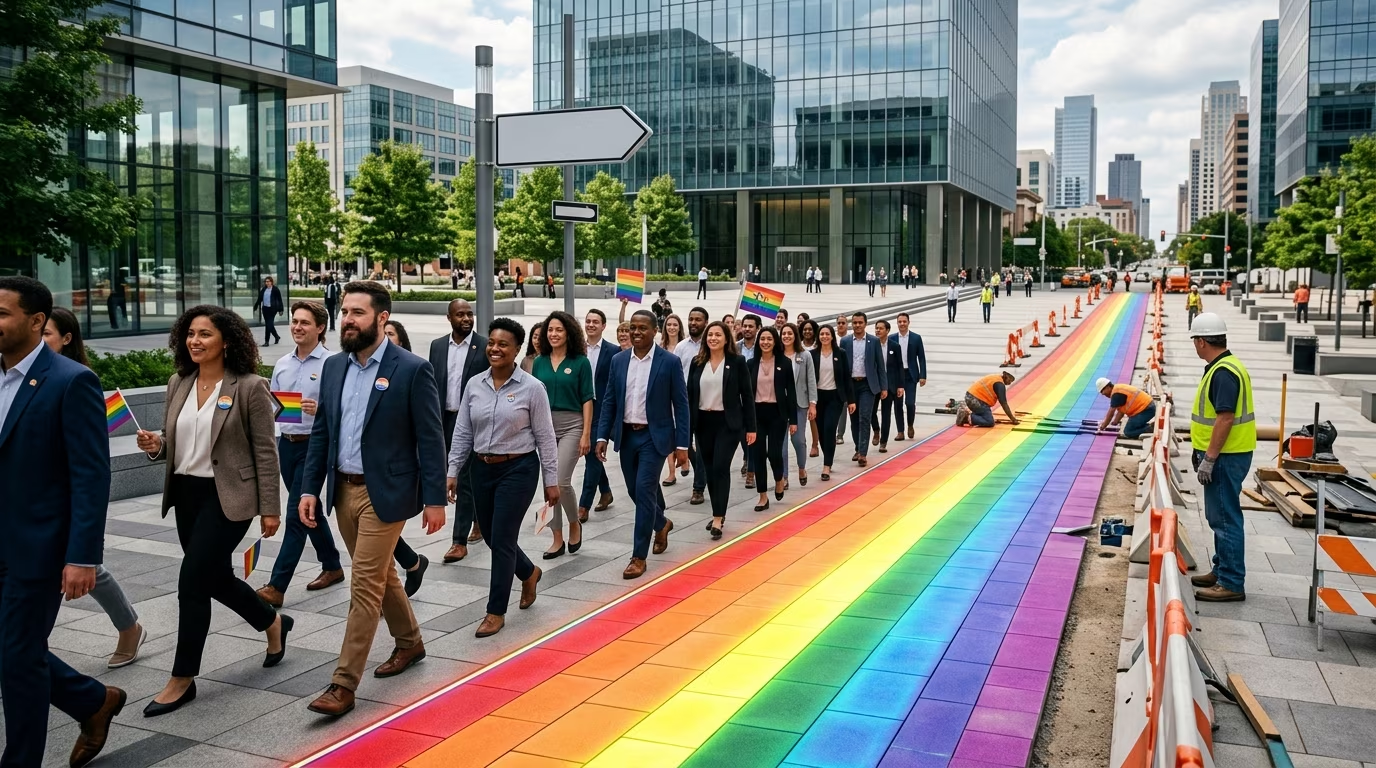
The vibrant colors of a Pride parade, the jubilant celebrations of marriage equality, and the increasing visibility of queer narratives in mainstream media paint a compelling picture of a society that has definitively turned the page on bigotry. It is tempting to look at the corporate-sponsored floats, the rainbow-hued storefronts, and the shifting political rhetoric to conclude that the historic battle for LGBTQ+ civil rights has been irrevocably won. However, this celebratory facade often masks a much harsher reality, one that unfolds not on lively parade routes, but in quiet office cubicles, crowded breakrooms, and demanding factory floors across the country.
The truth is that the march for LGBTQ+ equality is profoundly unfinished, particularly when it comes to the fundamental right to earn a living free from discrimination, harassment, and bias. While society rightfully celebrates monumental legal victories and profound cultural shifts, the lived experiences of many LGBTQ+ individuals serve as a sobering reminder of why the fight must aggressively continue. When a dedicated employee can still be handed a termination notice under the thinly veiled guise of arbitrary “policy violations” simply for living their authentic truth, the promise of equality remains an aspiration rather than an ironclad guarantee.
The Paradox of Progress: Visibility Versus Vulnerability
To fully grasp the current landscape of LGBTQ+ civil rights, one must grapple with the duality of the movement’s progress. The past two decades have undeniably witnessed unprecedented advancements. The legalization of same-sex marriage nationwide fundamentally altered the legal and social fabric of the United States, providing millions of couples with long-denied rights, dignity, and recognition. Coupled with growing representation in politics, entertainment, and business, these milestones have cultivated an atmosphere of triumph.
Yet, this very progress has inadvertently created a paradox of visibility versus vulnerability. For many LGBTQ+ individuals, increased public visibility has not neatly translated into private security. The same society that applauds a celebrity coming out can simultaneously turn a blind eye to the systemic vulnerabilities that everyday queer people face in the workforce. This discrepancy is born from the difference between formal equality—having laws written into the judicial record—and substantive equality, which is the actual lived experience of safety, fairness, and opportunity.
Legalizing marriage did not automatically dismantle the deeply ingrained prejudices that infect hiring practices, promotion evaluations, and day-to-day workplace interactions. For countless individuals, the profound joy of being able to marry their partner over the weekend is entirely overshadowed by the looming terror of being fired for it on a Monday morning. This duality demands a critical reevaluation of where the civil rights movement directs its energy, emphasizing that economic security and employment rights are just as vital to human dignity as the right to marry.
The Transgender Experience in the American Workforce
Nowhere is the gap between societal progress and workplace reality more glaring than in the experiences of transgender and nonbinary individuals. While the broader LGBTQ+ community faces ongoing hurdles, transgender workers endure a uniquely intense form of economic marginalization, scrutiny, and hostility. The prejudice they encounter is often acute, systemic, and devastating to their financial stability and mental health.
Research consistently highlights a grim reality for gender-diverse employees. According to a comprehensive 2024 report by the Williams Institute at the UCLA School of Law, the rates of workplace discrimination remain alarmingly high.
| Workplace Experience Metric | Percentage | Source |
|---|---|---|
| Transgender employees who have experienced discrimination or harassment at work | 82% | Williams Institute (2024) |
| Transgender employees who engaged in “covering” behaviors (e.g., altering voice/mannerisms) | 71% | Williams Institute (2024) |
| Transgender employees who left a job specifically due to LGBTQ+ related mistreatment | 67% | Williams Institute (2024) |
These staggering statistics reflect the pervasive nature of sex stereotyping in the modern workplace. Sex stereotyping occurs when an employer penalizes an employee for failing to conform to traditional, socially constructed expectations of masculinity or femininity. For a transgender woman, this might manifest as being harshly disciplined for her attire or presentation, while a cisgender woman engaging in the exact same behavior would not warrant a second glance.
Transgender individuals are frequently forced to navigate a minefield of unwritten rules. The psychological toll of this constant surveillance is immense. To survive in these hostile environments, many engage in “covering” behaviors. They alter their voices, meticulously plan when and where they use the restroom to avoid drawing attention, and hesitate to form authentic relationships with their colleagues. This forced compartmentalization prevents them from bringing their full potential to their roles, stunting their professional growth and ultimately depriving employers of their true talents. The reality is simple but brutal: if you cannot safely use the restroom at work, or if you must constantly hide who you are, you are being effectively pushed out of the public economy.
Legal Frameworks: Title VII and the Bostock Watershed
The fight against workplace discrimination has long relied on the bedrock of federal civil rights legislation, specifically Title VII of the Civil Rights Act of 1964. For decades, Title VII expressly prohibited employment discrimination based on race, color, religion, sex, and national origin. However, the interpretation of “sex” remained a heavily contested legal battleground. Employers and lower courts frequently argued that the statute only protected individuals from discrimination based on their assigned biological sex, deliberately excluding sexual orientation and gender identity from its protective umbrella. This created a fractured legal landscape where an LGBTQ+ individual’s rights depended heavily on their state or zip code, leaving millions vulnerable to legalized prejudice.
This ambiguity was fundamentally upended by the Supreme Court’s landmark 2020 decision in Bostock v. Clayton County. In a watershed moment for civil rights, the Court ruled that Title VII’s prohibition against sex discrimination inextricably includes discrimination based on sexual orientation and gender identity. The legal reasoning was both elegant and profound: it is impossible to fire someone for being gay or transgender without inherently taking their sex into account.
Bostock was heralded as a definitive victory, legally cementing the rights of LGBTQ+ workers nationwide. However, the ruling, while revolutionary, is not a magic wand that instantly eradicates bias. There remains a profound gap between a Supreme Court decree and localized, middle-management compliance within everyday workplaces. Laws on the books require vigorous, sustained enforcement to become realities on the ground. Employers determined to discriminate rarely do so overtly. Instead, they rely on a smokescreen of pretextual reasons—citing minor policy infractions, vague performance issues, or ambiguous notions of “company culture fit”—to mask their underlying bigotry. This necessitates not just strong laws, but robust mechanisms to investigate, challenge, and dismantle these discriminatory practices.
The Role of the EEOC: Enforcing the Unwritten Rules
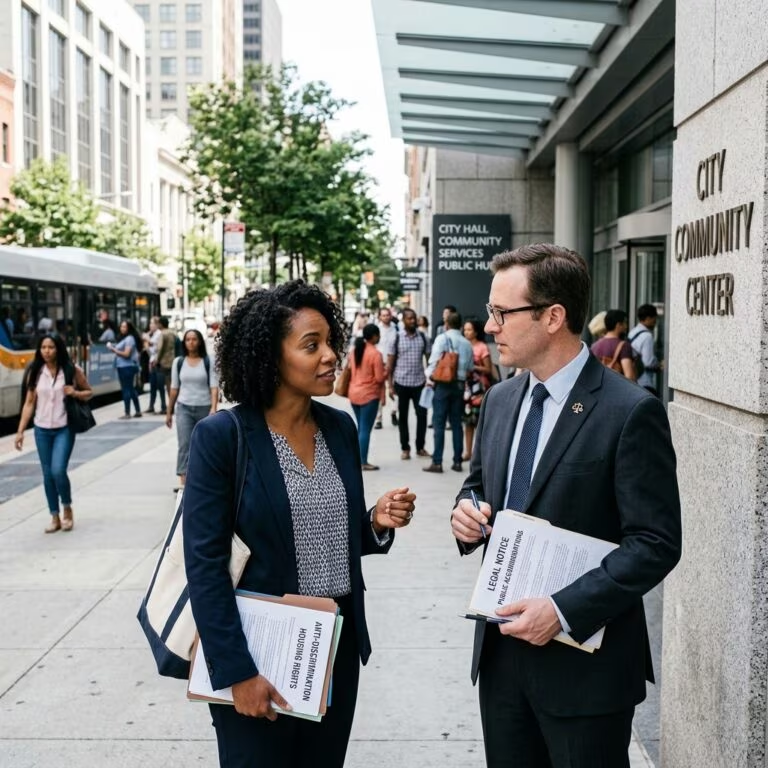
This is where the role of the U.S. Equal Employment Opportunity Commission (EEOC) becomes absolutely critical. As the federal agency tasked with enforcing civil rights laws in the workplace, the EEOC serves as the primary gateway for employees seeking justice against discriminatory employers. Before an individual can file a federal lawsuit under Title VII, they must generally file a charge with the EEOC and exhaust their administrative remedies. The agency is responsible for investigating these claims, mediating disputes, and, in some cases, litigating on behalf of the aggrieved employees.
The investigative power of the EEOC is essential in uncovering the pretextual nature of modern discrimination. When an employer claims a transgender worker was fired for a “policy violation,” an EEOC investigation can peel back the layers to see how that policy is actually enforced across the board. If a transgender employee is fired for a minor infraction, while cisgender employees commit the same infraction without consequence, the EEOC can find “reasonable cause” to believe discrimination occurred.
Although the EEOC finds reasonable cause in only a fraction of its total investigations, a positive finding is a powerful validation of the employee’s experience and a critical piece of leverage in subsequent litigation. Furthermore, the EEOC issues vital guidance to employers, clarifying how rulings like Bostock apply to everyday situations, such as the use of correct pronouns and access to sex-segregated facilities consistent with an employee’s gender identity. Through aggressive enforcement and clear administrative guidance, the EEOC plays an indispensable role in translating abstract legal rights into tangible workplace protections.
Corporate Responsibility and the Limits of Performative Allyship
As the legal landscape has shifted, so too has corporate posturing. Today, it is standard practice for major corporations to roll out rainbow logos during Pride month, sponsor LGBTQ+ events, and issue sweeping public statements about their commitment to diversity, equity, and inclusion. While this visibility is a marked improvement from the days of institutionalized homophobia, performative corporate allyship has distinct limits.
A company can have a beautifully drafted diversity statement on its website, yet still foster a localized culture where a transgender employee is subjected to daily microaggressions, passed over for leadership roles, or unfairly disciplined by a biased supervisor. True corporate responsibility demands a systemic overhaul of HR practices, comprehensive and ongoing bias training for management, and strict accountability for those who perpetuate toxic environments. When companies fail to self-regulate, civil rights litigation remains an indispensable tool. Lawsuits do more than seek justice for an individual plaintiff; they serve as a powerful deterrent, reminding the corporate sector that there are serious, expensive, and highly public consequences for treating employees unfairly.
Intersectional Struggles: Who is Left Behind?
The struggle for workplace equality cannot be fully understood without acknowledging the intersectional realities of the LGBTQ+ community. Discrimination does not operate in a vacuum. A transgender woman of color, for instance, faces a gauntlet of prejudice that intersects racism, sexism, and transphobia. Data consistently shows that LGBTQ+ people of color report significantly higher rates of workplace discrimination, wage disparities, and chronic unemployment compared to their white LGBTQ+ peers.
Furthermore, class and geography play pivotal roles in an individual’s ability to fight back. An LGBTQ+ executive working in a progressive metropolitan area may experience a very different reality than a queer blue-collar worker in a deeply conservative region. For low-income workers, the risks associated with coming out or challenging workplace discrimination are astronomically high, as job loss often threatens immediate economic ruin, eviction, and loss of healthcare. A movement that only secures the rights of the most privileged within its ranks is fundamentally incomplete; true equality requires centering the most vulnerable.
Conclusion: Why We Must Keep Marching
The journey toward full LGBTQ+ equality is a testament to the resilience, courage, and relentless advocacy of generations who refused to be invisible. We have secured victories that once seemed unimaginable, fundamentally reshaping the legal and cultural contours of the nation. Yet, as we reflect on these triumphs, we must remain soberly aware of the battles still raging.
The pervasive discrimination faced by transgender and nonbinary workers, the necessity of exhausting legal battles to enforce existing laws, and the intersectional disparities that leave so many vulnerable are stark reminders that the work is not over. We continue to march because a Pride parade is not a substitute for a safe, equitable workplace. We advocate, litigate, and organize because no individual should have to choose between their authentic self and their livelihood. Until systemic bigotry is entirely eradicated from our economic systems, the march for LGBTQ+ rights will press onward, driven by the unwavering belief that justice in the workplace is a fundamental human right.
Frequently Asked Questions (FAQs)
Q: Does Title VII protect transgender employees nationwide?
A: Yes. In the landmark 2020 Supreme Court decision Bostock v. Clayton County, the Court ruled that Title VII of the Civil Rights Act of 1964 protects employees against discrimination because of their sexual orientation or gender identity.
Q: What is “sex stereotyping” in the context of employment law?
A: Sex stereotyping occurs when an employer discriminates against an employee for failing to conform to traditional expectations regarding how men or women should look, behave, or present themselves. This concept has been instrumental in protecting LGBTQ+ employees from biased enforcement of dress codes and behavioral expectations.
Q: What should an employee do if they face anti-LGBTQ+ discrimination at work?
A: Employees facing discrimination should document all incidents, consult their company’s HR policies, and consider filing a charge of discrimination with the U.S. Equal Employment Opportunity Commission (EEOC). Consulting with a civil rights attorney can also provide vital guidance on navigating the legal process.
References
- More than 80% of transgender employees in the US have experienced discrimination or harassment at work — Williams Institute at UCLA School of Law. 2024-11-19. https://williamsinstitute.law.ucla.edu/press/trans-workplace-press-release/
- A Message from EEOC Chair Charlotte A. Burrows for Pride Month and the Anniversary of the Supreme Court’s Decision in Bostock v. Clayton County — U.S. Equal Employment Opportunity Commission. 2021-06-15. https://www.eeoc.gov/message-eeoc-chair-charlotte-burrows-pride-month-and-anniversary-supreme-courts-decision-bostock-v
- Bostock v. Clayton County, Georgia, 140 S. Ct. 1731 (2020) — Supreme Court of the United States. 2020-06-15. https://www.supremecourt.gov/opinions/19pdf/17-1618_hfci.pdf