
LGBTQ+ Rights and the Brutality of Solitary Confinement
Exposing the harsh carceral realities faced by marginalized LGBTQ+ inmates.
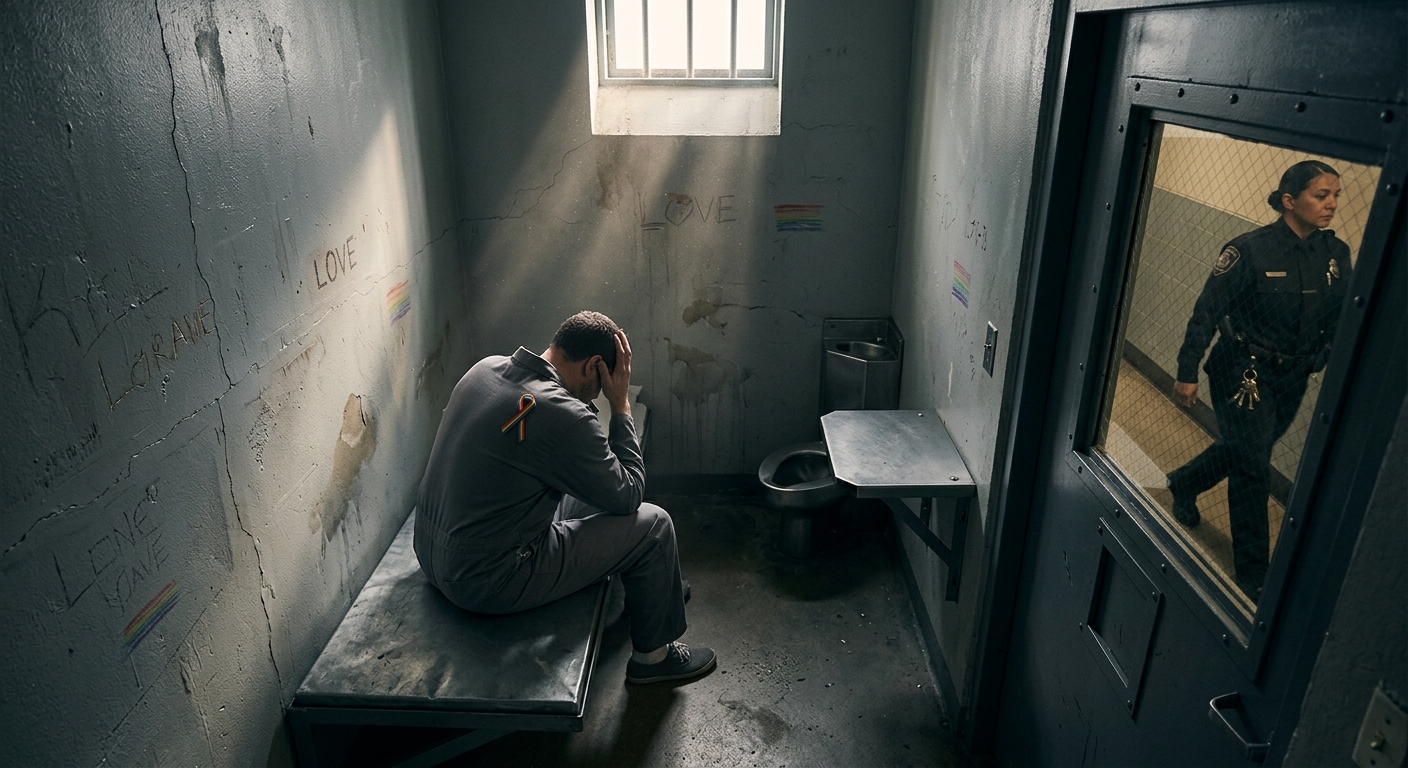
The Chasm Between Casual Metaphors and Carceral Reality
When society faces collective inconveniences, public discourse often borrows the heavy vocabulary of the penal system. We hear casual complaints equating home isolation, temporary lockdowns, or cancelled social events to “being in prison” or enduring “solitary confinement.” While these exaggerated metaphors might seem harmless to those wielding them, they do immense damage to our understanding of the criminal justice system. They actively mask the profound suffering of those who are genuinely locked inside the brutal, unforgiving machinery of carceral isolation.
For individuals actually living through the nightmare of solitary confinement, there are no spacious rooms, comfortable beds, or unrestricted access to global communication. The reality is a concrete box, approximately the size of a standard parking space. The reality is a heavy steel door, unending fluorescent lights that purposefully disrupt the body’s natural circadian rhythms, and a profound, echoing lack of meaningful human contact. When privileged members of society equate temporary inconveniences to institutionalized sensory deprivation, it fundamentally undermines the urgent movement for prison reform. It strips the gravity from a practice that international bodies classify as psychological torture, silencing the desperate voices of the marginalized individuals trapped within those walls.
Systemic Vulnerability: The Crisis of LGBTQ+ Criminalization
To comprehend the horrors of carceral isolation, we must first examine who is disproportionately locked within these cells. The LGBTQ+ community—most notably transgender individuals, non-binary people, and queer youth of color—experiences drastically elevated rates of arrest and incarceration compared to the general population. This disparity does not emerge from a vacuum; it is the direct result of systemic, overlapping societal inequalities. LGBTQ+ youth often face severe family rejection, pushing them into chronic homelessness. Once on the streets, they become highly visible targets for law enforcement, entering the criminal justice system through survival economies or discriminatory profiling by police.
Once entangled in this punitive system, the physical and emotional dangers multiply exponentially. Most carceral facilities are rigidly divided by sex assigned at birth, displaying a deeply ingrained refusal to accommodate or respect diverse gender identities. For a transgender woman housed in a men’s facility, the risk of extortion, physical assault, and systemic sexual violence is astronomical. The staff in these institutions frequently lack the specialized training required to navigate these dynamics safely, and in many cases, institutional bigotry means that staff members are fully complicit in the harassment. Consequently, the criminal justice system transforms from a purported mechanism of rehabilitation into a gauntlet of survival, where marginalized sexual orientations and gender identities are actively penalized.
The False Promise of “Protective Custody”
One of the most insidious intersections of LGBTQ+ rights and the penal system is the institutional use of “protective custody.” Prison administrators are legally obligated to keep incarcerated individuals safe, but they frequently claim that integrating LGBTQ+ inmates into the general population is an impossible security risk. Their default institutional solution is administrative segregation. While the terminology sounds clinical and benign, “protective custody” is functionally identical to solitary confinement.
Under the guise of keeping them safe from general population violence, LGBTQ+ individuals are locked in tiny cells for 23 to 24 hours a day. They are stripped of access to educational programs, communal dining, recreational activities, and vital rehabilitative services. Instead of addressing the root causes of the violence—such as dismantling the predatory culture of the broader facility or training guards to proactively protect vulnerable individuals—the system chooses the path of least resistance. It isolates the victim.
This carceral framework turns protection into a profound punishment. It communicates a chilling message to LGBTQ+ incarcerated people: your existence is a liability, and the only way to survive is to be entirely erased from the social fabric of the facility. Forced segregation punishes the marginalized person for their own vulnerability, drastically compounding their trauma. Rather than functioning as a shield against harm, this forced isolation strips away human dignity and inflicts severe psychological damage, allowing prison administrators to wash their hands of any ongoing responsibility while the individual decays in a locked box.
The Devastating Psychological and Physical Impact
The human brain is an inherently social organ, completely unequipped to handle profound, prolonged social deprivation. According to extensive public health research and data archived by the National Institutes of Health, the psychological deterioration caused by solitary confinement is rapid and devastating. Within just days of entering isolation, incarcerated individuals frequently begin to experience intense panic attacks, overwhelming depressive episodes, extreme paranoia, and terrifying auditory or visual hallucinations. Without external stimuli, human interaction, or even a window to track the passage of time, the mind begins to fracture.
The behavioral consequences of this psychological collapse are exceptionally grim. Data reviewing the medical records of jail systems demonstrates a terrifying correlation between isolation and self-directed violence. While a relatively small percentage of incarcerated individuals are placed in solitary confinement at any given time, they account for a staggeringly disproportionate number of self-harm incidents and suicides within carceral facilities.
Beyond the psychological terror, solitary confinement inflicts profound physical decay. The extreme lack of physical space severely limits bodily movement, leading to muscle atrophy, joint pain, and chronic lethargy. The constant physiological stress of isolation heavily elevates cortisol levels, which can lead to severe cardiovascular issues, gastrointestinal distress, and a compromised immune system. For LGBTQ+ individuals, who may already be struggling to access essential healthcare—such as gender-affirming medications or HIV treatments—the enforced isolation of solitary confinement creates an insurmountable barrier to proper medical support. By the time an individual is released from solitary, if they survive, they carry invisible, debilitating scars that severely hinder their ability to reintegrate into society.
International Human Rights: The Nelson Mandela Rules
The barbarity of solitary confinement is not merely a subject of domestic political debate; it is a critical issue of international human rights. In 2015, recognizing the urgent need to establish universally acknowledged benchmarks for humane carceral management, the United Nations General Assembly adopted the revised Standard Minimum Rules for the Treatment of Prisoners. These guidelines are now globally recognized as the Nelson Mandela Rules, honoring the late South African president who endured decades of imprisonment and advocated for the humane treatment of all people behind bars.
| Term | Definition | International Classification |
|---|---|---|
| Solitary Confinement | Isolation for 22 or more hours a day without meaningful human contact. | Subject to strict limitations, oversight, and used only as a last resort. |
| Prolonged Solitary Confinement | Solitary confinement extending beyond 15 consecutive days. | Strictly prohibited; classified globally as torture or cruel and inhuman treatment. |
Crucially, the Nelson Mandela Rules explicitly dictate that prolonged solitary confinement is a violation of basic human rights. The United Nations classifies any isolation beyond this 15-day threshold as a form of psychological torture. Despite these crystal-clear international directives, many correctional facilities across the United States routinely hold LGBTQ+ inmates in isolation for months, or even years, flagrantly violating basic global human rights standards.
Legislative Momentum and the Path Toward Abolition
In response to these pervasive abuses, a growing coalition of civil rights advocates, medical professionals, and lawmakers has begun pushing back against the systemic reliance on solitary confinement. Meaningful legislative efforts are finally emerging at both the state and federal levels to combat this human rights crisis. True reform requires comprehensive policy shifts, including:
- Federal bans on protective isolation: Legislation, such as the proposed Solitary Confinement Reform Act, aimed at ensuring LGBTQ+ inmates are not penalized with solitary confinement simply because of their identity.
- Gender-affirming housing policies: Mandating that incarcerated individuals be safely housed in facilities that align with their gender identity rather than the sex they were assigned at birth.
- Enhanced mental health interventions: Replacing punitive isolation with restorative counseling, independent medical care, and specialized programming.
However, true justice demands more than piecemeal modifications to existing torture methods; it requires a radical reimagining of accountability and safety. Carceral facilities must be forced to foster environments where personal safety does not necessitate sensory deprivation. Moving forward, the ultimate goal must be to dismantle the punitive reliance on isolation entirely, steering society toward restorative justice frameworks that recognize and fiercely protect the fundamental humanity of every single individual.
Frequently Asked Questions (FAQ)
What exactly constitutes solitary confinement?
Solitary confinement is the practice of isolating an incarcerated individual in a highly restrictive cell for 22 to 24 hours a day. During this time, the person is deprived of all meaningful human contact, unable to participate in educational programming, communal dining, or group recreation. While correctional facilities may use euphemistic terms such as “administrative segregation,” “restrictive housing,” or “protective custody,” the fundamental reality remains the same: it is a mechanism of profound sensory and social deprivation.
Why are LGBTQ+ people disproportionately affected by this practice?
LGBTQ+ individuals, particularly transgender women and queer youth of color, are heavily overrepresented in the criminal justice system due to systemic discrimination, familial rejection, and profiling. Once incarcerated, they face extraordinarily high rates of targeted violence within the general prison population. Rather than addressing the predatory culture of the facility or establishing gender-affirming housing policies, administrators frequently default to placing LGBTQ+ inmates in “protective custody,” subjecting them to the punitive horrors of solitary confinement simply because the institution refuses to implement proper safety protocols.
What are the psychological impacts of extreme isolation?
The human brain requires social interaction and environmental stimulation to maintain baseline cognitive function. Extensive medical research shows that isolation rapidly induces severe mental health crises, including extreme panic, clinical depression, paranoia, and terrifying hallucinations. Individuals in solitary confinement are disproportionately likely to engage in self-harm or attempt suicide, resulting in long-term trauma that severely impedes an individual’s ability to reintegrate into society upon release.
What are the Nelson Mandela Rules?
Adopted by the United Nations General Assembly in 2015, the Nelson Mandela Rules are a set of universally recognized standards for the humane treatment of incarcerated individuals. These rules strictly define solitary confinement and unequivocally prohibit “prolonged solitary confinement” (isolation lasting more than 15 consecutive days), classifying it as a form of psychological torture or cruel, inhuman, and degrading treatment.
References
- UN launches ‘Nelson Mandela Rules’ on improving treatment of prisoners — United Nations. 2015-10-07. https://news.un.org/en/story/2015/10/511932-un-launches-nelson-mandela-rules-improving-treatment-prisoners
- Solitary Confinement and Risk of Self-Harm Among Jail Inmates — American Journal of Public Health (PMC). 2014-03-01. https://www.ncbi.nlm.nih.gov/pmc/articles/PMC3953781/
- Senators Coons, Durbin introduce bill to limit use of solitary confinement — U.S. Senate. 2024-04-16. https://www.coons.senate.gov/news/press-releases/senators-coons-durbin-introduce-bill-to-limit-use-of-solitary-confinement
- LGBTQ Youth Pathways Through The Juvenile/Criminal Justice System — Nebraska Judicial Branch. 2018-01-03. https://supremecourt.nebraska.gov/sites/default/files/Programs/cip/LGBTQ_Youth_Pathways.pdf
Similar Articles








Read full bio of medha deb




