
Beyond Repeal: The Continuing Quest for LGBTQ+ Military Equality
Navigating the ongoing fight for LGBTQ+ military inclusion.
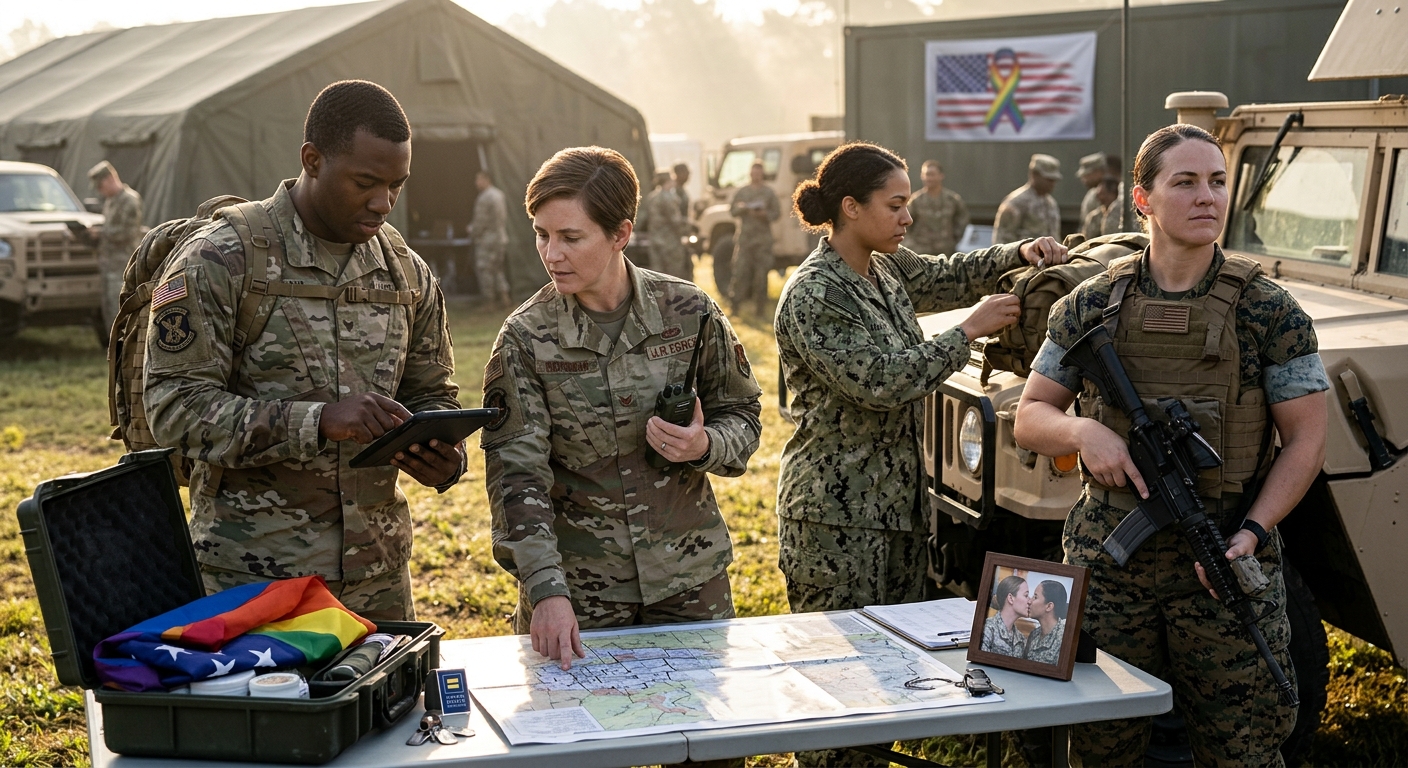
The Evolution of LGBTQ+ Military Service in the United States
The relationship between the United States armed forces and LGBTQ+ service members is a complex tapestry woven with threads of patriotism, systemic discrimination, and a relentless pursuit of equality. For decades, the military apparatus actively excluded individuals based on sexual orientation and gender identity, operating under the flawed premise that their presence would irreparably damage unit cohesion and national security. The journey toward an inclusive military has not been a single, decisive victory, but rather an ongoing, multi-generational campaign.
While the eventual dismantling of institutionalized bans marked a watershed moment in civil rights history, the legislative repeal of discriminatory frameworks was merely the closing of one chapter and the opening of another. Understanding this evolution requires analyzing not just the landmark policy shifts, but the lingering administrative hurdles and cultural challenges that continue to affect active-duty personnel and veterans alike.
Historical Context: The Era of Institutional Silence
To fully grasp the magnitude of modern inclusivity efforts, one must first examine the historical climate that necessitated them. Following World War II and accelerating during the Cold War era, the federal government systematically targeted homosexual employees and service members. This period, often referred to as the Lavender Scare, equated homosexuality with moral weakness and susceptibility to foreign blackmail, resulting in strict regulations that barred open service.
By the early 1990s, public pressure mounted to reconsider these draconian bans. However, the political climate was deeply divided, leading to a controversial compromise in 1993. This policy mandated that the military would not actively interrogate recruits about their sexual orientation, provided those individuals remained entirely closeted during their tenure. While intended as a middle ground, this framework effectively codified institutional silence. It forced patriotic Americans into a precarious existence, requiring them to constantly monitor their words, actions, and personal associations to avoid detection.
The consequences of this era were devastating. Thousands of capable, highly trained service members—including crucial linguists, medics, and combat specialists—were unceremoniously discharged. The policy fostered a climate of paranoia and enabled “witch hunts,” where anonymous accusations could upend a career overnight. Instead of protecting unit cohesion, the enforced silence eroded trust among service members, fundamentally undermining the core military values of integrity and honor.
The Turning Point: Dismantling Discriminatory Frameworks
The paradigm began to shift dramatically at the dawn of the 21st century. Years of tireless advocacy, shifting public opinion, and irrefutable evidence that sexual orientation had no bearing on military readiness culminated in a significant legislative push. Proponents of equality argued that maintaining a discriminatory posture weakened national security by actively dismissing talented individuals during a time of prolonged global conflict.
The legislative repeal, enacted in late 2010 and certified for implementation the following year, was a monumental bureaucratic and cultural undertaking. The Department of Defense (DoD) initiated comprehensive training programs designed to transition the force from a posture of exclusion to one of acceptance. The certification process required the President, the Secretary of Defense, and the Chairman of the Joint Chiefs of Staff to formally attest that the repeal would not negatively impact military readiness, effectiveness, or unit cohesion.
When the ban was officially relegated to history, the relief across the armed forces was palpable. Service members who had served in the shadows for years were finally able to acknowledge their partners, list them as emergency contacts, and serve with the authenticity that their heterosexual peers had long taken for granted. However, advocacy groups and legal experts quickly noted that repealing the law did not automatically erase the decades of damage inflicted upon those who had already been pushed out of the ranks.
Unfinished Business: Rectifying Past Injustices
One of the most pressing, yet frequently overlooked, issues in the post-repeal era is the status of veterans who were discharged under previous discriminatory policies. When individuals were ousted for their sexual orientation, many received less-than-honorable, general, or other-than-honorable discharges. The ramifications of these characterizations extend far beyond military life, deeply impacting a veteran’s civilian trajectory.
A less-than-honorable discharge can severely restrict access to essential benefits administered by the Department of Veterans Affairs (VA). These lost benefits include the GI Bill for higher education, comprehensive medical care, VA-backed home loans, and even military burial honors. Furthermore, the narrative on a veteran’s DD-214 (Certificate of Release or Discharge from Active Duty) often carried a stigmatizing reentry code, creating significant barriers to civilian employment, particularly in government or security sectors.
While the DoD and the VA have established pathways for veterans to seek a discharge upgrade, the process remains notoriously complex and burdensome. Veterans must apply to their respective military branch’s Board for Correction of Military Records (BCMR) or Discharge Review Board (DRB). This process requires the veteran to navigate bureaucratic red tape, compile historical evidence, and bear the emotional toll of revisiting a traumatic dismissal.
Advocates argue that placing the burden of proof on the victims of a discriminatory government policy is fundamentally unjust. There are ongoing calls for executive or legislative action to initiate automated, blanket upgrades for all personnel discharged solely on the basis of sexual orientation, ensuring that these veterans receive the honor, recognition, and benefits they rightfully earned.
Comparison of LGBTQ+ Military Service Eras
| Historical Era | Prevailing Policy Framework | Primary Impact on Service Members |
|---|---|---|
| Pre-1993 | Outright Ban (Regulatory) | Immediate dismissal upon discovery; severe stigmatization; complete bar to entry. |
| 1993 – 2011 | Enforced Silence / Compromise | Service permitted only if identity was hidden; pervasive fear of investigation; thousands discharged. |
| 2011 – Present | Open Service (LGB) | LGB individuals can serve openly; focus shifts to discharge upgrades and administrative equity. |
The Ongoing Fight for Transgender Service Members
While the early 2010s marked a victory for lesbian, gay, and bisexual personnel, transgender individuals were left behind. The legislative repeal of previous bans was rooted in sexual orientation, whereas transgender individuals were historically excluded under DoD medical regulations that classified gender dysphoria and any history of gender transition as disqualifying conditions.
The struggle for transgender military inclusion has been characterized by extreme administrative volatility. In 2016, following extensive study by institutions like the RAND Corporation, the Department of Defense concluded that allowing transgender personnel to serve openly would have minimal impact on readiness and healthcare costs. The DoD subsequently lifted the medical ban, allowing trans service members to serve openly and seek gender-affirming medical care.
However, this progress was abruptly reversed just a few years later. Between 2017 and 2021, the executive branch implemented a new policy that largely prohibited transgender individuals from enlisting and placed strict limitations on those already serving. This whiplash policy environment created profound instability for trans service members, their commanders, and military medical professionals who were caught in the crossfire of political maneuvering.
In early 2021, executive action once again reversed course, establishing a robust framework that prohibits discrimination based on gender identity. Current DoD instructions allow transgender individuals to serve in their self-identified gender and provide pathways for medical transition while on active duty. Despite this stabilization, the vulnerability of these policies remains a concern. Because trans inclusion is currently governed by executive orders and DoD instructions rather than codified federal law, it remains susceptible to the ideological shifts of future presidential administrations.
Broader Implications for Equality in the Armed Forces
Policy changes on paper are a necessary prerequisite for equality, but they do not automatically transform the lived experiences of service members. Fostering a truly inclusive military climate requires sustained effort across all echelons of command. The modern challenge lies in eradicating microaggressions, dismantling lingering biases, and ensuring equal opportunity in promotions and assignments.
Leadership plays a pivotal role in this cultural shift. When commanders actively enforce zero-tolerance policies for harassment and champion diversity as a strategic asset, unit cohesion strengthens. Furthermore, the repeal of the Defense of Marriage Act (DOMA) eventually forced the military to recognize same-sex spouses, extending crucial benefits such as base housing, healthcare (TRICARE), and survivor benefits. Ensuring parity in family readiness programs remains vital to retaining highly qualified LGBTQ+ personnel.
The military’s approach to LGBTQ+ rights often serves as a bellwether for broader societal trends in the United States. As the armed forces continue to adapt their policies to better reflect the diverse population they protect, they send a powerful message about the values of meritocracy and fundamental fairness. The journey beyond mere repeal is a testament to the belief that the strength of the military lies not in its uniformity, but in the diverse experiences of those who wear the uniform.
Frequently Asked Questions (FAQ)
What was the exact date the discriminatory military policy was repealed?
The legislation initiating the repeal was signed into law on December 22, 2010. However, the policy did not officially end until September 20, 2011, following a mandatory certification process by top civilian and military leaders confirming that the repeal would not harm military readiness.
Can veterans discharged under past discriminatory policies get their benefits back?
Yes. Veterans who received less-than-honorable discharges due to their sexual orientation can apply for a discharge upgrade through their branch’s Board for Correction of Military Records (BCMR). If approved, the veteran’s DD-214 is updated, which can restore eligibility for crucial VA benefits, including the GI Bill and medical care. However, the process currently requires the veteran to initiate the application.
Are transgender individuals currently allowed to serve in the US military?
As of early 2021, transgender individuals are allowed to serve openly in the United States military. The Department of Defense provides specific instructions that protect service members from discrimination based on gender identity and outlines the administrative and medical processes for those seeking to transition while serving.
Why is a discharge upgrade so important for civilian life?
A military discharge characterization (such as Honorable, General, or Other-Than-Honorable) functions similarly to a reference check. A less-than-honorable discharge not only strips a veteran of federal and state benefits but also carries a stigma that can prevent them from securing civilian employment, housing, and professional licenses.
References
- Don’t Ask, Don’t Tell Repeal Act of 2010 — U.S. Congress (Public Law 111-321). 2010-12-22. https://www.congress.gov/111/plaws/publ321/PLAW-111publ321.pdf
- Transgender Service in the U.S. Military — Congressional Research Service. 2022-03-31. https://crsreports.congress.gov/product/pdf/IF/IF10813
- Discharge Upgrades for Veterans Discharged Under Don’t Ask, Don’t Tell — U.S. Department of Veterans Affairs. 2021-09-20. https://www.va.gov/discharge-upgrade-instructions/
- Assessing the Implications of Allowing Transgender Personnel to Serve Openly — RAND Corporation. 2016. https://www.rand.org/pubs/research_reports/RR1530.html
Similar Articles








Read full bio of Sneha Tete


