
Getting Legitimate Low-Cost COVID Test Kits and Avoiding Scams
Learn how to safely get COVID-19 tests, check expiration dates, avoid government imposters, and report scams quickly.
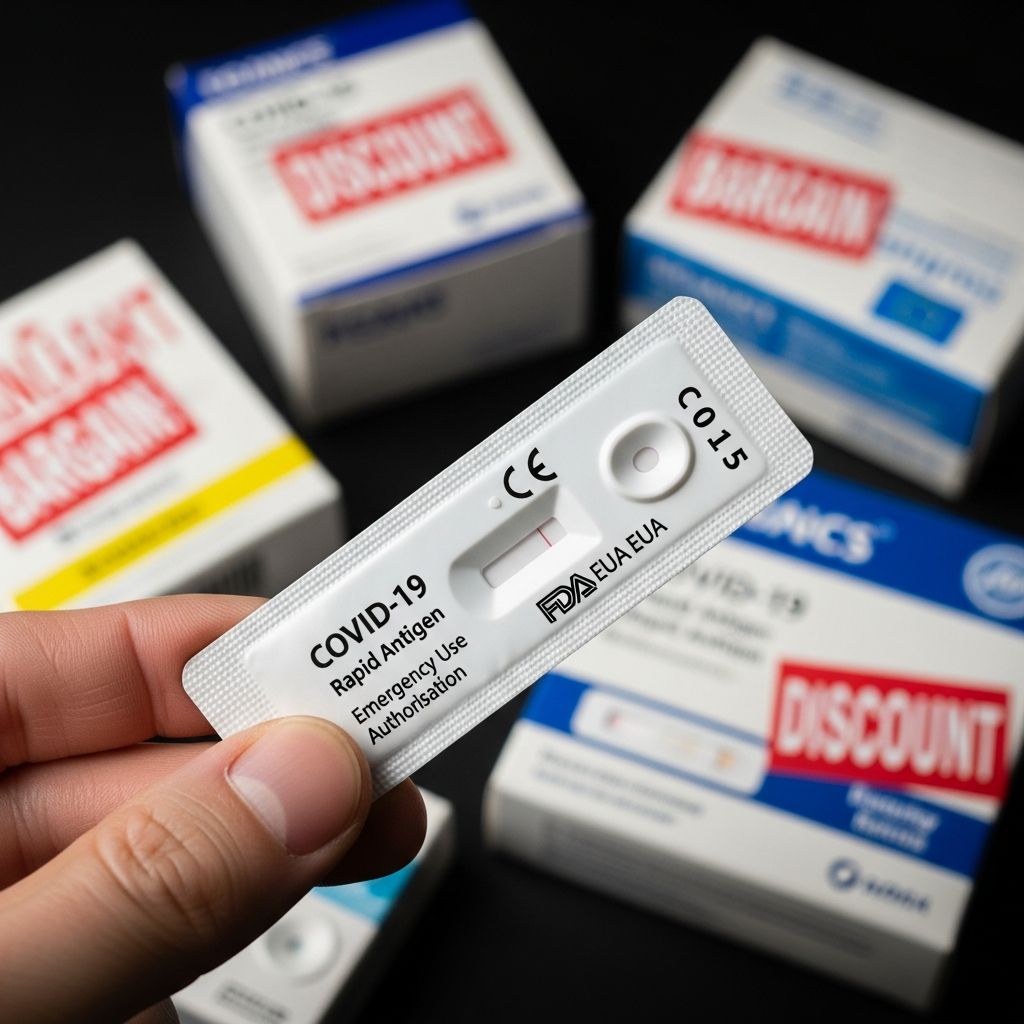
COVID-19 is still circulating, and testing remains an important tool to protect yourself and the people around you. As programs that mailed free at-home tests have started and stopped over time, scammers have repeatedly tried to exploit the confusion by pretending to offer free or special-access kits. This guide explains how to get legitimate COVID-19 tests, recognize red flags, and protect your personal and financial information.
1. The Current Landscape for Free and Low-Cost COVID Tests
Government programs that mailed free at-home COVID-19 tests directly to households have ended, but tests are still widely available through other channels, sometimes at low or no cost depending on where you live and what insurance you have.
1.1 Where you can still get tests
Common ways to get COVID-19 tests now include:
- Retail pharmacies and drugstores – Many national and local pharmacies sell at-home test kits and also offer in-person testing appointments.
- Grocery and big-box stores – Most large chains stock over-the-counter rapid antigen tests near the pharmacy or health section.
- Clinics, hospitals, and testing sites – Health care providers and some public testing sites still offer lab-based PCR or rapid tests.
- Local health departments – Some communities continue to distribute free or low-cost tests when supplies are available, particularly during surges.
Prices and availability vary, but many pharmacies routinely stock several brands of over-the-counter tests.
1.2 What insurance may cover
Coverage rules have changed from the height of the public health emergency. In general:
- Private insurance – Some plans may cover at least part of the cost of in-person testing, and some may reimburse for at-home tests. You need to check your specific plan benefits.
- Medicare – Medicare continues to cover lab-based COVID-19 tests ordered by a health care provider, but no longer covers most over-the-counter at-home tests.
- Medicaid – Medicaid coverage varies by state but typically covers medically necessary testing. Check your state Medicaid program for details.
Because coverage for at-home tests is no longer guaranteed, it is important to confirm what your insurance will pay for before you purchase a large quantity of kits.
2. How to Order Tests Safely and Avoid Imposters
Whenever the federal government offers free test kits, scammers quickly mimic official announcements, websites, and messages. Even when those programs pause or end, imposters keep operating because people expect help to be available. Knowing how legitimate programs work will help you spot scams immediately.
2.1 What a legitimate federal test program looks like
When the federal government operates a mail-order test program, it typically follows a simple pattern:
- Single official entry point – The program is promoted through an easy-to-remember .gov domain (for example, a site that clearly uses a U.S. government address).
- Limited information collected – You are asked only for a name and shipping address. An email address may be optional for delivery updates.
- No payment or financial information – Test kits and shipping are free. You are not asked for credit card numbers, bank details, or Social Security numbers.
- Orders fulfilled by the U.S. Postal Service – USPS normally handles the delivery, and tracking, if available, is provided through official Postal Service channels.
Any program that deviates from these basic practices deserves scrutiny.
2.2 Red flags that signal a COVID test scam
Scammers use many of the same tactics whether a federal program is active or not. Watch for these warning signs:
- Requests for credit card or bank account numbers “to verify” your identity or to pay a small fee.
- Demands for your Social Security number, Medicare number, or other sensitive data to “confirm eligibility.”
- Unsolicited calls, texts, emails, or social media messages claiming to be from the government, urging you to claim your tests immediately.
- Promises of special access, extra kits, or VIP priority if you pay or share more information.
- Websites that look like government sites but have misspellings, strange domains, or no clear contact information.
Anyone who pressures you to act quickly or threatens that you will “lose your benefits” if you do not provide information is likely a scammer.
3. Checking COVID Test Expiration Dates Correctly
Many people throw away at-home tests as soon as the printed expiration date passes. However, the U.S. Food and Drug Administration (FDA) has extended expiration dates for some tests after reviewing stability data, which means some kits remain usable for months longer than originally printed.
3.1 Why expiration dates may change
Manufacturers initially receive emergency authorization with a conservative shelf life. As they gather more data, they can show the FDA that the tests remain accurate for a longer period. When the FDA agrees, it publicly updates the authorized shelf life and posts the changes by brand.
3.2 Steps to confirm whether your test is still valid
To check if an at-home test kit is still usable:
- Locate the brand name and lot number on your test package.
- Visit the FDA’s page listing authorized home COVID-19 tests.
- Search for your test manufacturer and product name in the table.
- Look for notes about an extended expiration date and compare with your lot number.
If the FDA has extended the expiration date for your exact test and lot, you can rely on the new date provided instead of the original printed one.
| What You See on the Box | What You Should Do |
|---|---|
| Expiration date is in the future | Use the test anytime before that date, storing it as instructed. |
| Expiration date has passed | Check the FDA list to see if the date has been extended for your specific test brand and lot. |
| Brand not found on FDA list | Be cautious; if you cannot verify authorization and expiration, consider using a different test. |
4. Safe Ways to Shop for At-Home COVID Tests
If no government distribution program is active where you live, you may still want to keep a few tests on hand. Buying from trusted sources reduces your risk of counterfeit or mishandled kits.
4.1 Choosing where to buy
Prefer these options when possible:
- Established pharmacies – National chains and independent pharmacies typically source directly from authorized manufacturers.
- Reputable grocery or big-box stores – Large retailers follow regulated supply chains and are more likely to sell genuine products.
- Official manufacturer sites – Some FDA-authorized test makers sell kits directly online.
Be careful buying from unknown third-party sellers, especially on online marketplaces where counterfeit products can slip through.
4.2 What to check on the package
Before you buy—or before you open the kit—look for:
- Brand name and manufacturer that appear on the FDA’s authorized list.
- Clear labeling in your language, including instructions for use and warnings.
- Lot number and expiration date printed on the box and, if applicable, the test device.
- Packaging that is intact and sealed without signs of tampering or damage.
If packaging looks altered, missing key information, or obviously different from previous boxes of the same brand, do not use the test.
5. Protecting Your Personal and Financial Information
Scammers know that health-related offers can feel urgent. That sense of urgency makes people more likely to share information they normally would not. Treat any message related to COVID-19 testing with the same caution you would use for financial transactions.
5.1 Information you should never give to get tests
To receive legitimate free or low-cost COVID-19 test kits, you do not need to provide:
- Your full Social Security number or full Medicare number, unless you are working directly with a trusted health care provider who needs it for billing.
- Bank account or debit card numbers just to confirm eligibility or identity.
- Credit card numbers when the offer promises that tests and shipping are “free.”
- Account passwords, one-time passcodes, or login credentials for your medical portal.
Any request for this information tied to “free” COVID-19 tests is almost certainly fraudulent.
5.2 Tips to stay safe online
When you see an offer for COVID-19 tests on the internet:
- Type web addresses manually or use a saved bookmark for official government or health sites instead of clicking on unexpected links in emails or texts.
- Look for .gov domains when dealing with federal agencies, and cross-check information with USAGov or your state health department.
- Ignore pop-up ads and social media messages that urge you to “claim your free kit now” with countdown timers or limited-time warnings.
- Enable multi-factor authentication and unique passwords on your email and online pharmacy accounts.
6. What to Do if You Think You Were Scammed
If you shared personal information, paid for bogus tests, or suspect that a COVID-19 test offer was fraudulent, acting quickly can limit the damage.
6.1 Steps to take right away
- Contact your bank or card issuer to dispute unauthorized charges and request new cards.
- Monitor your statements and health insurance benefit forms for unfamiliar charges or claims.
- Change passwords for any accounts that use the same login information you may have shared.
6.2 Report suspected COVID-19 test scams
Reporting scams helps regulators track patterns and shut down dishonest operators. You can:
- Report fraud and imposter scams related to federal programs to the appropriate consumer protection agency or fraud reporting portal.
- Share details with your state or local health department if the scam involves fake testing sites or bogus public health outreach.
- Tell your health insurer if you suspect someone is billing tests in your name that you did not receive or request.
Include as much information as you can: phone numbers, email addresses, websites, payment receipts, and screenshots of messages.
7. Smart Habits for Using At-Home COVID-19 Tests
Once you have test kits from a trusted source, using them correctly matters just as much as avoiding scams. Proper storage and accurate sampling make the results more reliable.
7.1 When to test
Public health agencies generally recommend testing:
- When you have symptoms consistent with COVID-19, such as fever, cough, sore throat, or loss of taste or smell.
- After a known exposure to someone with COVID-19, usually starting about 5 days after exposure if you do not have symptoms.
- Before visiting high-risk individuals (for example, older adults or people with underlying health conditions), when recommended by health authorities.
7.2 Using the kit correctly
Every brand has slightly different instructions, but general best practices include:
- Read and follow the manufacturer’s instructions from start to finish before beginning.
- Wash your hands thoroughly and work on a clean surface.
- Use the provided swab, buffer, and test device; do not mix parts from different kits.
- Collect the sample exactly as instructed, paying attention to which nostril, how deep, and how long to swab.
- Wait the specified time before reading the result—neither earlier nor significantly later.
If the test result and your symptoms do not match, or if you have questions about what to do next, contact a health care provider or your local health department for guidance.
Frequently Asked Questions (FAQs)
Q1: Are any free COVID-19 test mail programs still running?
Many large federal mail-order programs have ended, though some communities, health systems, or charitable organizations may still offer free tests locally during surges. Check USAGov and your state or local health department for the most current information in your area.
Q2: How can I tell if a COVID-19 test brand is authorized?
Look for the test on the FDA’s list of authorized at-home over-the-counter COVID-19 diagnostic tests. That list includes the manufacturer, test name, and links to official instructions, along with notes on expiration dates.
Q3: What should I do with a box of tests that shows an expired date?
Do not immediately throw it away. First, check the FDA’s website to see whether the expiration date for that specific brand and lot number has been extended. If there is no extension and the printed date has passed, it is safer to replace the kit.
Q4: Is it safe to click on a link in a text offering free COVID-19 tests?
Treat unexpected texts, emails, or social media messages as suspicious, even if they look official. Instead of clicking the link, navigate directly to well-known government or health department sites by typing the address yourself or using a saved bookmark.
Q5: Can scammers bill my insurance for tests I never received?
Yes. Some fraud schemes involve billing Medicare or other insurers for test kits or services that were never provided. Check your insurance statements for unfamiliar charges or test claims, and report anything suspicious to your insurer and to appropriate fraud-reporting channels.
References
- How to Order Free COVID Test Kits from the Federal Government & Avoid Scammers — Federal Trade Commission. 2024-10-04. https://consumer.ftc.gov/consumer-alerts/2024/10/how-order-free-covid-test-kits-federal-government-avoid-scammers
- At-Home OTC COVID-19 Diagnostic Tests — U.S. Food and Drug Administration. 2025-08-15 (updated). https://www.fda.gov/medical-devices/coronavirus-covid-19-and-medical-devices/home-otc-covid-19-diagnostic-tests
- COVID-19 testing and vaccinations — USAGov. 2025-11-21. https://www.usa.gov/covid-tests-vaccinations
- At-home COVID-19 tests — Administration for Community Living, U.S. Department of Health and Human Services. 2025-03-10. https://acl.gov/accessibletests
- A Guide to COVID-19 Testing for Seniors — National Council on Aging. 2025-03-06. https://www.ncoa.org/article/a-guide-to-covid-19-testing-for-seniors/
- COVID-19 Testing — New York State Department of Health. 2025-01-31. https://coronavirus.health.ny.gov/covid-19-testing
- Coronavirus (COVID-19) Testing · NYC311 — NYC311, City of New York. 2025-03-09. https://portal.311.nyc.gov/article/?kanumber=KA-03322
Similar Articles








Read full bio of medha deb


