
Legality of Rescuing Farm Animals from Abuse
Navigating the complex legal landscape of intervening to save farm animals from suspected cruelty conditions.
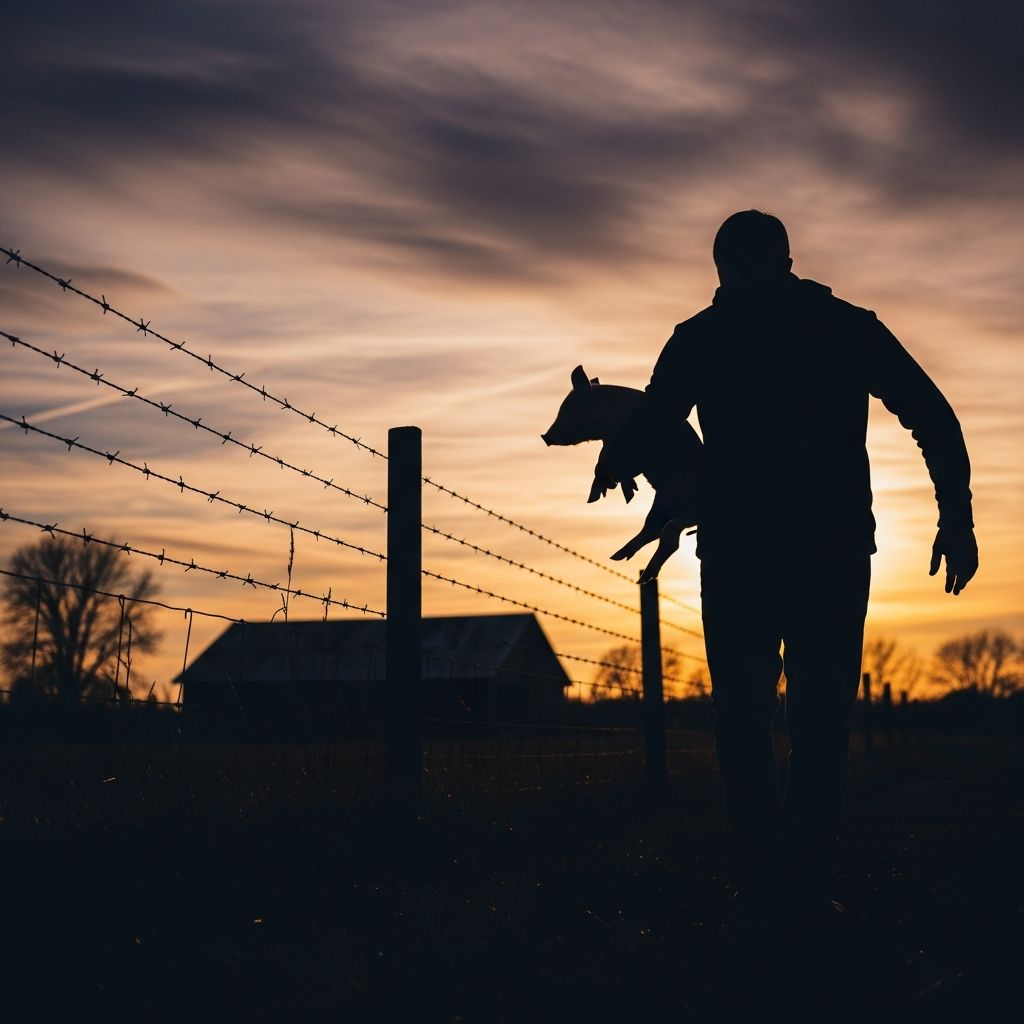
Farm animals endure conditions that many view as cruel, yet federal and state laws often exempt agricultural practices from general animal protection statutes, making unauthorized rescues legally perilous.
Understanding Federal Frameworks for Farm Animal Protection
The Animal Welfare Act (AWA) establishes baseline standards for animal care in research, exhibition, and transport but explicitly excludes farm animals raised for food production. Enforced by the USDA, it focuses on species like dogs, cats, and primates, leaving livestock without comparable oversight during routine farming operations.
Another key federal measure, the 28-Hour Law, mandates that animals transported across state lines for slaughter receive food, water, and rest every 28 hours, with exceptions for certain conditions or species like poultry. Violations incur fines, but this law addresses only transit, not on-farm treatment.
The PACT Act of 2019 criminalizes extreme acts of cruelty such as crushing or sexual exploitation when tied to interstate commerce, yet carves out exemptions for ‘customary’ farming and veterinary practices, limiting its application to farm settings. These gaps highlight why farm animals receive minimal federal safeguards compared to companion animals.
State-Level Variations in Animal Cruelty Enforcement
Most animal cruelty prosecutions occur under state laws, which differ widely. Eleven states, including Alabama, Georgia, and Texas, exempt ‘standard’ agricultural activities from cruelty definitions, presuming practices like confinement or dehorning as lawful. Conversely, states like California, Massachusetts, and New York apply broader cruelty standards without farm-specific carve-outs, potentially covering severe on-farm neglect.
Targeted state measures address confinement: nine states ban gestation crates for sows, while California’s Proposition 12 prohibits sales of products from cruelly confined animals like veal calves or battery hens, influencing out-of-state producers. Michigan limits sow confinement to 12 days around farrowing, with misdemeanor penalties.
| State Example | Key Restriction | Penalties |
|---|---|---|
| California (Prop 12) | Bans sale of confined animal products | Civil fines, injunctions |
| Arizona | No gestation crates | Class 2 misdemeanor |
| Michigan | Sow confinement limits | Up to 1 year jail, $5,000 fine |
| Texas | Farm exemption from cruelty laws | N/A for standard practices |
These inconsistencies mean legality of perceived ‘cruelty’ hinges on jurisdiction and practice normalization.
Risks of Unauthorized Animal Rescues on Farms
Taking animals without permission typically constitutes theft or trespass, regardless of welfare motives. Farms view livestock as property, and removal—even from dire conditions—invites criminal charges. Courts rarely accept ‘necessity defenses’ for animal rescue, prioritizing property rights.
- Criminal Charges: Burglary, larceny, or criminal trespass, with felony potential for high-value livestock.
- Civil Liabilities: Damages for lost productivity, veterinary costs, or emotional distress claims by owners.
- Evidentiary Hurdles: Proving imminent harm requires documentation; subjective views of ‘cruelty’ seldom suffice legally.
Rescuers risk counter-suits, and seized animals may be returned to owners. Interstate transport adds federal scrutiny under laws like the Lacey Act, prohibiting wildlife trade but applicable to some livestock scenarios.
Permissible Pathways for Animal Welfare Intervention
Legal avenues exist for concerned citizens to effect change without direct action.
Reporting Suspected Cruelty
Contact local humane societies, animal control, or state agriculture departments. Some states empower third parties to seek care orders for neglected livestock, covering costs without ownership transfer. Document conditions via photos or videos from public vantage points to bolster reports.
Supporting Advocacy and Litigation
Organizations like the Animal Legal Defense Fund pursue lawsuits challenging confinement practices, as seen in Prop 12 enforcement. Public support amplifies ballot initiatives or legislative pushes for stronger standards.
Foster and Sanctuary Operations
Legally acquiring animals via auctions or owner surrender allows sanctuaries to provide refuge. However, farm-based shelters must navigate zoning, USDA licensing if applicable, and limits on animal numbers. States may regulate rescues akin to kennels, requiring inspections and health protocols.
Ethical Considerations and the Five Freedoms
Beyond law, the Five Freedoms guide humane treatment: freedom from hunger, discomfort, pain/injury/disease, fear/distress, and to express natural behaviors. While aspirational, they inform regulations and public pressure for reform. Activists weigh rescue risks against systemic change via policy.
Case Studies in Farm Animal Welfare Conflicts
High-profile raids, like those by activist groups, often end in convictions despite public sympathy. In one instance, New Jersey courts struck down broad ‘husbandry’ exemptions after challenges, narrowing farm defenses. Ongoing USDA reviews of organic standards may expand protections, pending litigation.
Frequently Asked Questions
Can I legally enter a farm to save a suffering animal?
No, unauthorized entry constitutes trespass; report to authorities instead.
Do any federal laws protect farm animals on-site?
No, the AWA excludes them; only transport rules like the 28-Hour Law apply.
What if a state has no farm exemptions?
Cruelty laws may apply, but proving violation requires severe, non-standard abuse.
How can I start a legal farm animal sanctuary?
Check zoning, obtain permits, comply with health/vaccination rules, and consider USDA oversight.
Are gestation crate bans widespread?
Nine states plus others via sales bans; momentum grows for more.
Future Directions in Farm Animal Law
Trends include expanding PACT-like federal oversight and state confinement bans. Organic rule reevaluations could mandate welfare standards. Citizens can advocate through votes, donations, and ethical consumerism, driving incremental progress without legal jeopardy.
References
- Animal Welfare Overview — National Agricultural Law Center. 2023. https://nationalaglawcenter.org/overview/animalwelfare/
- Legal Protections for Animals on Farms — Animal Welfare Institute. 2022. https://awionline.org/sites/default/files/uploads/documents/22-Legal-Protections-Farm.pdf
- Laws Regulating Rescue and Foster Care Programs — Animal Legal & Historical Center. 2023. https://www.animallaw.info/intro/laws-regulating-rescue-and-foster-care-programs-companion-animals
- Laws that Protect Animals — Animal Legal Defense Fund. 2024-01-17. https://aldf.org/article/laws-that-protect-animals/
- Animal Welfare Act — National Agricultural Library, USDA. 2024. https://www.nal.usda.gov/animal-health-and-welfare/animal-welfare-act
- What Are the Legal Requirements for Operating an Animal Shelter on a Farm — Barn World. 2023. https://www.barnworld.com/uncategorized/what-are-the-legal-requirements-for-operating-an-animal-shelter-on-a-farm/
- The Five Freedoms for Animals — Animal Humane Society. 2023. https://www.animalhumanesociety.org/health/five-freedoms-animals
Similar Articles








Read full bio of Sneha Tete


