
Legal Rules for Using Customer Social Photos in Business
Navigate the legal landscape of repurposing customer social media images for your business marketing without facing lawsuits or fines.
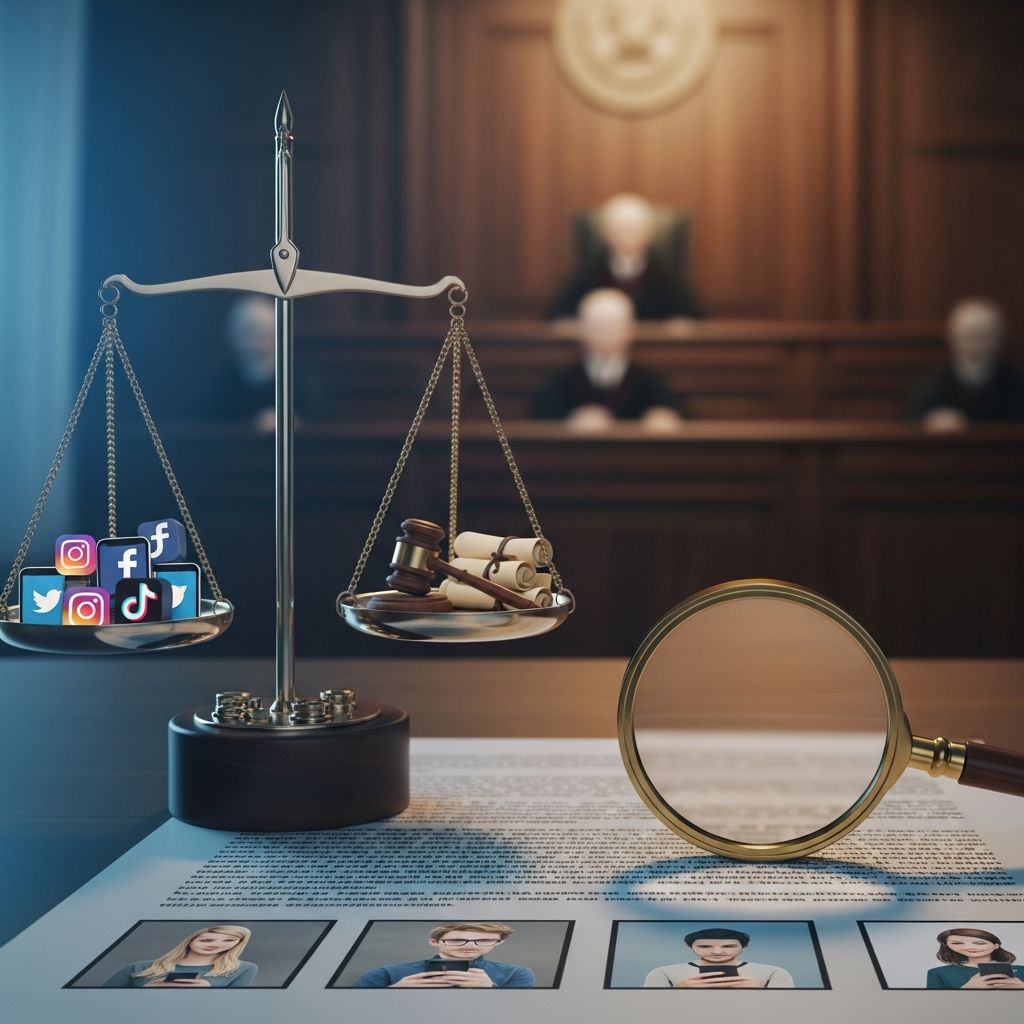
Businesses often leverage user-generated content from social media to boost engagement and authenticity in marketing. However, reposting customer photos without proper authorization can lead to serious legal consequences, including lawsuits for privacy invasion or copyright infringement. This guide explores the key legal considerations, practical steps for compliance, and strategies to safely incorporate these visuals into your promotions.
Understanding Core Legal Risks in Photo Usage
Using images from social platforms involves multiple legal frameworks. Primarily, businesses must address right of publicity, which protects individuals from unauthorized commercial exploitation of their name, image, or likeness. This right varies by state but generally prohibits using someone’s identifiable photo to promote products or services without consent.
Additionally, copyright law applies universally under U.S. federal regulations. The creator of the photo—often the customer who posted it—holds the copyright, regardless of whether their face appears in it. Reposting without permission constitutes infringement, even if the image features your product.
Privacy laws add another layer, encompassing claims like intrusion upon seclusion or portraying someone in a false light. For instance, photographing someone in a non-public setting, such as inside your store during a private event, heightens risks if shared commercially.
- Right of publicity: State-specific; protects commercial use of likeness.
- Copyright: Federal; owned by photographer.
- Privacy torts: Intrusion, false light, misappropriation.
State Variations in Right of Publicity Laws
Unlike copyright, right of publicity is governed by state statutes and common law, creating a patchwork of rules. In states like California and New York, protections are robust, extending posthumously and covering broad commercial uses. Pennsylvania, for example, distinguishes between statutory rights (requiring commercial value in the likeness) and common law rights (applying to anyone).
| State | Key Features | Applies To |
|---|---|---|
| California | Post-mortem rights up to 70 years | Celebrities and private individuals |
| New York | Strong statutory protections | Commercial advertising |
| Pennsylvania | Statutory for valuable likeness; common law broader | All individuals |
| Texas | Property right, transferable | Any commercial use |
Businesses operating across states should review laws in jurisdictions where photos are taken or customers reside. Even non-celebrities can sue if their image is used to imply endorsement.
Copyright Essentials for Social Media Images
Under the U.S. Copyright Act, original photos receive automatic protection upon creation. Social media users retain ownership when posting to platforms like Instagram or Facebook, granting platforms limited licenses but not transferring rights to third parties.
Reposting a customer’s photo of your product? You need their explicit permission as the copyright holder. Creative Commons licenses are rare on personal posts, so assume full restrictions apply. Fair use rarely defends commercial marketing, as it doesn’t transform the work sufficiently.
To differentiate usage types:
- Non-commercial: Personal blogs or profiles may not require permission if no sales intent.
- Commercial: Ads, product pages, social promotions—mandatory consent needed.
Privacy Protections and Expectations
Invasion of privacy claims arise when businesses disregard reasonable expectations. Public spaces allow photography, but commercial repurposing still needs consent. Private areas, like fitting rooms or events, demand heightened caution.
Key privacy torts include:
- Intrusion upon seclusion: Capturing private moments.
- False light: Editing or captioning that misrepresents.
- Misappropriation: Using likeness for profit without approval.
Children’s images require parental consent, and identifiable minors amplify risks.
Best Practices: Securing Permissions Effectively
The safest approach is obtaining written consent before use. Develop a standard release form specifying:
- Photo description and usage platforms (e.g., Instagram, website).
- Duration (e.g., perpetual or 2 years).
- Commercial rights granted.
- Model release for likeness and publicity rights.
Store forms securely, digitally or physically. Train staff on protocols, especially for event photography.
For existing social posts:
- Comment or DM requesting permission.
- Specify intended use and get written reply.
- Credit the creator visibly.
Non-identifiable images (e.g., hands, backs) bypass many issues.
Types of Image Licenses and Alternatives
Beyond user content, source stock photos legally:
- Public Domain: Free use, no restrictions.
- Rights-Managed: Specific terms, one-time fees.
- Royalty-Free: Unlimited use post-purchase.
- Editorial: Non-commercial only.
Avoid scraping images; use platforms like Unsplash (CC0) or Shutterstock for compliance.
Real-World Scenarios and Pitfalls
Scenario 1: Customer tags your business in a product photo. Reposting without permission risks copyright claims, even if complimentary.
Scenario 2: Employee snaps store visitor. Commercial post without release invites publicity suits.
Scenario 3: Influencer wears your merch on TV. Capturing and using the clip breaches misappropriation.
Costs of violations: Legal fees often exceed $50,000, plus damages. DMCA takedowns disrupt online presence.
Employee and Internal Photo Policies
Staff-generated content needs guidelines. Employees may consent via employment agreements, but customers cannot be assumed. Implement training: “Ask first, release required.”
International Considerations for Global Reach
U.S. businesses targeting international audiences face GDPR in Europe (explicit consent for personal data) and stricter EU publicity rights. Always verify cross-border laws.
Frequently Asked Questions (FAQs)
Can I use a photo where the person’s face isn’t visible?
Yes, non-identifiable images (e.g., feet using your product) generally don’t require consent, but confirm no other privacy issues.
Is verbal permission enough?
No, written releases are essential for enforceability in court.
What if the customer posted publicly?
Public posting doesn’t grant commercial rights; you still need permission for business use.
How do I handle group photos?
Obtain releases from all identifiable individuals.
Can fair use apply to marketing?
Rarely; commercial promotion doesn’t qualify as transformative or non-profit.
Building a Compliant Visual Content Strategy
Integrate legal checks into workflows: Review posts pre-publish, audit past content, consult attorneys for templates. Encourage user submissions via contests with built-in releases. This fosters engagement while minimizing risks.
Proactive compliance enhances trust, avoids disruptions, and allows authentic marketing. Stay updated on evolving laws, as social platforms and courts refine boundaries.
References
- Can Businesses Use Customer Photos on Social Media? — Insureon. 2023-05-15. https://www.insureon.com/blog/can-businesses-use-customer-images-on-social-media
- How to Legally Use Photos in Your Social Media and Online Marketing — Author Learning Center. 2022-11-10. https://www.authorlearningcenter.com/marketing/social-media/w/general/7385/how-to-legally-use-photos-in-your-social-media-and-online-marketing
- When Can You Use Photos of Customers or Employees for Business Purposes? — RKG Law. 2024-02-20. https://www.rkglaw.com/when-can-you-use-photos-of-customers-or-employees-for-business-purposes/
- Keep Your Social Media Marketing Legal — Penn State Extension. 2023-08-05. https://extension.psu.edu/keep-your-social-media-marketing-legal/
- A Small Business Guide to Image Copyright — U.S. Chamber of Commerce. 2024-01-12. https://www.uschamber.com/co/grow/marketing/image-copyright-guide
- A Guide To Legally Using Images In Your Marketing — AUZi Insurance. 2023-09-18. https://www.auzi.com/portal/small-business/a-guide-to-legally-using-images-in-your-marketing/
Similar Articles








Read full bio of medha deb


