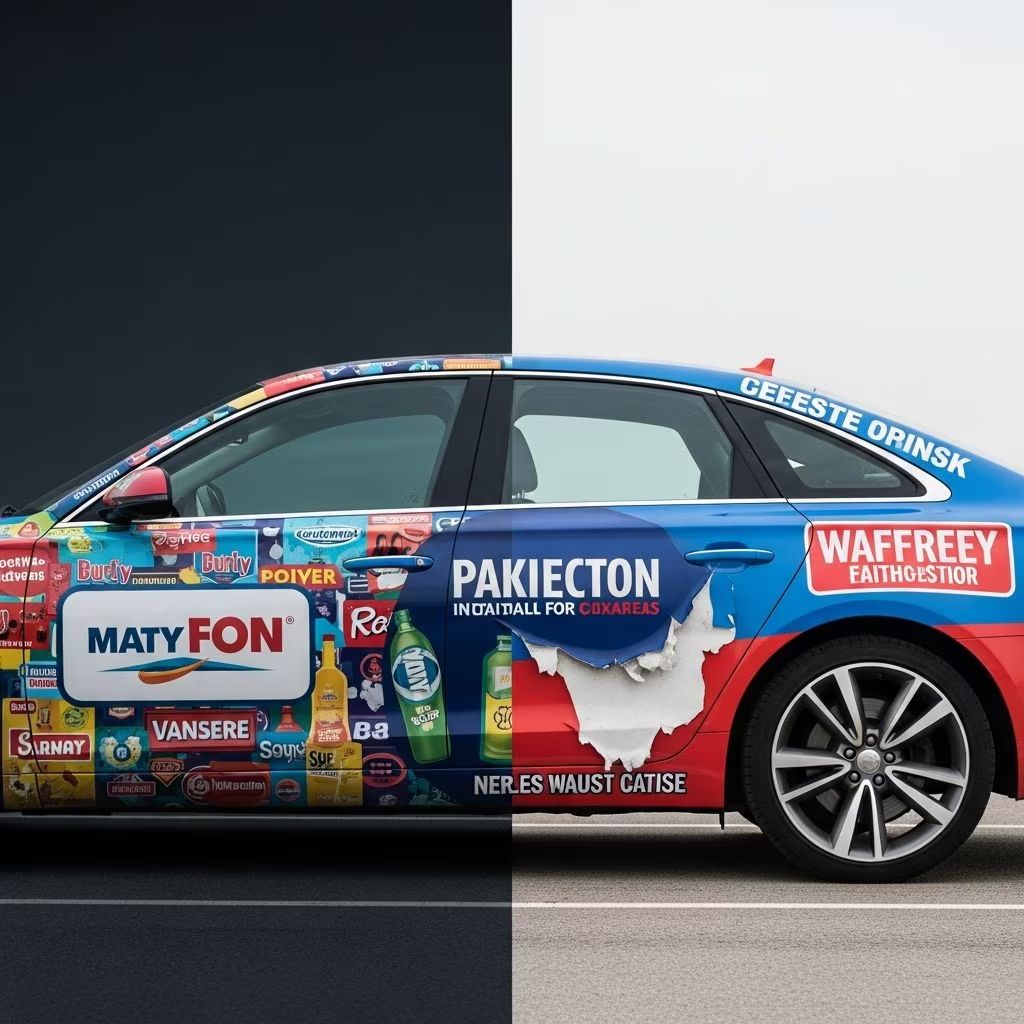
For many small businesses, placing a logo, magnet, or full wrap on a vehicle looks like a low-cost way to gain daily exposure. But once your car carries an advertisement, a web of laws, contracts, and tax rules can apply in ways that surprise new entrepreneurs. This guide explains the main legal and practical issues to consider before you turn your personal or business car into a mobile ad.
Why Vehicle Advertising Is So Attractive to Small Businesses
Vehicle branding can be a powerful marketing tool, especially for local and service-based businesses. A single car circulating in a neighborhood can be seen thousands of times over the course of a year, depending on traffic patterns and mileage.
- Continuous visibility: Your brand travels with you wherever you drive or park.
- Targeted local reach: Your car naturally spends time in the same areas as your customers.
- Perceived professionalism: Branded vehicles can signal that your business is established and trustworthy.
- Potential tax benefits: In some cases, advertising expenses, including vehicle wraps, may be deductible.
These advantages are real, but they exist alongside regulatory, financial, and liability considerations that many business owners overlook.
From Personal Car to Commercial Asset: What Changes Legally?
Once you add logos, contact information, or business slogans to a vehicle, it may stop being treated as purely personal property. Laws in some states and cities treat an advertised vehicle more like a commercial asset than a private car.
| Aspect | Typical Personal Vehicle | Vehicle with Business Advertising |
|---|---|---|
| Registration category | Passenger vehicle registration | May need commercial registration in some states |
| Parking rules | Residential parking usually allowed | May face restrictions or bans in residential zones |
| Homeowners’ rules | Often no special restrictions | HOAs may restrict visible commercial vehicles |
| Insurance treatment | Personal auto policy | Insurer may require commercial policy or endorsement |
| Tax treatment | Limited deductions for commuting | Advertising and business use may be deductible if criteria are met |
Each of these changes can affect your costs, obligations, and potential liability.
Local Laws and Zoning Rules That Can Affect Car Advertising
Vehicle advertising is not governed by a single national standard. Instead, cities and counties often use sign codes and zoning rules to regulate mobile ads.
1. Sign and mobile advertising ordinances
Many municipalities regulate vehicle advertisements through sign ordinances, often treating a wrapped or sign-bearing car as a type of mobile sign.
- Complete bans in some cities: Certain cities prohibit advertisements on vehicles altogether, especially when they are primarily used as rolling billboards.
- Parking restrictions: Rules may limit parking of visibly advertised vehicles in residential areas or on public streets for extended periods.
- Permit requirements: Some jurisdictions require a permit if the wrap or signage meets the legal definition of a sign, including size thresholds.
Failing to comply can result in fines, orders to remove the advertising, or towing if the vehicle is parked in violation of local codes.
2. Zoning and land-use considerations
Zoning laws can regulate where commercial vehicles may be stored or parked, even when they are privately owned.
- Residential neighborhoods may limit parking of vehicles bearing commercial signage overnight.
- Historic districts or scenic zones sometimes restrict visible advertising to preserve neighborhood character.
- Businesses that operate from home may face additional scrutiny when parking wrapped or branded vehicles at the residence.
Checking with your city or county planning department before adding advertising can help you avoid expensive surprises.
Could Your Car Need Commercial Registration?
In some states, when a vehicle is used to market a business, especially if it regularly carries tools, goods, or employees, it may fall into a commercial category for registration or licensing purposes.
Potential consequences include:
- Higher registration fees: Commercial plates often cost more than standard passenger plates.
- Weight and equipment rules: Heavier commercial vehicles may be subject to inspections and safety equipment requirements.
- Regulatory oversight: Certain commercial vehicles are subject to federal or state motor carrier safety rules if they transport goods or people across state lines.
Because definitions vary by state, it is wise to check with your state department of motor vehicles about whether advertising changes your vehicle’s classification.
Design Rules: Not Every Wrap or Message Is Allowed
Adding graphics to your car does not give you unlimited freedom of expression, particularly when you are operating a business. Both safety laws and advertising regulations can limit what you display.
1. Safety-related design restrictions
Traffic safety rules often affect how much of the vehicle you can cover and what materials you may use.
- Obstructed windows and lights: Many jurisdictions prohibit wraps or signs that block the driver’s view, vehicle lights, or license plates.
- Reflective materials: Highly reflective vinyl can be restricted because it may cause glare or confusion for other drivers.
- Impersonation risks: Designs that make the car resemble an emergency or law enforcement vehicle can be unlawful.
2. Advertising law and content controls
Business advertisements must comply with general truth-in-advertising principles enforced at the federal and state level, such as those overseen by the Federal Trade Commission (FTC). Ads must not be deceptive or materially misleading about products, services, or prices.
- Avoid unsubstantiated claims (e.g., superlatives about results or savings) that you cannot support with evidence.
- Ensure that required disclosures (such as conditions or limitations) are clear and readable.
- Consider community standards: offensive, discriminatory, or explicit imagery may violate local decency rules or generate complaints.
Your Homeowners’ Association and Landlord May Have a Say
Even if your city allows vehicle advertising, private property rules can limit what you park at home or at a rented office.
- HOA restrictions: Many homeowners’ associations restrict or prohibit visibly parked commercial or branded vehicles to preserve neighborhood aesthetics.
- Lease terms: Residential or commercial leases may forbid advertising that is visible from the street without landlord consent.
- Enforcement tools: Violations can result in fines, towing, or lease violations, even where public law allows the vehicle.
Review covenants, conditions, and restrictions (CC&Rs) or your lease agreement before investing in permanent branding.
Insurance Implications: Personal vs. Commercial Coverage
Insurance companies care not only about how a vehicle looks, but also how it is used. When a car is regularly used for business or carries advertising, an insurer may decide that a personal policy no longer fits the risk profile.
Important considerations include:
- Disclosure obligation: Insurers typically require you to disclose material changes in vehicle use or modifications.
- Commercial auto policies: If your car is used to visit customers, transport equipment, or regularly advertise, your insurer may require a commercial policy or a business-use endorsement.
- Coverage for the wrap itself: If the wrap or signage is expensive, you may need to confirm that physical damage coverage extends to the graphics.
- Liability exposure: In a crash involving an advertised vehicle, plaintiffs may more easily identify your business and pursue a larger claim, arguing that the vehicle was being used for commercial purposes.
Failing to update your insurer after converting a personal car into a business asset can, in some cases, jeopardize coverage for a claim.
Tax Treatment and Recordkeeping for Vehicle Advertising
In the United States, ordinary and necessary expenses paid or incurred in carrying on a trade or business are generally deductible, including reasonable advertising costs. A vehicle wrap or signage will often fall under this category when used to promote the business.
Key points to discuss with a tax professional include:
- Classification of costs: Some expenses may be currently deductible advertising costs, while others may be treated as capital improvements that must be depreciated.
- Business vs. personal use: If you use the car for both commuting and business, careful mileage and expense records are needed to substantiate deductions.
- Substantiation: Keep invoices for wraps or signage, contracts with installers, and photos documenting the advertising.
Because tax rules are complex and fact-specific, professional advice is strongly recommended before relying on deductions for vehicle advertising.
Contracts With Third-Party Advertising Programs
Some companies pay drivers to place ads or wraps on their personal vehicles. If you join such a program as a small business owner or individual, read the contract carefully.
- Use and mileage requirements: You may be required to drive a minimum number of miles or in certain areas each month.
- Maintenance and appearance: Agreements often require you to keep the vehicle clean, undamaged, and mechanically sound.
- Liability and indemnity clauses: Contracts may attempt to shift responsibility for accidents, traffic tickets, or public complaints onto you.
- Removal costs: Determine who pays to remove the wrap or signage when the contract ends.
Before signing, consider how the advertising could affect your existing insurance, your landlord or HOA rules, and your professional image.
Practical Risk Management Tips Before You Wrap
If you decide that vehicle advertising still makes sense for your business, a thoughtful compliance and risk plan can help you avoid common pitfalls.
- Check your city and county sign, zoning, and parking ordinances for rules on mobile advertising and commercial vehicle parking.
- Review HOA rules and lease terms for restrictions on visible business vehicles.
- Consult your DMV or licensing authority about vehicle classification and registration type.
- Work with reputable wrap or sign installers who are familiar with local regulations and safety requirements.
- Notify your insurance company of any change in use or wrap installation, and discuss coverage options.
- Talk with a tax advisor regarding deductibility and recordkeeping requirements for advertising and business use.
- Use clear, truthful, and non-offensive messaging that aligns with advertising and consumer protection rules.
Frequently Asked Questions (FAQs)
Does putting my logo on my car automatically make it a commercial vehicle?
Not always. Whether your car must be registered as commercial depends on your state’s laws and how the vehicle is used. Some states require commercial registration when the vehicle regularly transports goods, tools, or employees, or is held out primarily as a business vehicle. Check with your state DMV for specific thresholds.
Can my city really ban advertisements on cars?
Yes, some municipalities have ordinances that restrict or prohibit mobile advertising or advertising on vehicles parked on public streets. These rules are generally based on local authority to regulate signs and protect traffic safety or neighborhood character, though they must still comply with constitutional protections for speech.
Do I need a special permit for a vehicle wrap?
In some jurisdictions, large or permanent graphics on vehicles are treated as signs and may require a sign permit, especially if the vehicle is regularly parked in a visible location for advertising purposes. Local planning or building departments can explain whether a permit is required for your specific design.
Will my personal auto insurance cover me if I have an accident while advertising my business?
It depends on the policy language and how frequently you use the vehicle for business. If you regularly use your car for work—such as visiting clients or transporting equipment—your insurer may require a business-use endorsement or a commercial auto policy. Undisclosed business use can, in some situations, create coverage disputes, so it is important to discuss your plans with your insurer.
Can I deduct the cost of my vehicle wrap on my taxes?
In many cases, the cost of vehicle wraps used to promote a business is considered an advertising expense and may be deductible.However, the extent of the deduction depends on factors such as business vs. personal use and whether any portion must be capitalized or depreciated. A tax professional can help you apply the rules to your situation.
References
- Permits and Regulations for Commercial Van Wraps — ACME Graphic. 2023-08-10. https://www.acmegraphic.com/permits-and-regulations-for-commercial-van-wraps/
- Rules and Regulations for Vehicle Wraps: Navigating the Legal Landscape of Wrapping Your Vehicle — House of Signs Co. 2023-10-14. https://houseofsignsco.com/2023/10/14/rules-and-regulations-for-vehicle-wraps-navigating-the-legal-landscape-of-wrapping-your-vehicl/
- The Legalities of Car Wraps: Three Things You Need to Know — CarWraps.com. 2022-06-01. https://carwraps.com/blog/the-legalities-of-car-wraps-three-things-you-need-to-know
- Vehicle Wrap Advertising: Get Noticed Everywhere You Go — Jobber Academy. 2023-07-12. https://www.getjobber.com/academy/vehicle-wrap-advertising/
- What Is Car Wrap Advertising? A Complete Guide for Commercial Fleets — FleetWrap HQ. 2023-05-03. https://fleetwraphq.com/car-wrap-advertising/