
Right To Refuse Service: 5 Safe Steps For Businesses
Understand when businesses can legally refuse service to protect operations without violating anti-discrimination laws.
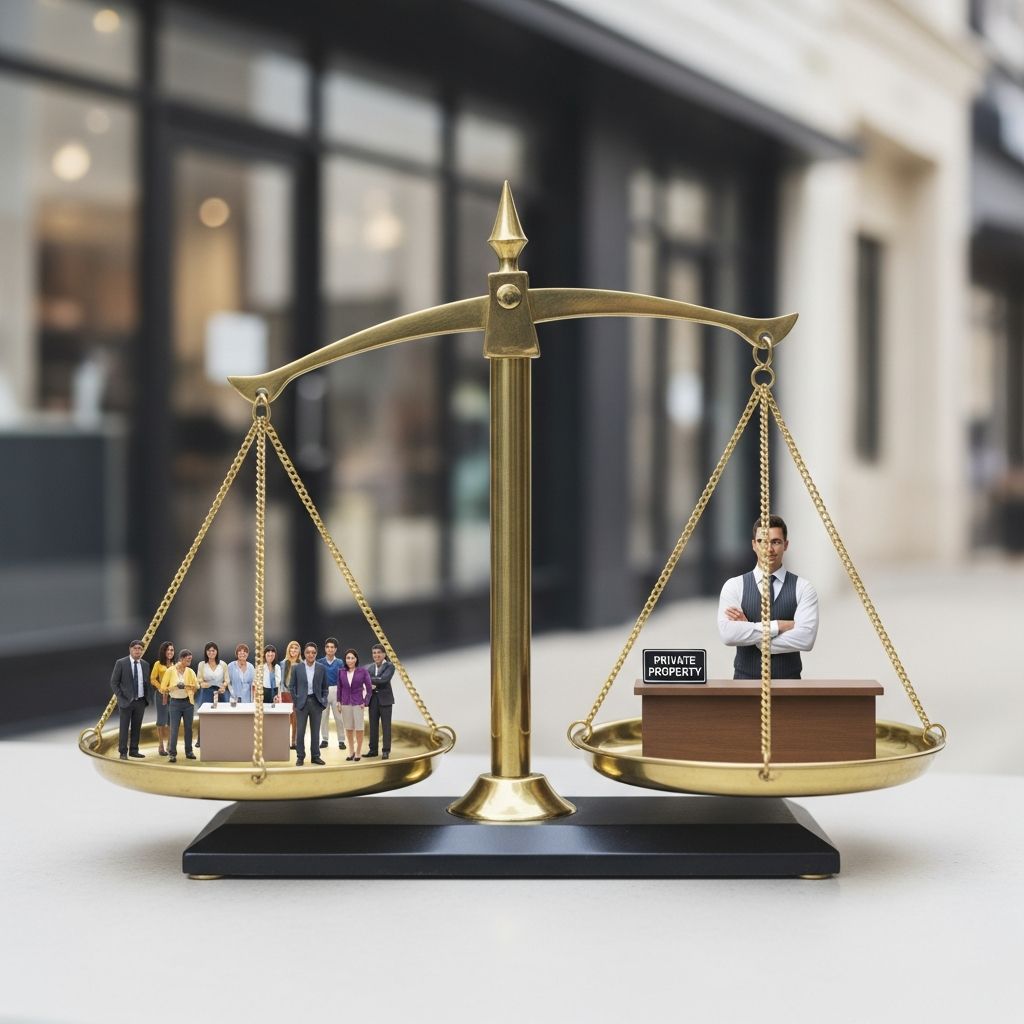
Private businesses generally hold the authority to refuse service to customers, but this power is strictly constrained by federal, state, and local anti-discrimination statutes. Understanding these limits is crucial for owners to safeguard their operations while avoiding costly litigation.
Core Legal Foundations of Service Refusal
The principle allowing businesses to deny service stems from their status as private entities, yet it intersects with public accommodation laws designed to prevent bias. The Civil Rights Act of 1964 prohibits discrimination in places of public accommodation based on race, color, religion, or national origin. Similarly, the Americans with Disabilities Act (ADA) bars refusal due to disabilities, extending protections to employment, transportation, and customer-facing services.
These laws define protected classes, groups shielded from discriminatory denial of service. Key categories include:
- Race or color
- National origin or citizenship status
- Religious beliefs
- Sex or gender identity (in many jurisdictions)
- Age
- Veteran status
- Disability or pregnancy
- Sexual orientation (federal level allows refusal, but state laws often prohibit)
Violating these protections exposes businesses to lawsuits, fines, and reputational harm. For instance, denying service perceived as tied to a customer’s ethnicity could trigger federal scrutiny under Title II of the Civil Rights Act.
Valid Grounds for Legally Refusing Customers
Businesses can deny service when a customer’s behavior poses legitimate risks to safety, operations, or policy compliance, provided it remains non-discriminatory. Common permissible scenarios include disruptions that endanger staff or patrons.
| Scenario | Legal Basis | Example |
|---|---|---|
| Disruptive or abusive conduct | Threat to safety | Yelling, swearing, or verbal threats to employees |
| Health/safety violations | Local ordinances | Bringing non-service animals into food establishments |
| Dress code non-compliance | Establishment policy | Arriving underdressed at a formal venue |
| Capacity limits | Fire/safety codes | Refusing entry when at maximum occupancy |
| Intoxication or mess-making | Business operations | Customer causing disturbances while inebriated |
These refusals must be uniformly applied; selective enforcement risks discrimination claims. Signs like “No shirt, no shoes, no service” reinforce policies but do not grant blanket authority—they must align with law.
Navigating State and Local Variations
Federal protections form the baseline, but states expand safeguards. Over 20 states, including California, New York, and Illinois, prohibit discrimination beyond federal classes, covering sexual orientation and gender identity explicitly. Municipalities in states like Texas and Florida add layers, creating patchwork protections.
Owners should consult state statutes: for example, Colorado and Connecticut mandate inclusive service in public accommodations. Recent cases, like those involving mask or vaccine policies during pandemics, affirm businesses’ rights to impose health rules without bias, as long as applied evenly.
Recent Court Rulings Shaping Policy
Supreme Court decisions refine boundaries. In 303 Creative LLC v. Elenis (2023), the Court ruled that businesses offering expressive services (e.g., custom web design) may refuse based on First Amendment protections if the service conveys a specific message and state law compels unwanted speech. This narrow exception applies only when both conditions are met: the service must be inherently expressive, and the law must target disfavored ideas.
However, this does not broadly permit refusals; routine retail or dining remains governed by anti-discrimination rules. Businesses must document expressive elements to invoke such defenses.
Practical Strategies for Safe Refusals
To minimize risks, implement proactive measures:
- Clear Policies: Post visible rules on dress, conduct, and capacity. Train staff on uniform application.
- Documentation: Record incidents with timestamps, videos, and witness statements for potential disputes.
- De-escalation: Address complaints calmly; offer resolutions before refusal to foster loyalty.
- Legal Review: Consult attorneys for jurisdiction-specific advice, especially post-refusal.
- Insurance Coverage: Secure policies covering discrimination claims and liability.
Refusal should be a last resort; prioritizing safety while maintaining inclusivity protects long-term viability.
Consequences of Improper Refusals
Missteps lead to severe repercussions. Civil suits under the Civil Rights Act can yield damages, attorney fees, and injunctions. Negative reviews amplify harm via social media, eroding customer trust. Criminal charges arise in extreme cases of bias-motivated denial. Mitigation involves swift apologies for misunderstandings and policy audits.
Frequently Asked Questions (FAQs)
What if a customer claims discrimination after a valid refusal?
Present evidence of non-discriminatory reasons, like video of disruptions. Engage counsel immediately to preserve records.
Can signs alone justify refusals?
No; signs support policies but refusals require valid, provable grounds compliant with law.
Does this apply to online businesses?
Yes, public accommodation laws extend to digital services if they serve the public.
How do I handle repeat offenders?
Issue trespass notices, enforceable by law enforcement for future violations.
Are there exceptions for small businesses?
No; protections apply universally to public-facing operations, regardless of size.
Building a Customer-Friendly Yet Secure Environment
Balancing refusal rights with hospitality involves staff training on de-escalation, clear signage, and customer feedback loops. Regularly review policies against evolving laws to preempt issues. By prioritizing safety and fairness, businesses thrive amid legal complexities.
This comprehensive approach empowers owners to protect their premises confidently. (Word count: 1678)
References
- The right to refuse service to rude customers: Is it legal for a business? — KESQ (Stacker Money). 2025-09-04. https://kesq.com/stacker-money/2025/09/04/the-right-to-refuse-service-to-rude-customers-is-it-legal-for-a-business/
- When Can a Business Legally Refuse Service? — Craft Legal. 2024-01-24. https://www.craftlegal.com/2024/01/24/when-can-a-business-legally-refuse-service/
- Can a Business Legally Refuse a Customer? — AmTrust Financial. N/A (Accessed 2026). https://amtrustfinancial.com/blog/small-business/can-a-business-legally-refuse-a-customer
- When Can a Business Refuse to Sell? — The Regulatory Review. 2024-10-22. https://www.theregreview.org/2024/10/22/huang-when-can-a-business-refuse-to-sell/
- The right to refuse service to rude customers: Is it legal for a business? — NEXT Insurance. N/A (Accessed 2026). https://www.nextinsurance.com/blog/right-to-refuse-service-to-rude-customers/
- What does “We reserve the right to refuse service to anyone” really mean? — MyDoorSign. N/A (Accessed 2026). https://mydoorsign.com/blog/right-to-refuse-service-to-anyone/
Similar Articles








Read full bio of medha deb


