
Expressing Dissent: Legal Protections for Offensive Gestures
Understanding when vulgar hand gestures are protected speech under the First Amendment.
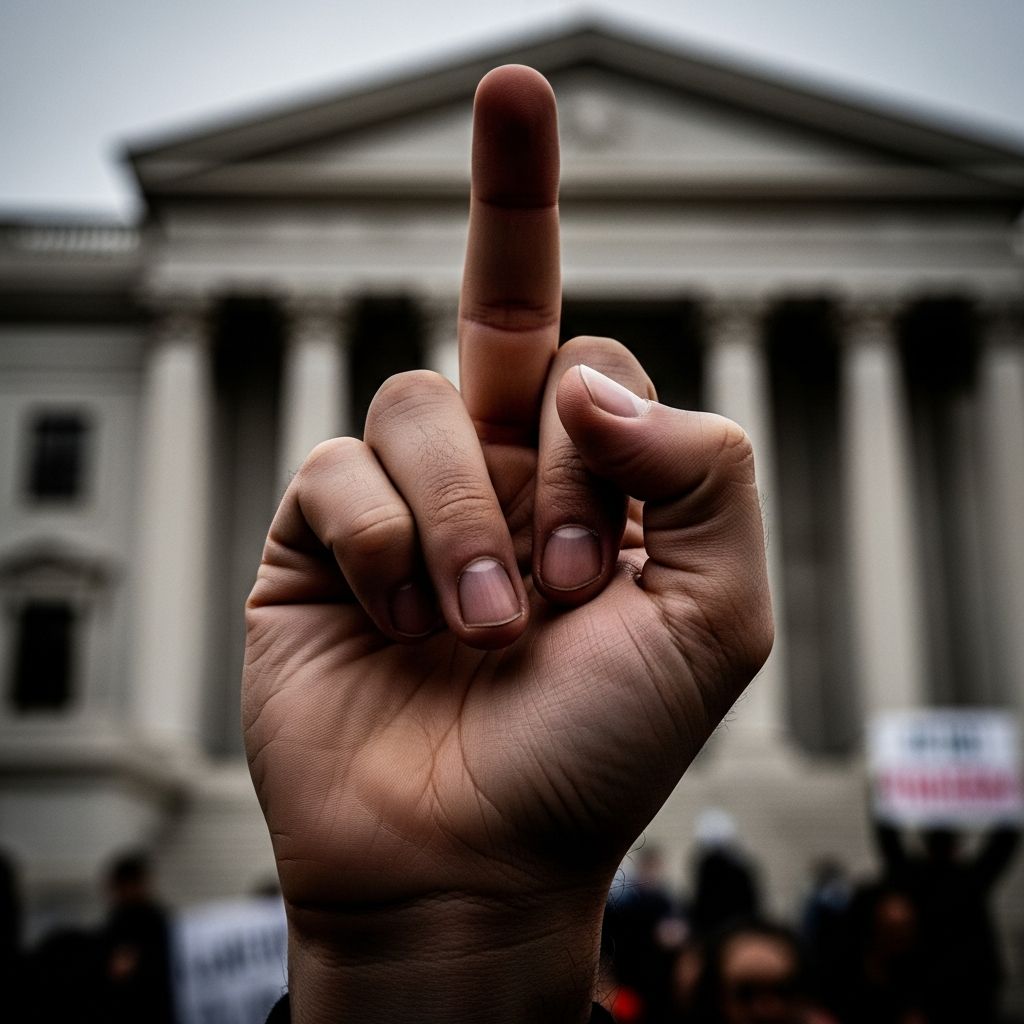
Understanding Expressive Conduct and Constitutional Protection
The intersection of free speech rights and publicly offensive behavior has long fascinated legal scholars and constitutional experts. One of the most contentious questions in First Amendment jurisprudence involves whether vulgar hand gestures qualify as protected expression. Unlike traditional speech involving words, expressive conduct operates in a gray area of constitutional law, requiring courts to balance individual liberty against government interests in maintaining order and civility. The Supreme Court has consistently recognized that symbolic actions can communicate messages deserving protection under the First Amendment, provided they meet certain constitutional criteria.
Expressive conduct encompasses any nonverbal communication intended to convey a particularized message that would be understood by observers in context. This framework emerged from landmark cases establishing that the government cannot suppress messages simply because they are controversial, offensive, or disagreeable. The protections apply equally to pleasant gestures and deeply insulting ones, reflecting the principle that freedom of expression protects unpopular speech most vigorously. Courts must examine whether conduct demonstrates intent to communicate, whether that message would be understood by reasonable observers, and whether government regulation targets the message itself rather than incidental effects.
The Constitutional Foundation for Vulgar Gesture Protection
Federal appellate courts have repeatedly affirmed that raising one’s middle finger constitutes protected symbolic speech under the First Amendment. This protection applies regardless of the target’s identity, though certain contexts create exceptions. The reasoning underlying these decisions reflects broader First Amendment doctrine holding that offensive, crude, or vulgar expression receives constitutional protection unless it falls within narrow categorical exceptions such as fighting words, true threats, or obscenity in specific contexts.
The Supreme Court’s longstanding precedent emphasizes that speech cannot be prohibited merely because society or government officials find it offensive, disrespectful, or lacking in civility. In numerous decisions, the Court has protected flag burning, sexually explicit expression, and profane utterances, establishing that emotional offense alone cannot justify suppression. This principle extends to nonverbal communication conveying similar messages through gesture rather than language. The constitutional analysis focuses on whether expression falls within a recognized exception to First Amendment protection, not on whether the majority considers the speech tasteful or appropriate.
Landmark Cases Establishing Gesture Protection
Several significant federal appellate decisions have definitively established that vulgar gestures toward law enforcement officers receive First Amendment protection. One particularly influential case involved a female motorist pulled over for speeding by a Michigan state officer. Rather than accepting a reduced citation for a non-moving violation, the driver expressed her displeasure by making an obscene gesture as she drove away. The officer responded by initiating a second traffic stop and issuing the original speeding citation despite having initially declined to do so.
The federal appeals court addressing this matter ruled unanimously that the officer violated the driver’s First Amendment rights by retaliating against protected expressive conduct. The court emphasized that any reasonable police officer should understand that citizens have constitutional rights to make vulgar gestures, regardless of whether such conduct violates conventional standards of courtesy. The decision specifically noted that legal protection extends to expression that violates social norms, lacks gratitude, or demonstrates disrespect. The court rejected the government’s argument that exercising discretion in issuing citations justified punishing speech-motivated retaliation, likening such conduct to a prosecutor revoking a plea agreement because the defendant said something offensive.
Similar protection emerged in another case involving an Indiana driver who made an obscene gesture toward a state trooper whose aggressive driving the motorist perceived as dangerous and hypocritical. Constitutional advocates challenged the resulting traffic stop and citation as unconstitutional retaliation for expressive conduct protected under the First Amendment and the Fourth Amendment’s prohibition on unreasonable seizures. Courts have consistently held that gestures standing alone, without accompanying fighting words or threats of violence, cannot justify police action.
Categories of Expression Excluded from Protection
Despite broad First Amendment safeguards for offensive speech, certain narrow exceptions exist where government can restrict or punish vulgar expression. Understanding these exceptions clarifies the boundaries of constitutional protection:
- Fighting Words: Expression directly inciting imminent lawless action or intended to provoke physical confrontation falls outside protection. However, courts have determined that merely offensive gestures without threatening language or context typically do not qualify as fighting words.
- True Threats: Speech communicating intent to commit violence or serious bodily harm receives no constitutional protection. An obscene gesture alone, absent accompanying statements or actions suggesting violent intent, does not constitute a true threat.
- Obscenity in Specific Contexts: While the Supreme Court protects offensive speech generally, obscenity in certain settings such as schools or courtrooms may face greater restriction. A student making vulgar gestures toward school administrators operates in a context with reduced First Amendment protection.
- Contempt of Court: Federal courts have held that directing vulgar gestures at judges during judicial proceedings can constitute contempt, particularly when the conduct demonstrates willful disrespect for court authority and judicial processes. This exception reflects the government’s legitimate interest in maintaining courtroom decorum necessary for justice administration.
- Breach of Peace Statutes: Some jurisdictions have attempted to prosecute vulgar gestures under general breach of peace ordinances. However, courts increasingly recognize that a gesture alone rarely rises to conduct genuinely threatening public tranquility.
Police Encounters and First Amendment Rights
One of the most practically significant applications of gesture protection involves police encounters. Citizens frequently face arrest or citation for making obscene gestures toward officers during traffic stops, arrests, or street encounters. Federal courts have consistently ruled that such gestures alone cannot justify police action, though confusion persists among law enforcement about constitutionally permissible responses.
When a motorist makes an obscene gesture during a traffic stop, that conduct alone cannot provide reasonable suspicion or probable cause for further detention or citation. An officer who initially decided to issue only a reduced violation cannot escalate enforcement after observing a vulgar gesture. Such retaliation violates the motorist’s constitutional rights and potentially violates Fourth Amendment protections against unreasonable seizure when the gesture provides no legal basis for continued detention.
Courts have rejected arguments that officers possess special dignity justifying protection against offensive expression unavailable to ordinary citizens. The Constitution does not grant government officials immunity from disrespect, insult, or crude communication. While officers understandably prefer professional courtesy, constitutional law does not permit punishing citizens for failing to provide it. The reasoning reflects broader principles that democratic governance depends on permitting criticism and disapproval of government officials and their conduct.
Important Contextual Limitations on Expression Rights
Although courts provide robust protection for vulgar gestures, important contextual limitations clarify situations where restrictions may apply:
| Context | Legal Treatment | Explanation |
|---|---|---|
| School Environments | Reduced Protection | Students and school staff operate within institutional settings where authorities have legitimate interests in maintaining orderly learning environments distinct from public spaces |
| Courtroom Proceedings | Potential Restriction | Judges maintain authority to ensure decorum necessary for judicial processes, though courts apply this power with varying consistency |
| During Legal Proceedings | Contempt Possible | Making gestures at judges or during testimony may constitute contempt, reflecting the court’s interest in maintaining proceedings rather than punishment for speech content |
| Military Context | Reduced Protection | Military discipline and command structure may permit greater restrictions on expression than civilian settings |
| Public Streets | Full Protection | Open public spaces receive maximum First Amendment protection absent accompanying conduct rising to fighting words or true threats |
The Qualified Immunity Doctrine and Police Protection
Police officers who violate citizens’ First Amendment rights by retaliating against vulgar gestures face potential civil liability. However, the qualified immunity doctrine, which shields government officials from liability for constitutional violations unless they violate clearly established law, has historically provided protection. Recent court decisions have narrowed this immunity, explicitly holding that it is clearly established law that citizens possess First Amendment rights to make vulgar gestures toward officers.
Federal courts have rejected qualified immunity defenses when officers retaliate against clearly protected expression. This development provides citizens with potential remedies through civil litigation when officers infringe First Amendment rights. The expansion of liability for retaliatory enforcement sends important messages to law enforcement agencies about constitutional boundaries. However, the qualified immunity doctrine remains complex, and some courts continue applying it to shield officers from liability in close cases, highlighting ongoing tensions in constitutional law.
Legislative and Policy Responses
While courts have established clear constitutional protections for vulgar gestures, some jurisdictions have attempted legislative responses through breach of peace statutes, disorderly conduct ordinances, or laws specifically criminalizing offensive gestures. These statutes typically fail constitutional challenge when applied to pure expressive conduct lacking accompanying conduct genuinely threatening peace or safety.
Some municipalities have repealed or limited overly broad disorderly conduct ordinances after federal court decisions struck them down as unconstitutional when applied to gesture-based expression. However, statutory ambiguity and inconsistent enforcement persist in many jurisdictions, resulting in continued arrests and citations that courts subsequently dismiss. This pattern creates unnecessary legal expense and inconvenience for citizens exercising constitutional rights.
Practical Guidance for Citizens and Law Enforcement
Understanding these legal principles carries practical importance for both citizens and officers. Citizens should recognize that while vulgar gestures receive constitutional protection, exercising this right during police encounters remains practically unwise, potentially escalating tense situations and creating safety risks. Constitutional protection does not mean consequence-free expression; it means protection against government punishment for the expression itself.
Law enforcement officers must understand that constitutional authority to arrest or cite citizens depends on conduct exceeding mere vulgarity. An officer observing an obscene gesture cannot lawfully escalate enforcement based on offense at the expression. Professional training emphasizing constitutional boundaries helps prevent violations resulting in civil liability, suppressed evidence, and damaged public-police relationships.
The Broader Principle at Stake
Protection for vulgar gestures reflects fundamental commitments underlying American constitutional democracy. The First Amendment protects expression precisely when government officials dislike, disapprove of, or find offensive the message. Permitting officials to suppress offensive expression would grant government power to determine which viewpoints and expressions deserve protection based on palatability to authorities.
This principle proves most important when applied to speech that most people find offensive or disagreeable. Constitutional protection for easily likable speech requires no special defense; it is when protecting vulgar, crude, or insulting expression that commitment to free speech becomes meaningful and genuinely protective of liberty. The doctrine holds that freedom of expression cannot depend on government approval of the message’s content.
Frequently Asked Questions
Q: Can I be arrested for giving the middle finger to a police officer?
A: No, federal courts have consistently ruled that giving the middle finger alone does not constitute a crime. Officers cannot arrest you simply for making an obscene gesture. However, if your conduct involves additional elements such as threats, fighting words, or obstruction of lawful duties, different legal issues may arise. Gesture alone, standing by itself, receives full First Amendment protection.
Q: What if I make an obscene gesture in response to a lawful police command?
A: The gesture itself remains protected expression and cannot justify arrest. However, the underlying lawfulness of the police command and your obedience or refusal to obey separate issues remain. If you fail to comply with a lawful command while making the gesture, the refusal to comply presents different legal questions distinct from the expressive conduct itself.
Q: Can schools punish students for making vulgar gestures?
A: Schools possess greater authority to restrict student expression than exists in public spaces. Courts recognize that educational institutions have legitimate interests in maintaining appropriate learning environments. Vulgar gestures in school settings may face greater restriction than identical conduct in public streets, though schools cannot punish expression entirely arbitrarily.
Q: Does the First Amendment protect gestures made to private individuals?
A: The First Amendment restricts government action, not private conduct. Your right to make vulgar gestures applies specifically to protection against government punishment. Private citizens lack First Amendment constraints and may respond to offensive gestures within other legal boundaries, such as self-defense laws or civil tort remedies for assault.
Q: Can I face civil liability for making an obscene gesture?
A: Civil liability depends on context and applicable state law. While the First Amendment protects against criminal prosecution, some states recognize torts such as intentional infliction of emotional distress or assault that might theoretically apply to extreme circumstances. However, courts generally restrict such claims when grounded primarily in offensive gesture alone, recognizing First Amendment protections.
Q: What happens if a judge holds me in contempt for gesturing in court?
A: Courts maintain authority to sanction conduct disrupting judicial proceedings, including potentially contempt sanctions for vulgar gestures directed at judges. However, this represents an exception to general First Amendment protection, grounded in the court’s interest in maintaining orderly proceedings rather than punishment for expression content. Appellate courts review contempt convictions carefully to ensure they reflect genuine courtroom disruption rather than mere offense at the gesture.
Q: If an officer tickets me for a gesture, can I sue?
A: Yes, you may have a civil rights claim against the officer and municipality. Recent court decisions have established that it is clearly established law that vulgar gestures receive First Amendment protection. Officers who retaliate against clearly protected expression may face civil liability, though qualified immunity doctrine still provides some protection in certain circumstances.
References
- Court Rules First Amendment Protects Motorist Who Gave the Middle Finger to Police Officer — First Amendment Center, Middle Tennessee State University. 2019. https://firstamendment.mtsu.edu/post/court-rules-first-amendment-protects-motorist-who-gave-the-middle-finger-to-police-officer/
- It’s Not Polite, But the Constitution Protects Your Right to Give the Finger to Police — American Civil Liberties Union of Indiana. 2020. https://www.aclu-in.org/news/its-not-polite-constitution-protects-your-right-give-finger-police/
- Digitus Impudicus: The Middle Finger and the Law — UC Davis Law Review, Vol. 41, No. 4. 2008. https://lawreview.law.ucdavis.edu/sites/g/files/dgvnsk15026/files/media/documents/41-4_Robbins.pdf
- Can You Be Arrested for Giving the Finger to Police? — TalksOnLaw. 2021. https://www.talksonlaw.com/briefs/can-you-be-arrested-for-giving-the-finger-to-police
- First Amendment Watch: Middle Finger Archives — First Amendment Watch. 2019. https://firstamendmentwatch.org/tag/middle-finger/
- Can I Legally Flip Off the Police? — Wirth Law Office, Tulsa. 2021. https://www.wirthlawoffice.com/tulsa-attorney-blog/2021/04/can-i-legally-flip-off-the-police
Similar Articles








Read full bio of medha deb


