
Legal Limits on Killing Trespassing Animals
Understand when property owners can legally protect their land from animals, balancing self-defense rights with animal cruelty laws across U.S. states.
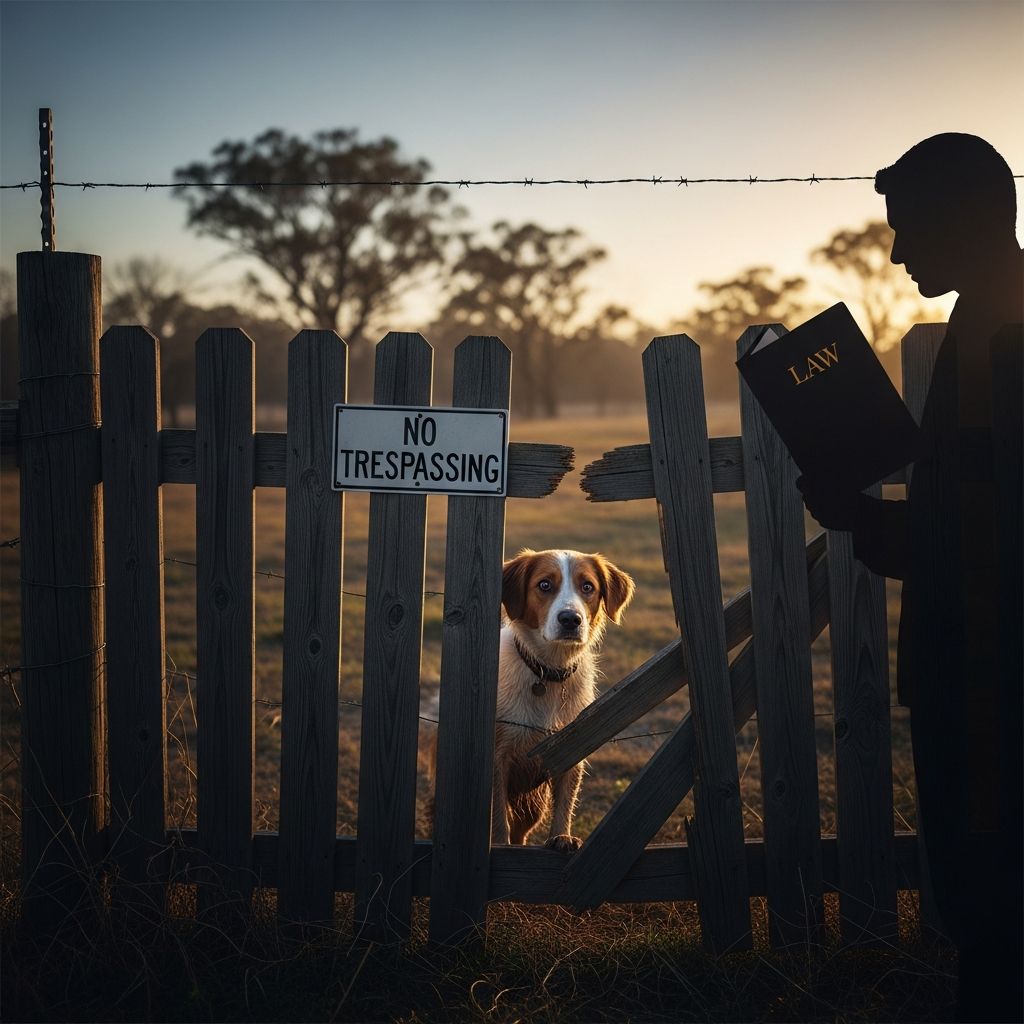
Property owners often face dilemmas when wild or domestic animals wander onto their land. While instincts may urge immediate action, U.S. laws impose strict boundaries on using lethal force against such intruders. Generally, simply trespassing does not justify killing an animal; an imminent threat to people, livestock, or significant property damage must exist. These rules stem from animal cruelty statutes that prioritize humane treatment unless clear dangers arise.
Core Principles of Animal Trespassing and Legal Responses
Across the United States, animal cruelty laws form the foundation for regulating interactions between property owners and trespassing creatures. All 50 states and the District of Columbia criminalize intentional harm to animals, often classifying unjustified killings as felonies with penalties including prison time and fines. The key determinant is necessity: lethal action is permissible only when the animal presents an immediate risk, such as attacking humans, livestock, or causing substantial destruction.
Federal oversight adds layers through acts like the Animal Welfare Act (AWA), which prohibits interstate animal fighting but leaves most cruelty matters to states. The AWA sets standards for handling animals in research, transport, and exhibitions, enforced by the U.S. Department of Agriculture, yet it excludes broad protections for trespassing scenarios. Similarly, the Preventing Animal Cruelty and Torture (PACT) Act establishes federal felonies for malicious acts, but exempts routine farming, veterinary care, and food slaughter.
State variations highlight the patchwork nature of these protections. In urban areas, stray pets trigger swift enforcement, while rural zones may tolerate more leniency for wildlife or livestock threats. Property owners must assess situations carefully to avoid criminal charges.
State-Specific Regulations on Animal Encounters
Laws differ significantly by jurisdiction, reflecting local priorities like agriculture, wildlife conservation, and pet ownership densities. Below is a comparative overview of select states’ approaches to killing trespassing animals.
| State | Key Legal Provision | Allowed Circumstances | Penalties for Violation |
|---|---|---|---|
| California | Felony to maliciously kill or maim any animal | Only if posing direct threat to life or property | Prison time, fines |
| Illinois | Owners may kill dogs injuring livestock or poultry | Caught in act of harming animals; not for mere trespass | Class 4 felony for aggravated cruelty |
| Iowa | Permissible to kill collared dogs chasing or attacking | In the act of maiming domestic animals or biting people | Animal cruelty charges otherwise |
| Nebraska | Right to kill dogs chasing or injuring people/livestock | Found in the act of worrying or killing domestic animals | Standard cruelty penalties |
| South Carolina | Illegal to maliciously wound or shoot animals | Strict limits; threat must be proven | Up to 10 years prison |
| Georgia | No killing unless imminent threat to person/property | Defending life, livestock, or pets from injury | Case-by-case review by authorities |
This table illustrates common themes: permission hinges on active harm, not presence alone. For instance, Illinois’ Humane Care for Animals Act explicitly allows livestock owners to act against predatory dogs but prohibits euthanasia methods like carbon monoxide outside veterinary settings. Nebraska empowers broader defenses against dogs menacing people or farms.
When Lethal Force Becomes Justifiable
Justification requires evidence of imminent danger. Courts evaluate factors like the animal’s behavior—growling, charging, or prior attacks—and context, such as protecting children, elderly residents, or valuable assets. In Georgia, officials from Bibb County Animal Services emphasize case-by-case assessments: a dog barking from afar differs from one lunging aggressively.
- Human Safety: Immediate attacks on individuals qualify in most states.
- Livestock Protection: Farmers can intervene if dogs or wildlife kill poultry or herds, as in Illinois and Nebraska.
- Property Damage: Substantial, ongoing destruction (e.g., repeated garden ruin by deer) may allow non-lethal deterrents first, escalating to lethal only if alternatives fail.
- Wildlife Exceptions: Nuisance wildlife like coyotes or feral hogs often fall under hunting regulations, requiring permits outside self-defense.
Documentation is crucial: photographs, videos, witness statements, and veterinary reports on injuries strengthen defenses against cruelty accusations. Rural areas report higher tolerance, but urban enforcements are stricter.
Consequences of Unauthorized Animal Harm
Violating these laws invites severe repercussions. Unjustified killings constitute animal cruelty, graded as misdemeanors or felonies based on intent and method. California’s malicious acts are felonies; South Carolina imposes up to a decade in prison. Federal PACT Act interventions occur for interstate cases or egregious cruelty.
Civil liabilities compound criminal ones: pet owners can sue for veterinary bills, emotional distress, or wrongful death of companions. Courts may order restitution, restraining orders, or firearm restrictions. In one Georgia incident, escaped dogs shot on a neighbor’s land prompted investigations, hinging on threat proof.
Aggravated cruelty definitions vary—Illinois excludes humane euthanasia but bans torturous methods. Repeat offenders face enhanced sentences, pet forfeitures, and no-contact orders with animals.
Non-Lethal Strategies for Managing Trespassers
Prevention trumps reaction. Property owners should prioritize humane deterrents to avoid legal pitfalls.
- Fencing and Barriers: Sturdy, animal-proof enclosures keep intruders out.
- Repellents: Ultrasonic devices, motion lights, or scent-based sprays deter without harm.
- Habitat Modification: Remove food sources like unsecured trash or bird feeders.
- Local Reporting: Contact animal control for strays; they handle trapping and relocation.
- Neighbor Communication: Discuss roaming pets amicably to foster cooperation.
For pet owners, secure containment prevents escapes. Microchipping and licensing aid quick returns, reducing trespass risks. Wildlife agencies offer guidance on legal trapping for species like raccoons.
Wildlife vs. Domestic Animals: Distinct Rules
Distinctions matter: domestic pets enjoy stronger protections under cruelty laws, while wildlife follows conservation statutes. The AWA covers exhibition animals but not free-roaming wildlife. Hunting seasons regulate deer or bears; off-season kills risk poaching charges.
Feral cats and dogs blur lines—community cats may receive advocacy from groups citing anti-cruelty provisions. States like those with broad felony cruelty laws treat intentional harms similarly regardless of ownership.
Frequently Asked Questions
What if a dog is just wandering on my property without aggression?
No, lethal force is not allowed. Call animal control instead to avoid cruelty charges.
Can I shoot a coyote threatening my chickens?
Yes, if caught in the act and local wildlife laws permit; check state hunting regs first.
What evidence do I need if I kill a trespassing animal in self-defense?
Photos, videos, injuries, and witnesses; report immediately to authorities.
Do federal laws override state ones for pet killings?
Generally no; states handle most cases, but PACT Act applies to severe cruelty.
How can pet owners prevent legal issues with wandering animals?
Use secure fencing, leashes, and ID tags; communicate with neighbors.
Navigating Disputes and Seeking Resolution
Conflicts arise from misunderstandings—escaped pets versus perceived threats. Mediation through local animal services or HOAs resolves many issues pre-escalation. Legal aid from bar associations clarifies rights without court.
Evolving laws reflect societal shifts toward animal welfare. Recent amendments strengthen penalties, urging education on humane alternatives. Property owners benefit from knowing limits, ensuring safety without liability.
In summary, while self-defense rights exist, they demand proportionality. Ignorance invites trouble; proactive measures safeguard all parties.
References
- Can you shoot an animal on your property? — 13WMAZ (YouTube transcript). 2024-02-13. https://www.youtube.com/watch?v=3Z8i-fXERUk
- Pet Trespassing Laws by State — Dr. Jeff Veterinary Clinic Blog. Accessed 2026. https://drjeff.com/blogs/blog/pet-trespassing-laws-by-state
- Animal Cruelty Facts: Understanding the Law — Alley Cat Allies. Accessed 2026. https://www.alleycat.org/resources/anti-cruelty-laws-protect-all-cats/
- Humane Care for Animals Act (510 ILCS 70/) — Illinois General Assembly. Accessed 2026. https://www.ilga.gov/Legislation/ILCS/Articles?ActID=1717&ChapterID=41
- Laws that Protect Animals — Animal Legal Defense Fund. Accessed 2026. https://aldf.org/article/laws-that-protect-animals/
Similar Articles








Read full bio of Sneha Tete


