
Can You Legally Copy Textbook Pages? 4 Practical Rules
Uncover the legal boundaries of photocopying textbooks for study, teaching, and beyond under U.S. copyright rules.
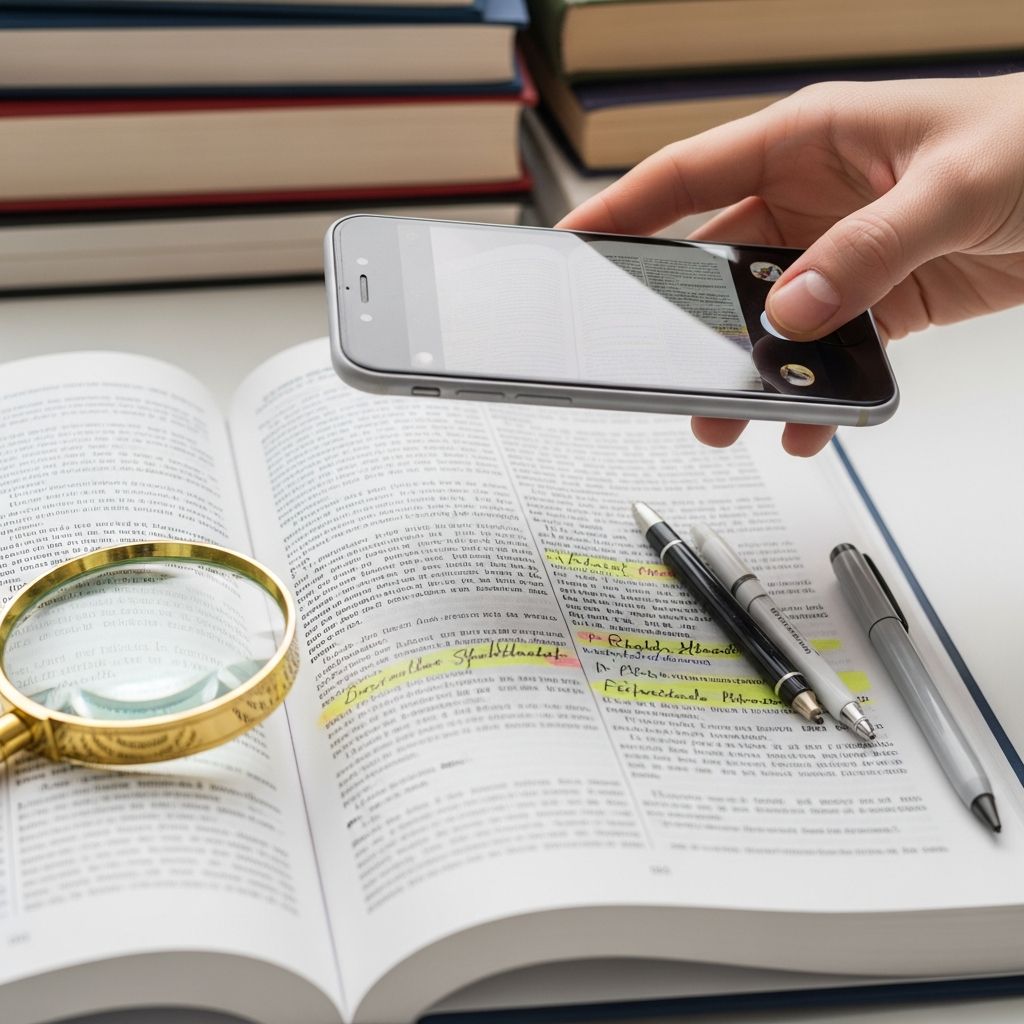
Photocopying textbooks raises complex questions under U.S. copyright law, balancing access to knowledge with creators’ rights. While limited copying may qualify as fair use for education, duplicating entire books or substantial portions typically constitutes infringement. This article explores the legal framework, practical guidelines, and strategies to avoid violations.
Understanding Copyright Protection for Educational Materials
Copyright law safeguards original works like textbooks from unauthorized reproduction. Under Title 17 of the U.S. Code, protection begins upon creation and covers photocopying, scanning, or digital duplication. Only non-copyrighted materials, such as public domain works or government documents, can be freely copied.
Textbooks, as creative expressions, receive full protection regardless of publication date. Publishers actively enforce rights, pursuing lawsuits against individuals and institutions for unauthorized copies, potentially leading to statutory damages from $250 to $150,000 per willful infringement.
The Fair Use Doctrine: Key to Permissible Copying
Fair use permits limited reproduction without permission for purposes like teaching, research, and scholarship. Codified in 17 U.S.C. § 107, it requires weighing four factors:
- Purpose and character: Non-profit educational uses favor fair use over commercial ones.
- Nature of the work: Factual textbooks are more copy-friendly than highly creative ones.
- Amount copied: Small excerpts are safer; entire chapters or books rarely qualify.
- Market effect: Copying that supplants sales harms fair use claims.
Courts apply these holistically; no single factor is decisive. Photocopying a single page for class discussion might pass muster, but multiple copies of a chapter likely do not.
Educational Photocopying Guidelines for Classroom Use
Congress-endorsed guidelines from 1976 provide a ‘safe harbor’ for spontaneous classroom copying, though they set minimum standards, not maximum limits. Brevity rules include:
- Poetry: Up to 250 words, no more than two poems per author.
- Prose: Less than 1,000 words or 10% of the work, whichever is shorter.
- Illustrations: One chart, graph, or picture per book.
Copying must not:
- Replace textbook purchases or anthologies.
- Be mandated by administrators.
- Repeat the same material term-to-term by the same instructor.
- Charge students beyond photocopying costs.
| Permitted Example | Prohibited Example |
|---|---|
| One article excerpt (<10 pages) for a single class session | Full chapter copies distributed multiple semesters |
| Single poem handout for analysis | Entire workbook duplicated for student purchase |
| Graph from textbook for lecture slide | Complete textbook scan shared online |
These ensure copies supplement, not supplant, originals.
Student Photocopying: Personal Study vs. Infringement
Students often photocopy textbook pages for notes or to avoid buying books. A single copy for private study may invoke fair use or library provisions under 17 U.S.C. § 108, but only if not for broader distribution. Copying entire textbooks violates these limits, as it copies the ‘heart’ of the work and impacts sales.
Library notices warn: Reproductions are for ‘private study, scholarship, or research’ only, shielding libraries from liability. Sharing copies with classmates or online turns personal use into infringement.
Institutional Policies and Course Packs
Universities like Yale and Penn mandate compliance, requiring permissions for course packets—compilations of readings sold to students. Packets often exceed fair use, necessitating licenses from the Copyright Clearance Center.
Best practices:
- Place materials on electronic reserves with access limited to enrolled students.
- Obtain permissions for substantial excerpts.
- Include copyright notices on all copies.
Violations expose institutions to suits; faculty may face personal liability if acting unreasonably.
Digital Alternatives and the TEACH Act
Modern education favors digital tools. The TEACH Act (2002) allows displaying or performing copyrighted works in distance learning, provided access is controlled and notices are posted. Scanning pages for password-protected platforms may qualify, but downloading full texts does not.
Open educational resources (OER) and licensed e-books offer legal, affordable alternatives to photocopying.
Consequences of Unauthorized Photocopying
Infringers face actual damages (lost sales), statutory awards up to $150,000 for willful acts, and injunctions halting distribution. ‘Innocent’ infringers believing in fair use avoid statutory damages but not costs or profits disgorgement.
Publishers target copy shops and universities; cases like Princeton University Press v. Michigan Document Services (1996) ruled course packs infringing without permission.
Practical Strategies for Legal Compliance
To stay safe:
- Limit scope: Copy only what’s necessary.
- Seek permission: Use CCC or publisher sites for licenses.
- Leverage libraries: Interlibrary loans and reserves are protected.
- Opt digital: Platforms like Canvas with DRM support TEACH Act uses.
- Document decisions: Note fair use analysis.
Frequently Asked Questions
Is it okay to photocopy one chapter of a textbook for personal use?
Limited to private study, a short excerpt might qualify as fair use, but an entire chapter often does not due to amount and market impact.
Can teachers make multiple copies of articles for class?
Yes, if brief, spontaneous, and within guidelines—not substituting for texts.
What if I scan pages instead of photocopying?
Scanning is reproduction; same rules apply, with added digital distribution risks.
Are old textbooks free to copy?
No, copyrights last author’s life plus 70 years; check status via U.S. Copyright Office.
How do I get permission for course materials?
Contact publishers or use services like Copyright Clearance Center for quick licenses.
Navigating Copyright in a Digital Era
As education digitizes, tools like learning management systems and OER reduce reliance on copies. Institutions train faculty on compliance, emphasizing ethical access to knowledge without undermining creators. Always err toward permission for gray areas to mitigate risks.
References
- Photocopying for Educational Purposes — University of Pennsylvania. Accessed 2026. https://catalog.upenn.edu/pennbook/photocopying-educational-purposes/
- Fair Use and Copyright: Librarians — CUNY Library Guides. Accessed 2026. https://guides.cuny.edu/cunyfairuse/librarians
- Copyright: Academic Copying and Student Course Packets — Yale Office of General Counsel. Accessed 2026. https://ogc.yale.edu/ogc/copyright-academic-copying-and-student-course-packets
- Reproduction of Copyrighted Works by Educators and Librarians — U.S. Copyright Office. 2023-10-15. https://www.copyright.gov/circs/circ21.pdf
- A Guide to Copyrighted Material for Education & Fair Use — NYT Licensing. Accessed 2026. https://nytlicensing.com/latest/methods/using-copyrighted-material-educational-purposes/
- Using Content in Photocopies — Boise State University Office of General Counsel. Accessed 2026. https://www.boisestate.edu/generalcounsel/use-of-content-guidelines/photocopies/
Similar Articles








Read full bio of medha deb


