
Legal Guide to Removing Vehicles from Private Land
Understand property rights, towing regulations, and steps to legally remove unauthorized cars from your land without disputes.
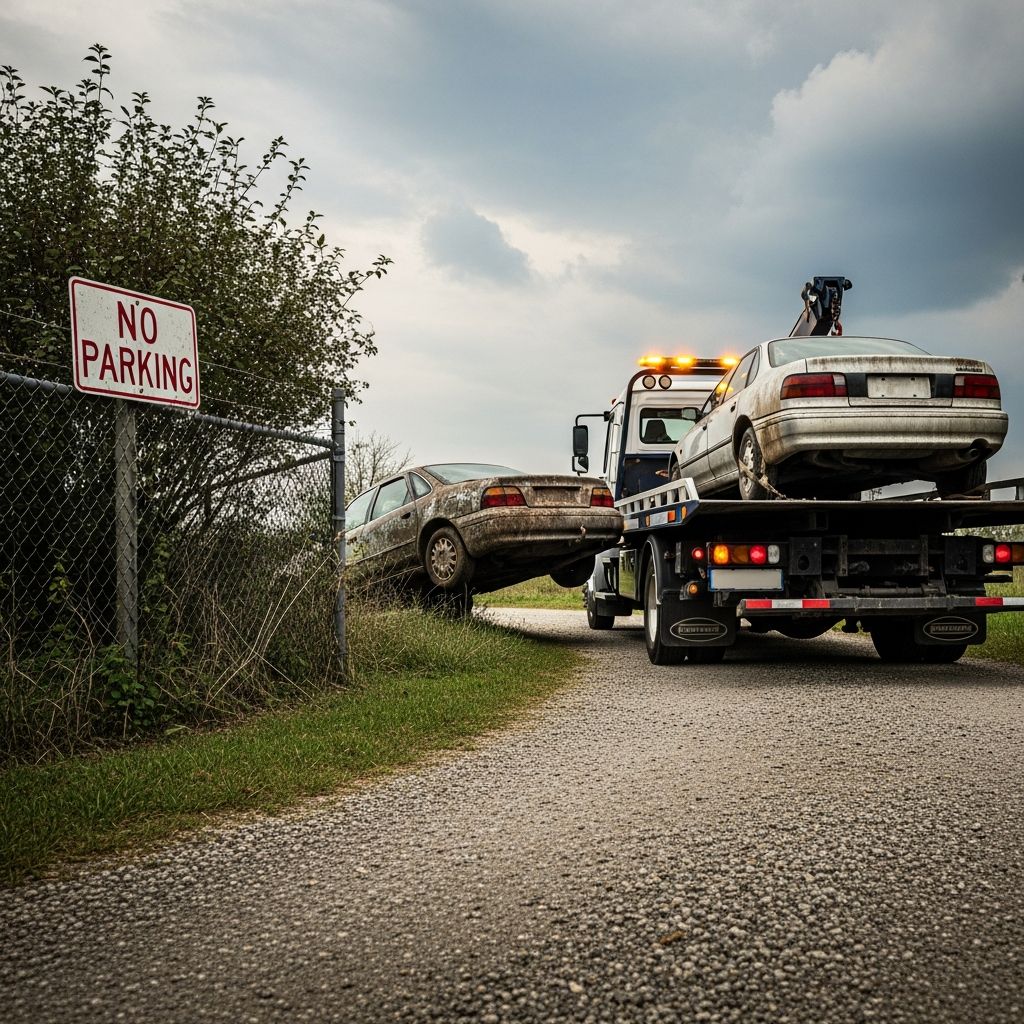
Property owners frequently encounter unauthorized vehicles parked on their land, creating nuisances like blocked access or safety hazards. Knowing the precise legal framework for vehicle removal is crucial to avoid liability, fines, or disputes. This guide outlines key regulations, primarily drawing from Illinois statutes and Chicago ordinances, to empower owners with compliant strategies.
Understanding Your Authority as a Property Owner
Private land grants owners significant control over parking, but towing requires adherence to specific protocols. Under Illinois law, you can authorize removal of trespassing vehicles, but only after fulfilling notice and signage obligations. Failure to comply can render a tow unlawful, exposing you to claims for damages or wrongful impoundment.
For residential properties like apartment complexes or multi-family units, additional tenant considerations apply. Recent legislation mandates direct communication attempts before towing vehicles with established parking agreements, reflecting a balance between owner rights and vehicle owner protections.
Essential Signage Requirements for Legal Tows
Prominent signage is the cornerstone of lawful private property towing. Illinois statute 625 ILCS 5/4-203 mandates signs at every vehicle entrance, positioned within five feet of the public street, with reflective letters at least two inches high on a contrasting background. The bottom of each sign must be at least four feet above ground.
In areas without curbs or barriers, signs are required every 100 feet along the lot frontage. For two- to four-family residences, a single perimeter sign visible to entering vehicles suffices. Content must warn of towing at the owner’s expense and list the towing service’s name and phone number.
Chicago adds layers: signs must appear at entrances and parking zones, stating maximum fees and company details. Without these, tows risk invalidation.
- Placement: All entrances and high-visibility spots.
- Visibility: Night-readable with reflective material.
- Content: Tow warning, costs, contact info.
- Exceptions: Fire lanes or driveways may bypass signage for immediate action.
When Immediate Towing is Permitted
Not all situations demand extended warnings. Vehicles blocking driveways, fire lanes, or emergency access can be towed without prior notice, prioritizing public safety. Police also hold authority for abandoned cars, traffic hazards, or crime-related impounds, often without owner consent.
Abandoned vehicles on private property trigger municipal processes: cities issue warnings, then remove after a grace period. Property owners should coordinate with local authorities rather than acting unilaterally.
Partnering with Licensed Towing Services
Select towing companies registered with the Illinois Commerce Commission (ICC) and insured for private property operations. Provide explicit written instructions detailing the vehicle and authorization.
In Chicago, post-tow police notification is mandatory, including make, model, plate, and storage location for owner retrieval. Companies must issue a Bill of Rights outlining procedures.
| Requirement | Illinois State | Chicago Specific |
|---|---|---|
| Licensing | ICC Registered | Licensed & Insured |
| Instructions | Written from Owner | Express Written |
| Notification | To Police Post-Tow | Immediate Police Alert |
| Fees | Regulated | Max Posted Rates |
Recent Legislative Changes Enhancing Notifications
Effective January 1, 2023, Senate Bill 3629 requires property owners to notify vehicle owners via phone, text, or email at least three hours before towing for vehicles under parking agreements. This modernizes prior written notice rules, preventing surprise impounds and auctions.
The law targets scenarios where mail fails, like out-of-town owners, ensuring direct contact to allow self-removal and save costs.
Vehicle Owner Rights During and After Towing
Owners arriving before full removal can reclaim vehicles by producing keys and moving them immediately. Non-commercial vehicles incur no fee; commercial ones pay half the posted rate.
Post-tow, access personal items is guaranteed without full payment, under supervision. Photos or videos of the vehicle pre-tow must be provided on request, timestamped with plate and location visible. Retrieval windows vary: 21 days in some impounds before auction risks.
Towing firms must supply itemized invoices; disputes over excessive fees can go to regulators.
Costs Involved and Fee Regulations
Fees are capped to prevent abuse. Chicago mandates posted maximums on signs, covering hook-up, mileage, and storage. Drop fees for on-site releases are limited.
Owners should demand breakdowns; overcharges violate ordinances, potentially voiding liens.
Special Considerations for Businesses and Landlords
Commercial lots demand vigilant signage and contracts specifying towing policies. Landlords must balance tenant rights with property maintenance, using the new notice law for leased spots.
For HOAs or complexes, uniform rules prevent selective enforcement claims. Document all actions photographically for defense.
Steps to Legally Initiate a Tow
- Verify signage compliance.
- Confirm violation (e.g., no permit, blocking access).
- Contact licensed tower with written instructions.
- Attempt direct notice if applicable (post-2023 law).
- Notify police post-tow.
- Retain records of all communications.
Potential Pitfalls and How to Avoid Them
Common errors include inadequate signs, unlicensed towers, or skipped notices, leading to lawsuits. Always consult local ordinances, as Chicago exceeds state minimums.
Disabled placards or emergencies may prohibit tows; verify before acting. Wrongful tows expose owners to reimbursement liability.
Frequently Asked Questions
What if the vehicle owner shows up mid-tow?
They can remove it immediately with keys; no or reduced fee applies.
Do I need signs for my entire property?
Key entrances and intervals per statute; visibility is critical.
Can I tow without police involvement?
Yes, but notify them afterward in many locales.
What about tenant vehicles?
Provide 3-hour direct notice before towing.
How long before a towed car is auctioned?
Typically 21 days; check local rules.
Consulting Professionals for Compliance
For complex properties, attorneys or towing consultants ensure adherence. Local bar associations offer resources on property law nuances.
Staying updated via official sites prevents costly oversights amid evolving rules.
References
- Towing Bill of Rights. 9-84-036 — City of Chicago Municipal Code. Accessed 2026. https://codelibrary.amlegal.com/codes/chicago/latest/chicago_il/0-0-0-2647368
- Is It Legal to Tow a Car Without Permission in Illinois? — Belleville Towing Services. 2025-06-06. https://bellevilletowingservices.com/2025/06/06/is-it-legal-to-tow-a-car-without-permission-in-illinois/
- New Murphy Law Requires Property Owners to Give Notice Before Towing — Illinois Senate Democrats. Accessed 2026. https://www.illinoissenatedemocrats.com/caucus-news/40-senator-laura-murphy-news/4014-new-murphy-law-requires-property-owners-to-give-notice-before-towing-people-s-cars
- Everything You Need to Know About Illinois Towing Laws — Jerry.ai. Accessed 2026. https://jerry.ai/state-laws/illinois-towing-laws/
- Private Property Towing Rules in Chicago — Rightway Towing LLC. Accessed 2026. https://rightwaytowingllc.com/private-property-towing-rules-in-chicago/
- Is it legal to tow someone without giving notice? — Illinois Legal Aid Online. Accessed 2026. https://www.illinoislegalaid.org/legal-information/it-legal-tow-someone-without-giving-notice
- 625 ILCS 5/4-203 — Illinois General Assembly. Accessed 2026. http://www.ilga.gov/legislation/ilcs/fulltext.asp?DocName=062500050K4-203
Similar Articles








Read full bio of Sneha Tete


