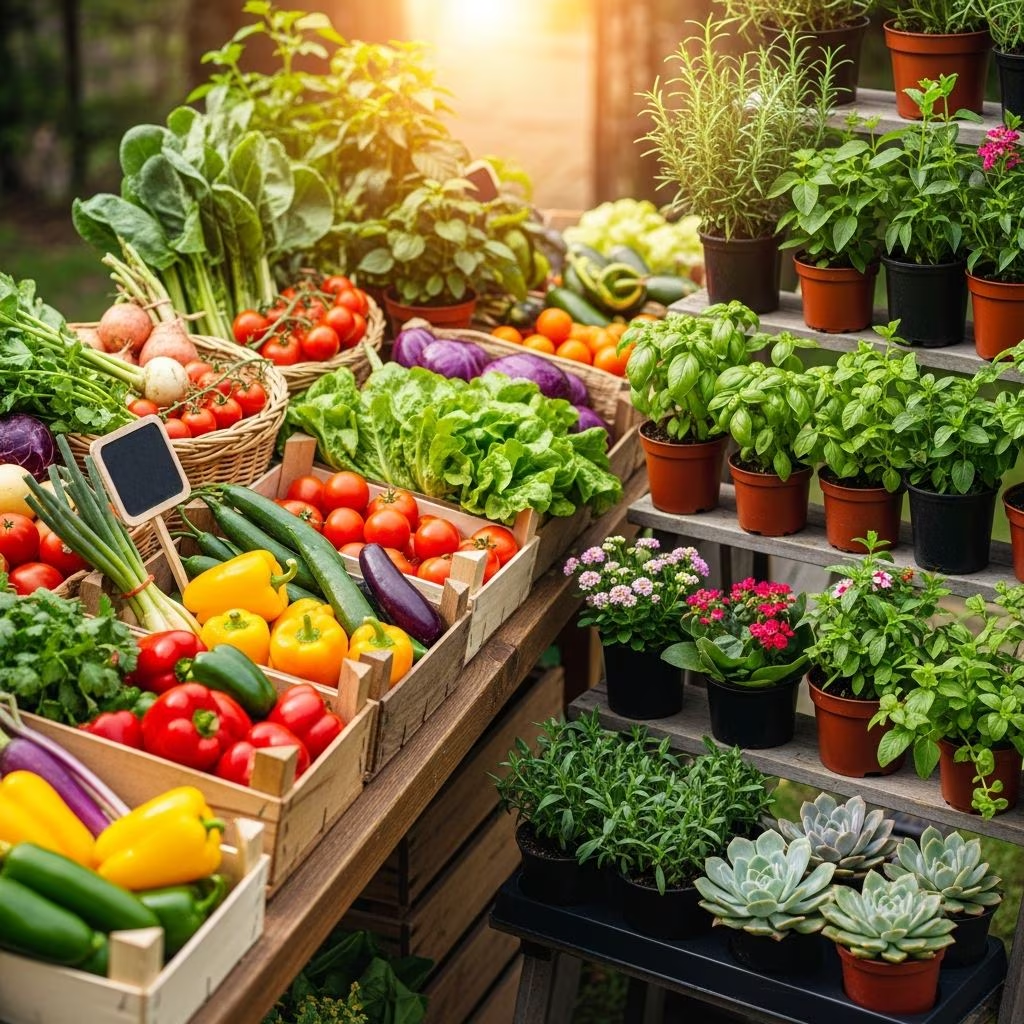
Turning your backyard garden into a source of income by selling plants and fresh produce sounds appealing, especially with rising interest in local, home-grown foods. However, legal hurdles like licensing, intellectual property protections, and health regulations can complicate this venture. This guide breaks down the essentials for operating lawfully from home across the U.S., drawing on state agriculture departments and federal guidelines to help you avoid fines or shutdowns.
Understanding Federal and State Frameworks for Home Sales
At the federal level, the U.S. Department of Agriculture (USDA) oversees plant health and interstate commerce, but day-to-day sales fall under state jurisdiction. Each state maintains its own Department of Agriculture, which enforces rules on nurseries, produce handling, and direct-to-consumer sales. For instance, Georgia requires proof of citizenship for live plant licenses, emphasizing secure verification processes. Home sellers must research local rules, as urban zoning might prohibit commercial activity on residential property.
Key federal considerations include restrictions on noxious weeds and endangered species. The Plant Protection Act prohibits selling plants on the Federal Noxious Weed list, a rule mirrored in states like Georgia where such sales are outright banned. Produce sales often tie into cottage food laws, which allow limited home processing without full commercial kitchens—Georgia’s recent updates via House Bill 398 even eliminate licensing for certain low-risk items.
Licensing Essentials: Do You Need a Nursery or Dealer Permit?
Whether a license is required hinges on scale, plant type, and sales method. Many states mandate a nursery license for anyone propagating and selling plants beyond personal use. In Florida, all plant sales demand certification, while California limits it to outdoor plants and seeds. Washington’s rules require a nursery dealer license or plant sale permit for online or home sales.
- Small-scale sellers: Occasional sales at farmers’ markets or yard events might qualify for temporary permits, especially for non-profits.
- Regular home operations: Expect to apply for a full nursery license, involving site inspections, pest management plans, and record-keeping.
- Produce-focused: Fruits and veggies often need handling permits if processed, but raw sales may fall under cottage food exemptions.
Applications typically require mapping your growing area, detailing crops, and committing to integrated pest management. Thresholds vary—some states trigger requirements after selling over 5,000 plants annually, per general nursery guidelines. Always verify with your state’s agriculture department for exact thresholds and fees.
Navigating Plant Patents and Intellectual Property Protections
Plants aren’t exempt from innovation protections. A plant patent (PP followed by a number) or PPAF (applied for) on labels signals exclusive rights to the breeder. Selling these without permission invites lawsuits or penalties. Stick to heirloom or open-pollinated varieties without markings to sidestep issues.
| Protection Type | Label Indicator | Sale Restriction |
|---|---|---|
| Plant Patent | PP XXXXX | Prohibited without license |
| Patent Applied For | PPAF | Same as above |
| Trademark | ™ or ® symbol | No propagation or sale |
| None | No marking | Generally allowed |
Trademarks protect variety names indefinitely, unlike patents which expire after 20 years. Check USDA’s Plant Variety Protection database before propagating.
Prohibited and Restricted Plants: What You Can’t Sell
Beyond patents, certain plants are off-limits due to ecological risks. Federal lists ban noxious weeds, invasive species, and endangered plants. State laws amplify this—Georgia explicitly prohibits noxious weeds and requires phytosanitary certificates for regulated shipments.
- Invasive species like certain kudzu varieties or English ivy.
- Controlled substances: Marijuana (state-dependent), opium poppies.
- Federally protected: Anything on the Endangered Species Act list.
For produce, avoid selling uninspected items prone to pests. Interstate sales demand compliance with APHIS (Animal and Plant Health Inspection Service) rules.
Online and Interstate Sales: Heightened Scrutiny
Selling plants online introduces shipping regulations. U.S. law requires permits for importing most plants, seeds, or soil, with restrictions to states like Hawaii. Sellers must ensure domestic sourcing and buyer-state compliance. Platforms like Etsy mandate verifying no import violations.
Live plants need phytosanitary certificates proving pest-free status, especially crossing state lines. Some states exempt small intrastate mailings, but always confirm. For produce, USDA grading standards apply if marketing as certified.
Cottage Food Laws for Home Produce Sales
Produce sales benefit from cottage food exemptions, allowing home sales of low-risk items like dried herbs, jams, or raw veggies without commercial facilities. Georgia’s HB 398 removed licensing for many items, boosting home entrepreneurs. Limits typically cap annual sales at $50,000 and require labeling with ‘Made in a Home Kitchen’ warnings.
High-risk produce like cut melons or sprouts often needs full licensing. Check for pathogen testing mandates.
Local Zoning, Business Permits, and Taxes
Even with agriculture clearance, local rules matter. Residential zones may ban ‘home businesses’ or limit traffic. Agricultural land reserves offer exemptions, as in some Canadian contexts adaptable to U.S. farm stands.
Obtain a business license for sales tax collection—most states tax plants and produce. Track income for IRS reporting; home deductions may apply under Schedule F.
Best Practices for Compliant Home Garden Sales
To thrive legally:
- Contact your state Dept. of Ag early for tailored advice.
- Maintain meticulous records: sources, sales, pest treatments.
- Label accurately: variety, origin, care instructions.
- Implement IPM to pass inspections.
- Start small at markets to test demand.
Insurance covering liability protects against claims like diseased plants damaging buyer gardens.
Frequently Asked Questions
Do I need a license for occasional plant sales from home?
Yes in most states for repeated sales; temporary permits suffice for events. Check your state’s agriculture department.
Can I sell patented plants I propagated?
No, without breeder permission—violations lead to penalties.
What about selling produce like tomatoes or herbs?
Often allowed under cottage food laws for raw items; processed goods have stricter rules.
Is shipping plants across states legal?
Requires phytosanitary certificates and compliance with destination rules.
Do I need a business license beyond agriculture permits?
Usually yes, for taxes and zoning.
References
- Do You Need A License To Sell Plants From Home? — Gardening Know How. 2023. https://www.gardeningknowhow.com/garden-how-to/info/license-to-sell-plants.htm
- Live Plant Regulations – Rule 40-4-9-.07 — Georgia Administrative Code, Secretary of State. Accessed 2026. https://rules.sos.state.ga.us/gac/40-4-9
- Live Plant Licenses — Georgia Department of Agriculture. Accessed 2026. https://www.agr.georgia.gov/live-plant-licenses
- Cottage Food — Georgia Department of Agriculture. Accessed 2026. https://www.agr.georgia.gov/cottage-food
- Requirements When Selling Plants, Seeds, Bulbs or Soil Products — Etsy Seller Handbook. 2023. https://www.etsy.com/seller-handbook/article/1073410083134
- Am I Allowed to Sell Plants? — YouTube (Nursery Regulations Video). 2023. https://www.youtube.com/watch?v=Ux60aXzJ744