
The Legal Crusade Against Systemic Police Misconduct in Louisiana
Discover how innovative legal strategies and community advocacy are dismantling police brutality and racial profiling.
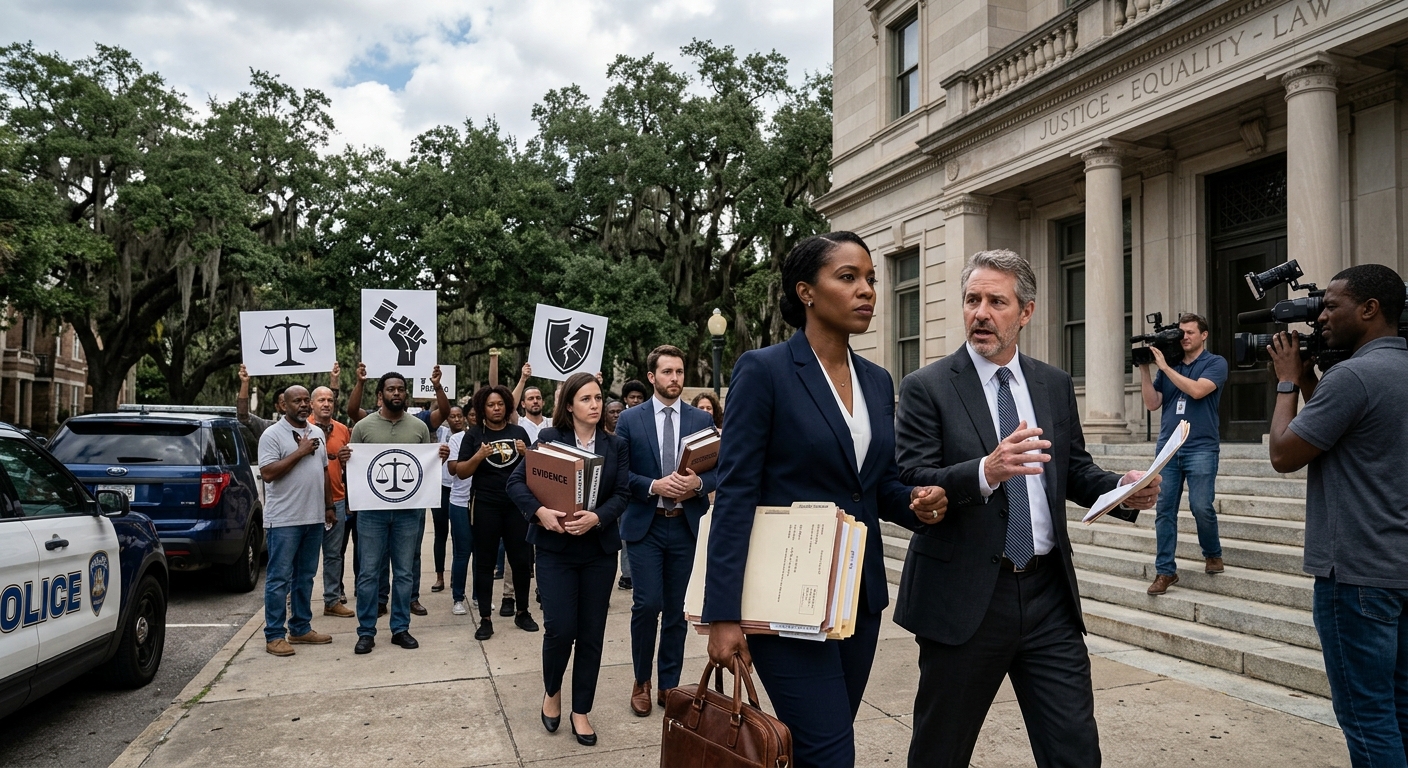
The pervasive crisis of law enforcement overreach and police brutality continues to be one of the most defining and contentious civil rights issues of our modern era. Across the United States, marginalized communities—particularly Black and Brown neighborhoods—disproportionately bear the devastating brunt of systemic misconduct, experiencing vastly higher rates of discriminatory stops, excessive force, and fatal encounters. Within this broader national crisis, the state of Louisiana has emerged as a critical and highly visible battleground. Historically plagued by entrenched institutional racism and a criminal justice system that frequently insulates law enforcement officers from meaningful accountability, the state is currently witnessing a fierce, unprecedented legal and grassroots crusade aimed at dismantling the status quo. Civil rights organizations, private law firms, academic institutions, and local community activists are no longer passively waiting for slow-moving legislative reform; instead, they are taking the fight directly to the federal courts. This comprehensive legal campaign is not solely about winning individual financial settlements. It is fundamentally about upending the restrictive legal architectures that protect violent officers and demanding an absolute transformation in how American communities are policed, protected, and respected.
The Anatomy of Law Enforcement Overreach
To comprehend the absolute necessity of this massive legal intervention, one must critically examine the daily, lived realities of law enforcement interactions within marginalized communities. Discriminatory policing is rarely a series of isolated anomalies or the result of a few “bad apples.” Rather, it is a deeply systemic failure rooted in long-standing policies, training methodologies, and departmental cultures that inherently encourage aggressive escalation over peaceful de-escalation. According to the Bureau of Justice Statistics’ comprehensive 2022 report on contacts between the public and the police, approximately 49.2 million United States residents aged 16 or older had some form of contact with law enforcement over the previous year. The data underscores stark and persistent racial disparities, explicitly noting that Black residents were significantly more likely to experience the threat or use of nonfatal force during these encounters compared to their white counterparts. This data proves that the disparate treatment of minorities is a statistical reality, not a subjective perception.
In Louisiana, this troubling national trend is acutely and painfully visible. Routine, low-level traffic stops and minor municipal infractions frequently and unnecessarily escalate into violent altercations, creating a pervasive environment of hyper-policing. This aggressive environment severely disrupts community cohesion and fundamentally shatters the foundational trust that must exist between the public and those who are sworn to protect them. The psychological, physical, and socio-economic toll on these neighborhoods is immense. Residents are forced to navigate their daily lives in a state of persistent anxiety, fearing that a broken taillight or a misunderstood gesture could result in severe bodily harm or death. Addressing this deep-seated fear requires far more than surface-level departmental statements; it demands rigorous, adversarial intervention through the justice system to force structural accountability.
A New Blueprint for Accountability: The Collaborative Legal Model
Traditional avenues for combating police violence—such as relying on internal affairs reviews, civilian oversight boards with no subpoena power, or local district attorney interventions—have repeatedly proven inadequate. In response to these systemic failures, a novel and highly aggressive blueprint for accountability has been forged in Louisiana. This model, championed by major civil rights networks, represents a total paradigm shift in legal advocacy by merging intensive, high-volume federal litigation with deep-rooted, grassroots community organizing.
The strategy is highly multifaceted and resource-intensive. Instead of tackling police brutality cases one by one in isolated vacuums, this approach builds a formidable, interconnected network of legal firepower. Prominent national law firms, prestigious academic legal clinics, and dedicated local civil rights attorneys pool their vast resources, finances, and intellectual capital to represent victims of police violence on a pro bono basis. This collaborative, strike-force effort ensures that plaintiffs—who almost always lack the immense financial resources required to engage in protracted, multi-year legal battles against well-funded municipal and state governments—receive elite, top-tier legal representation capable of matching the state’s defense teams.
Crucially, this advanced model incorporates data transparency to expose systemic flaws that might otherwise remain hidden in fragmented police records. By utilizing digital tools such as interactive heatmaps of police violence and comprehensive databases of officer misconduct, advocates can accurately visualize patterns of abuse across various parishes, sheriff’s offices, and state police troops. This data-driven approach is an absolute game-changer. It aggregates individual complaints into an undeniable, macro-level statistical narrative, proving to federal judges, juries, and the voting public that the violence is institutional, predictable, and correctable.
Bridging the Gap Between Communities and the Courts
Successful litigation cannot exist in a vacuum; it requires the immense courage of directly impacted citizens to step forward and share their deeply traumatic experiences. The new legal frameworks prioritize establishing deep trust with local communities, actively encouraging residents to report abuses ranging from verbal harassment to lethal force. By doing so, they are actively challenging a wide spectrum of constitutional violations in federal and state courts, including:
- Unlawful Searches and Seizures: Aggressively challenging the constitutionality of pretextual traffic stops, “stop-and-frisk” practices, and highly invasive physical searches conducted entirely without probable cause or reasonable suspicion, effectively enforcing the Fourth Amendment.
- Excessive and Lethal Force: Holding individual officers and their commanding supervisors strictly accountable for deploying unnecessary physical violence, chemical agents, tasers, or firearms, especially in incidents involving unarmed individuals or those who are fully complying with verbal commands.
- Targeting Vulnerable Populations: Suing police departments for the systemic mistreatment of unhoused individuals and the critical failure to properly train officers to safely and compassionately respond to citizens experiencing severe mental health crises, which too often end in fatal shootings.
- Racial Profiling and Harassment: Documenting and litigating the highly disproportionate targeting of Black and Brown individuals for minor, non-violent offenses, such as jaywalking or loitering, which are frequently used as mere pretexts to enter the criminal justice system.
Overcoming Formidable Structural Legal Barriers
Initiating a federal lawsuit against law enforcement is merely the first step in an arduous and highly complex journey. The true challenge lies in expertly navigating a legal system that has meticulously constructed formidable barriers designed specifically to protect government officials from civil liability. Two of the most insurmountable obstacles in modern civil rights litigation are the judicially created doctrine of qualified immunity and excessively restrictive state-level statutes of limitations.
The Impenetrable Shield of Qualified Immunity
Qualified immunity is a controversial judicial doctrine that effectively shields government officials, including local and state police officers, from personal liability in civil lawsuits unless the plaintiff can definitively prove that the official violated a “clearly established” statutory or constitutional right. As defined by the Legal Information Institute at Cornell Law School, this doctrine theoretically attempts to balance the need to hold public officials accountable with the necessity to protect them from frivolous litigation while performing their duties. However, in actual practice, it has evolved into an almost impenetrable shield for law enforcement.
Federal courts frequently require plaintiffs to produce a prior case with almost identical, highly specific facts where an officer was previously found to have violated the Constitution. If no such exact precedent exists in that specific jurisdiction, the offending officer is granted immunity, and the case is dismissed—even if the judge explicitly acknowledges that the officer’s actions were entirely unconstitutional. In Louisiana, dedicated civil rights litigators are aggressively and systematically challenging the broad application of qualified immunity. They argue vehemently that officers should not be immunized from the severe consequences of egregious, unprovoked violence simply because a highly specific factual scenario hasn’t been previously litigated. By relentlessly pushing these complex cases through the appellate courts, advocates aim to narrow the oppressive scope of this doctrine and forge new legal precedents that protect vulnerable victims rather than violent perpetrators.
Navigating the Trap of Restrictive Statutes of Limitations
Another immense hurdle in the pursuit of civil justice is the arbitrary and often deeply unfair time limits imposed on victims to file a civil rights lawsuit. Historically, Louisiana has maintained one of the absolute shortest statutes of limitations in the entire country for these types of tort claims—giving victims a mere one year from the date of the violent incident to secure counsel, gather evidence, and formally file a federal lawsuit. For individuals who have been brutally hospitalized, unjustly incarcerated, or are simply attempting to recover from severe psychological trauma, navigating the immense complexities of the legal system within a twelve-month window is extraordinarily difficult, if not impossible. Legal crusaders are actively petitioning higher courts to clarify and standardize these restrictive time limits across the nation, ensuring that procedural technicalities and arbitrary state laws do not rob victims of their rightful day in court.
Federal Civil Rights Litigation: The Power of Section 1983
At the absolute core of this legal renaissance is 42 U.S.C. Section 1983, a pivotal piece of federal law originally enacted as part of the Civil Rights Act of 1871. Historically known as the Ku Klux Klan Act, this legislation was initially passed during the Reconstruction Era specifically to protect newly freed slaves from state-sanctioned terror and local government complicity. Today, Section 1983 provides the primary legal mechanism for individuals to sue state and local government officials for the deprivation of their constitutional rights. It is the most powerful vehicle used by civil rights attorneys to bypass biased, entrenched local judicial systems and elevate police brutality cases directly into the federal court system.
By effectively leveraging Section 1983, litigators are forcefully asserting that police violence is not just a mere violation of internal departmental policy, but a fundamental, severe breach of the Fourteenth Amendment’s strict guarantee of equal protection under the law, as well as the Fourth Amendment’s strict protection against unreasonable searches and seizures. The intensive, high-volume use of this specific statute is purposefully designed to impose a massive financial and legal cost on municipalities and departments that tolerate racism and brutality. Ultimately, by threatening the financial stability of these entities through massive civil judgments and attorney fee awards, advocates are forcing municipalities to totally overhaul their hiring, training, and disciplinary procedures.
The Broader Implications for National Policing Reform
The concerted, well-funded legal offensive currently unfolding in the American South serves as a critical, high-stakes proving ground for the entire United States. If dedicated advocates can successfully dismantle the legal protections that shield abusive officers in a state with some of the most deeply entrenched systemic challenges, the resulting federal legal precedents can and will be weaponized in jurisdictions nationwide.
This evolving movement underscores a critical and pragmatic reality: legislative reform and theoretical policy changes are entirely insufficient without the sharp teeth of rigorous, adversarial legal enforcement. By institutionalizing a permanent system where private law firms, national civil rights organizations, and local communities collaborate to continuously audit law enforcement through the courts, a lasting deterrent against police misconduct is firmly established. This powerful model demonstrates that achieving racial and civil justice is not a passive waiting game relying on the goodwill of the state, but an active, relentless pursuit that requires dismantling the architecture of impunity brick by brick, lawsuit by lawsuit.
Frequently Asked Questions (FAQs)
What exactly is the doctrine of qualified immunity?
Qualified immunity is a complex legal principle established by the Supreme Court that protects government officials, including law enforcement officers, from being held personally liable for constitutional violations—such as the use of excessive force—unless the specific right they violated was “clearly established” by prior case law. Critics argue it effectively shields officers from accountability and denies justice to victims of severe misconduct.
How does Section 1983 function in civil rights lawsuits?
Enacted in 1871, 42 U.S.C. Section 1983 is a vital federal statute that allows private citizens to sue state and local government employees for civil rights violations. It serves as the primary legal tool used by plaintiffs and civil rights attorneys to seek financial damages and injunctive relief in federal court when police officers violate their constitutional rights.
Why are statutes of limitations such a critical issue in police brutality cases?
A statute of limitations dictates the strict maximum timeframe after an event within which legal proceedings may be initiated. In states with exceptionally short windows—such as a one-year limit—traumatized victims of police brutality who are hospitalized or facing retaliatory, bad-faith criminal charges often miss the strict deadline to file a civil lawsuit, permanently barring them from ever seeking justice.
Can civil litigation truly bring about systemic police reform?
While civil litigation alone cannot solve all societal issues, it is a profoundly powerful tool to hold individual officers accountable and force widespread departmental changes. The threat of massive financial judgments, combined with court-ordered federal consent decrees, creates immense pressure on municipalities to reform their policing practices, rewrite use-of-force policies, and terminate abusive officers.
References
- Contacts Between Police and the Public, 2022 — Bureau of Justice Statistics. 2024-10-04. https://bjs.ojp.gov/library/publications/contacts-between-police-and-public-2022
- Qualified Immunity — Legal Information Institute (LII), Cornell Law School. 2020-07. https://www.law.cornell.edu/wex/qualified_immunity
- 42 U.S. Code § 1983 – Civil action for deprivation of rights — Legal Information Institute (LII), Cornell Law School. https://www.law.cornell.edu/uscode/text/42/1983
- Justice Lab: Putting Racist Policing on Trial — ACLU of Louisiana. https://www.laaclu.org/en/campaigns/justice-lab-putting-racist-policing-trial
Similar Articles








Read full bio of Sneha Tete




