
The Threat of Law Enforcement Surveillance on Campus
How unchecked police surveillance on campuses fails American civics.
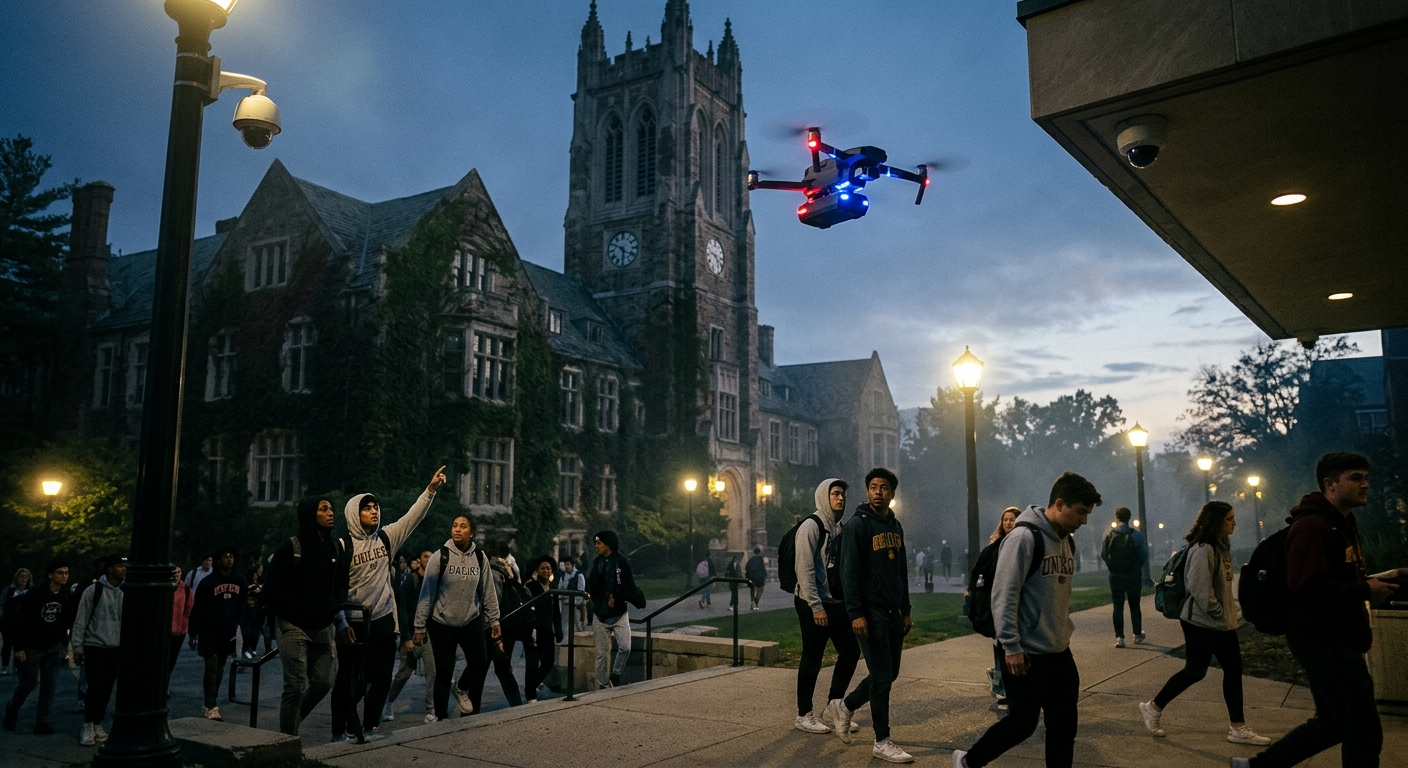
When Law Enforcement Overreaches: The Threat of Surveillance on Campus and Beyond
Every fall, as college campuses across the United States welcome millions of students back to their dormitories and lecture halls, a familiar cycle of civic engagement begins. Universities have historically served as the epicenters of vibrant political discourse, public demonstrations, and organized activism. From the civil rights movement and anti-war protests of the 1960s to the modern rallies advocating for social justice, environmental action, and human rights, students rely on these academic environments to exercise their constitutional freedoms. However, a creeping shadow has increasingly loomed over the quintessential college experience: the unchecked expansion of law enforcement surveillance. As police departments and federal agencies continually bolster their intelligence-gathering toolkits, their aggressive monitoring of student activism suggests a profound misunderstanding of fundamental democratic principles. In essence, by treating peaceful assembly as a precursor to criminal activity, modern law enforcement is completely flunking civics.
The Evolution of Domestic Investigative Guidelines
To understand how surveillance has deeply infiltrated daily life and the modern campus environment, one must look back at the systemic changes in federal investigative rules over the past two decades. For many years, federal law enforcement operated under relatively strict guidelines that required a factual predication—a reasonable, documented indication of criminal wrongdoing—before a formal investigation could be opened. This foundational requirement served as a critical safeguard against unwarranted government intrusion, ensuring that citizens could not be targeted merely for their political beliefs, community associations, or religious affiliations.
However, a pivotal and controversial shift occurred in 2008 with the implementation of the revised Attorney General’s Guidelines for Domestic FBI Operations. These updated rules consolidated multiple existing directives and significantly lowered the threshold for initiating an investigation. The most alarming introduction was the concept of an “assessment.” Under this classification, law enforcement agents were granted the broad authority to proactively gather intelligence and investigate individuals or groups without any factual predication or suspicion of a crime having been committed.
This policy change meant that agents could conduct physical surveillance, utilize undercover informants, and conduct pretextual interviews simply to assess whether a person or group might pose a potential future threat. While proponents argued that this flexibility was an absolute necessity to prevent national security threats before they materialized, civil liberties advocates rightly warned that such expansive authority is fundamentally incompatible with the principles enshrined in the United States Constitution. When law enforcement agencies are permitted to spy on citizens without just cause, the foundational presumption of innocence is eroded, and the door is opened wide for racial profiling, religious discrimination, and the severe suppression of lawful political dissent.
How Lowered Thresholds Impact Communities
The ramifications of these relaxed investigative standards ripple far beyond federal field offices and government intelligence briefings. State, local, and campus police departments frequently emulate the tactics, tools, and strategies of federal agencies through joint task forces and integrated information-sharing networks. As federal definitions of domestic security threats continually expand without adequate oversight, local law enforcement bodies increasingly view community organizers and student activists through a persistent lens of unwarranted suspicion.
The Federal Bureau of Investigation (FBI) and the Department of Homeland Security (DHS) frequently release joint strategic intelligence assessments on domestic terrorism. These intelligence reports often emphasize that lone actors and small groups motivated by varied ideological beliefs pose the most significant contemporary threats. While preventing violence is undeniably a vital law enforcement mandate, the aggressive monitoring of ideologically motivated individuals can swiftly blur the critical legal line between tracking a genuine physical threat and unlawfully policing thought. When behavioral indicators are interpreted overly broadly by authorities, constitutionally protected speech and peaceful protests mistakenly become classified as potential indicators of extremism.
The true danger lies in the institutionalization of this suspicion within our domestic police forces. For example, law enforcement entities have been heavily criticized for infiltrating peaceful environmental groups, monitoring the social media accounts of social justice activists, and attending community meetings simply because participants vocally oppose government policies. This preventative policing model disproportionately targets marginalized communities and effectively punishes them for engaging in the very democratic processes that are meant to hold systemic power accountable. By prioritizing mass surveillance over individual privacy, agencies abandon the civic duty to uphold civil liberties in favor of a misguided and often highly ineffective dragnet approach.
The Digital Panopticon: Monitoring the Modern Campus
If federal surveillance guidelines laid the legal groundwork for unchecked monitoring, the rapid advancement of digital technology has provided the precise tools to implement it on a massive scale. Today’s student protests are predominantly organized and amplified online, making digital platforms the new public square. Consequently, law enforcement agencies have aggressively expanded their digital footprints, investing heavily in sophisticated software tools designed to monitor, track, and categorize student behavior in real-time.
A stark example of this technological overreach is the proliferation of artificial intelligence (AI) monitoring software purchased by university police departments across the nation. Comprehensive investigations by leading journalism institutions have revealed that numerous colleges and universities spend thousands of taxpayer dollars on services like Social Sentinel—an AI-driven platform originally marketed to educational institutions to identify students at risk of self-harm or violent outbursts. However, public records indicate that campus authorities frequently repurposed this exact technology to explicitly monitor student demonstrations.
By inputting specific keywords related to campus protests, local political rallies, or even administrative criticism, authorities actively tracked student organizers. The utilization of these intrusive technologies transforms the campus environment into a modern digital panopticon. Students, acutely aware that their online expressions and physical presence at rallies could be archived in permanent police databases, face a severe chilling effect. The mere presence of police surveillance—whether through undercover officers mingling in a campus crowd, the deployment of biometric facial recognition cameras, or the algorithmic tracking of personal social media feeds—actively discourages individuals from participating in lawful assemblies. When students hesitate to join a picket line or post an op-ed online out of fear of state retaliation or monitoring, the fundamental purpose of the First Amendment is actively subverted.
The Constitutional Crisis: First and Fourth Amendment Clashes
The aggressive surveillance tactics increasingly employed by modern law enforcement agencies create a direct, unavoidable conflict with core constitutional protections, specifically the First and Fourth Amendments. The First Amendment unequivocally guarantees the right of the people peaceably to assemble and to petition the government for a redress of grievances. However, when police systematically record, index, and monitor non-violent protesters, they impose a subtle but profound burden on these foundational rights.
Legal scholars and civil rights experts describe this growing issue as the “paradox of public privacy.” While protests inherently take place in the public sphere to garner attention, individuals still retain a reasonable legal expectation that their participation will not be permanently logged in a government database simply because they are exercising their democratic rights. The indiscriminate collection of video footage, license plate data, and biometric information at public protests actively punishes participation in public discourse and threatens to expose individuals to unwarranted harassment.
Simultaneously, these practices raise severe Fourth Amendment concerns regarding unreasonable searches and seizures by the state. One of the most controversial tactics involves the use of “tower dumps,” a procedure where law enforcement forces cellular service providers to hand over the unedited data of all mobile devices connected to specific cell towers during a certain timeframe. When used near a protest, a tower dump indiscriminately sweeps up the personal location data of every demonstrator, passing journalist, and innocent bystander in the area. This fundamentally bypasses the strict constitutional requirement for individualized suspicion and particularized warrants. The persistent failure of law enforcement to recognize and respect these constitutional boundaries underscores a glaring deficit in their understanding of basic civic rights.
Building a Syllabus for Reform: How to Pass the Civics Test
To correct this dangerous trajectory and ensure that law enforcement respects the constitutional boundaries of a free society, a comprehensive syllabus for reform must be enacted. Re-establishing the crucial balance between public safety and civil liberties requires immediate legislative and administrative action at all levels of government:
- Reinstate Factual Predication: The Department of Justice must revise the Attorney General’s Guidelines to explicitly prohibit “assessments.” No federal, state, or local agency should be permitted to open an investigation or conduct proactive surveillance without a clear, documented factual basis indicating criminal activity.
- Ban Warrantless Digital Dragnets: State and federal legislatures must pass stringent laws prohibiting the use of tower dumps, geofence warrants, and real-time facial recognition technology at public assemblies. Any digital data acquisition must be subjected to strict judicial oversight and require a warrant based explicitly on probable cause.
- Audit Campus Police Technologies: Universities must implement transparent, independent oversight committees comprising students, faculty, and civil rights experts to review the acquisition and deployment of any surveillance technology. AI monitoring tools that lack clear privacy protections and usage limitations should be strictly prohibited on campus.
- Protect the Right to Anonymity: Policies should be immediately enacted to protect protesters from retaliatory doxxing and surveillance. Public dissemination of unedited protest footage by police departments must be heavily regulated to prevent the intimidation and targeted harassment of civil rights activists.
- Mandate Civil Liberties Training: Law enforcement agencies must implement rigorous, independent training programs focused on the historical importance of the First Amendment, the constitutional right to dissent, and the detrimental impacts of implicit bias and racial profiling in intelligence gathering.
Frequently Asked Questions (FAQ)
What are the Attorney General Guidelines for Domestic FBI Operations?
The Attorney General Guidelines are the overarching rules that govern how the FBI conducts investigations and gathers intelligence within the United States. Revised significantly in 2008, the current guidelines allow agents to initiate “assessments”—investigations that do not require any factual suspicion of criminal wrongdoing. This change has been widely criticized for enabling unwarranted surveillance and profiling, fundamentally altering the landscape of federal law enforcement and compromising individual privacy rights.
How does police surveillance impact student protests?
When law enforcement actively monitors protests through undercover agents, facial recognition, or social media tracking, it creates a psychological “chilling effect.” This means that individuals become fearful of joining lawful demonstrations or expressing dissenting opinions, directly undermining their First Amendment rights and stifling necessary democratic participation.
Are campus police legally allowed to use AI to monitor social media?
While many campus police departments legally purchase AI software using university funds to monitor public social media posts, the ethical and constitutional implications are highly contested. Critics argue that repurposing these tools—often initially marketed for suicide prevention or campus safety alerts—to track political activism violates student privacy and suppresses free speech.
What is a “tower dump” and why is it controversial?
A tower dump is an investigative technique where police obtain a list of all mobile devices that connected to a specific cell tower during a specific time period. It is highly controversial because it indiscriminately collects location data from everyone in the area—including innocent protesters and unrelated bystanders—effectively bypassing the Fourth Amendment’s strict requirement for individualized suspicion and particularized warrants.
Conclusion
The fundamental premise of a democratic society relies heavily on the unimpeded ability of its citizens to organize, speak out, and challenge authority without the paralyzing fear of government retribution. When local and federal law enforcement agencies prioritize preemptive intelligence gathering and unchecked digital monitoring over the protection of core constitutional rights, they fail the most basic tenets of American civics. True public safety and domestic security do not require the wholesale sacrifice of our civil liberties. Instead, they demand a rigorous adherence to the legal frameworks that prevent state overreach. It is absolutely imperative that citizens, lawmakers, and academic institutions demand strict accountability, unparalleled transparency, and robust legislative safeguards to rein in the ever-expanding surveillance state. By vigorously defending the right to privacy and free expression—both on college campuses and in the broader public square—we ensure that our foundational democratic principles not only survive the complexities of the modern digital age but continue to thrive for generations to come. Passing the civics test requires active participation and a refusal to surrender the rights that define a free society.
References
- The Attorney General’s Guidelines for Domestic FBI Operations — Department of Justice. 2008-09-29. https://www.justice.gov/archive/opa/docs/guidelines.pdf
- Strategic Intelligence Assessment and Data on Domestic Terrorism — Federal Bureau of Investigation & Department of Homeland Security. 2022-10-22. https://www.fbi.gov/file-repository/fbi-dhs-domestic-terrorism-strategic-report.pdf/view
- Protest Surveillance: Police Transparency or Doxxing? — Stanford Law School. 2022-05-09. https://law.stanford.edu/2022/05/09/protest-surveillance-police-transparency-or-doxxing/
- Tracked: How colleges use AI to monitor student protests — UC Berkeley Journalism. 2022-09-20. https://journalism.berkeley.edu/tracked-how-colleges-use-ai-to-monitor-student-protests/
Similar Articles








Read full bio of medha deb




