
Who Can Use the Bathroom? The Law Behind Starbucks-Style Restroom Policies
A clear legal guide to when businesses can restrict restroom access to paying customers and where the law draws the line.
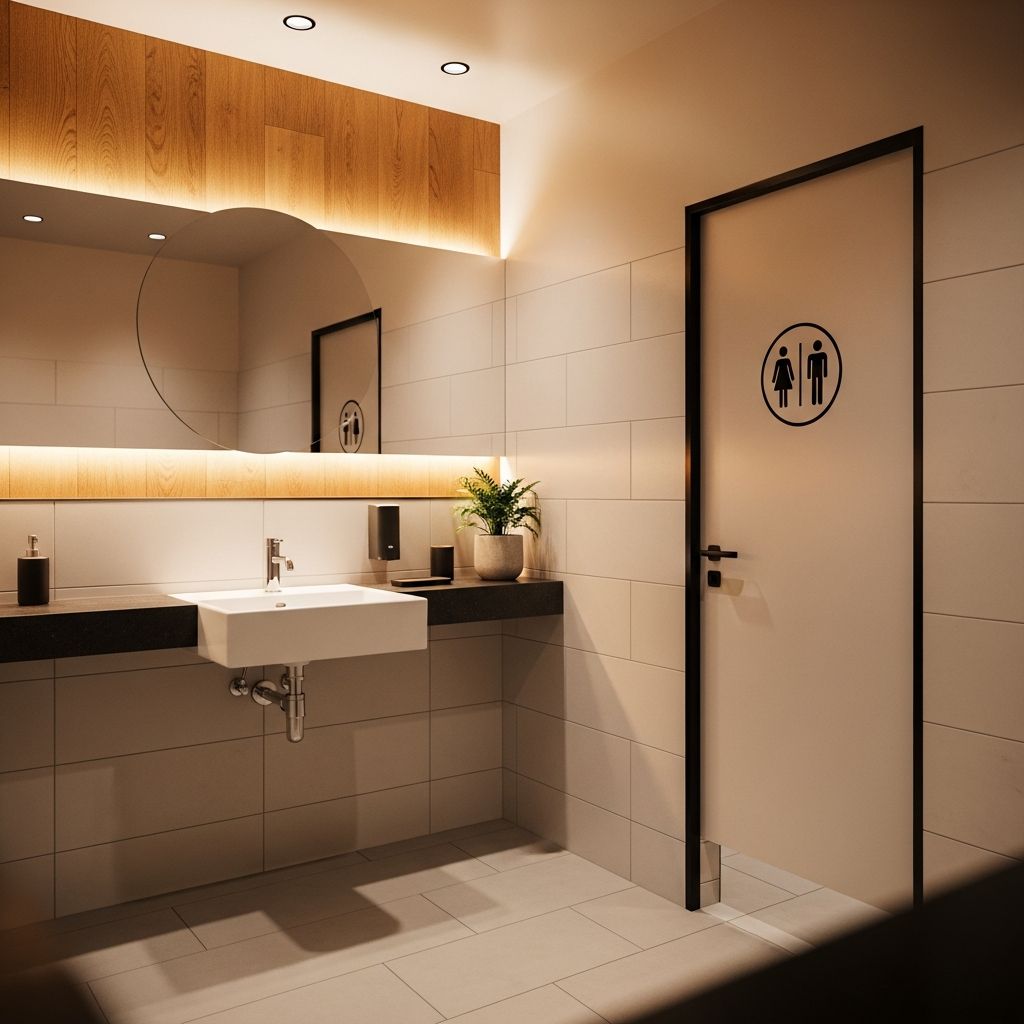
When a major chain like Starbucks announces that its restrooms are only for paying customers, it raises a simple but surprisingly complex question: what does the law actually say about who may use a business’s bathroom? This article explains, in plain language, how U.S. law treats restroom access in restaurants, coffee shops, and other private businesses.
1. The Big Picture: Restrooms, Private Property, and the Law
Most coffee shops and restaurants are privately owned businesses, even if they feel like public gathering places. As a starting point, owners generally have the right to control who is on their property and how their facilities, including restrooms, are used, so long as they comply with applicable health, safety, building, and civil rights laws.
That means a business can usually say, for example:
- “Restrooms are for customers only.”
- “Restrooms are for employees only.”
- “No loitering” or “Time-limited seating” rules.
But that freedom is not absolute. A web of federal, state, and local rules limits how far a company can go, especially when it comes to disability access, health emergencies, and discrimination.
2. Why Starbucks and Other Chains Care About Restroom Rules
High-traffic chains face practical pressures that drive restroom policies:
- High usage and maintenance costs from non-customers.
- Safety and security concerns, such as drug use, vandalism, or harassment in restrooms or dining areas.
- Customer experience: paying guests may complain about long lines, unavailable seats, or unsanitary bathrooms.
- Public relations and reputational risk, especially when enforcement decisions lead to viral incidents and allegations of bias.
Starbucks has repeatedly adjusted its approach between more open “community space” models and tighter rules focused on serving paying customers. Its moves highlight the tension between business interests, public expectations, and legal obligations.
3. Are Businesses Required to Let Anyone Use the Bathroom?
There is no single nationwide law that forces private businesses to let the general public use their restrooms. Instead, requirements come from different layers of law:
- Building and plumbing codes (adopted by states and cities).
- Health and safety regulations for food-service establishments.
- Civil rights and disability laws, like the Americans with Disabilities Act.
- Specialized laws such as Restroom Access Acts for certain medical conditions.
Understanding restroom rights starts with these background rules.
4. Building & Plumbing Codes: Restrooms for Whom?
States and cities typically adopt model codes that set the minimum number and type of toilets buildings must provide. Many follow the International Plumbing Code (IPC) or similar standards.
Common features of these codes include:
- Requiring a certain number of fixtures per number of occupants.
- Separating facilities for men and women, or permitting gender-neutral alternatives.
- Requiring public access areas (like dining rooms) to have restrooms available to occupants.
However, the term “public” in these codes typically means occupants engaged with the establishment, not passersby who simply walk in off the street. In other words, the code might require a restaurant to provide enough toilets for its patrons, but it does not always say any member of the public on the sidewalk may walk in and use them without engaging in business.
4.1 Different Local Rules, Different Outcomes
Local law can make a big difference. For instance, news coverage has highlighted that:
- New York City requires many food-service businesses with sufficient seating to provide restrooms for customers.
- California mandates restrooms for certain restaurants, primarily based on size and construction date.
- Some cities only require customer-accessible restrooms if alcohol is served.
Even where restrooms must exist for customers, local rules do not always specify whether non-customers must be allowed in. That gap leaves room for “customers only” policies, which businesses may adopt unless another law says otherwise.
| Legal Layer | What It Usually Regulates | Effect on Restroom Access |
|---|---|---|
| Building / Plumbing Codes | Number and design of fixtures, accessibility standards | Require toilets for customers/occupants, but rarely force access for all passersby |
| Health Codes | Sanitation in food-service operations | Demand restrooms for employees and often customers, focused on hygiene |
| Civil Rights Laws | Anti-discrimination protections | Limit how access rules can be enforced, especially by protected class |
| Restroom Access Acts | Emergency medical needs | Require businesses to let qualifying individuals use employee-only restrooms |
5. The Americans with Disabilities Act: Access vs. Purchase
The Americans with Disabilities Act (ADA) is a major federal law that regulates how businesses open to the public (called “public accommodations”) must treat people with disabilities. Coffee shops, restaurants, and many retail stores fall into this category.
Under the ADA, these businesses must:
- Provide accessible routes into the building and to key areas, including restrooms when they are offered.
- Ensure toilets, sinks, doors, and clear floor space are designed to ADA accessibility standards in new construction or major alterations.
- Avoid rules that unnecessarily exclude people with disabilities from equal use of facilities.
However, the ADA does not usually require a business to provide a restroom to the public in the first place. Instead, it says: if you provide a restroom to customers, you must make the facility accessible and provide equal access to people with disabilities.
So, a “customers only” rule can exist under the ADA, but it must be applied in a way that does not discriminate on the basis of disability. For example, a shop could not refuse restroom use to a customer because of a service animal or visible disability while allowing similarly situated non-disabled customers to use it.
6. “Ally’s Law” and Medical-Emergency Access
Some states have adopted special protections often known as Restroom Access Acts or “Ally’s Law,” originally inspired by advocates with conditions like Crohn’s disease or ulcerative colitis.
These laws typically require certain businesses to:
- Allow people with qualifying medical conditions to use an employee-only restroom when a public restroom is not otherwise available.
- Accept documentation or a card from a health professional confirming the condition.
- Provide access so long as it does not pose an obvious safety risk (for example, in areas with dangerous equipment).
At least 20 states have some version of these protections. Where such laws exist, a strict “no public restroom” or “employees only” rule has to make room for individuals protected by the statute, even if they are not paying customers.
7. Anti-Discrimination Laws and Biased Enforcement
Even when a business has the general right to say “restrooms are for customers only,” how that rule is enforced is critical. Federal civil rights statutes, along with many state and local laws, prohibit discrimination in places of public accommodation based on characteristics such as race, color, national origin, religion, disability, and in many jurisdictions, sex, gender identity, and sexual orientation.
Potential legal trouble arises when:
- Employees apply restroom rules more harshly against certain racial or ethnic groups than others.
- Staff make assumptions about who is a “real customer,” targeting homeless individuals or people of color while granting flexibility to others.
- Security calls or trespass warnings appear tied to protected traits rather than neutral conduct.
High-profile incidents involving Starbucks and other companies have shown how quickly an enforcement decision can be perceived as discriminatory and lead to public backlash, investigations, or legal claims. Many large chains now pair stricter codes of conduct with bias-awareness and de-escalation training for employees.
8. What “Customers Only” Usually Means in Practice
Policies like Starbucks’ revised code of conduct tend to include several common elements:
- Defined eligible users: restrooms, seating areas, and patios are for paying customers and employees.
- Behavior standards: prohibitions on harassment, violence, drug use, public intoxication, and vandalism.
- Restrictions on panhandling or solicitation inside the store.
- Authority to ask non-compliant individuals to leave, sometimes with law-enforcement backup.
Even then, many companies allow staff limited discretion. For example, Starbucks has publicly acknowledged that someone might reasonably need to use the restroom before ordering, and that such use will not automatically be treated as a violation.
9. Practical Tips: Customers, Non-Customers, and Business Owners
9.1 For Customers and Visitors
- Check posted signs: Most chains post their restroom policy near the door or bathrooms.
- Ask politely: In many cases, staff may allow restroom use before purchase if you indicate you intend to buy something.
- Know your rights: If you have a qualifying medical condition and are in a state with a Restroom Access Act, you may have a right to an employee restroom even without buying.
- Watch for discrimination: If you notice rules applied unevenly based on race, disability, or other protected traits, that may raise legal concerns.
9.2 For Business Owners and Managers
- Review local codes: Confirm plumbing, building, and health requirements in your jurisdiction; do not assume national uniformity.
- Align written policy with training: A clear code of conduct without consistent training can invite biased or unlawful enforcement.
- Plan for exceptions: Build in procedures for emergencies, disability-related needs, and Restroom Access Act requests.
- Document neutral reasons for denying access or asking someone to leave, focusing on conduct (threats, vandalism, drug use), not identity.
10. Frequently Asked Questions (FAQs)
Q1: Can a coffee shop legally require me to buy something before using the restroom?
In most places in the United States, yes. Private businesses generally may set a “customers only” restroom rule, as long as they still comply with building codes, health rules, disability-access laws, and any state Restroom Access Act requirements.
Q2: Does federal law require businesses to offer public restrooms?
No federal law universally requires public restrooms for all passersby. Federal law, including the ADA, focuses more on accessibility and non-discrimination where facilities are provided, rather than compelling businesses to offer toilets to people who are not patrons.
Q3: What if I have a medical condition and urgently need a restroom?
Many states have Restroom Access Acts that require certain retailers to let people with specific medical conditions use an employee restroom if no public restroom is available. You may need to show a card or note from a health care provider. Check your state’s statute to confirm coverage and procedures.
Q4: Can a business call the police if I refuse to leave after being denied restroom access?
Because businesses are typically private property, they often may ask people to leave and treat refusal as a trespass situation, subject to local law. However, if the decision is rooted in discriminatory motives or violates disability or restroom-access statutes, it could expose the business to legal risk even if trespass laws formally apply.
Q5: Do anti-discrimination laws give me a right to use any restroom I want?
Anti-discrimination laws do not generally turn private business restrooms into open public facilities. Instead, they require that whatever access rules exist be applied equally, without targeting people because of protected traits like race, disability, or, in many jurisdictions, gender identity and sexual orientation.
References
- Starbucks Reverses Open Door Policy, Paying Customers Only — Entrepreneur. 2025-05-23. https://www.entrepreneur.com/business-news/starbucks-reverses-open-door-policy-paying-customers-only/485529
- Starbucks’ policy change ignites debate over public restroom access — FOX 13 Seattle / Associated Press. 2025-05-24. https://www.fox13seattle.com/news/starbucks-policy-ignites-bathroom-access-debate
- Starbucks changes open-door policy; expert calls the decision a risky move — 6abc Philadelphia. 2025-05-23. https://6abc.com/post/starbucks-changes-open-door-policy-expert-calls-decision-risky-move/15799881/
- ADA Requirements: Accessible Design for Public Accommodations and Commercial Facilities — U.S. Department of Justice, Civil Rights Division. 2010-09-15 (still in force). https://www.ada.gov/resources/2010-standards-for-accessible-design/
- Public Accommodations and Facilities — U.S. Department of Justice, Civil Rights Division. 2022-04-28. https://www.justice.gov/crt/public-accommodations-and-facilities
Similar Articles








Read full bio of medha deb


