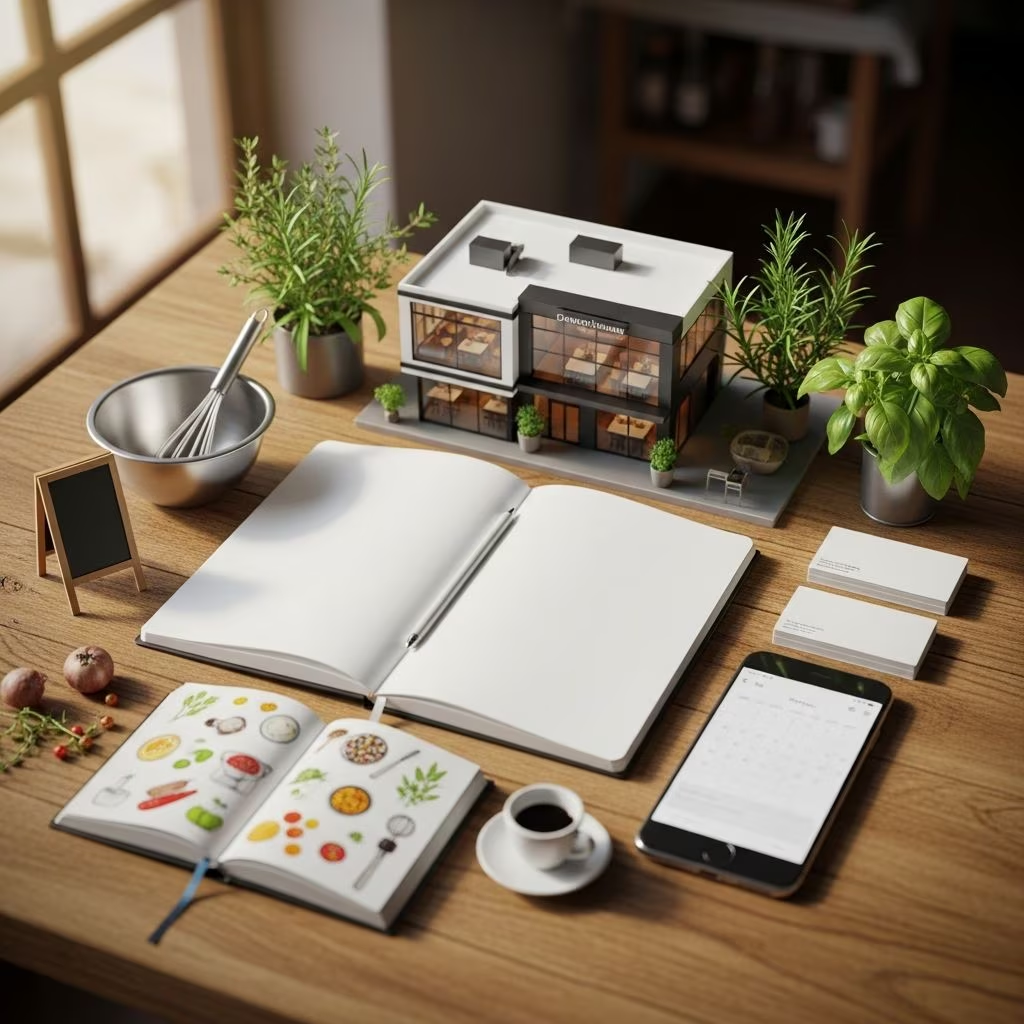
Opening a restaurant demands passion, meticulous planning, and strategic execution. This guide provides a roadmap covering concept development, financial strategies, legal compliance, operational setup, and growth tactics to help you build a profitable venture.
Defining Your Restaurant Vision
The foundation of any successful eatery begins with a clear concept. Decide on the dining style—whether quick-service for on-the-go customers, casual spots for families, fast-casual with healthy options, upscale fine dining, or innovative pop-ups. Align this with your target audience’s preferences, such as busy professionals seeking efficiency or foodies craving gourmet experiences.
Your brand identity, including name, logo, color scheme, and overall aesthetic, must cohesively reflect this vision. Customers should instantly grasp your unique offering upon seeing your signage or online presence. Conduct market research to validate demand: survey potential patrons, analyze local demographics, and study trends like sustainable sourcing or fusion cuisines.
- Quick-service: Emphasizes speed and affordability, ideal for high-traffic urban areas.
- Casual dining: Offers relaxed atmospheres with diverse menus for broader appeal.
- Fast-casual: Bridges quick and quality, focusing on fresh, customizable meals.
- Fine dining: Prioritizes premium ingredients and ambiance for special occasions.
- Pop-ups: Tests concepts with low overhead, perfect for experimental chefs.
Crafting a Robust Business Plan
A detailed business plan acts as your blueprint, essential for internal guidance and attracting investors. Start with an executive summary outlining your concept, seating capacity, and unique selling points. Follow with a company overview highlighting strengths like chef expertise or eco-friendly practices.
Include a sample menu with pricing, management structure, staffing projections, market analysis, competitor insights, location evaluation, marketing strategies, and financial forecasts. Realistic projections cover startup costs—often $250,000 on average—including renovations, equipment, and initial inventory.
| Business Plan Section | Key Elements |
|---|---|
| Executive Summary | Concept overview, goals, funding needs |
| Market Analysis | Target demographics, competitor breakdown |
| Financial Projections | Sales forecasts, break-even analysis, pricing |
| Operations Plan | Staffing, suppliers, daily workflows |
| Marketing Strategy | Digital campaigns, loyalty programs, events |
Update this document regularly as your business evolves, using it to track progress and pivot when needed.
Securing Funding for Launch
Funding is a critical hurdle; estimate total costs meticulously, from lease deposits to marketing launches. Options include personal savings, commercial loans from banks (offering lower rates for larger sums), Small Business Administration (SBA) loans for favorable terms, investor partnerships, or crowdfunding for community-backed concepts.
Prepare a pitch deck with your business plan, financials, and growth potential. Demonstrate viability through pilot testing or pop-up events. Budget for ongoing expenses like utilities, payroll, and food costs, aiming for a break-even point within 12-18 months.
- Personal investment: Minimizes debt but risks personal finances.
- Bank loans: Require strong credit and collateral.
- SBA programs: Government-backed with lower barriers.
- Investors: Offer expertise alongside capital.
Selecting the Perfect Location
Location influences foot traffic, visibility, and viability. Prioritize high-visibility spots with easy access for vehicles and pedestrians, ample parking, and proximity to complementary businesses like offices or entertainment venues.
Evaluate square footage for kitchen, dining, and storage needs. Negotiate leases considering foot traffic data, zoning laws, and renovation permissions. Urban centers suit quick-service models, while suburbs favor family-oriented casual dining.
Perform a location analysis: assess demographics, competitor density, rent per square foot, and growth projections. Tools like census data or commercial real estate platforms provide insights.
Navigating Licenses and Permits
Compliance is non-negotiable; obtain a general business license from local government, food service license for handling edibles, health department permits for sanitation, liquor license if serving alcohol, and signage or occupancy approvals.
Requirements vary by jurisdiction—consult the U.S. Small Business Administration (SBA) website or local health departments. Budget time (up to several months) and fees ($1,000-$10,000+). Engage legal counsel to avoid delays or fines.
- Business license: Authorizes operations in your area.
- Food service license: Ensures safe food handling.
- Health permit: Mandates inspections and hygiene standards.
- Liquor license: State-specific for alcohol sales.
Designing an Irresistible Menu
Your menu defines the customer experience—balance popular staples with signature dishes. Factor in ingredient costs, preparation efficiency, dietary needs (vegan, gluten-free), and profitability margins (aim for 28-35% food cost).
Test recipes in pop-ups, price competitively based on market research, and design for visual appeal. Seasonal rotations keep offerings fresh. Use descriptive language to entice: “house-smoked brisket with artisanal bourbon glaze” over bland listings.
Consider equipment needs: ovens for baked goods, grills for proteins, refrigeration for perishables. Partner with reliable suppliers for quality and consistency.
Building Your Team
Staffing blends front-of-house (FOH: servers, hosts, bartenders) and back-of-house (BOH: chefs, cooks, dishwashers). Estimate needs based on seats and shifts; train for your concept’s standards.
Hire experienced managers for oversight. Offer competitive wages, benefits, and culture to retain talent in a high-turnover industry. Conduct background checks, especially for food handlers.
| Role | Responsibilities | Typical Qualifications |
|---|---|---|
| Head Chef | Menu creation, kitchen leadership | Culinary degree, 5+ years experience |
| Server | Customer service, order taking | Personable, basic training |
| Manager | Operations, staff scheduling | 2+ years management |
Setting Up Operations and Equipment
Equip your kitchen with commercial-grade tools: ranges, hoods, walk-ins, POS systems. Design layouts for workflow efficiency—prep areas near storage, service lines close to dining.
Implement inventory systems to minimize waste, POS for seamless transactions, and reservation software for peak times. Focus on sustainability: energy-efficient appliances reduce costs.
Marketing and Customer Acquisition
Build buzz pre-launch with social media teasers, email sign-ups, and soft openings. Launch a user-friendly website with menu, hours, and online ordering. Leverage SEO, Google My Business, and influencer partnerships.
Post-opening, foster loyalty via apps, events, and feedback loops. Track metrics like table turnover and repeat visits.
- Social media: Daily posts, stories, reels.
- Local SEO: Claim listings, encourage reviews.
- Events: Tastings, themed nights.
Frequently Asked Questions
What are average startup costs for a restaurant?
Costs typically range from $250,000 to $1 million, covering leases, equipment, and renovations, varying by location and scale.
How long does it take to open a restaurant?
Expect 6-12 months from planning to doors open, factoring in permits and build-out.
Do I need a liquor license?
Only if serving alcohol; processes are state-specific and time-intensive.
How do I choose a menu focus?
Blend customer demand, your expertise, and profitability; test via pop-ups.
What funding options are best for beginners?
SBA loans or personal savings offer accessibility; investors bring networks.
Sustaining Success Long-Term
Monitor finances monthly, adapt menus seasonally, and invest in staff development. Embrace technology like delivery integrations and data analytics for optimization. Resilience against challenges like economic shifts defines enduring eateries.
Regularly review performance: customer satisfaction scores above 4.5/5, profit margins at 10-15%. Scale thoughtfully—perhaps adding locations once profitable.
References
- The Complete Guide to Starting a Restaurant — Lendio. 2023. https://www.lendio.com/blog/complete-guide-starting-restaurant
- How to Start a Restaurant Business: 6 Steps For Success — CloudKitchens. 2023. https://cloudkitchens.com/blog/how-to-start-a-restaurant-business/
- How to Open a Restaurant: 11 Steps to Success — WebstaurantStore. 2023. https://www.webstaurantstore.com/article/40/how-to-start-a-restaurant.html