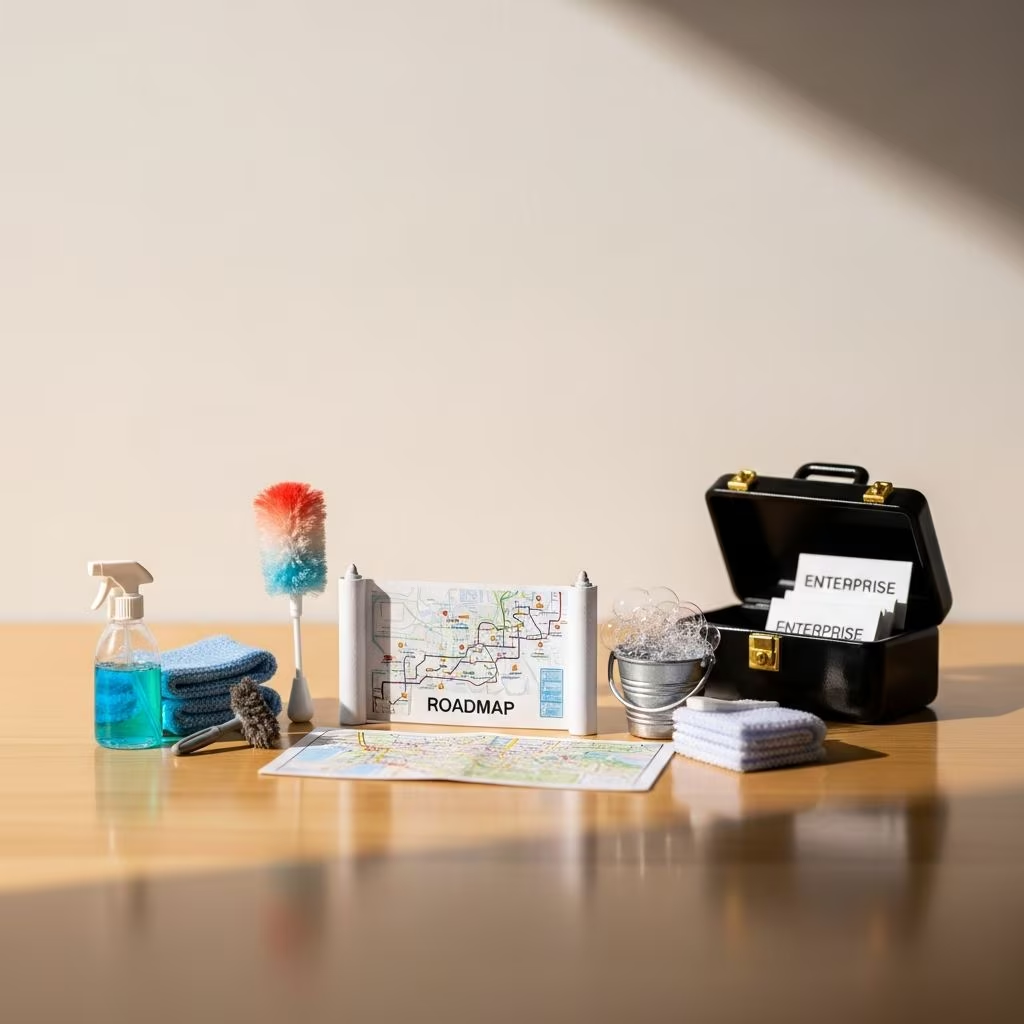
Building the Foundation for Your Cleaning Venture
Starting a cleaning business offers a viable pathway to entrepreneurship with relatively low barriers to entry compared to many other industries. The startup investment typically ranges from $2,000 to $10,000, covering permits, licenses, insurance, supplies, and essential equipment. However, success requires more than capital—it demands strategic planning, market understanding, and operational discipline. This comprehensive guide walks you through each critical phase of establishing and developing a cleaning enterprise that can scale and generate sustainable revenue.
Understanding Your Market Position and Service Focus
Before investing resources, conduct thorough market research to identify gaps in your local cleaning services landscape. Analyze existing competitors, understand what clientele they serve, and determine which demographic segments are underserved. This research directly influences your business strategy and helps you carve out a competitive advantage.
The cleaning industry primarily divides into two service categories, each with distinct operational requirements. Residential cleaning focuses on individual homes and typically requires basic, cost-effective cleaning supplies. This segment generally involves straightforward tasks like vacuuming, dusting, bathroom sanitation, and kitchen cleaning. In contrast, commercial cleaning encompasses office buildings, retail spaces, industrial facilities, and specialized properties like high-rise windows. Commercial operations demand more expensive, sophisticated equipment, specialized training for your workforce, and often involve complex scheduling and coordination with business operations.
Your choice between these segments—or a hybrid approach—should align with your current resources, expertise, and long-term vision. Starting with residential services allows for lower initial investment and easier scaling, while commercial work typically offers higher profit margins and more stable contracts.
Developing Your Strategic Business Plan
A formal business plan serves as your operational blueprint, clarifying your vision, defining achievable goals, and establishing the scope of work. This document guides decision-making throughout your business lifecycle and proves invaluable when seeking investor funding or bank financing.
Core Components of Your Business Plan
- Executive Summary: A concise overview (1-2 pages) articulating your business vision, mission statement, service descriptions, competitive advantages, and market opportunity. This section provides readers with immediate understanding of your business concept.
- Company Profile: Detailed information about your business structure, registered name, physical location, ownership details, and the nature of your operations. Include descriptions of the key personnel involved and their respective responsibilities within the organization.
- Market Analysis: Research-backed insights into your target market demographics, service demand indicators, pricing benchmarks within your region, and analysis of three to five key competitors. Identify what differentiates your business from existing service providers.
- Service Offerings: Clear descriptions of the specific cleaning services you’ll provide, whether standard weekly maintenance or specialized deep cleaning. Define service tiers, pricing levels, and any premium or niche services that set you apart.
- Financial Projections: Five-year financial forecasts including startup costs, operational expenses, revenue projections, break-even analysis, and profitability timelines. Detail how you’ll allocate funding toward supplies, equipment, staff salaries, vehicle maintenance, office expenses, and marketing initiatives.
Navigating Legal Requirements and Business Registration
Establishing your cleaning business legally protects your personal assets, builds credibility with clients, and ensures compliance with local regulations. The specific requirements vary by jurisdiction, but several foundational steps apply universally.
Business Structure Selection
Choose an appropriate business structure that aligns with your growth plans and tax situation. A sole proprietorship offers simplicity but provides no liability protection. Limited Liability Companies (LLCs) provide personal asset protection while maintaining favorable tax treatment for many entrepreneurs. Corporations offer maximum liability protection but involve greater complexity and administrative overhead. Consult with a business attorney or accountant to determine which structure best suits your circumstances.
Registration and Licensing
Register your chosen business name with your state government, ensuring the name isn’t already claimed and aligns with state naming conventions. Obtain an Employer Identification Number (EIN) from the Internal Revenue Service, which you’ll need for tax purposes and hiring employees. Secure any required business licenses from your city or county government, and verify specific licensing requirements in your industry (some jurisdictions require specific cleaning business permits). Keep copies of all registration documents readily accessible for compliance verification.
Insurance Protection
Business insurance is non-negotiable for protecting your enterprise and building client confidence. General liability insurance covers property damage and bodily injury claims arising from your services. Workers’ compensation insurance is typically mandatory if you hire employees and covers workplace injuries. Consider commercial auto insurance for company vehicles, professional liability coverage for your services, and bonding to ensure client satisfaction and protect against theft or damage claims. These insurance investments, while representing an expense, fundamentally protect your business viability.
Essential Equipment and Supply Investment Strategy
Determining the right equipment mix balances quality, cost, and operational efficiency. Rather than purchasing everything at once, adopt a phased approach, starting with essentials for your initial jobs and expanding as revenue grows.
Core Cleaning Supplies
- Multi-purpose cleaner for general surfaces
- Bathroom-specific disinfectant formulations
- Kitchen grease-cutting cleaner
- Glass and window cleaner
- Dishwashing liquid and degreaser
- Floor cleaning solution appropriate for your target properties
- Carpet shampoo or extraction solution
- Descaling agents for mineral deposits
- Wood polish and protective treatments
- Laundry detergent for cloth materials
Equipment Essentials
- Upright and handheld vacuum cleaners for varied carpet and surface types
- Carpet extraction machine for deep cleaning services
- Floor care equipment including mops, buffers, and waxing machines for larger spaces
- Microfiber cloths and specialized applicators for streak-free results
- Cleaning caddies for organized product transport
- Safety equipment including respirators, gloves, and protective eyewear
- Reliable transportation (van or truck) for equipment and supply transport
Start with basics that generate immediate revenue, then reinvest profits into specialized equipment that expands your service capabilities. Quality matters significantly—professional-grade equipment delivers superior results, enhances your reputation, and reduces replacement costs long-term.
Financial Architecture and Operational Systems
Sound financial management distinguishes thriving cleaning businesses from struggling ventures. Establish separate business banking accounts immediately, even as a sole proprietor, to maintain clear financial records and facilitate tax preparation.
Cost Structure Understanding
Monthly operational costs for basic cleaning operations typically range from $500 to $3,000, depending on scale and service scope. This includes vehicle expenses, supply replacement, employee wages (if applicable), insurance premiums, office overhead, and marketing costs. One-time startup investments in equipment can range substantially based on whether you’re starting residential or commercial operations.
Pricing Architecture
Research competitor pricing in your market to establish competitive rates that reflect your experience level and service quality. Common pricing structures include hourly rates, per-room pricing, square footage-based pricing, or subscription models for recurring clients. Calculate your pricing to cover all costs while generating sufficient margin for profit and business reinvestment. Test your pricing with initial clients and adjust based on market feedback and your actual time requirements.
Accounting and Record-Keeping
Implement accounting software from the beginning to track income, expenses, and tax obligations. Maintain detailed records of all business transactions, client information, service dates, and equipment maintenance. This systematic approach simplifies tax filing, provides business performance metrics, and supports growth planning. Consider consulting with a bookkeeper or accountant annually to optimize your tax strategy.
Building Your Brand and Attracting Clients
Effective marketing transforms a cleaning business from invisible to thriving. Develop a memorable business name that conveys professionalism and service focus. Create visual branding including a logo, color scheme, and professional presentation materials that clients encounter across all touchpoints.
Multi-Channel Marketing Approach
- Digital Presence: Establish a professional website describing your services, service area, and contact information. Claim and optimize your Google Business Profile to appear in local searches. Build social media profiles on platforms where homeowners and business managers gather.
- Local Networking: Attend community events, join local business organizations, and build relationships with complementary service providers who might provide referrals.
- Word-of-Mouth Development: Deliver exceptional service that naturally generates referrals. Implement a referral incentive program encouraging existing clients to recommend your business.
- Digital Advertising: Use targeted ads on Google and social media to reach potential clients in your service area, testing different messaging to identify what resonates.
- Service Directories: List your business in online directories and cleaning service platforms that connect clients with providers in their area.
Scaling Operations and Long-Term Growth
As your cleaning business matures, specialized business software accelerates growth by automating scheduling, dispatching, routing, invoicing, and employee hour tracking. These tools enhance productivity, improve customer experience, and provide data for strategic decision-making.
Hiring and training employees represents your first major expansion milestone. Recruit individuals who demonstrate reliability, attention to detail, and customer service orientation. Invest in thorough training covering your cleaning standards, safety procedures, equipment use, and customer interaction expectations. Well-trained teams maintain your reputation and enable you to expand your client base without sacrificing service quality.
Getting Started Without Prior Experience
Lacking cleaning industry experience shouldn’t deter you from entrepreneurship. Consider working for an established cleaning company first to develop practical skills, understand industry standards, accumulate startup capital, and identify market opportunities. This foundation provides invaluable perspective on what works operationally and commercially while reducing your financial risk.
Frequently Asked Questions
Q: How much initial investment do I need to start a cleaning business?
A: Startup investments typically range from $2,000 to $10,000 to cover business licenses, insurance, basic equipment, supplies, and transportation. You can start lean and reinvest profits into expanding your equipment and service offerings.
Q: Should I start with residential or commercial cleaning?
A: Residential cleaning requires lower initial investment and less specialized equipment, making it ideal for bootstrapping entrepreneurs. Commercial cleaning typically offers higher margins and more stable contracts but demands greater upfront investment and specialized training.
Q: What insurance do I absolutely need?
A: General liability insurance is essential to protect against property damage and injury claims. Workers’ compensation is mandatory if you hire employees. Consider commercial auto insurance for company vehicles and bonding to enhance client confidence.
Q: How do I price my services competitively?
A: Research competitor pricing in your specific market, calculate your costs including time, supplies, and overhead, then establish pricing that covers expenses with appropriate profit margin. Test initial pricing and adjust based on client feedback and your actual time requirements.
Q: Can I start a cleaning business without prior experience?
A: Yes, but working for another cleaning company first provides valuable experience, helps you build startup capital, and reduces your risk. This foundation clarifies industry standards and what clients expect.
Q: When should I hire my first employee?
A: Consider hiring when you consistently have more business than you can handle personally while maintaining quality standards. This typically occurs after establishing 20-30 regular clients, generating sufficient revenue to cover employee wages and benefits.
References
- Ultimate Checklist for Starting a Cleaning Business — Method CRM. 2024. https://www.method.me/blog/checklist-for-starting-a-cleaning-business/
- How to Start a Cleaning Business: 2025 Guide and Checklist — Jobber Academy. 2025. https://www.getjobber.com/academy/cleaning/how-to-start-a-cleaning-business/
- How to Start a Cleaning Business: A Comprehensive Guide — Jani-King Franchise Opportunity. 2024. https://www.janiking.com/franchise-opportunity/how-to-start-a-cleaning-business/
- Cleaning Business Start-Up Costs: Complete Guide — Housecall Pro. 2024. https://www.housecallpro.com/resources/cleaning-business-startup-costs/
- The Complete Guide to Starting a Cleaning Business — CleanFreak. 2024. https://www.cleanfreak.com/pages/complete-guide-to-starting-a-cleaning-business