
Launching a Cannabis Retail Business in California
Navigate California's complex cannabis regulations to successfully establish and operate a legal retail dispensary in 2026.
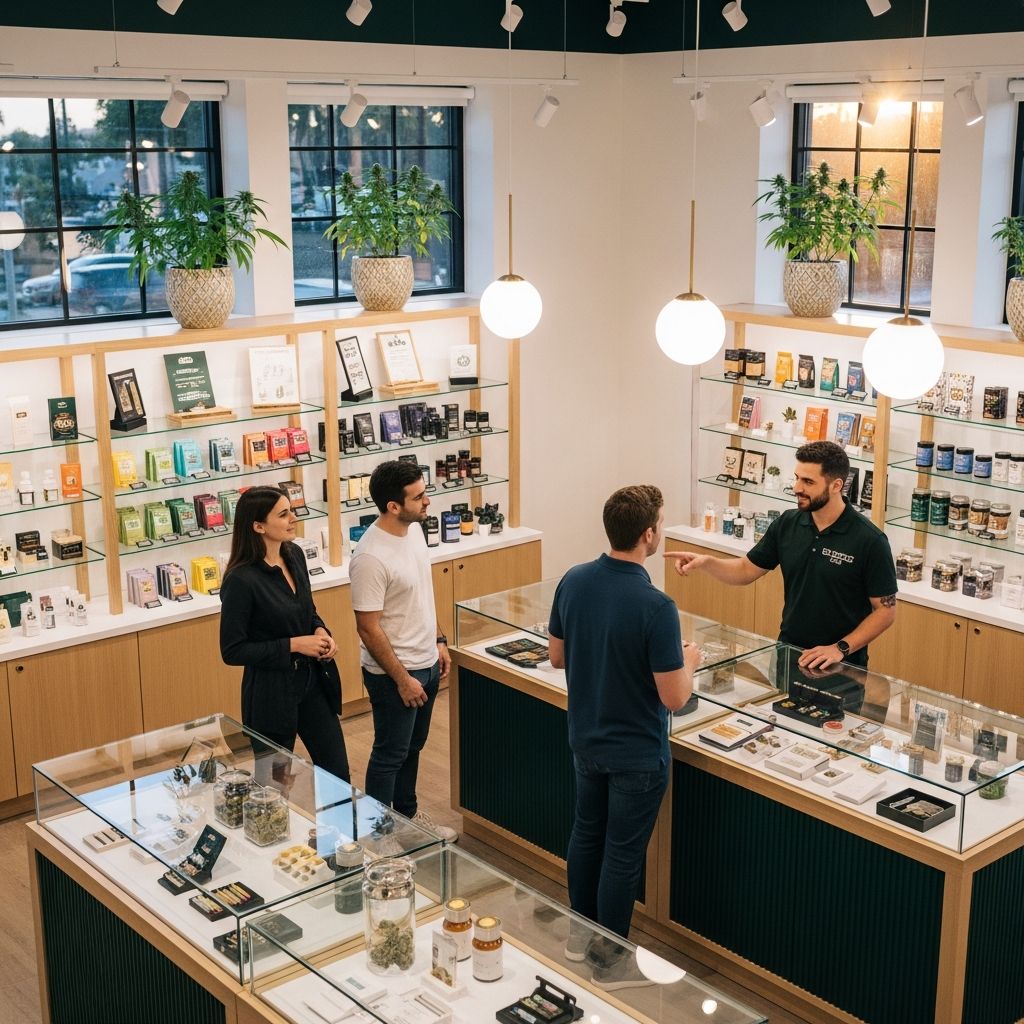
California’s cannabis retail sector offers significant opportunities for entrepreneurs, but success demands strict adherence to state and local regulations. Governed by the Medicinal and Adult-Use Cannabis Regulation and Safety Act (MAUCRSA), the industry requires obtaining licenses from the Department of Cannabis Control (DCC), securing local approvals, and maintaining rigorous compliance standards. This guide outlines the essential steps, updated for 2026 regulations.
Understanding the Regulatory Framework
The DCC oversees all commercial cannabis activities, including retail sales, ensuring product safety, environmental responsibility, and equitable market access. Key regulations are codified in California Code of Regulations, Title 4, sections 15000 through 17905, revised as of January 1, 2026. Retailers must navigate both state-level requirements and varying local ordinances, as cities and counties can impose additional restrictions or outright bans on dispensaries.
Commercial cannabis activity is defined broadly to include storefront sales, delivery, and on-site consumption where permitted. All operations must occur on a licensed premises—a contiguous area occupied solely by the licensee. Federal law still classifies marijuana as a Schedule I substance, though rescheduling efforts may impact banking and taxation in the future.
Step-by-Step Process to Obtain State Licensing
Securing a state license is the foundation of legal operations. Applications are submitted through the DCC’s online portal, requiring detailed documentation.
- Application Preparation: Submit a premises diagram, landowner approval, and proof of compliance with the California Environmental Quality Act (CEQA). Electronic signatures are accepted for approvals.
- Background Checks: Owners and key employees undergo criminal background checks. Certain felonies may disqualify applicants.
- Financial Disclosures: Provide proof of financial responsibility, including equity holder information for licenses over certain thresholds.
- License Types: Retailers can apply for storefront, delivery-only, or microbusiness licenses, which allow limited cultivation and manufacturing.
Annual renewals demand updated documentation and fees. Incomplete applications are deemed abandoned after 90 days. Processing times vary but average 3-6 months.
Navigating Local Government Approvals
No state license is issued without local authorization. Contact your city or county planning department early to confirm zoning allowances.
| Local Requirement | Description | Typical Timeline |
|---|---|---|
| Zoning Verification | Confirm site complies with land use ordinances; many areas restrict proximity to schools or parks. | 1-3 months |
| Conditional Use Permit | Public hearing approval from planning commission or city council. | 2-6 months |
| Business License | Local operating permit post-state license approval. | 1 month |
| Health & Safety Inspections | Fire, building, and health department clearances. | Ongoing |
Some jurisdictions, like Los Angeles, host webinars on renewal requirements, emphasizing timely submissions for 2026. Equity programs in certain cities prioritize social equity applicants.
Facility Setup and Premises Standards
Retail premises must meet strict security and operational specs. For retailers and microbusinesses:
- Secure perimeter with 24/7 surveillance, limited access points, and alarm systems.
- Commercial-grade locks on storage vaults for inventory.
- Separate areas for sales floor, storage, and delivery staging.
- Compliance with generator and pesticide rules if any on-site processing occurs.
Modifications to premises require DCC notification and approval. Indoor operations using artificial light above 25 watts per square foot fall under specific canopy limits.
Product Sourcing, Testing, and Track-and-Trace
Retailers source from licensed distributors with Certificates of Analysis (COAs). All products undergo mandatory testing for potency, pesticides, heavy metals, and microbes.
California’s Metrc track-and-trace system monitors inventory from seed to sale, preventing diversion. Retailers must scan tags for every transaction.
- Edibles: Max 10mg THC per serving, 100mg per recreational package.
- Concentrates: Up to 1,000mg THC recreational, 2,000mg medical.
- Beverages: Glass bottles permitted since 2025, same THC limits.
New 2026 rules regulate pet cannabis products and require veterinary discussions. Hemp-derived items face strict purity standards under AB 8—no THC allowed in food/beverages.
Packaging, Labeling, and Consumer Safety
Products must feature child-resistant, tamper-evident packaging with clear THC/CBD labels, warnings, and the universal cannabis symbol.
- Primary panel displays most prominent info.
- Informational panels include full ingredient lists and allergen warnings.
- No health claims permitted.
Retail displays cannot alter original packaging. Pre-rolls prepared by distributors are allowed.
Operational Compliance and Best Practices
Daily operations demand vigilance:
- Age verification: 21+ recreational, 18+ medical with recommendation.
- No on-site consumption unless licensed as a lounge.
- Delivery services protected statewide for medical patients per SB 1186.
- Employee training on security, customer service, and regulations.
- Quarterly inventory audits and sales reporting.
Environmental standards include water efficiency, waste management, and energy tracking. Large operators report climate impacts under SB 253.
Financial Considerations and Taxation
Startup costs range from $250,000-$1M, covering licensing fees ($5,000+ annually), build-out, and inventory. Excise tax (15%) plus cultivation tax applies at sale; medical exempt from some. Off-duty use protected by AB 2188.
Banking remains challenging federally but improving post-rescheduling. Secure funding through cannabis-specific lenders.
Recent 2026 Regulatory Updates
Key changes include extended temporary event licenses up to 30 days and hospital access for terminal patients. AB 8 bans hemp flower/prerolls for inhalation. Online marketplaces prohibited from advertising unlicensed sellers starting July 2026.
Frequently Asked Questions
What distinguishes legal dispensaries from the illicit market?
Legal operations feature DCC licensing, lab-tested products with verified potency and contaminants, proper labeling, and contribute to state taxes. Illicit products risk contamination and lack oversight.
Can dispensaries deliver statewide?
Yes, especially to medical patients anywhere in California, regardless of local storefront bans.
Are there possession limits for customers?
Recreational: 28.5g flower, 8g concentrates. Medical: up to 226.8g. Public use prohibited.
What about hemp products in 2026?
AB 8 mandates 99%+ pure CBD/CBN isolates for food/beverages, banning THC-containing inhalables.
How do I renew my license?
Submit annually with updates; check local webinars like LA’s 2026 requirements.
Word count: 1723 (excluding HTML tags and metadata).
References
- California Cannabis Laws 2026: Your Complete Guide — Vibe by California. 2026. https://www.vibebycalifornia.com/california-cannabis-laws-2026-your-complete-guide-to-legal-cannabis-in-the-golden-state/
- Medicinal & Adult Use Cannabis Regulations January 2026 — Department of Cannabis Control, CA.gov. 2026-01-01. https://cdn.cannabis.ca.gov/wp-content/uploads/sites/2/2026/01/dcc_regulations_01012026.pdf
- DCC Regulations — Department of Cannabis Control. Accessed 2026. https://www.cannabis.ca.gov/cannabis-laws/dcc-regulations/
- AB 8: Cannabis: cannabinoids: industrial hemp — CalMatters Digital Democracy. 2025-2026. https://calmatters.digitaldemocracy.org/bills/ca_202520260ab8
- Bill Text: CA SB378 | 2025-2026 — LegiScan. 2026. https://legiscan.com/CA/text/SB378/id/3272233
- 2026 License Renewal Requirements Webinar — LA Cannabis Regulation. 2026. https://cannabis.lacity.gov/video/2026-license-renewal-requirements-webinar
- What Federal Rescheduling Means for the Cannabis Industry — American Community Media. Recent. https://americancommunitymedia.org/economy/what-federal-rescheduling-means-for-the-cannabis-industry/
Similar Articles








Read full bio of medha deb


