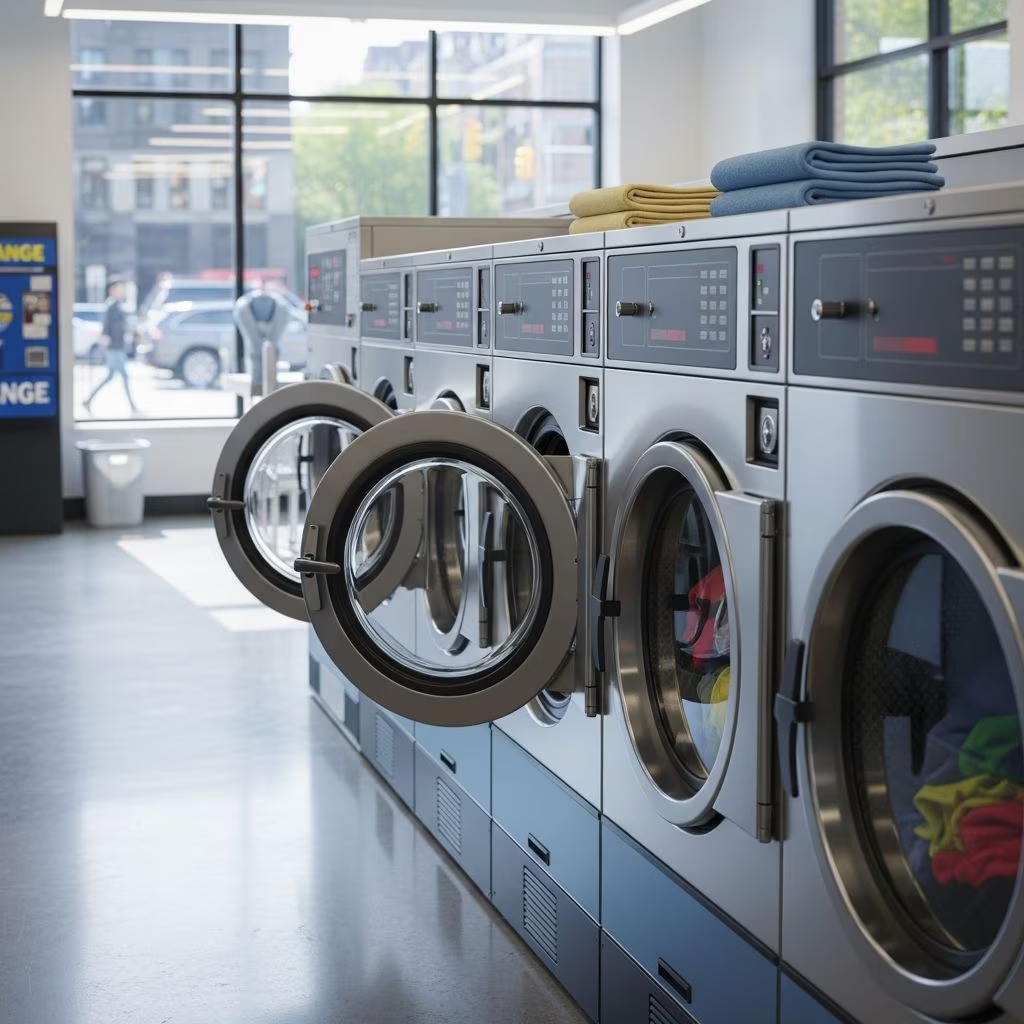
Opening a laundromat offers a stable path to entrepreneurship with recurring revenue from essential services. This guide provides a roadmap covering market evaluation, financial planning, operational setup, and growth tactics to build a resilient business.
Evaluating Market Demand and Ideal Locations
Success begins with understanding local needs. Analyze demographics to target areas with high renter populations, such as urban apartments or student housing, where in-unit laundry is scarce. High foot traffic zones near transit hubs amplify visibility.
- Demographic Focus: Prioritize neighborhoods with 40%+ renters or low-to-moderate income levels, as they rely heavily on public laundry facilities.
- Competition Scan: Map existing laundromats within a 2-mile radius; aim for underserved spots or gaps in modern amenities like card payments.
- Traffic Analysis: Select sites with 500+ daily passersby, ample parking (at least 10 spaces), and 24/7 accessibility potential.
Use free tools like census data from the U.S. Census Bureau to validate demand. Areas with population density over 5,000 per square mile often yield 20-30% higher usage rates.
Financial Planning: Budgeting Startup Costs
Initial outlays range from $250,000 to $600,000 for a 2,000 sq ft facility, including equipment, renovations, and working capital. Break down expenses meticulously to attract funders.
| Category | Estimated Cost Range | Notes |
|---|---|---|
| Lease/Renovation | $50,000 – $150,000 | Includes plumbing upgrades and electrical panels for high-capacity machines. |
| Equipment (20-30 units) | $150,000 – $350,000 | New vs. refurbished; factor in installation. |
| Utilities Setup & Permits | $20,000 – $50,000 | Water lines, HVAC, and compliance fees. |
| Marketing & Misc. | $10,000 – $30,000 | Signage, software, initial supplies. |
| Working Capital (6 months) | $20,000 – $50,000 | Covers utilities and minor repairs. |
Project revenues at $5-$8 per load, aiming for 60% capacity utilization in year one for $150,000+ annual gross. Net margins often hit 20-35% after expenses.
Securing Funding Sources
Explore SBA 7(a) loans up to $5 million for real estate and equipment, requiring 10-20% down payments. Traditional banks favor applicants with 680+ credit scores and detailed projections showing 1.25x debt coverage.
- SBA Loans: Low-interest (6-8%) with 10-25 year terms; apply via sba.gov for laundromat-specific programs.
- Equipment Leasing: Reduces upfront costs by 50%; vendors finance 100% with monthly payments tied to revenue.
- Investors/Grants: Pitch 25-30% ROI; minority-owned businesses may qualify for grants via SBA’s 8(a) program.
Prepare pro formas forecasting break-even in 18-24 months. Recent data shows laundromats averaging 15% cash-on-cash returns.
Business Structure and Legal Compliance
Form an LLC for liability protection and tax flexibility; costs $100-$800 statewide. Register via your secretary of state portal.
- Required Permits: General business license, occupancy certificate, water discharge permit from local EPA equivalents, and fire safety inspection.
- Insurance: General liability ($1M+ coverage), property, and workers’ comp if staffed; annual premiums $5,000-$15,000.
- Environmental Regs: Comply with EPA wastewater standards; high-efficiency machines minimize violations.
Consult state health departments for vending add-ons. Non-compliance risks fines up to $10,000.
Equipment Selection and Facility Design
Invest in energy-efficient, commercial-grade units lasting 10-15 years with 10-year warranties. Mix 20-40 lb washers/dryers for variety.
- New vs. Used: New offers reliability (lower downtime); used saves 40% but inspect for 5,000+ cycle wear.
- Tech Upgrades: Card readers, app payments reduce cash handling by 70%; integrate IoT for remote monitoring.
- Layout Optimization: 60% machines, 20% seating/folding, 20% vending; bright LED lighting boosts dwell time.
Vendors like Speed Queen provide ROI calculators projecting $0.50-$1 profit per load after utilities.
Operational Models and Daily Management
Choose self-service (unattended, low labor), attended (wash-dry-fold), or hybrid. Unattended suits 24/7 ops with cameras and smart locks.
- Staffing: Part-time attendant at $15/hr for peak hours; automate with software for inventory and alerts.
- Utility Management: Expect $0.20-$0.40/load; solar panels or efficient models cut bills 25%.
- Software Tools: Platforms track usage, schedule maintenance, and handle payments, improving efficiency 30%.
Daily revenue peaks evenings/weekends; monitor KPIs like machine uptime (95% target).
Marketing and Customer Acquisition Strategies
Drive 50% occupancy via digital and local tactics. Claim Google Business Profile for map dominance.
- Digital: SEO-optimized site with hours/pricing; run geo-targeted Facebook ads ($500/month ROI 5x).
- Local: Flyers in apartments, partnerships with delivery services for pick-up.
- Loyalty: Apps for free loads after 10 visits; reviews boost rankings.
Grand opening promotions like 50% off first week fill cycles fast.
Revenue Diversification and Profit Maximization
Boost income 20-40% beyond machines. Vending (snacks, soap) yields $1,000/month; add arcade games or coffee nooks.
- Services: Wash-dry-fold at $2/lb; pickup/delivery via apps ($5 fee).
- Upsells: Premium detergents, fluff-dry ($1 extra).
Aim for $300K revenue at scale with 70% margins on add-ons.
Scaling and Long-Term Sustainability
After year one, reinvest 20% profits into expansions or acquisitions. Franchise models offer blueprints but charge 5-7% royalties.
Track metrics quarterly; pivot based on data like peak usage for staffing. Industry growth at 2-3% annually supports multi-unit portfolios.
Frequently Asked Questions
What is the average ROI for a laundromat?
Expect 15-30% cash-on-cash returns, with payback in 2-4 years under optimal conditions.
How much does it cost to start small?
A 1,500 sq ft unattended site starts at $200K, scaling with location.
Do I need to be on-site daily?
No, remote management via apps works for unattended models; visit weekly.
What are top equipment brands?
Speed Queen, Maytag Commercial; prioritize energy star ratings.
Can laundromats run cashless?
Yes, 80% of modern sites use cards/apps, cutting theft and boosting convenience.
References
- Starting a Laundromat Business from Scratch: A Guide — LaundroBoost Marketing. 2024-09-16. https://laundroboostmarketing.com/2024/09/16/how-to-start-a-laundromat-business-from-scratch/
- Ultimate Guide Starting and Succeeding in the Lucrative Laundromat Business — LaundryCard. 2024. https://www.laundrycard.com/ultimate-guide-starting-and-succeeding-in-the-lucrative-laundromat-business/
- Your Guide to Opening a Laundromat — Speed Queen Commercial. 2022. https://go.speedqueencommercial.com/whyinvest2022
- 7-Step Guide To Starting A Laundromat — Laundrylux. 2024. https://laundrylux.com/blog/7-step-guide-to-starting-a-laundromat/
- Essential Guide to Starting a Laundromat Business — Turns App. 2024. https://www.turnsapp.com/blog/essential-guide-to-starting-a-laundromat-business-self-service-full-service-and-hybrid-models
- A Simple Guide to Starting a Laundromat — WASH. 2024. https://www.wash.com/washresources/a-simple-guide-to-starting-a-laundromat/