
Labor Rights and Occupational Hazards in Meat Processing
Systemic exploitation and severe hazards facing migrant meatpacking workers.
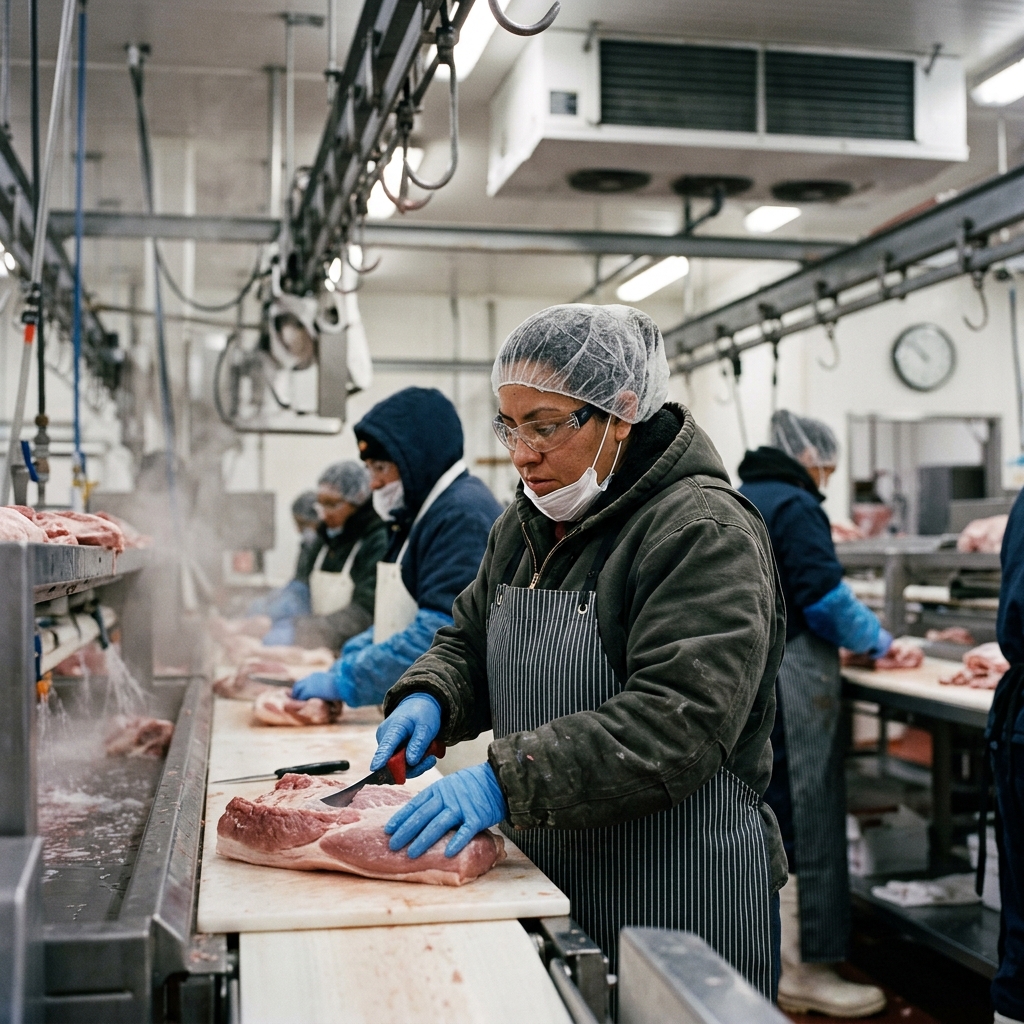
The Human Toll of Industrial Meat Production
The industrial agricultural complex in the United States processes billions of animals each year, supplying supermarkets and restaurants with a seemingly endless stream of affordable protein. Yet, beneath the pristine packaging and clever marketing lies a deeply troubling reality. The workers who power this massive supply chain—those stationed on the rapid-fire disassembly lines of modern meatpacking plants—endure some of the most grueling and hazardous working conditions found in any domestic sector. Despite generating billions in corporate profits, the meat processing industry has long been criticized for its systemic exploitation of a largely invisible workforce. This environment is characterized by relentless physical demands, hazardous machinery, and a pervasive culture of intimidation that disproportionately targets vulnerable populations.
The human toll of industrial meat production is staggering. Behind the closed doors of massive slaughterhouses and processing facilities, laborers work shoulder-to-shoulder in extreme temperatures, constantly battling the twin threats of industrial accidents and communicable diseases. The disconnect between the sanitized grocery store aisle and the visceral, blood-soaked reality of the killing floor has allowed severe labor rights violations to persist largely unchecked. As consumer demand for cheap meat continues to drive production line speeds faster, the bodies of the workers bear the ultimate cost. This deep dive explores the multifaceted crisis of occupational hazards, regulatory loopholes, and human rights abuses that define the contemporary American meatpacking industry.
Systemic Vulnerabilities: The Intersection of Immigration and Labor
To understand the exploitation inherent in meat processing, one must first examine the demographics of its workforce. The meat and poultry industry strategically situates its massive facilities in rural, economically depressed areas, far from the scrutiny of urban media centers and robust labor organizing. To staff these demanding operations, corporations rely overwhelmingly on immigrant laborers, refugees, and migrant workers. A significant percentage of this workforce consists of individuals from Latin America, Africa, and Southeast Asia, many of whom have recently resettled in the United States and possess limited English proficiency.
This demographic composition is not accidental; it is a calculated feature of an industry that requires a highly compliant, expendable labor pool. Immigrant workers, particularly those with undocumented status or precarious temporary visas, represent the ideal captive workforce for operations that demand absolute compliance in the face of suffering. The persistent fear of deportation serves as a powerful, invisible silencer on the factory floor. When workers lack permanent legal residency, employers hold an asymmetrical advantage, utilizing the implicit or explicit threat of immigration enforcement to suppress complaints about stolen wages, denied bathroom breaks, or profoundly unsafe machinery.
Furthermore, language barriers drastically exacerbate these vulnerabilities. Safety training, when provided at all, is frequently inadequate and rarely translated effectively into the multitude of indigenous dialects and languages spoken by the floor staff. Consequently, workers are thrust into highly dangerous environments without a fundamental understanding of their rights under federal labor law or the administrative mechanisms available for reporting workplace hazards. This intersection of immigration status, linguistic isolation, and economic desperation creates a fertile breeding ground for systemic labor abuses, effectively stripping workers of their agency and reducing them to mere extensions of the processing machinery.
Occupational Hazards: From Biohazards to Industrial Accidents
Meatpacking has consistently ranked among the most dangerous manufacturing industries in the United States. The occupational hazards are ubiquitous, multifaceted, and severe. Workers are required to perform highly repetitive motions—often making tens of thousands of identical knife cuts per shift—while standing on slippery, blood-slicked floors in environments that fluctuate between freezing cold and oppressively hot.
The physical toll of these demands is catastrophic. According to occupational health data, meat and poultry workers suffer from repetitive strain injuries, such as debilitating carpal tunnel syndrome, at rates exponentially higher than the national average. Tendons snap, joints deteriorate, and chronic pain becomes a normalized aspect of daily existence. Beyond ergonomic trauma, the risk of acute traumatic injury is ever-present. The rapid pace of the production line, dictating that workers process an unrelenting quota of animal carcasses per minute, forces individuals to prioritize speed over safety. Amputations, lacerations, and crushing injuries caused by malfunctioning conveyor belts, unguarded saws, and heavy animal carcasses are tragically common occurrences across the sector.
In addition to mechanical dangers, processing plant workers are routinely exposed to severe biological and chemical hazards. They inhale caustic cleaning chemicals used to sanitize equipment during production, which can lead to chronic respiratory distress and asthma. Moreover, they are in constant contact with zoonotic pathogens—diseases transmissible from animals to humans. The extremely close-quarters layout of the processing line also creates a perfect incubator for airborne human viruses, facilitating rapid community transmission during widespread health crises.
The PPE and Sanitation Crisis
Perhaps the most visceral symbol of this occupational nightmare is the state of Personal Protective Equipment (PPE) provided to the laborers. In many facilities, workers are not supplied with adequate, clean gear on a reliable basis. Reports frequently emerge of employees being forced to work long, grueling shifts wearing blood-soaked masks, torn aprons, and compromised gloves. When protective gear is damaged on the line, companies often penalize the workers or mandate that they purchase replacements out of their own meager wages.
Coupled with these physical hazards are draconian attendance policies. Punitive point systems heavily penalize workers for taking sick days, compelling individuals to report to the processing line even when suffering from high fevers, severe infections, or contagious respiratory diseases. This dangerous intersection of inadequate sanitation, soiled protective gear, and forced presenteeism guarantees that infectious outbreaks spread aggressively across the factory floor, endangering both the workforce and the broader community.
To encapsulate the specific dangers faced by the workforce, the following table outlines the primary categories of occupational hazards within meat and poultry processing facilities:
| Hazard Category | Specific Examples | Common Health Consequences |
|---|---|---|
| Ergonomic & Repetitive Motion | High line speeds, repetitive slicing, heavy lifting of carcasses | Carpal tunnel syndrome, tendonitis, chronic back pain, musculoskeletal disorders |
| Mechanical & Traumatic | Unguarded band saws, high-speed conveyor belts, rendering equipment | Lacerations, severed digits, amputations, crush injuries, fatal accidents |
| Biological & Pathogenic | Animal blood/feces, zoonotic bacteria, close-contact airborne human viruses | Bacterial infections, brucellosis, severe viral outbreaks, sepsis |
| Chemical & Environmental | Ammonia leaks, chlorine washes, peracetic acid, extreme cold/heat | Chemical burns, asthma, respiratory degradation, heat stroke, hypothermia |
The Chilling Effect: Retaliation and Silenced Voices
A defining characteristic of the contemporary meatpacking industry is the pervasive culture of silence enforced by middle management. When working conditions become intolerable, the logical response in a functioning labor market is to file a grievance, seek union representation, or report the violation to regulatory authorities. However, in the meat processing sector, taking such action often triggers immediate and severe retaliation.
The mechanics of this intimidation are both subtle and overt. Supervisors, pressured intensely by upper management to maintain relentless production quotas, routinely dismiss and mock reports of injury. Workers who ask for a necessary bathroom break or request a visit to the onsite nursing station are often ignored, told to work through the pain, or threatened with termination. The onsite medical clinics, directly funded by the corporations, are notoriously known for practicing minimal first aid designed exclusively to keep the worker on the line, rather than formally diagnosing serious injuries that would require recording on federal injury logs.
For undocumented workers, the threat of calling Immigration and Customs Enforcement (ICE) remains the ultimate trump card held by abusive employers. Even legal permanent residents and citizens are easily silenced by the threat of being fired in remote rural towns where the meatpacking plant is the sole major economic anchor. The lack of robust, independent union representation in many right-to-work states further isolates the workers. Without a collective bargaining unit to champion their grievances, individual workers are left to face a multi-billion dollar corporate legal apparatus entirely alone. This chilling effect ensures that the vast majority of workplace injuries and safety violations remain entirely hidden from public view.
Regulatory Failures and the Push for Corporate Accountability
The persistent abuse of meatpacking workers is not merely a failure of corporate morality; it is a profound failure of government regulation. The Occupational Safety and Health Administration (OSHA), the federal agency tasked with ensuring workplace safety, is chronically understaffed and critically underfunded. OSHA inspectors are stretched so thin that it is logistically impossible to actively monitor the vast network of processing plants. Consequently, the agency relies heavily on employer-reported injury data to determine where to conduct targeted inspections.
This reliance creates a perverse incentive for meat processing corporations to aggressively suppress injury reporting. By utilizing punitive point systems to deter sick days and coercing injured workers to stay on the line, companies artificially deflate their reported incident rates. When OSHA does conduct inspections and issues citations, the financial penalties are routinely trivial—amounting to mere thousands of dollars for multi-national conglomerates generating billions in revenue. Such minor administrative fines are easily absorbed as the standard cost of doing business, offering zero deterrent effect against future corporate negligence.
Furthermore, jurisdictional conflicts between regulatory bodies exacerbate the danger on the factory floor. While OSHA focuses on worker safety, the United States Department of Agriculture (USDA) is primarily concerned with food safety and production efficiency. Over the years, the USDA has repeatedly granted controversial waivers to meatpacking plants, allowing them to drastically increase their slaughter line speeds. These regulatory concessions prioritize corporate output directly at the expense of human bodies, pushing workers well past the brink of physical endurance.
A Blueprint for Industry Reform
Meaningful reform in the meat processing industry requires a comprehensive overhaul of both foundational labor law and regulatory enforcement mechanisms. First and foremost, federal agencies must implement and aggressively enforce specific, binding standards regarding ergonomic hazards and infectious disease control in meatpacking facilities. Relying on voluntary corporate safety guidelines has proven to be an entirely ineffective strategy for protecting human life.
Furthermore, protecting the rights of immigrant workers is paramount to cleaning up the industry. Whistleblower protections must be vastly expanded, offering immediate deferred action and protection from deportation for any undocumented worker who bravely reports unsafe working conditions or severe labor violations. Decoupling immigration enforcement from labor rights is the absolute only way to pierce the systemic veil of silence that protects abusive employers from legal consequences.
Finally, the industry must be forced to abolish punitive attendance point systems that compel sick individuals to handle the nation’s food supply. Paid sick leave, mandated slowing of production line speeds, and comprehensive access to independent medical care must become non-negotiable requirements for any facility operating a commercial slaughterhouse. Only through robust government intervention, relentless advocacy from civil rights organizations, and the empowerment of collective bargaining can the meatpacking industry be forced to treat its essential workforce with the basic human dignity they inherently deserve.
Frequently Asked Questions
Why are injury rates so high in the meatpacking industry?
Injury rates are exceptionally high due to a dangerous combination of hazardous environmental factors and extreme corporate pressure. Workers operate heavy, sharp machinery, perform highly repetitive slicing motions, and work in crowded, slippery conditions. The relentless drive to maximize production line speeds forces workers to move faster than is safely possible, directly leading to acute traumas and severe chronic ergonomic injuries.
How does immigration status affect a worker’s ability to report unsafe conditions?
Immigration status is frequently weaponized by corporate employers. Undocumented workers, or those laboring on restrictive temporary visas, often deeply fear that reporting workplace hazards, wage theft, or severe injuries will result in their sudden termination and subsequent deportation. This dynamic creates a captive workforce that is highly susceptible to profound exploitation without consequence.
What role does OSHA play in protecting meat and poultry workers?
The Occupational Safety and Health Administration (OSHA) is the federal body responsible for setting and enforcing workplace safety standards. However, OSHA faces severe operational challenges, including massive understaffing, limited funding, and a deep reliance on self-reported injury data from employers. While they do occasionally conduct inspections and levy fines, the penalties are often too minuscule to force meaningful behavioral changes from massive corporations.
What are the long-term health consequences of working on a meat processing line?
Workers often suffer from permanent musculoskeletal disorders, severe chronic joint pain, respiratory issues from inhaled industrial cleaning chemicals, and significant psychological trauma. Conditions like extreme carpal tunnel syndrome, tendonitis, and debilitating back injuries frequently force workers out of the labor market entirely long before they reach traditional retirement age.
How can consumers support better labor conditions in the food supply chain?
Consumers can actively support labor rights by purchasing meat from local, transparent, unionized, or certified fair-labor farms whenever possible. Additionally, consumers can support legal advocacy organizations that fight for migrant worker protections, and they can contact their elected representatives to demand stronger federal regulatory oversight and mandated slower line speeds in industrial processing plants.
References
- Who are America’s meat and poultry workers? — Economic Policy Institute. 2020-09-24. https://www.epi.org/blog/meat-and-poultry-worker-demographics/
- Meat and Poultry Worker Safety: OSHA Should Determine How to Address Persistent Hazards Exacerbated by COVID-19 — Government Accountability Office (GAO). 2023-06-20. https://www.gao.gov/products/gao-23-105104
- US Department of Labor releases new inspection guidance to protect workers in animal slaughtering, processing industries — Occupational Safety and Health Administration (OSHA). 2024-10-16. https://www.osha.gov/news/newsreleases/national/10162024
- Meatpacking – Hazards and Solutions — Occupational Safety and Health Administration (OSHA). 2024-01-01. https://www.osha.gov/meatpacking/hazards-solutions
Similar Articles








Read full bio of Sneha Tete




