
K-1 Visa To Green Card: Step-By-Step Guide For 2025
Complete guide to transitioning from K-1 fiancé visa to U.S. permanent residency through adjustment of status process.
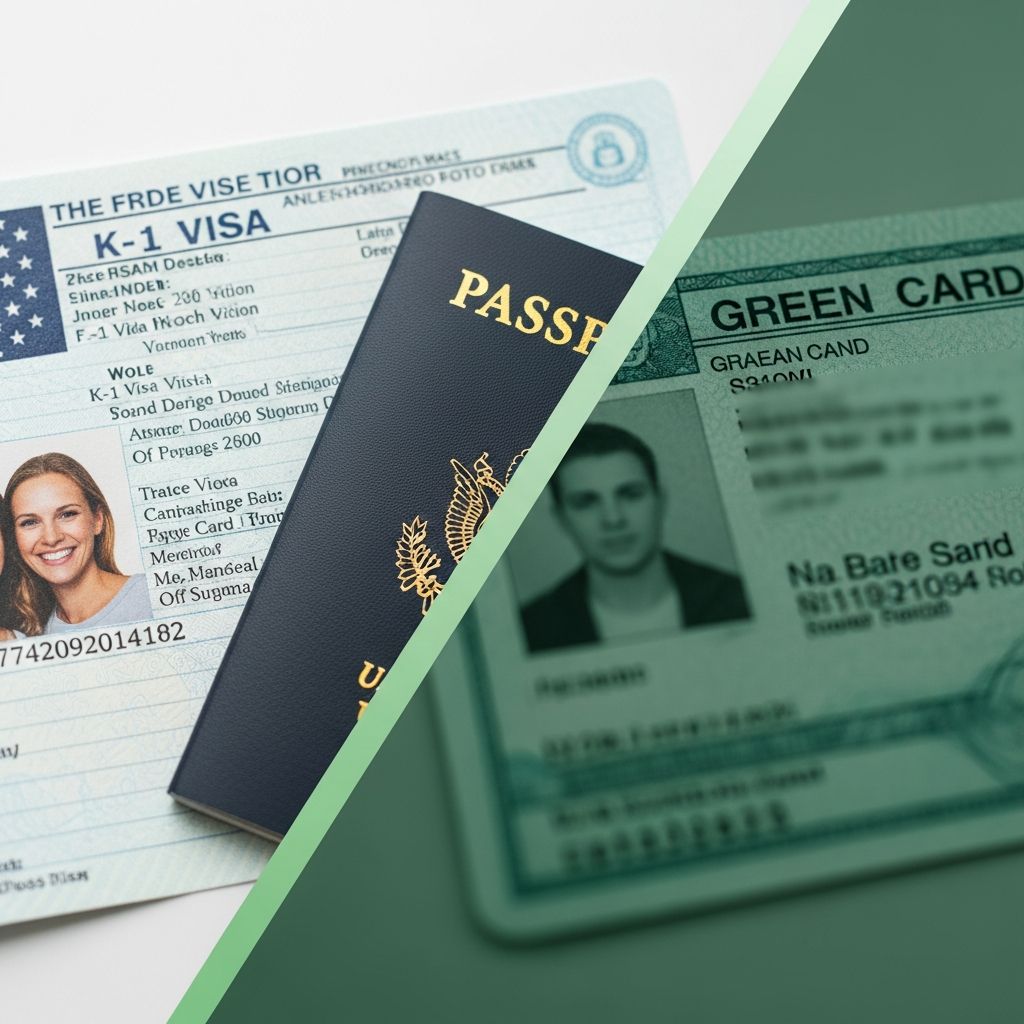
Entering the United States on a K-1 fiancé(e) visa opens the door to permanent residency for those who marry their U.S. citizen sponsor promptly. This comprehensive resource outlines the entire pathway from visa entry to green card approval, empowering applicants with actionable insights.
Overview of the K-1 Visa Pathway
The K-1 nonimmigrant visa enables foreign nationals engaged to U.S. citizens to enter the U.S. for marriage. Upon arrival, couples must wed within 90 days, after which the foreign spouse can pursue lawful permanent resident status without departing the country. This adjustment of status (AOS) procedure is tailored for K-1 entrants, streamlining their transition to long-term residency.
Unlike other visa categories, K-1 holders benefit from predefined eligibility tied directly to their marriage, minimizing hurdles if requirements are met. Success hinges on timely filing, complete documentation, and adherence to U.S. Citizenship and Immigration Services (USCIS) protocols.
Core Eligibility Requirements
To qualify for AOS post-K-1 entry, applicants must satisfy these foundational criteria:
- Valid entry into the U.S. using an unexpired K-1 visa.
- Marriage to the sponsoring U.S. citizen within exactly 90 days of arrival.
- No inadmissibility grounds, such as criminal history or health issues.
- Filing Form I-485 no later than one year after the initial overseas medical exam.
Even if the 90-day marriage window passes, eligible K-1 spouses retain AOS rights provided the union occurred within that period. K-2 children (unmarried dependents under 21) derive eligibility from the principal K-1 applicant.
| Requirement | Details | Potential Issues |
|---|---|---|
| Entry Validity | Must present valid K-1 at port-of-entry | Overstay voids status |
| Marriage Timing | Within 90 days of I-94 issuance | Late marriage bars AOS |
| Medical Exam | Valid within 1 year of filing | Class A conditions disqualify |
| Inadmissibility | No bars under INA §212 | Waivers may apply |
Required Forms and Filing Essentials
The AOS package centers on Form I-485, supplemented by optional forms for work and travel permissions. Submit everything concurrently to the designated USCIS lockbox, typically Chicago for K-1 cases.
Primary Application: Form I-485
This core form requests permanent residency. K-1 marriage serves as the immediate relative basis, exempting applicants from visa number waits. Include fees (currently around $1,440, subject to change) and supporting evidence of bona fide marriage.
Supporting Forms
- Form I-765 (EAD): Grants work authorization, typically approved in 3-5 months, allowing employment during pendency.
- Form I-131 (Advance Parole): Permits international travel without abandoning AOS; essential for emergencies.
- Form I-864 (Affidavit of Support): U.S. spouse proves financial sponsorship at 125% of poverty guidelines.
Fees for I-765 and I-131 are often waived when filed with I-485. Always verify latest instructions on USCIS.gov.
Gathering Essential Documentation
A robust evidence packet proves relationship authenticity and compliance. Organize documents clearly to expedite review.
- Copy of K-1 visa, passport, and I-94 arrival record.
- Marriage certificate and proof of prior divorce/death if applicable.
- Birth certificates for applicant and children.
- Two passport-style photos.
- Medical exam (Form I-693) if updates needed for vaccinations.
- Joint financial records, photos, affidavits from friends/family attesting to relationship.
For K-2 derivatives, include their K-2 visas, birth certificates linking to K-1 principal, and photos.
Step-by-Step Filing Process
- Complete Marriage: Wed within 90 days; obtain certified certificate.
- Assemble Package: Download forms from USCIS; fill accurately.
- Mail to Lockbox: Use USPS Priority or certified mail for tracking.
- Await Receipt Notices: USCIS sends I-797C within 2-4 weeks per form.
Post-receipt, monitor status online via USCIS case tool using receipt numbers.
Post-Filing Procedures and Timeline
Processing averages 8-14 months, varying by service center and field office workload. Key milestones include:
- Biometrics: 3-8 weeks post-filing; attend ASC for fingerprints/photo (30-45 minutes).
- Requests for Evidence (RFE): If docs insufficient, respond promptly within deadline.
- Interview: Scheduled 6-12 months in; both spouses attend local USCIS office.
Interviews assess marriage legitimacy via questions on daily life, future plans, and discrepancies. Bring originals of submitted docs. Waivers possible for certain cases.
Understanding Green Card Types
Approval yields Form I-551 (green card):
- Conditional (CR-1): If marriage <2 years old; valid 2 years.
- Permanent (IR-1): If ≥2 years; valid 10 years.
Conditional residents file Form I-751 90 days before expiration to remove conditions, proving ongoing bona fide marriage.
Travel and Work During Pendency
Without advance parole, departure abandons I-485. EAD enables legal work; combo card (EAD/AP) often issued together. Avoid unauthorized employment pre-approval.
Frequent Pitfalls and Prevention Strategies
Avoid delays with diligence:
- Verify all fees exact; mismatches cause rejection.
- Update address via AR-11 within 10 days of move.
- Respond to RFEs fully and timely.
- Ensure vaccination compliance per CDC standards.
- Disclose all prior U.S. entries accurately.
Common error: Filing post-90 days without marriage proof, risking denial.
Interview Preparation Tips
Expect 20-45 minute sessions. Practice consistent stories; bring joint lease, bills, travel records. Officers probe for fraud indicators like age gaps or quick filings.
Post-Approval Pathways
Green card holders can petition for family, renew every 10 years, and naturalize after 3 years (if married to citizen). Track USCIS policy updates.
Frequently Asked Questions
What if I marry after 90 days on K-1?
AOS ineligible; must pursue other paths like K-3 or CR-1 consular processing.
Can K-2 children adjust independently?
No; tied to principal K-1 parent’s approval.
How long until I can work?
Typically 3-5 months with I-765 approval.
What triggers an RFE?
Incomplete marriage proof or missing financial docs.
Is interview always required?
Usually yes for marriage cases; exceptions for low-fraud areas.
References
- Adjustment of Status through a K-1 Visa Entry — CitizenPath. 2023. https://citizenpath.com/adjustment-of-status-k-1-visa-entry/
- K1 Visa Adjustment of Status Explained — Sverdloff Law Group. 2023. https://sverdlofflaw.com/k1-visa-adjustment-of-status-explained/
- How to Get a Green Card Through Adjustment of Status — Boundless. 2025-01-10. https://www.boundless.com/immigration-resources/adjustment-status-process-explained
- Adjustment of Status After K1 Untimely Marriage — MyAttorney USA. 2023. https://myattorneyusa.com/immigration-blog/immigration-to-the-usa/family-immigration/adjustment-of-status-after-k1-untimely-marriage/
- Nonimmigrant Visa for a Fiancé(e) (K-1) — U.S. Department of State. 2025. https://travel.state.gov/content/travel/en/us-visas/immigrate/family-immigration/nonimmigrant-visa-for-a-fiance-k-1.html
Similar Articles








Read full bio of Sneha Tete


