
Juvenile Curfew Laws: Rights, Rules, and Real-World Impact
Understand how juvenile curfew laws work, what they require, and how they affect teens, parents, and communities across the United States.
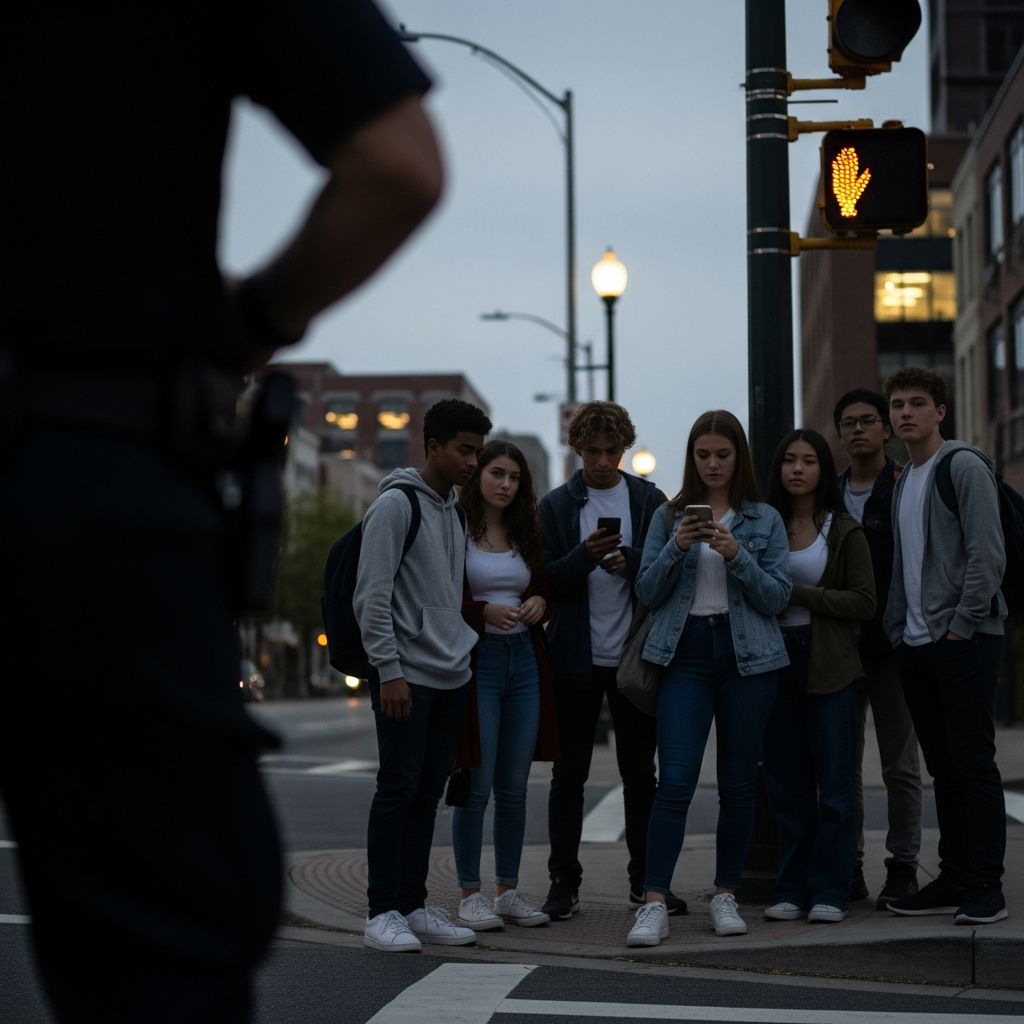
Many cities and counties in the United States limit when young people can be in public at night through juvenile curfew laws. These rules can be confusing and controversial, touching on safety, parental authority, and constitutional rights. This guide explains how these laws work, why local governments adopt them, and what families should know about enforcement and challenges.
What Is a Juvenile Curfew Law?
A juvenile curfew law is a local rule that restricts when people under a certain age may be in public places, on streets, or in businesses during specific hours, usually at night. Curfew violations are often treated as status offenses, meaning the conduct would not be illegal if an adult did the same thing.
- Typical age range: Under 16, under 17, or under 18, depending on the city or county.
- Common hours: Often from around 10:00–11:00 p.m. until early morning (for example, 5:00–6:00 a.m.).
- Geographic scope: Streets, sidewalks, parks, shopping centers, and other public places within the jurisdiction.
- Nature of the rule: Usually a civil or minor offense for the youth, but in some places it can be a misdemeanor.
These ordinances are typically enacted at the city or county level and can vary widely in detail and strictness.
Why Do Communities Adopt Juvenile Curfews?
Local governments often justify curfew ordinances as tools to promote public safety and protect youth. Research and policy reviews identify several stated goals:
- Prevent youth crime: Limiting late-night activity is intended to reduce opportunities for offenses such as theft, vandalism, and assaults.
- Reduce youth victimization: Officials argue that teens out late at night may be more vulnerable to being robbed, assaulted, or otherwise harmed.
- Support parental supervision: Curfews are framed as backing up parents who set similar rules at home.
- Promote school engagement: Keeping youth off the streets late at night is believed to help with rest and school attendance.
- Respond to public concern: Curfews are sometimes adopted after high-profile crimes or spikes in youth-related incidents, as a visible policy response.
However, a large body of research has questioned whether these laws actually achieve their crime-reduction goals, as discussed later in this guide.
Common Features of Juvenile Curfew Ordinances
While every locality writes its own law, many curfew rules share several core elements related to age, times, locations, and exceptions.
Typical Age Limits and Hours
Youth curfews usually target minors below the age of 18, sometimes with different rules for different age brackets.
| Policy Element | Common Local Approaches |
|---|---|
| Covered ages | Youth under 16, under 17, or under 18; some cities use multiple age groups with earlier hours for younger teens. |
| Nighttime hours | Often 10:00 p.m. or 11:00 p.m. to 5:00 a.m. or 6:00 a.m. on weekdays, with slightly later hours on weekends or during summer. |
| Daytime curfews | Some jurisdictions add school-day curfews during class hours to address truancy. |
| Geographic scope | Public streets, sidewalks, parks, transit stations, and often privately owned public spaces like malls. |
Frequent Exceptions and Defenses
To avoid sweeping up ordinary, lawful activity, curfew ordinances usually carve out specific exceptions.
Common exceptions include:
- With a parent or guardian: A minor is out in public but accompanied by a parent, legal guardian, or authorized adult.
- Traveling to or from work: Youth going directly to or from jobs, often with proof of employment such as a pay stub or work schedule.
- School, religious, or civic events: Participation in supervised activities like games, rehearsals, youth group meetings, or city-sponsored programs.
- Emergencies: Situations where a minor must seek help or respond to an urgent event.
- First Amendment activities: Some ordinances recognize protected speech and assembly—such as protests, vigils, or political meetings—as exceptions.
- Direct travel: Many laws require the youth to go “directly” between home and the permitted activity, without unrelated stops.
Because each city can define its own exceptions, it is important to read the text of the local ordinance or consult a lawyer when questions arise.
How Curfew Laws Are Enforced
Enforcement practices can vary significantly even when the legal text is similar. Official guidance and national reviews highlight several common approaches.
What Happens When a Youth Is Stopped?
If police officers encounter a young person they believe is violating curfew, they often follow a stepped process:
- Initial stop and questioning: Officers ask the youth’s age, destination, and reason for being out. They may request identification, though not all youth carry ID.
- Check for exceptions: Officers may ask about work, school, or other qualifying activities. Documentation can matter if the ordinance requires proof.
- Custody and release: In many places, youth are taken into temporary custody and then released to a parent or guardian.
- This may occur at the scene or at a designated curfew center or police facility.
- Written warning or citation: The youth and/or parent can receive a written notice, ticket, or referral to juvenile court, depending on local law.
Possible Consequences for Youth and Parents
Sanctions for violating curfew vary by jurisdiction and may be directed at the young person, the parent or guardian, or both.
- For the youth:
- Verbal or written warning
- Fines or fees (sometimes waived if the youth completes a program)
- Community service requirements
- Conditions of probation, including stricter court-ordered curfews
- On rare occasions, short-term detention for repeated or serious violations
- For parents or guardians:
- Civil fines when they “allow” or “knowingly permit” a youth to violate curfew
- Required parenting classes or counseling
- Community service obligations in some communities
Curfew cases that are formally referred to juvenile court may be treated as status offenses, where the court can order services, probation, or placement out of the home in extreme cases, though national data show these adjudications have fallen sharply in recent years.
Do Juvenile Curfews Reduce Crime?
Whether curfews work is a central policy question. Researchers have examined crime rates, victimization, and traffic injuries before and after curfew laws were adopted in dozens of communities.
Mixed Evidence and Methodological Challenges
Systematic reviews of the research literature highlight several key findings:
- Limited or no consistent crime reduction: Many studies find that curfews do not significantly reduce overall youth crime or victimization rates.
- Some narrow benefits: A few analyses have reported decreases in specific measures, such as nighttime traffic fatalities among teens, after curfew adoption.
- Potential displacement: When crime drops during curfew hours in some places, it may shift to earlier times rather than disappearing entirely.
- Research limitations: It is difficult to isolate the effect of curfews from other changes, such as new policing strategies, social programs, or economic shifts.
A 2016 systematic review of juvenile curfew laws concluded that overall evidence does not strongly support curfews as an effective strategy for preventing youth crime or victimization, although individual localities may experience different outcomes.
Constitutional and Legal Concerns
Curfew laws raise important questions about the rights of minors, parents, and communities. Civil liberties groups and affected families have challenged curfew ordinances in state and federal courts across the country.
Key Rights Implicated
Legal challenges often focus on whether a curfew infringes fundamental rights or treats minors unfairly. Among the issues raised are:
- Freedom of speech and assembly: Nighttime protests, vigils, or political meetings may be restricted, leading to claims that First Amendment rights are being violated.
- Freedom of movement and travel: Laws that restrict ordinary travel or gathering can be attacked as interfering with the right to move freely, both within a state and across state lines.
- Equal protection: Some critics argue that curfews unlawfully discriminate against minors, or that they are enforced in ways that disproportionately target certain neighborhoods or racial and ethnic groups.
- Parental rights: Parents have a recognized interest in directing the upbringing of their children. Curfews that punish parents for their child’s presence in public may be challenged as intruding on family autonomy.
- Due process and vagueness: Ordinances that are unclear about what counts as an exception, or when police may stop and question youth, may be attacked as unconstitutionally vague.
Court Approaches and Outcomes
Court decisions on juvenile curfews are not uniform. Some courts have upheld carefully crafted curfews, while others have struck down broader or poorly defined ordinances.
- Curfews may be upheld when:
- The government presents specific evidence of a serious public safety problem involving youth.
- The law is narrowly tailored, with clear language and ample exceptions for legitimate activities.
- Enforcement standards provide guidance to police and protections against arbitrary stops.
- Curfews may be struck down when:
- They are overbroad and sweep in a wide range of harmless conduct.
- They lack meaningful exceptions for work, school, religion, or protected speech.
- They invite arbitrary or discriminatory enforcement by giving officers little guidance.
Because legal standards differ among states and federal circuits, an ordinance deemed valid in one region might be unconstitutional in another.
Practical Tips for Parents and Teens
Regardless of whether one supports or opposes juvenile curfew laws, families must navigate them in daily life. The following strategies can help reduce confusion and legal risk.
1. Learn the Local Rules
- Check your city or county code for the exact hours, covered ages, and listed exceptions.
- Find out whether there is also a daytime or school-hours curfew.
- Look for any special provisions for holidays, summers, or specific neighborhoods.
2. Plan Ahead for Nighttime Activities
- When teens attend late events, arrange clear transportation home before curfew begins.
- For work or organized activities, keep copies of:
- Work schedules or employer letters
- Team or club rosters
- Event tickets or registration confirmations
- Discuss backup plans if transportation falls through.
3. Communicate with Youth About Rights and Responsibilities
- Explain the purpose of the local curfew and the possible consequences of violations.
- Talk about how to interact respectfully with officers while still asking questions or asserting legal exceptions.
- Encourage youth to call a parent or trusted adult immediately if they are stopped or taken to a curfew center.
4. Seek Legal Advice When Needed
- If a youth receives a ticket, citation, or court notice, consult a juvenile defense attorney or legal aid office.
- Ask about options to:
- Contest the citation
- Negotiate alternative sanctions such as community service
- Expunge or seal records where state law allows
- If you believe the ordinance is unconstitutional or applied in a discriminatory way, discuss longer-term strategies, including potential legal challenges.
Frequently Asked Questions About Juvenile Curfew Laws
Q1: Are juvenile curfew laws the same everywhere?
No. Curfew laws differ widely by city, county, and state. Age limits, hours, exceptions, and penalties are all set locally, so it is essential to check the specific ordinance where you live or travel.
Q2: Can a teenager be arrested for a curfew violation?
In most areas, first-time violations lead to a warning, a ride home, or a citation rather than an arrest, but repeated or serious violations can result in stronger court involvement. In some jurisdictions, violations may technically be misdemeanors, and youth can be taken into custody, though detention is generally rare and considered a last resort.
Q3: Do parents always get fined if their child breaks curfew?
Not always. Some ordinances impose fines on parents who knowingly allow violations, while others focus on the youth or use informal warnings. Whether a fine is issued can depend on local policy, the circumstances, and whether there were prior incidents.
Q4: If a teen is coming home from work after curfew, is that allowed?
Many curfews have explicit exceptions for employment, allowing minors to travel to and from work during restricted hours. However, youth may need to show proof, such as a schedule or employer letter, and must usually go directly home without unrelated stops.
Q5: Are curfew laws effective at keeping teens safe?
Research findings are mixed. Some studies suggest limited benefits in specific areas, while many evaluations find little or no overall reduction in juvenile crime or victimization linked directly to curfew laws. Policymakers and advocates continue to debate whether curfews are the best tool for improving youth safety.
Q6: Can a juvenile curfew law be challenged in court?
Yes. Families and advocacy groups have challenged curfew ordinances on constitutional grounds, including free speech, equal protection, and parental rights. Whether a particular ordinance is valid depends on its wording, its justifications, and how courts in that jurisdiction interpret state and federal law.
References
- Hemmens, Craig, and Katherine Bennett, “Juvenile Curfews” — University of Nebraska–Lincoln Digital Commons. 2001-01-01. https://digitalcommons.unl.edu/sociologyfacpub/785/
- Youth Curfews — Office of Juvenile Justice and Delinquency Prevention (OJJDP), U.S. Department of Justice. 2024-01-01. https://ojjdp.ojp.gov/model-programs-guide/literature-reviews/youth-curfews
- Purpose or Portrayal: The Dangers of Youth Curfew Laws on Public Safety and Youth Delinquency — Coalition for Juvenile Justice. 2019-10-08. https://juvjustice.org/blog/purpose-or-portrayal-the-dangers-of-youth-curfew-laws-on-public-safety-and-youth-delinquency/
- A Systematic Review of the Impact of Juvenile Curfew Laws on Public Health and Justice Outcomes — Center on Juvenile and Criminal Justice / National Institutes of Health (PMC). 2016-11-01. https://www.ncbi.nlm.nih.gov/pmc/articles/PMC4656116/
- The Truth About the Curfew Myth — National League of Cities. 2018-11-27. https://www.nlc.org/article/2018/11/27/the-truth-about-the-curfew-myth/
Similar Articles








Read full bio of Sneha Tete


